Myworldoffootball
Bastoni transfer news after Italy’s Bosnia shock
Bastoni transfer news explodes after Bosnia vs Italy ends in penalty heartbreak, Italy miss a third World Cup, and Barcelona circle Inter’s defender.
Bastoni transfer news explodes after Bosnia vs Italy ends in penalty heartbreak, Italy miss a third World Cup, and Barcelona circle Inter’s defender.
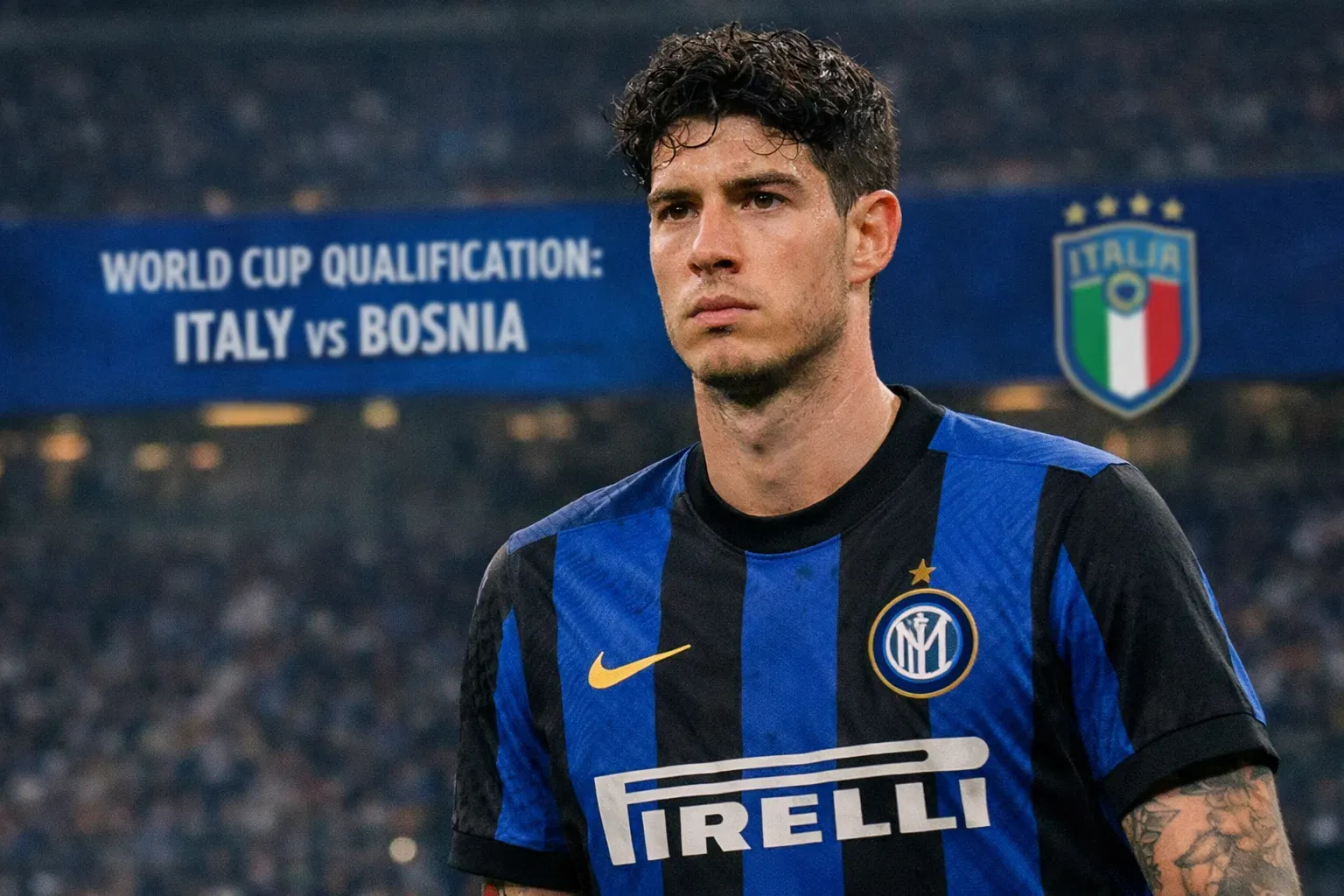
Italian football woke up to a familiar nightmare, only this time it felt even colder: Bosnia and Herzegovina knocking the Azzurri out of 2026 World Cup qualification after a 1-1 draw and a 4-1 defeat on penalties. The match will be replayed in headlines for years, but the story has already narrowed to one face and one moment. Alessandro Bastoni’s 41st-minute red card tilted the night, and suddenly Bastoni transfer news is not gossip but a defining subplot. With Barcelona reportedly ready to pounce, Italy’s latest collapse has turned into a club-level drama too.
Bosnia vs Italy had the atmosphere of a routine hurdle until it became a trapdoor, and the shift was brutal in real time. Italy’s structure looked stable early, but Bosnia’s intensity forced longer clearances and messy second balls, the kind that drain confidence. When the game stretched, Bosnia’s runners began to find pockets around the Italian midfield line. By the time penalties arrived, the stadium felt like it had already chosen its ending.
The 1-1 draw told only half the story because the match’s emotional rhythm was dictated by momentum, not possession. Italy’s equaliser steadied nerves briefly, yet Bosnia kept asking the same question: can you defend for 90 minutes with your plan disrupted? Once the red card arrived, Italy’s passing lanes narrowed and the bench options looked like damage limitation. In the aftermath, Bastoni transfer news gained oxygen because the defeat felt systemic and personal at once.
Bosnia didn’t need extravagant tactics; they needed clarity and courage, and they played like a side convinced Italy would blink first. They pressed Italy’s first build-up pass, then dropped quickly to crowd the central channel, daring Italy to play wide and cross under pressure. That approach forced rushed decisions and invited transition moments, where Bosnia’s directness looked sharper than Italy’s caution. In World Cup qualification, those small edges become a guillotine.
Penalties are never “luck” when one team arrives with calm and the other arrives with dread, and Italy’s recent history hangs heavy in those walks from halfway. Bosnia’s takers looked decisive, striking early and clean, while Italy’s body language screamed fatigue and fear. A missed kick becomes a headline, but the bigger issue was the sense of inevitability. That’s why Bastoni transfer news now sits beside national-team crisis talk, not beneath it.
The sending-off of Alessandro Bastoni in the 41st minute was the match’s hinge, the moment Bosnia vs Italy stopped being tense and became tilted. Italy had to reshuffle immediately, sacrificing progressive passing for survival and asking midfielders to cover wider spaces. The red card also changed Bosnia’s risk calculation, letting them commit more bodies forward without fearing Italy’s usual counter structure. From that instant, Bastoni transfer news felt less like summer speculation and more like fallout.
Italian press criticism landed quickly and loudly, framing the dismissal as emblematic of a wider loss of control. Even when Italy defended heroically in spells, the ten-man reality meant every clearance came back faster and every duel carried greater consequence. The tiring legs in extra time looked predictable rather than unlucky, and the shootout became a test of nerve Italy couldn’t pass. With the Italy national team missing a third straight World Cup, the scapegoat hunt naturally circles the red card.
Replays can soften a moment, but they can also harden opinions, and this one has hardened fast. The challenge looked like a defender trying to recover position, yet arriving late enough to invite the referee’s harshest interpretation under UEFA scrutiny. Italy’s teammates protested, but the decision stood, and the match immediately took on a siege mentality. In that environment, Bastoni transfer news becomes more plausible because reputations are rewritten quickly after national-team failures.
Pierre Kalulu was asked to do the kind of job that never gets remembered unless it goes wrong: plug gaps, win emergency duels, and keep the back line coherent while the midfield collapses inward. He covered wide areas and tried to maintain aggression without taking the kind of risks that produce another card. Yet the cost of ten men is cumulative, not instant, and Italy’s passing outlets vanished. When legs went, Bosnia’s belief rose, and Bastoni transfer news gained another layer of inevitability.
Italy missing the 2026 tournament would mark an astonishing third consecutive absence after 2018 and 2022, a stat that still looks fake when you read it slowly. This isn’t just a bad cycle; it’s a prolonged identity crisis where the Italy national team can’t reliably translate heritage into qualifying points. In World Cup qualification, Italy have too often looked like a team waiting for the shirt to win the game for them. Bosnia vs Italy exposed that fragility with ruthless simplicity.
The wider damage goes beyond one night because qualifying failure changes how players are judged at their clubs. Every mistake gets magnified, every weakness becomes a “pattern,” and every transfer rumour becomes a plausible escape route. That’s why Bastoni transfer news has erupted so quickly, despite his standing at Inter Milan and his previous performances for club and country. When a nation misses three straight World Cups, the public demands a price, and defenders often pay it first.
Italy’s paradox is that Serie A and its stars can still thrive in European nights, yet the national team often lacks the automatisms that decide tight qualifiers. Club football gives players rehearsed patterns and specialist roles, while international windows demand rapid chemistry and clear leadership. When that clarity isn’t present, games become anxious and reactive, and opponents smell it. Bosnia vs Italy became a case study in how quickly confidence drains when a plan meets resistance.
Italian media can be both guardian and executioner, and after another World Cup qualification failure the tone turns from analysis to indictment. A red card becomes a symbol, not an incident, and the player attached to it becomes a lightning rod for national frustration. In that climate, Bastoni transfer news spreads faster because fans start debating “fresh starts” rather than tactical tweaks. For clubs like Inter Milan, that noise can either harden resolve or open a negotiating door.
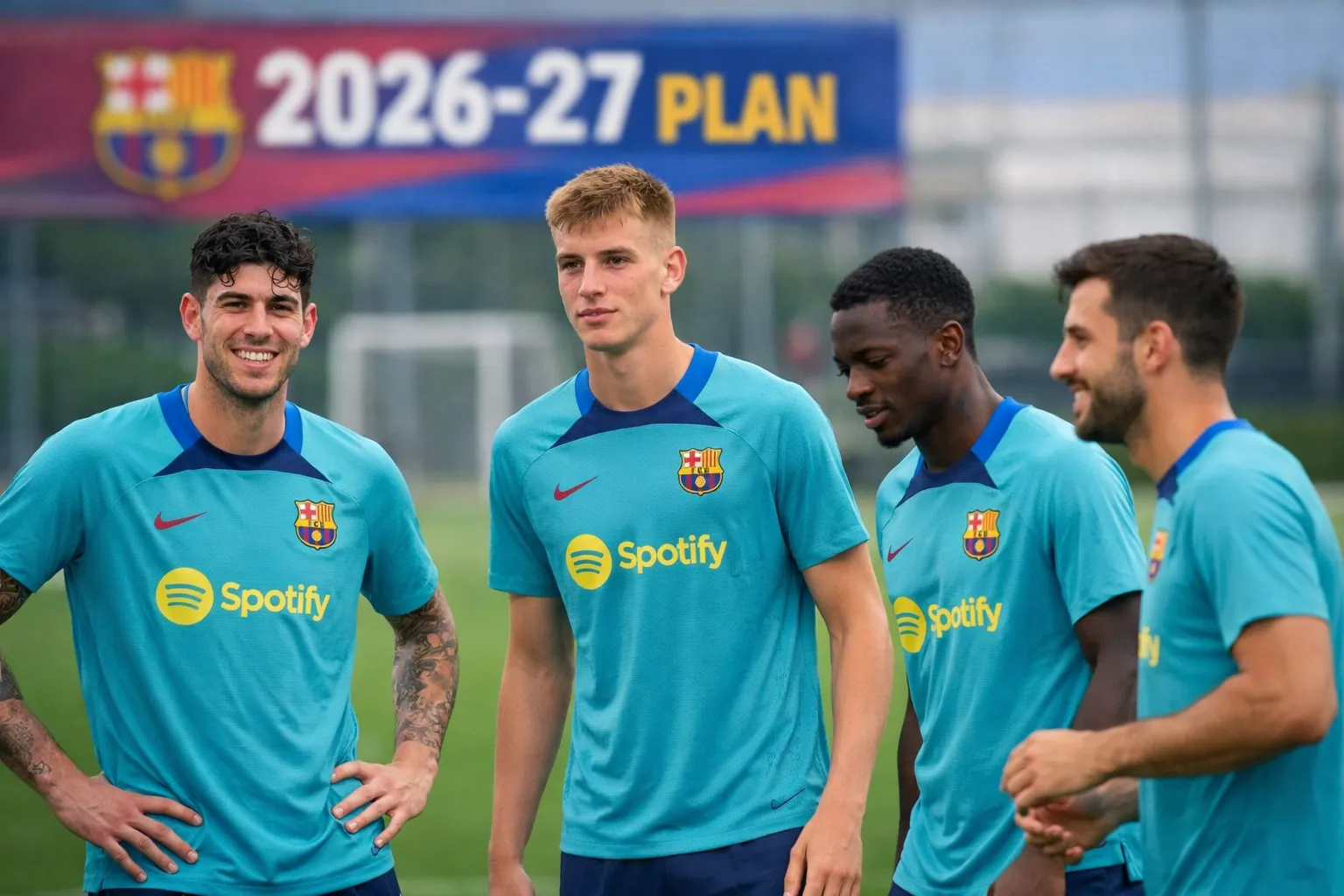
Barcelona have been linked with Alessandro Bastoni before, but the current wave of Bastoni transfer news carries a different intensity because it’s tied to a reputational dip. Reports suggest a potential €55-60 million move, a figure that reflects both elite value and opportunistic timing. Barcelona see a left-sided defender who can build play, defend space, and fit a possession-heavy identity. After Bosnia vs Italy, the question is whether the moment makes the deal easier, not whether the player is good enough.
For Inter Milan, the calculus is delicate because Bastoni is not just a defender; he is a tactical reference point in build-up and a leader of spacing. Selling him would require either a ready-made replacement or a structural change, and neither comes cheaply. Yet financial realities and market opportunities can force uncomfortable decisions, especially when a player is under national-team pressure. If Bastoni transfer news becomes a daily storm, Barcelona’s approach might feel like a lifeline to some and a betrayal to others.
Barcelona’s interest makes football sense because Bastoni offers progressive passing from deep, composure under pressure, and the ability to defend higher lines when the team squeezes the pitch. He can step into midfield zones, switch play with pace, and still win duels in the channels, a rare blend for a modern centre-back. In a squad that values build-up security, he looks like a plug-in solution. That’s why Bastoni transfer news has traction beyond tabloid drama.
Inter Milan don’t need to be convinced of Bastoni’s importance, but they do need to balance squad planning with economic reality and player mood. If Barcelona arrive with a clean offer and an attractive salary package, the conversation shifts from “never” to “under conditions.” Inter could demand add-ons, a sell-on clause, or even a player exchange to soften the sporting hit. The louder Bastoni transfer news gets in Italy, the more Barcelona can pitch the move as an escape from a hostile spotlight.
Football careers can pivot on single moments, and Bastoni’s red card has become the kind of clip that follows a player into every debate. It’s not fair to reduce a defender to one decision, yet the Italy national team’s ongoing failures create a harsh environment where nuance dies quickly. The narrative now frames him as the face of another missed World Cup, even if the problems were broader. In that storm, Bastoni transfer news functions like both consequence and coping mechanism.
What makes this episode especially dangerous is that it coincides with a transfer market that thrives on uncertainty. Barcelona don’t need to “create” pressure; they only need to recognise it and move decisively while emotions are high. Meanwhile, Inter Milan must protect an asset’s value while also protecting the player’s confidence, a tricky combination. Bosnia vs Italy may end as a qualification result, but its real aftershock could be a major European transfer.
When the public turns, players feel it in small ways: whistles in warm-ups, harsher questions in interviews, and a constant online verdict that never sleeps. Even strong dressing rooms can become tense when one player is treated as the reason for collective failure, because teammates are forced to defend him or distance themselves. That tension can make a “fresh start” abroad appealing, even for someone settled. It’s another reason Bastoni transfer news is being taken seriously across football news outlets.
The immediate response has to be professional calm: clear communication with Inter Milan, a measured public statement, and performances that remind everyone what he does well. Defenders rebuild reputations through consistency, not arguments, and the next months will matter more than the last 90 minutes. If Barcelona transfer talks intensify, he must decide whether the move is ambition or escape. Either way, Bastoni transfer news will follow him until he turns the conversation back to football.
The next steps will unfold on multiple tracks, which is why this story refuses to sit still. Under UEFA scrutiny, Italy will review the match, the officiating, and the disciplinary consequences, but none of that changes the result or the pain of missing another World Cup. The federation must now confront structural questions about development, leadership, and mentality in World Cup qualification. Bosnia vs Italy will be used as evidence in every argument, from coaching philosophy to player selection.
At club level, the calendar turns the spotlight toward summer negotiations, and Bastoni transfer news will be measured against deadlines and budgets. Barcelona typically move early when they identify a key target, while Inter Milan will want clarity before pre-season planning. If a fee around €55-60 million is real, it will dominate the market conversation, especially given the emotional context. Italy’s defeat has created a rare situation where national disappointment could directly accelerate a marquee transfer.
Barcelona’s best chance is to strike while the narrative is loud but before Inter Milan can reset the conversation with strong club performances and a calmer media cycle. Early contact, clear terms, and a defined role can persuade a player that the move is about football, not just optics. If negotiations drag, Inter’s leverage can grow as emotions cool and alternatives emerge. Still, Bastoni transfer news suggests Barcelona believe timing is their ally.
For the Italy national team, the rebuild cannot be purely emotional because the same problems have repeated across cycles: fragile confidence, unclear attacking identity, and poor crisis management in tight games. The federation must create a plan that survives pressure, not one that looks good in friendlies. New leaders will have to emerge, and veterans will have to accept accountability without becoming targets. Until Italy solve that, Bastoni transfer news will be just one of many stories born from a deeper wound.
In the end, Bosnia and Herzegovina earned their moment, and Italy earned their questions, which is the harsh fairness of football. The red card, the penalties, and the third straight missed World Cup will dominate memory, but the next twist may come in an office rather than on a pitch. If Barcelona turn interest into a formal bid, Bastoni transfer news will become the defining bridge between national failure and club reinvention. Inter Milan, Barcelona, and Bastoni now share the same uncomfortable timeline, and every decision will be judged through the lens of that 41st minute.

Julian Mercer is a lifelong student of the game whose passion for football was sparked at an early age, after stepping onto the grass of Camp Nou as a six-year-old — a moment that left a lasting impression and set him on a permanent path into the sport. Since then, football has been both his lens on the world and his favourite language. Blending traditional fandom with a deep interest in tactics, squad building, and long-term team development, Julian has spent decades analysing the game from every angle. His fascination with football strategy was further shaped through years of immersive play in Football Manager, a series he has followed since the mid-1990s, developing a sharp eye for patterns, player profiles, and the fine margins that define success. At My World Of Football, Julian focuses on the stories beneath the surface — from tactical evolutions and managerial philosophies to the narratives that connect clubs, players, and supporters across generations. His writing aims to balance insight with accessibility, always grounded in a genuine love for the game.
Continue reading more football news