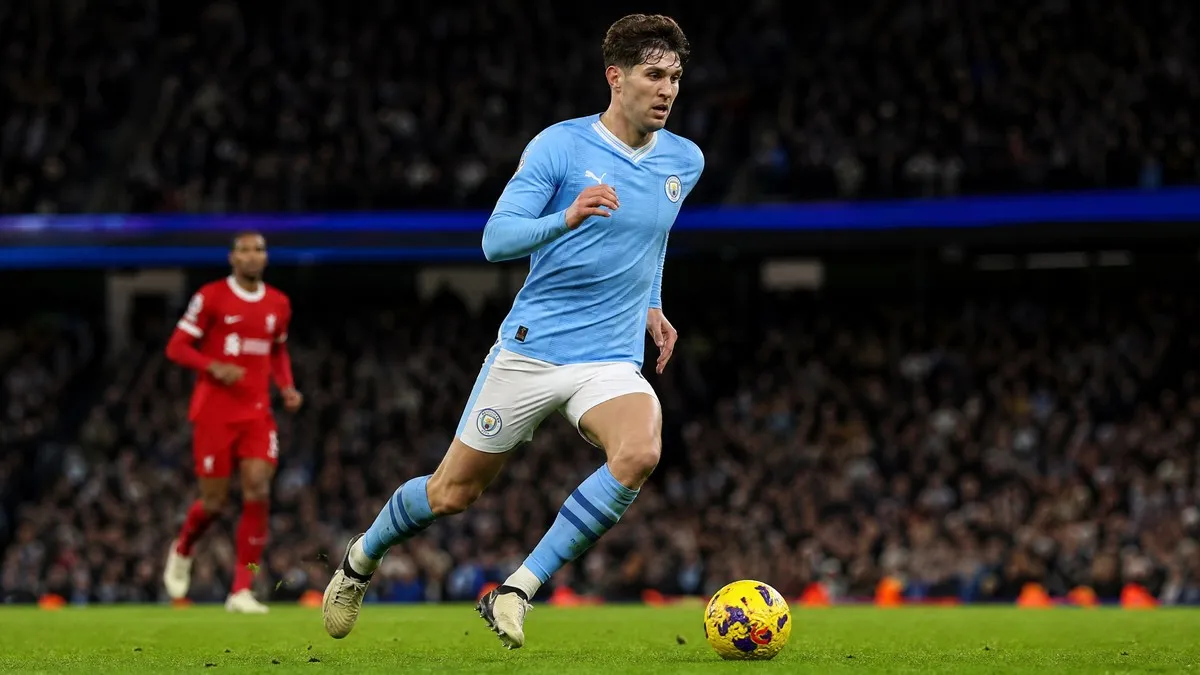
AI-generated image
Football News Today: Foden, Van Dijk, and World Cup buzz
Foden's Villa link, Van Dijk's future, and World Cup ticket prices rise. Check out the latest in football news today.
Foden's Villa link, Van Dijk's future, and World Cup ticket prices rise. Check out the latest in football news today.
Hey football fans, it’s July 1st and the transfer chatter is heating up. Phil Foden’s future is in the spotlight with a potential move to Villa, while Virgil van Dijk's links to Milan are making waves. Plus, Belgium's World Cup kit is turning heads. The Premier League is buzzing with action and stories from around Europe are piling up. Grab your coffee and let’s dive into today’s top football news.
Phil Foden transfer news feels weird because he is basically the poster boy for Manchester City’s academy dream. But it also rings true. His minutes have dipped, his influence has flattened, and he looks like a player waiting for the game to come to him. When you are used as a luxury sub, confidence goes quiet. Add the England snub noise and you can see why a reset gets talked about.
Tony Cascarino pitching Aston Villa is not just radio filler. Villa under Unai Emery give attackers clear jobs and repeat patterns until they stick. Foden could play off the left, as a narrow 10, or as the right-sided creator drifting inside. He would get the ball early and often, not just in the last 20 when a match is already stretched. That matters for rhythm, especially for a player who lives on timing.
The Morgan Rogers sale angle is what makes the Aston Villa transfer rumors feel more than fantasy. If Villa really bank something like £130 million, they can pay a City-level fee and wages, plus build around him. Foden is also a statement signing for a club trying to stay in the Champions League mix. He lifts the floor on technical quality and gives Emery another player who can win tight games with one touch.
From City’s side, the contract clock is the leverage. With a year left, it is either a Foden contract extension, a sale, or the risk of losing control of the situation. A new manager would also change the pecking order fast. Foden has six Premier League titles, so nobody doubts his pedigree, but squads move on. If City are reshaping, cashing in now could be rational.
The big question is whether Foden wants “more responsibility” or “more comfort.” Villa would offer both, but the pressure is different. At City, you get judged against perfection. At Villa, you get judged on impact. Phil Foden transfer news will keep rolling until he plays like the main guy again, either at the Etihad or somewhere that treats him like the first name on the team sheet.
The Belgium 2026 World Cup kit feels like Adidas finally decided Belgium should look like Belgium, not just another red shirt with a badge. The home design’s stained-glass treatment is a proper nod to the country’s Gothic heritage, and it lands because it is readable on the pitch. It also frames this generation’s last big swing. De Bruyne, Lukaku, Courtois, it is now or never.
The pricing tells you where modern kit culture is at. £85 for a replica and £120 for an authentic shirt is steep, especially when fans already juggle club shirts and constant drops. But the point of this Belgium national team kit is collectability as much as matchday identity. If you are buying, you want the details to feel intentional, not like a template with a story bolted on.
What makes the Belgium 2026 World Cup kit interesting is that it plays with national symbolism without getting corny. Stained-glass graphics and cultural icons can easily look like a tourist shop print, yet here it reads like a design system. That matters because Belgium have often looked stuck between footballing styles too. A kit that commits to a clear idea mirrors a team that needs to commit to a clear plan.
The leaked Belgium away kit is where the real chatter sits. Light sky blue with playful patterns linked to René Magritte is a brave pivot away from the usual dark alternates. If it releases in March 2026 as expected, it will arrive right in the build-up, when hype is easiest to convert into sales and atmosphere. Imagine it in the stands while De Bruyne is still at Manchester City and Lukaku is leading the line again.
Adidas deserve credit for treating 2026 World Cup apparel as more than colour swaps, but the kit cannot carry the tournament on its own. Belgium’s golden generation has been defined by fine margins and missed moments. If they want this Belgium 2026 World Cup kit to become iconic, they need a run that matches the ambition. Otherwise it is just a beautiful shirt from an era that drifted.
Jeremy Jacquet arriving for big money and immediately talking up Virgil van Dijk feels telling. In the middle of constant Virgil van Dijk transfer news, new lads usually keep it generic. Jacquet did the opposite, basically describing a dressing room built around Van Dijk. That reads like Liverpool FC briefing without the briefing. If the captain was genuinely off, you would not sell the project like that.
The contract angle is the real tension. Van Dijk’s deal running toward its final year is exactly how rumours get oxygen, and the Galatasaray links fit the usual pattern: big name, big wage, late-career move. But Liverpool have been here before. When they want to keep a core piece, they move early and quietly. The noise around Virgil van Dijk contract talks often says more about timing than intent.
On the pitch, losing senior leaders elsewhere would make letting Van Dijk go feel reckless. If Salah and Robertson are moving on, you are stripping experience from two ends of the team at once. That leaves Van Dijk as the organiser, the set-piece threat, and the calm head when Anfield gets edgy. In Premier League terms, that is not a luxury. It is the base layer of your points total.
Jacquet’s role is interesting because it changes the squad logic. A £60 million centre-back from Rennes is not a punt. He is a planned starter or a rapid successor. Pair him with Ibrahima Konate and you have pace and power, but you still need the conductor. Van Dijk as mentor makes sense for a season or two, then you transition without panic. That is why Virgil van Dijk transfer news feels more like leverage than destiny right now.
Joan Laporta confirming a formal offer turns the Julian Alvarez transfer news from whispers into a proper standoff. Barcelona want a striker who presses, runs channels, and still finishes like a killer, and Alvarez ticks that box. But when a president says the bid is time-sensitive, it is not just posturing. It is also a message to the dressing room and the market that Barca will pivot fast.
Atletico’s position makes sense even if it is annoying. Diego Simeone does not let a forward like Alvarez walk unless the replacement is already lined up, and that market is thin. Everyone knows Barca have to watch their accounts, so Atleti can just sit tight and squeeze. That is why this Barcelona transfer bid is not really about numbers only. It is about leverage and timing.
The spicy bit is Atletico filing complaints about how Barca have gone about it. That is classic big-club politics, and it usually means someone feels their control slipping. If Alvarez has told people he wants the Alvarez Camp Nou move, Atletico’s strongest play is to make the process messy and slow, then paint Barca as the bad guy. Laporta pushing back publicly is him protecting the club’s image as much as the deal.
From Barca’s side, the warning shot is clear. They cannot keep cash and wage space parked while Atletico shop around, especially with other needs in the squad. The Joan Laporta comments read like: we have a price, we have a deadline, and we will not get dragged into a saga. In Julian Alvarez transfer news terms, that is the moment you start watching alternative targets and whether Atletico’s “no” is real or just negotiation theatre.
Virgil van Dijk transfer news feels louder now because Liverpool look like they are wobbling at the top. Arne Slot’s departure changes the whole mood music. Van Dijk has been the on-pitch reference point for years, so any uncertainty around him lands harder than most. If Liverpool are heading into another reset, he has to decide if he wants to be the anchor again or step away.
AC Milan interest makes sense when you look at their squad. They have quality, but they still miss that calm, boss-level centre-back who keeps everyone switched on for 90 minutes. They have chased leadership since the Zlatan Ibrahimovic era, and you can see why his name keeps popping up in conversations around the club. Van Dijk is that kind of presence, even when he is not at his peak.
The money is the awkward bit. Van Dijk salary talk, at roughly €18.2 to €21 million a year, is not just tabloid noise. It shapes everything. Liverpool can justify it when they are competing for the biggest trophies and he is the defensive cheat code. Milan, even with ambition, have to be clever with wages. Any deal would likely need compromise, bonuses, or a shorter term.
What I like is he is not pretending everything is perfect. After the Morocco game he owned a defensive lapse, and that honesty matters for the Dutch national team too. If his club future is shaky, the armband for Netherlands gets heavier, not lighter. Teun Koopmeiners and others are coming, but Van Dijk is still the reference for standards and calm.
So the Virgil van Dijk transfer news cycle is really about timing and identity. Liverpool fans are split because some want a clean break and a rebuild, while others fear losing the last pillar of the title-winning spine. Milan fans see a ready-made leader. Van Dijk saying he needs to handle personal matters first sounds genuine. This one will move when he is ready, not when the rumour mill wants it.
Norway World Cup 2023 has already gone past the “nice to be here” stage, and that is why Erling Haaland’s caution lands well. This squad has played with nerve, not just vibes, and the late winner against Ivory Coast showed it. But Brazil in a round of 16 is a different sport. Haaland basically said what every fan thinks quietly: enjoy it, but do not kid yourself.
That 86th-minute goal mattered for more than points. It showed Norway can keep shape, stay in games, and still carry a punch late on. In this Norway World Cup 2023 run, they have not needed to dominate possession to look dangerous. They have been pragmatic, compact, and patient, then direct when the moment arrives. That profile travels well in knockouts, but it also invites pressure you must survive for long spells.
Haaland’s five goals put him right in the Golden Boot mix behind Messi and Mbappe, and it has not felt like padding against weak sides. He has scored different types too, including that clutch finish when legs were heavy. Still, Brazil will try to starve him. Expect aggressive front-foot defending, quick fouls when he spins, and lots of bodies between him and goal. Norway’s wide runners and second balls become crucial.
Martin Odegaard’s role is the counterweight. As captain, he is selling the underdog angle, and that is smart. If Norway World Cup 2023 is going to stretch another week, they need the mindset that pressure sits with Brazil. Odegaard has to manage tempo, win cheap free kicks, and make Norway’s counters breathe. Sunday at the New York/New Jersey Stadium feels like a test of emotional control as much as tactics.
The Julian Brandt PSV transfer news is interesting because it is not just a random Eredivisie transfer rumor. It lines up with a very specific hole PSV are about to create themselves. If Ismael Saibari really is Bayern Munich-bound for €55m, you lose a ball-carrying connector who can play between the lines and keep attacks flowing. Brandt is a different profile, but the role is there.
Brandt on a free looks like a cheat code on paper, yet it is never that simple. His Julian Brandt market value might sit around €15m, but wages and signing-on fees are the real price, and that is where PSV have to be sharp. Real Betis, Leeds, and Roma sniffing around changes the tone. PSV cannot sell him on money. They must sell him on minutes, fit, and a proper plan.
Tactically, PSV would be buying craft and tempo control more than raw power. Brandt can play as a No.10, an inside right, or even deeper as a passer when the game slows. In the Eredivisie, where PSV often face low blocks, that matters. The Julian Brandt PSV transfer news also hints at ambition: replacing a rising star with a name that has lived Champions League nights.
The other angle is what this says about Isaac Babadi. If the club thought Babadi was ready, they would not be linked so strongly to an experienced starter. After a rough loan spell, throwing him straight into Saibari’s workload feels unfair on him and risky for PSV. A Brandt arrival could actually help, giving Babadi time and a clearer development path, even if it blocks him short term.
Still, PSV have to weigh the dressing-room and resale logic. Saibari’s sale funds the squad, but Brandt does not bring future profit. You do it to win now. If PSV want to stay ahead of Ajax and keep their European level, this is the sort of swing you take. Expect the Julian Brandt PSV transfer news to heat up once the Saibari paperwork gets real.
The Marco Palestra Chelsea signing feels like a proper statement from the new Xabi Alonso Chelsea era. £47 million is not small change, but it is the kind of fee you pay when you want to stop living in transition and start building a spine. Chelsea have had talent all over the pitch, but the back line has rarely looked settled. This is a bet on a defender who can lead, not just fill minutes.
Palestra’s rise is the interesting bit. Atalanta have produced plenty of well-coached defenders, and his loan at Cagliari clearly did him good. Serie A Defender of the Year at 21 is not a participation trophy, even if awards can be a bit noisy. It suggests he handled different game states, defended his box, and stayed switched on over a full season. That matters more than highlight tackles.
Beating Inter Milan to him is another clue. Inter usually get their targets when they really want them, especially Italians with momentum. So the Marco Palestra Chelsea signing probably came down to project and role. Alonso can sell a clear idea to a defender: aggressive positioning, quick rest-defence, and a back line that has to defend big spaces. If Palestra buys into that, he plays. If he hesitates, he gets exposed.
From a Premier League 2026/27 angle, the big question is adaptation. Serie A teaches timing and organisation, but England tests your concentration with constant transitions and aerial chaos. Chelsea will need to protect him early, with the right partner and a stable midfield screen. Still, this looks like the first brick in a Chelsea squad overhaul, and it should push the next moves. If they want Champions League football again, it starts with fewer soft goals.
Premier League transfers 2026 already feel like they are being driven from the top down, and Tottenham have basically grabbed the megaphone. Paying north of £50m for Jan Paul van Hecke is a statement, but it is also a tell. Spurs are buying certainty in a market where “good enough” defenders cost elite money. It screams urgency, like they want a ready-made spine more than another development project.
The funny thing is the league keeps recycling its own parts. Intra-Premier League deals stay popular because everyone knows the risks. You are not guessing how a player handles the pace, the travel, the media noise. That is why the old examples still sting. Harry Maguire and Virgil van Dijk both went for fees that now look like bargains compared to what clubs are chucking around today.
Arsenal’s angle is different. Their Arsenal transfers plan looks like opportunism dressed as strategy, especially when it involves Chelsea cast-offs. It can work if the profile is right and the price is sane, but it also invites the question: are you upgrading, or just shopping in a familiar aisle? Meanwhile, Manchester United news will be all about whether they can sell well for once, not just buy loudly.
Richarlison Spurs is the cautionary tale sitting right there. He has had moments, but the output has never fully matched the fee or the expectation, and that matters when you are now stacking £50m decisions back-to-back. Tottenham signings need to land quickly because the league does not wait. One misfire and you are explaining “transition seasons” again.
And that is before you get to Aston Villa and Newcastle, who are stuck living with the consequences of these numbers. Their player market analysis is brutal: pay inflated fees to keep up, or get picked apart by richer clubs who can overpay without blinking. Premier League transfers 2026 might be entertaining, but the absurdity is real. It is becoming a tax on ambition.
Gavi praises Lamine Yamal and you can tell it is not just teammate talk. He is basically saying, “I see it every day in training and you lot still do not get it.” The Messi caveat matters too, because it frames Yamal as the best of the current lot, not a future promise. That is a big statement from a lad who has played with plenty of elite talent at Barcelona and Spain.
The timing is the real story. Yamal is carrying a hamstring issue and Spain are heading into a knockout against Austria, the kind of game where your wide player has to sprint, stop, sprint again, then track back. When Gavi says even at 70% he is still top, it sounds like reassurance, but it also hints at a risk. Hamstrings do not care about confidence or medals.
What makes Yamal different is how he affects matches without needing everything to be perfect. If his burst is slightly down, he can still win you moments with first touch, body shape, and that calm pass inside when the full-back expects the dribble. That is why a Barcelona winger like him racks up minutes even when not fully right. Coaches trust the decisions, not just the legs.
Gavi praises Lamine Yamal again because the mental side is just as rare. The fame, the Ballon d’Or noise, the “next Messi” baggage, it usually warps young football talent. Yamal looks weirdly normal within it. That is why he can play major minutes, take contact, get kicked, and still ask for the ball. Austria will test that with aggression and compact defending.
For Luis de la Fuente, it becomes a balancing act. Start him and you might get the game-breaking action early. Manage him and you might lose the one player who forces opponents to double up and open space for everyone else. Either way, Gavi praises Lamine Yamal because Spain’s World Cup 2024 hopes feel tied to that right flank, even if the hamstring is not fully convinced.
George Weah picking sides in the Kylian Mbappe vs Lamine Yamal chat was always going to land loudly, because he is not some random pundit. He has lived the jump from “talent” to “best in the world.” When he says Mbappe is far superior, he is really talking about proof. Mbappe has stacked seasons, titles, and now another World Cup where he looks like the reference point.
The Sweden game is the perfect example of why this comparison feels unfair right now. Mbappe’s brace in a 3-0 win was not just two nice finishes. It was control of the whole mood of the match. He picks when to explode, when to slow it down, and when to hurt you twice in five minutes. That’s why his World Cup total keeps climbing, and why “Mbappe goals” is basically a tournament storyline again.
Yamal is electric, but he is still learning the boring parts that make superstars inevitable. Decision-making under pressure, managing games without forcing moments, and handling teams that set up solely to stop him. Barcelona have already seen how quickly opponents adapt once the hype arrives. In the Kylian Mbappe vs Lamine Yamal debate, Weah is basically saying: one player is already a solved problem, the other is still being built.
Then there’s the Golden Boot race and the Messi scoring record chatter hanging over everything. Mbappe chasing Messi for top scorer keeps turning every France game into a personal scoreboard. That can be a trap, but Mbappe usually thrives on it. If France vs Spain happens in the semi-finals, it becomes the cleanest stage for the Yamal comparison: can he tilt a huge match the way Mbappe does, or is that step still a year or two away?
The Zinchenko Ajax departure feels like one of those transfers that never really got started. He arrived in February with a clear job to do, then his knee went in his second game and the whole spell turned into rehab and polite updates. Ajax backed him, he thanked them, but football moves fast. When you only get a couple of appearances, you do not get the chance to win people over.
From Ajax’s side, this was always going to be ruthless. They have already brought in Caio Henrique from Monaco, which tells you they could not wait around on timelines and medical reports. Even if Oleksandr Zinchenko comes back strong, a serious knee injury changes how coaches manage minutes, training loads, and risk. In a title race or Europe, you need availability. The Zinchenko Ajax departure is basically Ajax choosing certainty over sentiment.
For Zinchenko, the free-agent angle is interesting because it lowers the barrier for clubs that want experience without a big fee. PSV Eindhoven makes sense if Anass Salah-Eddine is heading back to Roma and they need a left-sided solution quickly. Zinchenko can play left-back, invert into midfield, and help control games. But PSV will want clear medical confidence, because they cannot carry a high earner through another long layoff.
Real Sociedad and Leeds United offer two very different pitches. Sociedad can sell him on structure, possession, and a calmer environment to rebuild rhythm. Leeds is more chaotic but could offer minutes and a big role, especially if they want a leader who has played at the top level. Either way, the Zinchenko Ajax departure leaves him at a crossroads: pick the club that manages his body smartly, not just the one with the loudest promise.
Mateo Chávez transfer news is starting to feel like more than agent chatter, mainly because the football bits add up. That goal and Man of the Match nod against Czechia did not just boost his profile, it showed he can decide games from a wide starting spot. PSV will watch that closely. They want full-backs who can attack without leaving the back line panicking.
The timing matters too. Anass Salah-Eddine heading back to AS Roma leaves PSV with a real decision on the left side, not just a depth tweak. If Mauro Júnior also moves on, PSV suddenly needs a starter and a plan. Sergiño Dest’s situation affects the overall balance as well, because PSV’s full-backs often rotate roles depending on the winger and the opponent.
Chávez fits the modern PSV template because he can play like an inverted wingback, stepping inside to help build and then arriving late on the overlap. That is valuable in the Eredivisie where teams sit deep and you need extra midfield numbers to pull blocks apart. It also helps when PSV press high, because he can close central lanes quickly and keep the counter under control.
AZ will not roll over, though. A contract to 2030 and a market value pushing ten million euros gives them leverage, and AZ are good at selling on their terms. PSV usually look for value, not just talent, so the price and the World Cup timing are key. Mateo Chávez transfer news might stay warm until 2026, unless PSV decide they cannot wait and move early.
There’s also the squad chemistry angle. PSV have leaned on young wide threats, including Ruben van Bommel types who need a reliable partner behind them to keep attacks flowing. If Chávez arrives, it reshapes the left flank: more underlaps, quicker switches, and a bit more bite in transition. That is the kind of change that wins tight European nights, not just league games.
World Cup 2026 ticket prices are already turning into the story before a ball’s even kicked. North America’s hosting, the stadiums are huge, and the tournament’s expanding, so you’d think supply would calm things down. It won’t. Demand is global, travel is easier than past World Cups for a lot of fans, and FIFA knows this will be a once-in-a-generation cash machine across the USA, Mexico, and Canada.
The big change is how the market behaves when dynamic pricing World Cup models meet football obsession. Prices don’t just “go up” anymore, they swing based on clicks, hype, and who’s trending that week. That makes planning tricky because you’re not budgeting for one fixed number, you’re budgeting for volatility. It also shifts the psychology. Fans feel pressure to buy early, then regret it if a later window drops.
Soccer ticket demand is being pulled hardest by the usual magnets: host nations and Argentina. Messi’s presence, even with the obvious caveat that 2026 is not guaranteed for anyone, still moves markets like no other player. Inter Miami has basically been a year-long advert for Argentina World Cup tickets in the US. Rodrigo De Paul and that core group have a strong following too, but Messi is the multiplier that makes certain fixtures feel unmissable.
FIFA ticket sales through the official portal remain the safest route because it’s the cleanest chain of custody and the least stressful on entry day. World Cup resale tickets on platforms like StubHub can be useful if you need flexibility, but you’re paying for convenience and scarcity, not just the seat. When you see premium match tickets reported at five figures, it’s not “normal tickets” getting that high. It’s hospitality, VIP packaging, and the final’s top-end inventory being priced like a corporate event.
Wout Weghorst FC Twente feels like one of those moves that makes perfect sense on paper. Free transfer after an Ajax departure that never really turned into a love story, back to a club that can build around a clear role. Twente need a focal point, someone who pins centre-backs and turns half chances into goals. Weghorst still does that, even if the legs are not what they were.
René Wagelaar comments have basically thrown the debate into the open: is Weghorst a leader or a performance? The criticism about his emotional scenes after defeats being “not real” hits because fans can smell theatre. But it also ignores that some players are just intense and a bit awkward with it. In Enschede, the crowd will forgive a lot if the effort looks honest and the team wins.
Michiel Kramer opinion adds another layer, because this is not just pundit noise. It is a fellow striker saying the vibes feel off. That matters in a dressing room where forwards live on confidence and pecking order. Twente’s staff have to set the tone early: you can be emotional, you can be demanding, but you cannot make it about you. Otherwise every bad result becomes a story about Weghorst.
On the pitch, the Wout Weghorst transfer is still a gamble worth taking. Even with decline, 15 goals is not a crazy shout if Twente feed him properly and keep him close to goal. The risk is that he chases games, drops too deep, and ends up looking frustrated again like at Ajax. If he keeps it simple and acts “normal” enough, Wout Weghorst FC Twente could be a proper fit.
Keep an eye on those transfer updates and World Cup developments. With the last 16 matches kicking off, there’s plenty to look forward to in the coming days.

Julian Mercer is a lifelong student of the game whose passion for football was sparked at an early age, after stepping onto the grass of Camp Nou as a six-year-old — a moment that left a lasting impression and set him on a permanent path into the sport. Since then, football has been both his lens on the world and his favourite language. Blending traditional fandom with a deep interest in tactics, squad building, and long-term team development, Julian has spent decades analysing the game from every angle. His fascination with football strategy was further shaped through years of immersive play in Football Manager, a series he has followed since the mid-1990s, developing a sharp eye for patterns, player profiles, and the fine margins that define success. At My World Of Football, Julian focuses on the stories beneath the surface — from tactical evolutions and managerial philosophies to the narratives that connect clubs, players, and supporters across generations. His writing aims to balance insight with accessibility, always grounded in a genuine love for the game.
Continue reading more football news