Myworldoffootball
Gennaro Gattuso Italy resignation after WCQ miss
Gennaro Gattuso Italy resignation confirmed after World Cup qualification failure and Bosnia playoff loss, as Gravina and Buffon also step down.
Gennaro Gattuso Italy resignation confirmed after World Cup qualification failure and Bosnia playoff loss, as Gravina and Buffon also step down.
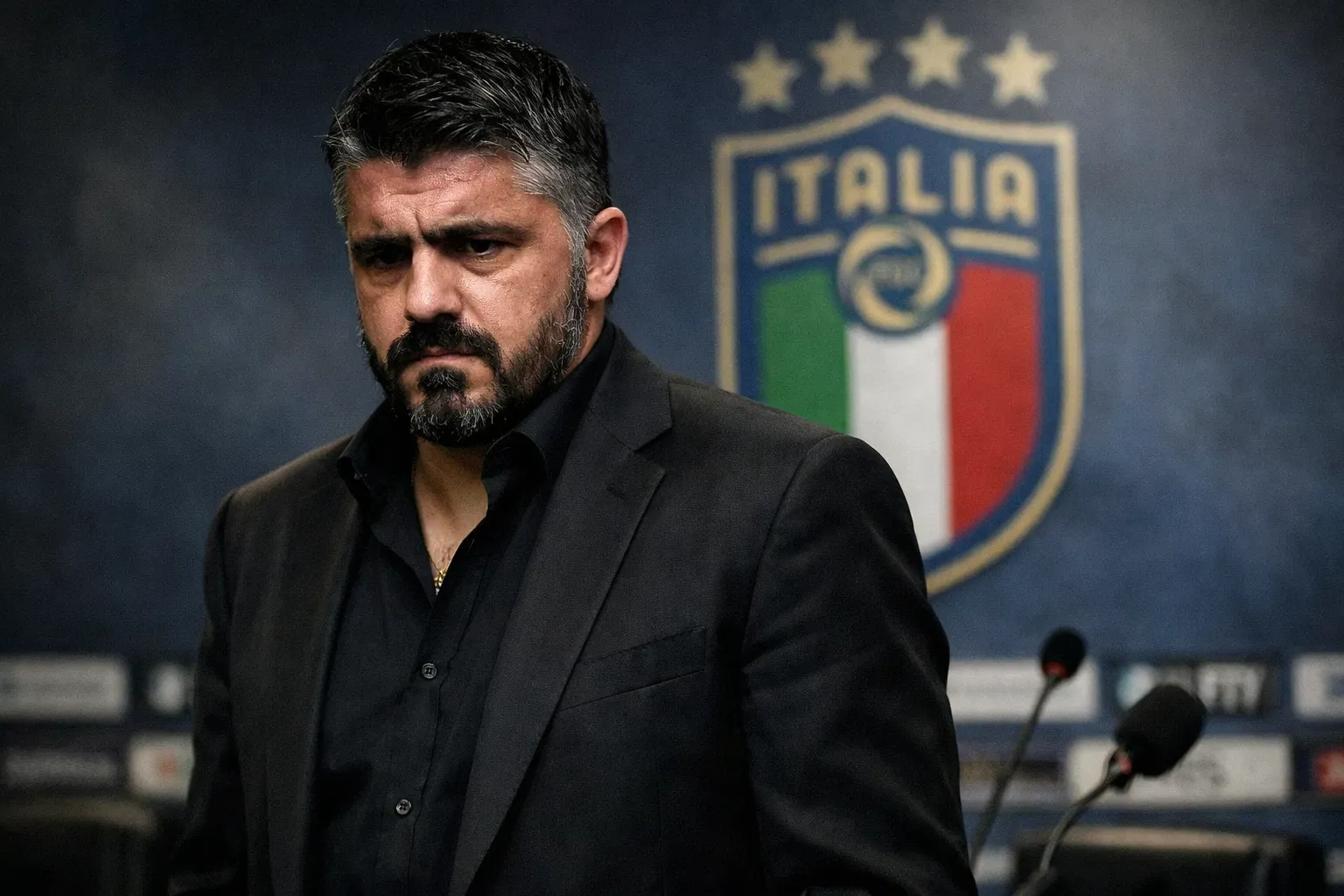
Italy woke up to a familiar, uncomfortable feeling: the sense that a proud football nation is again searching for answers it thought it already had. The Gennaro Gattuso Italy resignation has been confirmed after a mutual agreement with the Italian Football Federation, ending a tenure that began with hope in June 2025 and ended with a penalty shootout defeat to Bosnia and Herzegovina. With Gabriele Gravina and Gianluigi Buffon also resigning, the fallout is bigger than one coach, and the next steps feel unusually uncertain.
The Gennaro Gattuso Italy resignation was framed as a mutual decision, but the timing makes the context unavoidable. Italy’s failure in World Cup qualification left the federation with a choice between doubling down on a short-term project or resetting the entire structure. In the end, both sides chose the clean break, a diplomatic phrasing that still reads like an admission of collective disappointment.
Gattuso arrived with the promise of emotional clarity: simplify the message, restore intensity, and reconnect the shirt to the crowd. Yet the Gennaro Gattuso Italy resignation underlines how hard it is to turn those slogans into results when margins are thin and pressure is constant. The federation thanked him for dedication and professionalism, which sounded sincere, but also highlighted how quickly national-team cycles can swallow even strong personalities.
Mutual consent is football’s soft landing, a way to avoid courtroom language and protect reputations. In this case, the Gennaro Gattuso Italy resignation being mutually agreed allowed the Italian Football Federation to signal a reset without publicly blaming the coach for every tactical and psychological shortfall. For Gattuso, it preserved the idea that he didn’t cling on, but stepped aside for the good of the Italy national team.
Appointed in June 2025, Gattuso never had the luxury of a slow build, and that reality shaped the entire story. The Gennaro Gattuso Italy resignation arrives with the sense that Italy were always racing the calendar, trying to compress identity-building into a handful of camps. When the decisive moments came, the team looked caught between instincts: press or protect, play or manage, gamble or wait.
The decisive wound was opened in the playoff final, where Bosnia and Herzegovina held their nerve through 120 minutes and then won on penalties. Italy’s World Cup qualification dream, already fragile, broke in the most brutal way: a shootout that turns preparation into theatre and confidence into a coin flip. The Gennaro Gattuso Italy resignation, in that sense, became almost inevitable once that final kick went the wrong way.
Italy did not lose because they lacked effort, and that’s what makes the defeat sting. They lost because international football punishes indecision, and because knockout matches demand ruthless clarity in both boxes. In the hours after the match, the Gennaro Gattuso Italy resignation began to feel less like a surprise and more like the closing line of a script written by tension, missed chances, and a creeping fear of history repeating itself.
Penalty shootouts are often reduced to psychology, but they also reveal the hidden architecture of a team: leadership, hierarchy, and calm under stress. Italy’s miss in the shootout was not just a technical error; it looked like a moment where the weight of World Cup qualification pressed down on every run-up. The Gennaro Gattuso Italy resignation followed because, fairly or not, coaches are judged on whether their teams look certain in uncertain moments.
Bosnia and Herzegovina approached the match with a clear plan: deny central rhythm, force wide circulation, and wait for transitions and set-piece moments. Italy’s build-up often became predictable, and their final-third actions lacked the sharp second movement that opens elite defences. That tactical frustration fed the narrative that the Gennaro Gattuso Italy resignation was the consequence of a team that worked hard but didn’t consistently create the kind of chances that make pressure disappear.
The shockwaves did not stop with the bench, because the Italian Football Federation also lost its top figures in the immediate aftermath. Gabriele Gravina resigned as president, and team director Gianluigi Buffon followed him out of the door, turning a coaching change into an institutional reckoning. The Gennaro Gattuso Italy resignation therefore sits inside a wider story: Italy are not only changing a manager, they are questioning the leadership model behind the scenes.
Buffon’s resignation, in particular, carried emotional weight because he represents continuity between generations. His role was partly symbolic—an icon guiding the dressing room culture—and partly practical, acting as a bridge between federation politics and player reality. When the Gennaro Gattuso Italy resignation was paired with Buffon’s exit, it suggested the Italy national team is entering a vacuum, where even the usual stabilising voices have stepped away.
Gravina’s departure reads like an acceptance that World Cup qualification failure is never just about one match. The federation’s long-term planning, coaching appointments, and the pathway from youth to senior levels all come under scrutiny when results collapse. By resigning after the Gennaro Gattuso Italy resignation, Gravina signalled that the crisis was structural, and that the Italian Football Federation needed more than a tactical tweak.
Gianluigi Buffon’s influence has always been about standards: what training looks like, how players speak to each other, and how they handle a bad half. Remove that presence, and you remove a layer of cultural insulation that can protect a squad during turbulence. The Gennaro Gattuso Italy resignation already threatened to unsettle the group, but Buffon’s resignation amplifies the uncertainty because the team loses a trusted interpreter of what “Italy” is supposed to feel like.
Gattuso’s appointment was meant to restore bite, and there were moments when the Italy national team looked more aggressive without the ball. Training-ground stories spoke of a sharper edge, and players often described the message as simple and direct. Yet the Gennaro Gattuso Italy resignation reflects the reality that intensity is not an identity on its own, and that modern international football demands automated patterns that take time to install.
On the pitch, Italy sometimes pressed with conviction but struggled to turn recoveries into clean, high-quality attacks. The best national sides marry emotion with structure, and Italy at times leaned too heavily on the former. When World Cup qualification became a tightrope, the margins exposed how incomplete the project still was, and the Gennaro Gattuso Italy resignation became the federation’s admission that the rebuild had not matured fast enough.
Every Italy coach fights the same battle: the public wants both renewal and instant excellence, often from the same starting XI. Gattuso’s selections were scrutinised for balance, with debates about whether Italy needed more risk-takers, more technicians, or simply more leaders. The Gennaro Gattuso Italy resignation will inevitably reframe those choices as mistakes, even though the deeper problem was a squad still searching for a stable attacking hierarchy.
In decisive matches, Italy’s possession sometimes felt like protection rather than provocation, and that distinction matters. When a team circulates the ball to avoid mistakes, it invites the opponent to settle, breathe, and counter with belief. That dynamic was visible in the playoff, where long spells didn’t translate into the kind of chances that kill a game. The Gennaro Gattuso Italy resignation follows because, at this level, control without incision is a fragile form of safety.
Gattuso’s goodbye message leaned into what he has always represented: loyalty, pain, and pride in serving the crest. He spoke of sorrow at leaving, called it an honour to lead the national team, and thanked supporters for unwavering backing. The Gennaro Gattuso Italy resignation is therefore not only a technical story about World Cup qualification, but also a human one about a coach who understands the emotional economy of Italian football.
The fans’ reaction has been complicated, mixing frustration with empathy. Many supporters saw the effort and appreciated the honesty, while others felt that Italy cannot afford another cycle defined by “almost” and “next time.” In that tension sits the Gennaro Gattuso Italy resignation: a moment where fans must decide whether to blame the man on the touchline or the broader system that keeps producing fragile campaigns when the stakes rise.
When a coach says it was an honour, it can sound like a cliché, but in Italy it carries a particular meaning because the national team is treated like a shared inheritance. Gattuso’s words landed because he looked genuinely wounded, not defensive. Still, the Gennaro Gattuso Italy resignation forces supporters to ask whether passion is enough, or whether the Italy national team now requires a colder, more clinical approach to tournament football.
The Italian Football Federation’s statement of gratitude was respectful, but it also read like a final seal on a chapter they want to close quickly. Publicly, it protects the image of unity; privately, it suggests a belief that the project reached its ceiling. The Gennaro Gattuso Italy resignation, accompanied by thanks for “dedication,” implies that effort was never in doubt, but the results demanded a different direction and perhaps a different profile.
Italy now face upcoming friendlies without a confirmed new coach, and that uncertainty is more damaging than it sounds. Friendly matches are where ideas are tested, partnerships are built, and leadership groups form, especially after a traumatic exit. The Gennaro Gattuso Italy resignation means those fixtures risk becoming mere obligations rather than stepping stones, unless the Italian Football Federation installs an interim staff with clear authority and a coherent plan.
The coaching search will be complicated by the federation’s own leadership upheaval, because Gravina’s resignation leaves decision-making structures in flux. Any new coach will want clarity on sporting direction, staffing, and the relationship between youth development and senior selection. The Gennaro Gattuso Italy resignation therefore opens a double recruitment: not just a manager, but a governance model that can support World Cup qualification campaigns with stability rather than emergency measures.
When a national team drifts, the drift shows up months later as a lack of automatisms, not immediately as a bad result. An interim appointment can work if it is empowered to make choices and set non-negotiables, even in short camps. Without that, friendlies become auditions, and auditions rarely build teams. The Gennaro Gattuso Italy resignation makes this moment critical, because Italy cannot afford to waste international windows while rivals sharpen their identities.
The next Italy coach will inherit a squad that needs not only tactical clarity, but also a calmer relationship with pressure. The immediate goals will be to improve chance creation, define roles in the attacking third, and build a reliable spine that survives adversity. Just as importantly, the Italian Football Federation must align behind that plan so the coach isn’t isolated at the first wobble. The Gennaro Gattuso Italy resignation should be the last time Italy treat World Cup qualification like a late rescue mission.
For now, the Gennaro Gattuso Italy resignation stands as a bleak checkpoint in a story Italy desperately want to rewrite. A playoff loss to Bosnia and Herzegovina on penalties ended one project, while the resignations of Gabriele Gravina and Gianluigi Buffon suggest the reckoning goes far deeper than the dugout. Italy’s friendlies will arrive before certainty does, and the danger is that confusion becomes normal. If the next era is to mean anything, it must restore belief with a plan, not just a promise.

Julian Mercer is a lifelong student of the game whose passion for football was sparked at an early age, after stepping onto the grass of Camp Nou as a six-year-old — a moment that left a lasting impression and set him on a permanent path into the sport. Since then, football has been both his lens on the world and his favourite language. Blending traditional fandom with a deep interest in tactics, squad building, and long-term team development, Julian has spent decades analysing the game from every angle. His fascination with football strategy was further shaped through years of immersive play in Football Manager, a series he has followed since the mid-1990s, developing a sharp eye for patterns, player profiles, and the fine margins that define success. At My World Of Football, Julian focuses on the stories beneath the surface — from tactical evolutions and managerial philosophies to the narratives that connect clubs, players, and supporters across generations. His writing aims to balance insight with accessibility, always grounded in a genuine love for the game.
Continue reading more football news