Myworldoffootball
Premier League Player Replacements: Icons and Heirs
Premier League player replacements are never simple. From Salah’s fading impact to Kane and Hazard voids, we rank misses, hits, and next bets.
Premier League player replacements are never simple. From Salah’s fading impact to Kane and Hazard voids, we rank misses, hits, and next bets.
Premier League player replacements are the sport’s hardest trick, because you’re not just swapping goals and assists—you’re replacing identity. Fans remember the feeling of Eden Hazard gliding past defenders, Mohamed Salah turning Anfield into a finishing school, and Harry Kane making Tottenham feel inevitable in tight games. When those icons fade or leave, clubs chase the same output with different bodies, and it rarely fits cleanly. This season’s conversations—Salah’s waning influence, Chelsea’s endless search, Spurs’ Kane hangover—show how brutal succession planning can be.
Premier League player replacements fail most often because clubs treat legends like interchangeable parts rather than ecosystems. A talisman changes how opponents defend, how teammates move, and how a stadium breathes in unison. When that player goes, the space they created disappears too, so the successor inherits tighter marking, higher expectations, and less margin for error. The new signing is judged against memories, not metrics, and that’s a losing fight.
There’s also a timing trap that makes Premier League player replacements feel doomed from the start. Clubs either move too early and look disloyal, or move too late and end up buying in panic. The sweet spot—phasing in a successor while the icon still plays—is rare, because legends don’t want to be sunsetted. That tension shapes recruitment and dressing-room dynamics long before the first poor performance hits social media.
Premier League player replacements carry emotional weight that spreadsheets can’t price. Supporters attach milestones to an icon: the derby winner, the title push, the European night when everything clicked. A replacement arrives with a fee and a highlight reel, but no shared history, so every missed chance feels like a betrayal of what came before. Clubs talk about “projects,” yet fans experience it as a breakup with no clean closure.
In the current Premier League, player replacements succeed when they match the team’s patterns rather than the predecessor’s aura. A winger doesn’t need to be “the next Salah” if he triggers the same press, pins full-backs, and creates the same passing lanes. That’s why recruitment departments obsess over repeatable actions: sprints, touches in zones, shot locations, and defensive work. The best replacements imitate functions, not personalities.
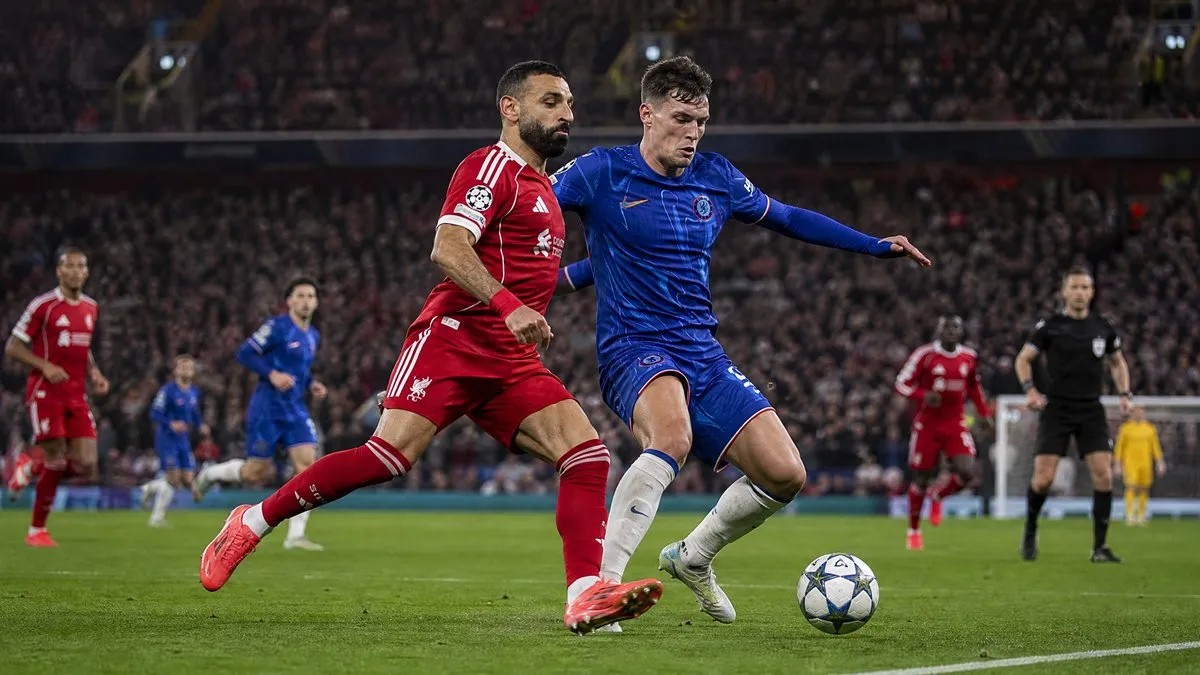
No conversation about Premier League player replacements is louder right now than Liverpool’s looming post-Salah reality. Mohamed Salah impact is still real—his gravity shapes defensive lines—but the sharpness that once turned half-chances into inevitability has softened. Opponents are happier to show him wide, and his bursts look less frequent across 90 minutes. Liverpool can’t wait for the cliff edge, because the title race punishes hesitation.
Liverpool transfers have increasingly signaled a transition from dependence to distribution. When Salah was at peak volume, Liverpool could live with a predictable right-sided funnel because it ended in goals. Now, the team needs more varied threat, with runners arriving from midfield and wide rotations that keep defenses guessing. Premier League player replacements, in this context, aren’t just about buying a winger—they’re about redesigning the attack without losing its edge.
RB Leipzig’s Yan Diomande has been framed as a potential heir, and it’s easy to see why Liverpool would be intrigued. He offers direct running, quick release shooting, and the kind of vertical appetite that suits transition-heavy phases. Still, Premier League player replacements can’t be judged by comps alone, because the league’s physicality and tactical traps punish rawness. Diomande would need time, coaching, and protection from instant “Salah replacement” labels.
The smartest Liverpool transfers would spread responsibility rather than crown a single new king. That means a right-sided attacker who can share creation, plus midfielders who arrive in the box and full-backs who vary angles. It also means accepting that Mohamed Salah impact can’t be replaced one-for-one, only redistributed across a healthier shot map. Premier League player replacements work best when the narrative shifts from “who replaces him?” to “how do we evolve?”
Tottenham’s search for a Harry Kane successor shows how Premier League player replacements can break even good players. Kane didn’t just score; he dictated tempo, dropped into pockets, and made Spurs feel dangerous even on flat days. Remove that, and the entire attack loses its reference point. The successor isn’t only asked to finish chances, but to recreate the assurance that one moment will decide the match.
Richarlison has felt that burden in real time, and the numbers don’t always tell the full story. He presses, he fights, he attacks crosses, yet the “Kane standard” is brutal because it includes playmaking and late-game calm. Premier League player replacements at striker are especially unforgiving, because every missed chance is televised proof of absence. At Tottenham, the crowd doesn’t just want effort; it wants inevitability back.
Richarlison thrives on chaos—second balls, near-post darts, and emotional momentum—while Kane mastered control. That mismatch turns into a stylistic argument every weekend, even when Tottenham’s broader structure is the real issue. Premier League player replacements often fail because clubs sign “a good player” rather than “the right connector” for existing patterns. Spurs needed a striker who could link play under pressure, not only attack space.
The practical solution for a Harry Kane successor might be to stop looking for one. Tottenham can build a front line where goals are shared between wide forwards, midfield runners, and set-piece threats. That approach reduces the psychological load on Richarlison and makes the attack less predictable. Premier League player replacements become easier when the team stops asking one player to carry a decade of memories and responsibility.
Chelsea’s Eden Hazard replacement story is the cautionary tale every big club studies. Hazard left for Real Madrid, and the emotional vacuum at Stamford Bridge was immediate because he was the release valve for everything: tight games, broken patterns, low confidence. Chelsea signings since then have often looked like attempts to buy a feeling rather than a role. Premier League player replacements rarely work when the club keeps changing the context around the new arrival.
The irony is that Chelsea have spent heavily and still look like they’re searching for the same spark. Managers changed, formations changed, and recruitment leaned young, which can be smart but also volatile. Premier League player replacements at Chelsea have been complicated by constant resets, meaning no newcomer gets the stable platform Hazard enjoyed. Without continuity, even talented attackers look like strangers to their own teammates.
Hazard’s move to Real Madrid created a narrative trap for Chelsea: every dribbler became a candidate, every creative winger a “new Hazard.” But Hazard was a rare blend of strength, balance, and decision-making that aged well in Premier League chaos. Premier League player replacements become cruel when the predecessor’s highlight reel is treated as a job description. The club needed to rebuild its attacking ecosystem, not just purchase another soloist.
Chelsea signings have often targeted archetypes—pace, flair, potential—without guaranteeing the final product. That’s not a criticism of youth strategy; it’s a warning about timelines and expectations. Premier League player replacements require a bridge: experienced leaders, stable roles, and patterns that help talent become output. Until Chelsea settle on an identity, the Eden Hazard replacement conversation will keep returning like a bad chorus after every goalless draw.
If you rank Premier League player replacements by how quickly they made fans forget the old hero, the list is short. Most clubs either overpay for a name or underinvest and hope coaching fills the gap. The “misses” aren’t always poor footballers; they’re often victims of context, asked to do two jobs at once. Replacing a legend means matching production while also carrying leadership, marketing, and mood.
Some cases sit in the murky middle, where a player’s quality is obvious but the fit is incomplete. That’s why debates about full-backs and wide players get heated—roles have evolved, and expectations have ballooned. Premier League player replacements in modern systems need to be athletes, creators, and defenders, sometimes all in the same phase. When a successor is slightly weaker in one area, the whole shape can wobble.
It’s tempting to frame Trent Alexander-Arnold as a blueprint and then judge others—like Jeremie Frimpong—through that same lens, but it can be unfair. Alexander-Arnold is a playmaking outlier, closer to a midfielder in distribution, while Frimpong’s game is built on explosive running and final-third chaos. Premier League player replacements become misleading when fans compare different tools for different jobs. A club must decide what it wants the role to be.
Moisés Caicedo and Phil Foden illustrate another angle: sometimes the “replacement” is internal or positional rather than a like-for-like star. Caicedo at Chelsea was signed to stabilize and elevate, but that responsibility can look heavy amid team-wide inconsistency. Foden, meanwhile, shows how a club can phase in a successor by letting him grow within a winning culture. Premier League player replacements thrive when development is protected by structure.
Tijjani Reijnders represents the type of midfielder Premier League clubs increasingly scout when planning Premier League player replacements: technical, durable, and capable of connecting phases. Even when a legend is a forward, the replacement solution might be a midfielder who changes how chances are created. That’s because modern attacks are built from the middle, with runners and rotations rather than one superstar dribbler. Smart clubs replace influence, not just position.
The appeal of players like Reijnders is that they can raise the floor of a team while the search for a headline heir continues. Liverpool, Chelsea, and Tottenham all know that a stable midfield can make attackers look better and reduce the pressure on the supposed successor. Premier League player replacements become less traumatic when the team’s baseline performance improves. In other words, fix the platform and the finishing follows.
Recruitment departments increasingly view Premier League player replacements as chains of actions: win the ball, progress it, create a high-value shot, then finish. If one icon used to cover two links in that chain, the replacement might require two players rather than one. That’s why clubs target ball-winning midfielders, progressive passers, and wide runners in the same window. The goal is to rebuild the chain so no single absence collapses the system.
Communication matters more than clubs admit, because Premier League player replacements are emotional events. Fans can accept evolution if they see a plan, honest messaging, and effort on the pitch that matches the badge. Problems start when the club talks like a giant while the football looks like a rebuild, or when a new signing is marketed as a savior. Sell the process, not the fantasy, and the stadium stays with you longer.
Premier League player replacements will always be part football problem and part human drama, because legends don’t leave clean gaps—they leave shadows. Salah’s gradual decline, Tottenham’s Kane-era hangover, and Chelsea’s endless Eden Hazard replacement hunt all show the same truth: the successor is rarely one person. Liverpool’s interest in Yan Diomande hints at smart planning, but the real win is building an attack that survives change. In the end, clubs that replace roles, share goals, and protect newcomers give fans the best chance to fall in love again.

Julian Mercer is a lifelong student of the game whose passion for football was sparked at an early age, after stepping onto the grass of Camp Nou as a six-year-old — a moment that left a lasting impression and set him on a permanent path into the sport. Since then, football has been both his lens on the world and his favourite language. Blending traditional fandom with a deep interest in tactics, squad building, and long-term team development, Julian has spent decades analysing the game from every angle. His fascination with football strategy was further shaped through years of immersive play in Football Manager, a series he has followed since the mid-1990s, developing a sharp eye for patterns, player profiles, and the fine margins that define success. At My World Of Football, Julian focuses on the stories beneath the surface — from tactical evolutions and managerial philosophies to the narratives that connect clubs, players, and supporters across generations. His writing aims to balance insight with accessibility, always grounded in a genuine love for the game.
Continue reading more football news