Myworldoffootball
Simone Inzaghi Italy national team talks amid crisis
Italian Football Federation chief Gabriel Garvina confirms Simone Inzaghi talks as Italy face World Cup 2026 fallout, Gattuso doubts, and Saudi interest.
Italian Football Federation chief Gabriel Garvina confirms Simone Inzaghi talks as Italy face World Cup 2026 fallout, Gattuso doubts, and Saudi interest.
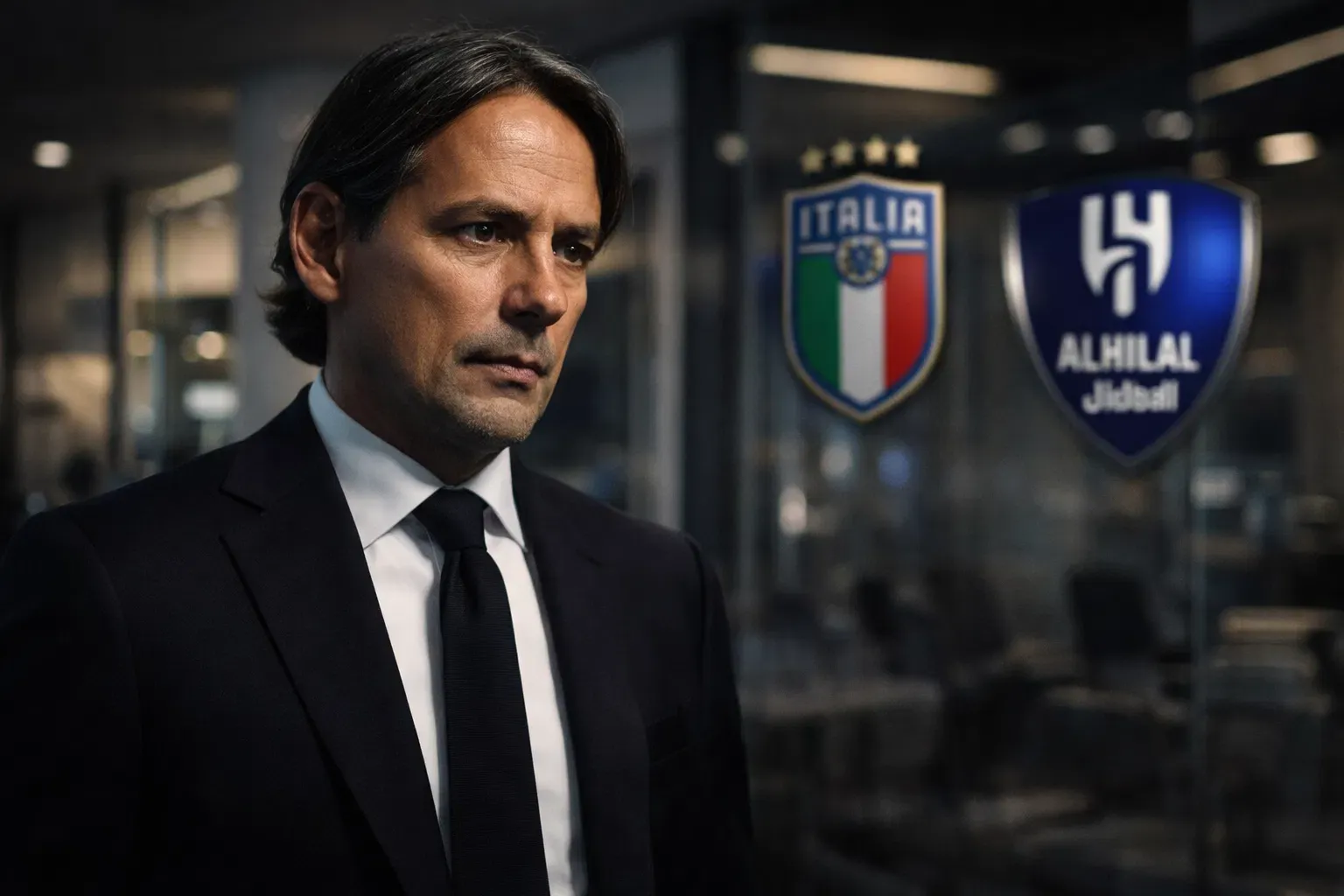
Italy’s latest collapse has opened a familiar wound, and the search for a reset is already reshaping the conversation around the Azzurri. After the European play-off defeat to Bosnia and Herzegovina sealed a third straight World Cup absence, Italian Football Federation president Gabriel Garvina confirmed negotiations that many fans suspected were happening anyway. The headline is simple but loaded: Simone Inzaghi Italy national team talks are real, even if any “done deal” narrative is not. With Gennaro Gattuso under pressure and Al-Hilal still in season, the next steps feel both urgent and complicated.
Garvina’s confirmation landed like a controlled leak, the kind designed to calm a furious public without boxing the federation into a corner. He acknowledged ongoing contacts while pushing back on claims that Simone Inzaghi Italy national team paperwork is already being drafted. That dual message matters, because the Italian Football Federation is trying to look decisive after failure without appearing panicked. In modern international football, perception is strategy, and Garvina is managing both timelines and tempers.
The appeal is obvious: Inzaghi has a club-coach résumé built on structure, attacking automatisms, and big-match nerve, all traits Italy have lacked at key moments. The Italian Football Federation also understands the optics of recruiting a coach currently succeeding abroad, rather than recycling the same domestic shortlist. Still, Simone Inzaghi Italy national team discussions have to account for availability, compensation, and whether he even wants the rhythm of international windows. This is not a romance; it’s a negotiation shaped by leverage.
Italy’s recent campaigns have too often relied on emotional surges rather than repeatable patterns, which is why the Bosnia defeat felt like a rerun. A systems coach can install clear triggers in pressing, rest-defense positioning, and set-piece routines that survive injuries and form dips. That’s why Simone Inzaghi Italy national team chatter resonates: fans want an identity that doesn’t evaporate under stress. The federation, meanwhile, wants a coach whose work shows on the pitch quickly.
By confirming negotiations but denying imminence, Garvina buys time and keeps options open, including a scenario where Inzaghi stays at Al-Hilal longer. The Italian Football Federation has to avoid looking like it’s begging, especially with other candidates inevitably circling. Yet the confirmation also signals to players and sponsors that the federation is aiming high. In short, Simone Inzaghi Italy national team interest becomes a stabilizer, even before any contract is signed.
Third consecutive elimination is no longer a blip; it’s a structural alarm that hits everything from youth development to tactical evolution. The Bosnia and Herzegovina play-off loss wasn’t just a bad night, it was a match that exposed Italy’s thin margins in chance creation and defensive transitions. When you lose the moments between phases, you lose tournaments, and Italy have been losing those moments repeatedly. It’s why Simone Inzaghi Italy national team rumors feel less like gossip and more like triage.
The looming target is World Cup 2026, and the calendar offers no mercy because qualification campaigns punish slow starts. Italy’s squad still has quality, but it needs a framework that maximizes strengths and hides weaknesses, especially against opponents comfortable in low blocks. The federation knows that another stumble could create a generational scar, not just a sporting one. In that context, Simone Inzaghi Italy national team conversations are about credibility as much as coaching.
Italy’s build-up has often been too predictable, with possession circulating safely rather than creating disorganizing runs behind the line. The midfield has lacked a consistent connector who can receive under pressure, turn, and accelerate play through the half-spaces. Defensively, the rest-defense has been fragile, leaving center-backs exposed when full-backs advance. A coach with Inzaghi’s emphasis on spacing and coordinated movements is why Simone Inzaghi Italy national team talk keeps returning.
International football is brutal because a few games can define an era, and Italy’s recent history has made every qualifier feel like a referendum. Players sense that tension, and it can lead to risk-averse decisions, especially in front of goal. The federation must rebuild belief without slipping into nostalgia or empty rhetoric. That’s another reason the Simone Inzaghi Italy national team storyline carries weight: it suggests a future plan rather than a backward glance.
Gattuso’s identity has always been clarity, intensity, and a demand for collective sacrifice, qualities that can lift a team quickly. But international management requires more than emotional fuel, because opponents study patterns and exploit predictable sequences. After the Bosnia loss, the questions around Gennaro Gattuso aren’t personal; they’re about whether his approach can produce consistent chance creation against disciplined defenses. As Simone Inzaghi Italy national team links grow, Gattuso’s margin for recovery shrinks.
The Italian Football Federation also has to consider dressing-room dynamics, because a coach can lose a group quietly long before results make it obvious. Gattuso remains respected, yet respect doesn’t automatically translate into tactical buy-in when the football looks strained. If the federation believes the squad needs a more automated attacking system, the pivot becomes logical. That is where Simone Inzaghi Italy national team speculation becomes a practical comparison, not a tabloid distraction.
Italy have often generated shots without generating fear, settling for efforts from poor angles or crowded central zones. The absence of synchronized runs has meant crosses arrive to static targets, and second balls are not attacked with coordinated spacing. Against Bosnia, the lack of clear final-third patterns was glaring, especially when chasing the game. This is the type of problem that pushes federations toward coaches like Inzaghi, making Simone Inzaghi Italy national team talk feel inevitable.
Sacking a national-team coach is never just a football decision, because it affects sponsors, public trust, and the federation’s internal politics. Keeping Gattuso could be framed as patience, but it also risks looking like complacency after repeated failure. Hiring a club tactician would be a statement, yet it carries adaptation risk to the international format. That’s why Simone Inzaghi Italy national team negotiations matter: they represent a calculated attempt to change the narrative without gambling blindly.
Inzaghi’s current job is not a waiting room; Al-Hilal are a heavyweight with expectations, titles to chase, and a squad built for dominance. The immediate focus is the Roshen Professional League match against Al-Taawoun, a fixture that demands preparation and attention to detail. Any hint of distraction becomes a storyline, especially when the coach’s name is tied to a national-team rescue mission. That’s why Simone Inzaghi Italy national team talk must coexist with the weekly grind in Riyadh.
From Al-Hilal’s perspective, clarity is paramount because recruitment plans, staff continuity, and player management depend on it. If Inzaghi is considering a move, the club will want timelines and assurances, not vague “after the season” promises. Yet Inzaghi also has professional pride; he will not want his Al-Hilal tenure defined by an exit rumor. The tension is that Simone Inzaghi Italy national team interest can raise his market power while complicating his day-to-day authority.
Matches like Al-Taawoun are where titles are protected, because complacency turns dominant seasons into anxious ones. Tactical sharpness, rotation decisions, and the emotional tone on the touchline will all be scrutinized for clues about Inzaghi’s future. If Al-Hilal look flat, critics will blame the noise; if they look ruthless, it strengthens his bargaining position. Either way, Simone Inzaghi Italy national team chatter becomes part of the match’s subtext.
Moving from Al-Hilal to a national team is not simply changing employers; it’s changing the entire rhythm of coaching. Training time becomes scarce, so the coach must prioritize principles that can be taught quickly and remembered easily. Inzaghi’s staff structure, video processes, and tactical language would need adaptation to the Italian setup. That’s why Simone Inzaghi Italy national team negotiations likely include details about assistants, scouting integration, and how much autonomy he receives.
The intrigue deepens because Inzaghi is also being mentioned as a candidate for the Saudi national team, where uncertainty surrounds Hervé Renard’s position. Saudi football has shown it will act decisively when it wants a headline appointment, and it can offer financial packages that federations find difficult to match. If Saudi Arabia enters the race seriously, the Italian Football Federation faces a different kind of competition. Suddenly, Simone Inzaghi Italy national team talks become a two-front negotiation.
Renard’s situation matters because it shapes urgency; a federation unsure about its coach may move quickly to secure a replacement before qualification pressure builds. For Inzaghi, the choice would be philosophical as well as practical: a return to Italy with intense scrutiny, or a project in Saudi Arabia with different expectations and resources. The Italian Football Federation must sell more than history; it must sell a plan. That’s why Simone Inzaghi Italy national team discussions will hinge on authority, support, and long-term vision.
When another federation is involved, the coach’s camp can push for better terms, clearer control over selections, and stronger guarantees about staffing. It also compresses timelines, because waiting too long risks losing the candidate to a faster-moving rival. Publicly, both sides must appear calm, yet privately the pressure rises with every report. In that environment, Simone Inzaghi Italy national team negotiations can’t drift; they need milestones and mutual commitments.
Renard is respected for tournament management and defensive organization, but federations often judge harshly when results plateau. When a coach’s seat warms, agents and intermediaries start circulating names, and top candidates become linked by default. Inzaghi’s profile fits because he offers tactical sophistication and brand value. So even as Italy pursue him, the Saudi national team angle keeps the Simone Inzaghi Italy national team story from becoming a straight line.
If Inzaghi takes the job, the immediate fascination will be tactical: does he bring his familiar back-three variations, or does he adapt to Italy’s player pool with a flexible hybrid? His teams typically create overloads wide, attack with coordinated runs, and protect central spaces with intelligent spacing behind the ball. Italy have the raw tools to execute that, but they need repetition and clarity. The promise of that clarity is why Simone Inzaghi Italy national team hopes are rising.
Selection would also become a statement, because a new coach often reshapes hierarchy quickly, rewarding form and tactical fit over reputation. The Italian Football Federation will want a coach brave enough to refresh the group while still respecting the shirt’s demands. With World Cup 2026 qualification looming, there’s little time for sentimental choices or slow experimentation. That urgency is precisely why Simone Inzaghi Italy national team negotiations feel like they’re happening at full volume behind closed doors.
Italy historically value control, but control without incision becomes sterile, and recent failures have shown that possession alone is not protection. Inzaghi’s best sides are proactive, using structured movements to create high-value chances rather than hoping for individual inspiration. That could help Italy break down stubborn opponents who sit deep and counter. If the Azzurri can marry Italian defensive intelligence with Inzaghi’s attacking choreography, Simone Inzaghi Italy national team could be a genuine reboot.
The early period would be about simplifying principles: pressing triggers, build-up outlets, and set-piece efficiency, because international windows are short and unforgiving. Results matter, but so does the “feel” of the team—clear roles, visible cohesion, and a sense of inevitability in chance creation. The federation and fans will accept growing pains only if the direction is obvious. That’s why Simone Inzaghi Italy national team will be judged from the first squad list onward.
For now, the only certainty is that Italy can’t afford more drift, and the Italian Football Federation knows the public has run out of patience. Garvina’s confirmation of talks is a signal that the federation is exploring a high-ceiling solution, even while insisting nothing is finalized. With Gennaro Gattuso’s future unclear, Hervé Renard’s situation adding pressure from abroad, and Al-Hilal still chasing results, the next decision will define an era. If Simone Inzaghi Italy national team becomes reality, it won’t just be a hire; it will be an attempt to rescue belief before World Cup 2026 slips away again.
Julian Mercer is a lifelong student of the game whose passion for football was sparked at an early age, after stepping onto the grass of Camp Nou as a six-year-old — a moment that left a lasting impression and set him on a permanent path into the sport. Since then, football has been both his lens on the world and his favourite language. Blending traditional fandom with a deep interest in tactics, squad building, and long-term team development, Julian has spent decades analysing the game from every angle. His fascination with football strategy was further shaped through years of immersive play in Football Manager, a series he has followed since the mid-1990s, developing a sharp eye for patterns, player profiles, and the fine margins that define success. At My World Of Football, Julian focuses on the stories beneath the surface — from tactical evolutions and managerial philosophies to the narratives that connect clubs, players, and supporters across generations. His writing aims to balance insight with accessibility, always grounded in a genuine love for the game.
Continue reading more football news