Myworldoffootball
Alejandro Garnacho tattoo: Joker back art stuns Chelsea
Alejandro Garnacho tattoo goes viral as Chelsea winger unveils a full-back Joker piece by Joaquin Ganga, amid form debate and Serie A interest.
Alejandro Garnacho tattoo goes viral as Chelsea winger unveils a full-back Joker piece by Joaquin Ganga, amid form debate and Serie A interest.
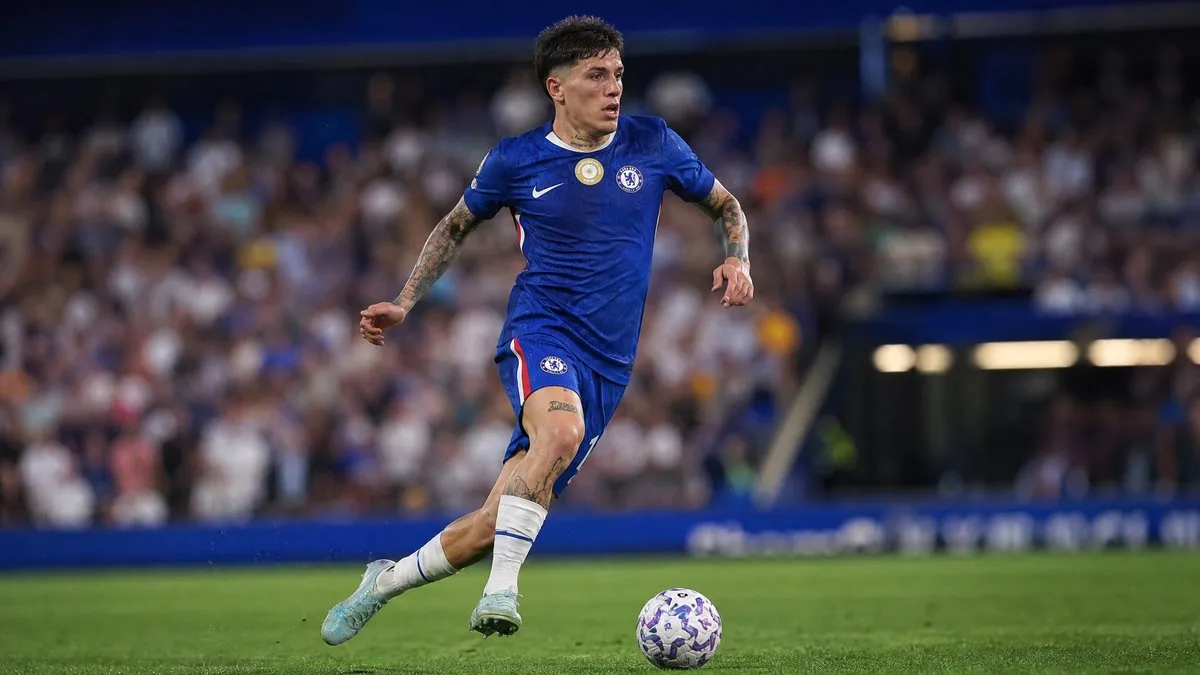
Alejandro Garnacho has never been shy about expressing himself, but his latest statement has landed with the force of a last-minute winner. The Chelsea winger is trending for an Alejandro Garnacho tattoo that covers his entire back, inspired by Heath Ledger’s Joker in The Dark Knight and inked in Los Angeles by celebrity artist Joaquin Ganga. It is bold, cinematic, and instantly recognisable, the kind of body art that turns a player into a pop-culture headline. Yet it also arrives while his football is being judged more harshly, with questions swirling around his next move.
The new Alejandro Garnacho tattoo is designed to stop you mid-scroll, the way a clever winger stops a full-back with a feint. Sprawled across his back is Heath Ledger’s Joker, rendered with a dramatic realism that makes the ink feel like a still frame from the film. The character holds a playing card and the piece includes the infamous “Why so serious?” line, a phrase loaded with menace and theatre. For a Chelsea winger, it reads like a declaration of fearlessness.
Footballers have long used body art as autobiography, but the Alejandro Garnacho tattoo is more like a billboard for personality. It is not a small symbol tucked under a sleeve; it is a full canvas, demanding attention and inviting interpretation. Some fans see it as an emblem of boldness, others as a nod to chaos and creativity, and plenty simply admire the craft. Either way, it has pushed Garnacho into a different conversation, where celebrity and sport collide.
In the age of viral clips and instant narratives, a Joker tattoo fits the modern football ecosystem perfectly. The character is a shorthand for unpredictability, edge, and a refusal to play by polite rules, which is exactly the vibe many want from a one-v-one attacker. The Alejandro Garnacho tattoo suggests he enjoys the theatre of being watched, judged, and occasionally misunderstood. For a Chelsea winger trying to impose himself, that self-image can be both armour and fuel.
That quote is not just fan service; it is a provocation, and it lands differently when you’re a player under scrutiny. Garnacho’s first season at Chelsea has been measured in goals and end product, and the numbers have not silenced doubters. The Alejandro Garnacho tattoo, with its taunting phrase, can be read as a wink at the noise around him. It implies he is comfortable being polarising, and perhaps even thrives on it.
The man behind the needle matters, and Garnacho didn’t pick just anyone for this kind of project. Joaquin Ganga is one of the most sought-after names in high-end realism, known for portrait work that looks almost photographic under studio lights. Flying to Los Angeles to collaborate signals serious intent, because a back piece of this scale is a commitment in both time and trust. The Alejandro Garnacho tattoo is therefore as much about craftsmanship as it is about character.
There is also something telling about where it happened: LA, a city built on image-making. Footballers increasingly operate like global entertainers, and the choice of location feels aligned with that reality. The Alejandro Garnacho tattoo was not an impulsive scribble; it was a planned production, with an artist whose reputation reduces the risk of a high-profile misfire. For supporters, it adds a layer of fascination, because the process becomes part of the story.
A big tattoo is physically demanding, and anyone who has sat through hours of shading knows it takes stamina. In that sense, the Alejandro Garnacho tattoo is oddly comparable to pre-season work: long sessions, discomfort, incremental progress, and the need to trust the professional guiding you. Players are used to routines, recovery, and discipline, which can translate well to ambitious body art. It also highlights how footballers control their bodies in more ways than one.
Football tattoos used to be intimate, hidden, and symbolic, but the trend has shifted toward statement pieces meant to be seen. Social media has turned ink into content, and content into brand-building, especially for young stars. The Alejandro Garnacho tattoo sits right at that intersection, where a player’s identity is curated as carefully as his highlight reel. Whether fans love or hate it, it proves he understands attention, and he is willing to harness it.
Garnacho’s ink didn’t start with the Joker, and that matters because it shows a consistent pattern of interests. He has collected tattoos that nod to pop culture, including tributes associated with Prison Break and Stranger Things, which tells you he gravitates toward stories of escape, tension, and outsiders. The Alejandro Garnacho tattoo is simply the biggest chapter so far, a centrepiece that makes the rest of the collection feel like supporting cast. It’s personal mythology written in black and grey.
For fans, the fun is in connecting the dots between the player and the references. A Chelsea winger lives in a world of pressure and performance, but his tattoos hint at what he consumes when the stadium lights go off. The Alejandro Garnacho tattoo adds a darker, more dramatic tone to that portfolio, as if he is leaning into the idea of being unpredictable. It also reinforces how modern athletes curate identity through culture as much as through trophies.
Choosing fictional worlds over traditional football symbols can signal a desire to be seen as more than an athlete. The Alejandro Garnacho tattoo, plus his other pieces, suggests he values narrative, character arcs, and the idea of transformation. That can reflect a mindset where reinvention is normal, and where criticism is just part of the plot. For a young winger navigating expectation, those themes can be comforting, even motivating, when form dips.
Supporters increasingly follow players like they follow artists, tracking style, interests, and aesthetics. Tattoos have become a language in that relationship, a way for fans to feel they “know” the person behind the shirt. The Alejandro Garnacho tattoo is perfect for that era because it is instantly shareable and easy to discuss. It sparks debates about taste, symbolism, and timing, while also keeping his name circulating beyond matchday talk.
All of this ink would be pure fun if the football conversation were calm, but it is not. Garnacho’s debut season at Chelsea has produced only eight goals, and for a forward in a club that demands decisive moments, that return invites scrutiny. The Alejandro Garnacho tattoo has therefore landed in a context where every detail can be framed as distraction or defiance. Some fans worry about priorities, while others argue confidence and self-expression can boost performance.
The reality is that footballers are judged by outputs, not aesthetics, especially at a club like Chelsea where patience is thin and competition is fierce. A Chelsea winger can go from cult favourite to transfer speculation in a month, and Garnacho has felt that swing. The Alejandro Garnacho tattoo might be unrelated to his finishing or decision-making, but it becomes part of the narrative machine. In modern football, perception is a rival you face every week.
At top clubs, the margin for error is tiny, and wide players are expected to deliver goals and assists almost on demand. A few missed chances can become a storyline, and soon every dribble is assessed as either genius or waste. The Alejandro Garnacho tattoo adds more spotlight, which can amplify both praise and criticism. For a 21-year-old, the challenge is staying grounded while the noise rises, because development rarely follows a straight line.
Whenever a player unveils a dramatic new look, the same argument returns: is it confidence, or is it distraction? The Alejandro Garnacho tattoo is an easy target for that conversation because it is so large and so loud in cultural terms. Yet many players use tattoos as emotional anchors, reminders of identity and resilience. If Garnacho believes the Joker imagery represents boldness, it could actually reinforce the swagger he needs to beat defenders.
On the market, talent always attracts attention, and Garnacho’s raw ability still excites recruiters across Europe. Reports of Serie A interest from Napoli, Juventus, AC Milan, and Roma underline that clubs see a winger with upside, even if his Chelsea numbers have been uneven. The Alejandro Garnacho tattoo may dominate social feeds, but sporting directors care more about acceleration, bravery in tight spaces, and the capacity to learn. Italy’s tactical environment could either sharpen him or suffocate him, depending on fit.
What makes this intriguing is the variety of potential destinations, each with a different football identity. Napoli might sell him on freedom and transition attacks, Juventus on structure and winning culture, AC Milan on a big-stage revival, and Roma on a passionate project with instant responsibility. The Alejandro Garnacho tattoo would follow him anywhere, of course, but the bigger question is where his game can breathe. A Chelsea winger needs minutes and trust, and those are often more available abroad.
Napoli’s best wide players thrive when the ball moves quickly into space, while Juventus often demand tactical obedience and defensive work. AC Milan can be a platform for expressive attackers, but the pressure of San Siro is its own exam, and Roma’s atmosphere can turn a player into a hero or a lightning rod. The Alejandro Garnacho tattoo suits the drama of Italian football, yet the decision would be about coaching and role. A winger’s output is shaped by the system around him.
Chelsea’s squad-building has been relentless, and that can squeeze players who need time to mature. If the club believes it can recoup its investment and reallocate funds, it will listen, especially when balance and depth are constant concerns. The Alejandro Garnacho tattoo is not the reason for any potential sale, but it symbolises how visible he has become. When a player becomes a headline, the business side often follows, because visibility can inflate both price and pressure.
The simplest way for Garnacho to quiet the debate is to stack decisive performances, because goals and assists reset every conversation. Chelsea supporters can forgive rough patches if they see progress: better choices in the final third, more consistent pressing, and a willingness to track back when games turn ugly. The Alejandro Garnacho tattoo will keep drawing attention, but attention is easier to manage when you are winning duels and deciding matches. In a young career, momentum is everything.
There is also a broader lesson here about modern stardom: you can’t separate the footballer from the persona anymore. Garnacho’s tattoos, fashion, and online presence are part of how he navigates fame, and the Joker back piece is a vivid example. The Alejandro Garnacho tattoo could become a symbol of a player who embraced pressure and turned it into edge, or it could be remembered as a footnote from a turbulent period. The next season will define which story sticks.
Narratives change fastest when the fundamentals improve. If Garnacho increases his shot quality, attacks the far post more often, and times his runs to meet cutbacks, his numbers will rise without needing spectacular reinvention. The Alejandro Garnacho tattoo might scream drama, but the solution on the pitch is often boring: repetition, composure, and clarity. For a Chelsea winger, adding two or three decisive moments in big games can transform public perception overnight.
It is easy to reduce the Joker to chaos, but the character is also about transformation and the power of a persona. Garnacho may see the Alejandro Garnacho tattoo as a reminder that he can reinvent himself within the game, adding layers to his style and learning to hurt teams in different ways. If he channels that idea into tactical maturity, the ink becomes a personal mission statement. In football, the best response to “Why so serious?” is simply to score.
For now, the Alejandro Garnacho tattoo sits at the crossroads of culture and competition, a stunning piece of body art that has made a 21-year-old Chelsea winger impossible to ignore. Joaquin Ganga’s craftsmanship has given Garnacho a cinematic back page, but the front page will always be written in goals, assists, and big moments under pressure. With Serie A interest growing and Chelsea weighing its options, his future feels open-ended. If he can marry that fearless Joker energy with ruthless end product, the next headlines will be about football first.

Julian Mercer is a lifelong student of the game whose passion for football was sparked at an early age, after stepping onto the grass of Camp Nou as a six-year-old — a moment that left a lasting impression and set him on a permanent path into the sport. Since then, football has been both his lens on the world and his favourite language. Blending traditional fandom with a deep interest in tactics, squad building, and long-term team development, Julian has spent decades analysing the game from every angle. His fascination with football strategy was further shaped through years of immersive play in Football Manager, a series he has followed since the mid-1990s, developing a sharp eye for patterns, player profiles, and the fine margins that define success. At My World Of Football, Julian focuses on the stories beneath the surface — from tactical evolutions and managerial philosophies to the narratives that connect clubs, players, and supporters across generations. His writing aims to balance insight with accessibility, always grounded in a genuine love for the game.
Continue reading more football news