AI-generated image
Football News Today: Tuchel's Plans and Messi's Legacy
Today's top stories cover Tuchel's plans for England, Messi's World Cup showdown with Yamal, and transfer news buzzing around Serie A.
Today's top stories cover Tuchel's plans for England, Messi's World Cup showdown with Yamal, and transfer news buzzing around Serie A.
Hey there, football fans! Today’s a big one as we dive into the fallout from the World Cup final. Tuchel is already thinking about England’s future and the upcoming Euros. Meanwhile, Messi and young star Lamine Yamal are set to clash in a final that feels like a changing of the guard. Plus, the transfer market is heating up with some intriguing moves on the horizon. Let’s break it all down.
That semi-final loss to Argentina stings because it felt like the moment England were finally ready to stop talking about 1966. Instead it’s 57 years and counting, and the England World Cup future starts to feel like a rolling project rather than a single shot. The margins were fine, but the pattern is familiar. Good spells, then a wobble, then chasing the game with hope.
The 2028 European Championship being co-hosted at home should be a launchpad, but it also puts the spotlight straight on Thomas Tuchel. His deal only runs to that tournament, which basically invites the succession chat now. Lee Carsley would mean continuity with the pathway. Eddie Howe would bring Premier League intensity and clear roles. Pep Guardiola is the fantasy pick, but England have to decide what they want to be, not just who’s available.
Selection-wise, the England World Cup future is going to look different even if the football stays similar. Jordan Pickford has been a reliable tournament keeper, but 2030 is a long way off, and you can see the handover coming. James Trafford feels like the obvious next bet if he keeps stacking starts and learning the ugly bits of international football. Behind them, younger defenders like Josh Acheampong are being watched because depth always gets tested.
By 2030, you’re probably talking about John Stones in a different role, if he’s there at all, and that changes how England build up. Ezri Konsa feels like the type who could quietly become the organiser, especially if he keeps improving with and without the ball. The bigger question is whether England commit to a settled spine early, or keep rotating and hoping form solves it for them.
None of this means doom. Fans are frustrated, but not broken, because the pipeline is real and the squad floor is high now. The trick is making the next cycle feel intentional. Use 2028 to lock in identity, not just results, then let the England squad 2030 be the payoff. That’s how you turn “nearly” into something that actually lasts.
Argentina’s 2-1 win over England should have been all about the football, because it was a proper semi-final. Messi pulling strings, Emiliano Martinez doing his chaos-merchant thing, and England left with that familiar feeling of being close but not quite. But the Argentina England World Cup controversy kicked off the moment the final whistle went, when players posed with a “Las Malvinas son Argentinas” banner.
This is where FIFA’s rules collide with what players think is just pride and identity. FIFA hates political messaging on the pitch because it turns every game into a referendum. The banner is not some vague slogan either. It is a direct sovereignty claim over the Falkland Islands, and that is why the UK government is leaning hard on FIFA to investigate. The islands’ own government calling it disappointing matters too.
The White House response is fascinating, mainly because it frames this as free speech rather than a sporting regulation issue. Andrew Giuliani talking First Amendment rights might play well domestically, but FIFA is not a US court and the World Cup is not a town hall. The real question is whether FIFA wants to set a precedent: punish Argentina and invite accusations of censorship, or let it slide and watch more teams test the line.
Politically, it is all predictable but still messy. The UK points to the 2013 referendum and self-determination, while Argentina’s Vice-President Victoria Villarruel praising the players turns it into a national cause again. For the Argentina national team, the risk is the story swallows the achievement. For England, it is another night they will want to talk tactics, not territory, and they will not get that luxury.
The Lamine Yamal Messi World Cup angle writes itself, but it is not just about nostalgia. It is about timing. Messi is the reference point for a whole generation, and Yamal is the first Barcelona kid in years who makes that comparison feel football-real, not marketing. A World Cup final meeting turns a personal idol story into a proper measuring stick.
Yamal’s rise has been fast even by Barcelona standards. Debut at 16, then straight into being a game plan for Spain, not a cameo. What’s impressed me in this 2026 World Cup run is how normal he looks doing high-stress things. He doesn’t hide. He asks for it. Rodri calling him mature matters, because Rodri is basically Spain’s on-pitch lie detector.
The funny thing is the numbers crowd will say he has gone quiet lately. No goal, no assist, so where’s the impact? Watch the last two matches again and you see it. Full-backs stop stepping out. Midfielders shade over early. That little panic creates the extra half-yard for Spain’s interior runners and the switch to the far side. Yamal becomes gravity, and Spain’s shape benefits.
Still, a final is where gravity has to turn into something on the scoreboard. Yamal knows it too. He’s talked about pressure, and that honesty is healthy because it means he feels the weight and still shows up. The Euro 2024 semi-final against France is the reminder: he can tilt a big night with one action. That’s why the Lamine Yamal Messi World Cup storyline lands.
For Spain, the key is not asking him to be Messi. It is asking him to be the trigger. Pin their left side, force the second defender, then punish the rotation with Rodri’s passing and quick third-man runs. If Messi gets space, he’ll hurt you. If Yamal gets space, he might define his era. That’s the tension everyone’s tuning in for.
Frank Leboeuf’s point about the Kylian Mbappe Ballon d'Or chat is simple: talent gets you on the shortlist, but habits win you the thing. Mbappe can decide games in two touches, yet voters still clock the stuff that helps a team breathe, not just the highlight reel. Think pressing triggers, tracking runners, and making the ugly run that opens a lane for someone else.
At Real Madrid, that balance gets tested every week. Madrid will always build around stars, but they also demand you fit the machine, especially in big Champions League nights. If Mbappe wants the Kylian Mbappe Ballon d'Or narrative to stick, it cannot be “Mbappe saves them again”. It has to be “Madrid are better because of him”, including when he does not score.
Leboeuf also nodding to Didier Deschamps’ legacy feels fair. France have basically lived in the last four of tournaments for a decade, and that is not luck. Deschamps has never chased pretty for the sake of it. He has protected the group, managed egos, and built a team that can suffer. That matters when you are one bad half away from going home.
The third-place playoff angle is the real human bit. Players hate it. You are drained, you have just had your dream taken, and now you are asked to get up for a medal that feels like a consolation prize. Against England, that mental fight is half the game. It also shapes how we judge leaders. The Kylian Mbappe Ballon d'Or case gets stronger if he drags standards up when nobody feels like playing.
And yeah, the 2030 talk is not mad. France’s conveyor belt is ridiculous, and this squad is still young enough to be around in different roles by then. But youth only becomes a dynasty with a culture. That is where Deschamps leaves his mark, and where Mbappe’s next step is obvious: turn individual brilliance into a team habit.
Maximilian Ibrahimovic AZ Alkmaar feels like the right kind of move, not because it is glamorous, but because it is practical. Last season at Ajax was a stop-start blur, mostly injuries and little rhythm, and you could see how hard it is for a young forward to build anything when he is in and out. A loan is meant to give you minutes, not headlines.
The Ajax spell is a reminder that development is rarely linear. Four appearances in the Keuken Kampioen Divisie is nothing like a proper run, especially for a striker who needs timing and confidence. When you are carrying a minor knock, you play within yourself. At 19, that can turn you passive fast. The Netherlands is a good place to learn, but only if you are actually on the pitch.
From AC Milan’s side, the logic is clear too. He is contracted until 2027, has trained around the first team, and still spent most of his competitive time lower down the ladder. That is not a criticism, it is just the reality of Milan’s depth and pressure. Maximilian Ibrahimovic AZ Alkmaar gives Milan a cleaner read on his level than cameos in Serie D or bench appearances.
AZ are smart with this kind of profile. Jong AZ is competitive, the coaching is solid, and the pathway to the first team is real if you earn it. The key is role clarity. If he is expected to be “Zlatan’s son”, it gets messy. If he is expected to press, run channels, and add end product over time, it can work. Maximilian Ibrahimovic AZ Alkmaar should be about reps, not reinvention.
The injury recovery angle matters, because it shapes the first month. AZ can manage his load, get him sharp, and avoid the cycle of rushed returns that wreck seasons. If he strings together ten to fifteen games for Jong AZ, you can start judging his movement, his intensity, and whether he can handle Dutch physicality. That is when a loan actually does its job.
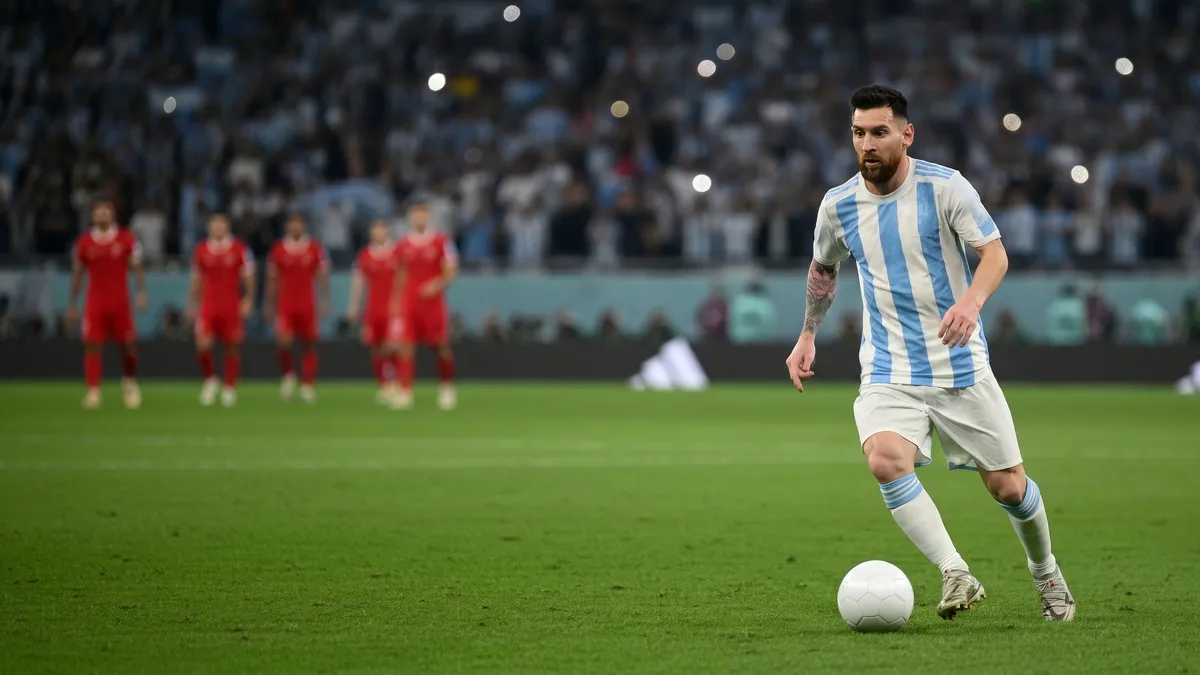
The Messi vs Yamal World Cup final in New Jersey has that rare feel where the storyline writes itself, but the football still matters more. Messi is chasing another peak, and he looks annoyingly sharp doing it, joint-top scorer with eight alongside Mbappe. Spain arrive with a 17-game unbeaten run, Argentina with 14 straight wins. That is not vibes, that is two machines colliding.
What makes this Argentina vs Spain final tasty is how different their danger comes. Argentina are still built around Messi’s gravity. He slows games down, drags a defender two steps out of line, then the pass arrives like it was always there. Spain, with Yamal, threaten in bursts. He receives wide, pins a full-back, then drives inside to force a decision. One mistake and Spain are in.
The Lionel Messi Lamine Yamal angle is not just age, it is schooling. Both are Barcelona academy graduates, but they express it differently. Messi plays like the game is a small room he has memorised. Yamal plays like the room keeps changing and he enjoys that. The old photo doing the rounds is cute, sure, yet it also underlines something real: Yamal grew up watching a standard that now stands in his way.
Tactically, the Messi vs Yamal World Cup final might swing on who gets helped more. Spain will try to box Messi in with midfield pressure, then jump on second balls to keep him running the wrong way. Argentina will likely shade extra cover to Yamal’s side, forcing him to recycle rather than isolate. If either team overcommits, that is when the final opens up and turns into a proper World Cup generational clash.
And then there is the Mbappe factor hanging over it all, even if he is not in this matchup. Messi’s eight goals set the bar, and finals often come down to one moment of ruthlessness. Spain’s control can look sterile if they do not finish, Argentina’s patience can look passive if Messi gets crowded out. But with these two in form, it feels like someone will blink.
The Milei World Cup absence sounds like a meme, but it lands because Argentina actually lives this stuff. Javier Milei saying he will stay away from MetLife for the final against Spain is not politics, it is pure fan logic. He has watched seven straight wins from home and thinks turning up would flip the script. In Argentina, being labelled a “mufa” sticks.
What makes it feel real is the routine. Same jacket, same setup, no messing. The Switzerland moment, when he changed it and Argentina conceded, is the kind of tiny detail fans cling to for months. It is irrational, sure, but football is built on rituals. The Milei World Cup absence is basically the president acting like the most anxious bloke in the WhatsApp group.
There is also history here. Argentine presidents have long treated big matches like a cursed stage. Carlos Menem dodging the 1990 run became part of the folklore, and Milei is leaning into that tradition rather than fighting it. In a weird way it is a show of respect for the dressing room. He is saying the players own this moment, not the VIP box.
On the pitch, the superstition chat sits beside a proper heavyweight final. Argentina bring a 14-match winning streak and Messi top of the scoring charts, which tells you the attack is clicking and the margins are being managed. Spain are unbeaten in 17, which screams control and patience. If it gets tight late, this is about who blinks, not who looks prettier.
Fans are split between pride and dread, which is the most Argentine thing possible. Some love the Milei World Cup absence because it feels like he is taking one for the team. Others hate that it even needs saying, like you are tempting fate by talking about fate. Either way, Messi and Argentina do not need a president in the stands. They need calm heads, clean rest defence, and one more ruthless spell.
Kyriani Sabbe transfer news makes a lot of sense when you look at PSG’s squad balance. Luis Enrique leans hard on full-backs for width, pressing triggers, and quick rest-defence recovery. Achraf Hakimi plays a ton of minutes because there is not a like-for-like option behind him. That is fine until injuries, AFCON, or rotation weeks hit and the right side loses its punch.
Sabbe’s appeal is that he is not just a runner. At Club Brugge he has played in a team that expects its full-backs to be brave on the ball and aggressive without it, which is a decent proxy for the kind of stress PSG put on wide defenders. Forty matches tells you about trust and durability. Three goals and four assists do not scream superstar, but they hint at timing in the final third.
The big question in this Kyriani Sabbe transfer news is role. If PSG want a pure Hakimi understudy, Sabbe needs to accept a slower minutes ramp and prove he can handle elite wingers in space. If Luis Enrique wants genuine Achraf Hakimi competition, then the Belgian has to offer something different too, like cleaner build-up passing or more controlled positioning when PSG dominate the ball and face counters.
Club Brugge news always comes with a price tag, and they can sit tight here. Sabbe is under contract until 2028, so €15m is more a starting point than a ceiling if multiple PSG transfer targets get linked and bidding starts. PSG will also want discretion because the moment Brugge smell urgency, the fee climbs. For Sabbe, the move is a rocket, but only if the pathway is real, not just a bench seat.
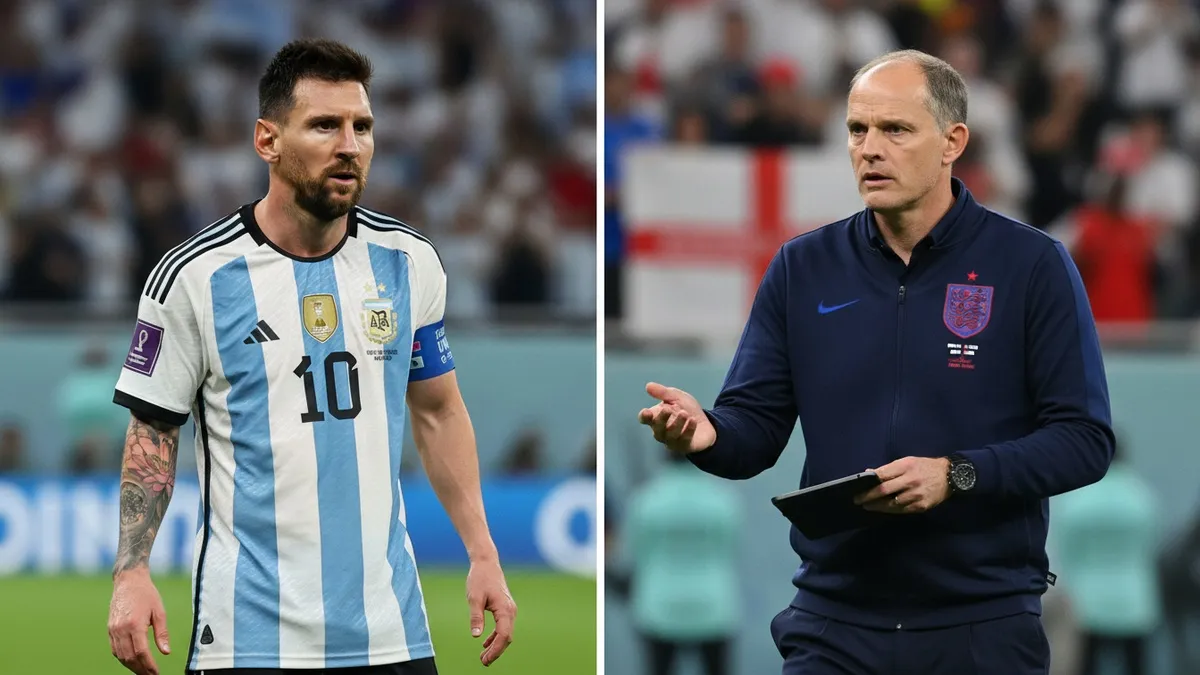
Donald Trump weighing in on Thomas Tuchel tactics after a World Cup semi-final is the sort of crossover you cannot script, but it has landed right on England’s sore spot. England were 1-0 up through Anthony Gordon and looked settled, then the shape changed and the game flipped. The noise is not really about Trump, it’s about whether Tuchel invited pressure when England had control.
The flashpoint is the Harry Kane role. Shifting your captain deeper can work if it’s a clear plan to protect the middle and help you play out. Here, it read more like an emergency move while England still had good momentum. Once Kane drops, you lose a reference point up top, your clearances come back faster, and your wide players have to run 60 yards just to join the next attack.
Argentina did what elite sides do when you show them you want to sit in. They fed Lionel Messi time between the lines, and he punished England’s distances. Two assists sounds simple, but it’s the pattern that hurts: England’s block got deeper, the midfield got pinned, and Messi could pick the moment to slip runners either side of the centre-backs. That is where Thomas Tuchel tactics will get questioned hardest.
Tuchel’s defence strategy talk about team spirit and a deep block is fair in isolation. Tournament football is about suffering well. The issue is the timing and the trigger. If you go low, you need outlets and you need set-piece relief. England had neither once Kane was essentially part of the defensive line. That’s why the comeback felt inevitable, not unlucky.
Now it’s France in the third-place playoff, and the FA backing means Tuchel is not coaching for his job. That security can be useful if he learns the right lesson. Keep the pragmatism, but be braver with the ball when you’re ahead. England’s best moments came before the retreat. Against France, Thomas Tuchel tactics need to protect a lead without surrendering the match.
Nicolas Tagliafico transfer news is starting to feel inevitable now. Lyon look ready to move him on, and at 33 you can see why both sides might fancy a clean break. His season in France has been flat, not disastrous, just short of the level he set at Ajax and with Argentina. If he’s about to play a World Cup final against Spain, it’s a weird contrast.
PSV Eindhoven make the most sense on the football side. They need a proper left-back after Anass Salah-Eddine moved on, and Mauro Júnior has had to cover too often. Tagliafico still gives you that aggressive front-foot defending and the experience to manage big European nights. PSV’s full-backs have to play high and recover fast, and he’s always been sharp at reading danger early.
The Ajax angle is the fun bit. He was a fan favourite in Amsterdam, and every window since he joined Olympique Lyon in 2022 there’s been some kind of link back. Ajax going for Caio Henrique instead tells you the club wanted a different profile, more build-up and less pure edge. PSV can sell the nostalgia without actually being a reunion tour, which matters.
Deportivo La Coruña interest is interesting too because it sounds more like a lifestyle and leadership move than a pure sporting step up. Tagliafico has talked before about planning his career and adapting to new cultures, from Argentina to Europe, and you can believe him. This Nicolas Tagliafico transfer news feels like a choice between a title-chasing system fit at PSV and a fresh chapter elsewhere. Either way, Lyon probably cash out before the legs go.
Joan Capdevila US travel denial is one of those stories that sounds small until you clock what it really means. A 2010 World Cup winner, trying to take his kids to MetLife for the final, and he cannot even get on the plane because his ESTA gets rejected. He ends up doing the most human thing possible, firing off a Donald Trump plea online like it is 2016 again.
The detail that matters is the “why”. Capdevila thinks it links back to a charity match in Tehran about a decade ago. If that is true, it shows how blunt the US travel filter can be when it comes to past visits, even when there is no criminal angle and the trip was public and football-related. ESTA rejection is automated and rigid, and once you trip a flag, you are suddenly in proper visa territory.
That is where the frustration comes from. Big tournaments sell this idea that football is for everyone, but borders do not care about your medal or your story. Joan Capdevila US travel denial also lands right as Spain build up to a massive showdown with Argentina, the kind of game where the old heads usually turn up for TV spots, federation invites, sponsor bits, and just to be around the squad. Instead, he is stuck refreshing email threads.
It also hits regular fans, not just ex-pros. Plenty of supporters have messy passport histories, dual nationalities, old stamps, or innocent travel that suddenly becomes “sensitive” years later. When finals are hosted in places with strict entry rules, the matchday crowd gets shaped by paperwork as much as ticketing. Spain versus Lionel Messi’s Argentina is already spicy enough without bureaucracy deciding who gets to watch it.
For Capdevila, the clean solution is probably not a viral appeal but a formal visa process with time, documents, and a proper interview. That is the brutal part. The World Cup final does not wait. Joan Capdevila US travel denial becomes a reminder that football’s biggest nights are still gated, and sometimes the gate is not the turnstile, it is an algorithm.
The World Cup final 2026 landing at New York New Jersey Stadium feels like the sport leaning into the host country’s habits, not just its venues. Spain vs Argentina is box office on its own, but FIFA clearly wants the whole night to read like a Super Bowl. That matters because finals are about ritual as much as football. Change the ritual and you change the temperature.
On the pitch, it’s a proper contrast in identities. Spain chasing a second title usually means control, patience, and the confidence to keep the ball even when the crowd wants chaos. Argentina going for a fourth is about edge and timing, and that sense they can suffer for long spells then decide it in a moment. Lionel Messi still warps defensive plans, even when he’s not sprinting.
The FIFA championship rings are the biggest talking point because they land right on that line between celebration and gimmick. Football traditions already have medals, shirts, and the trophy lift. Rings scream American sports influence, and some fans will hate that instantly. But players tend to love personal keepsakes, and custom rings can become part of team lore, especially if they’re designed well and not treated like merch.
Still, the detail that 2,026 rings will be produced, with some sold as licensed products, makes it feel less sacred. It risks turning the World Cup final 2026 into a shopping moment. You can already imagine the camera cuts. FIFA has to be careful not to drown out the human stuff, like Sergio Ramos trying to manage a back line under pressure, or the way Spain’s midfield traps you.
Then there’s Donald Trump presenting the trophy. Whatever your politics, it drags attention away from the players and into the culture war, which is the last thing a final needs. It also doubles down on the Americanization theme, for better or worse. If the football is tight, nobody will care. If it’s messy, all this extra theatre will get blamed.
Ruud Nijstad Barcelona ambition is the kind of line that sounds like pure teenage dreaming, but it tracks with how modern careers get built. He saw Pau Cubarsi handle Cristiano Ronaldo in Spain’s 1-0 win over Portugal and thought, that’s the level. Not the glamour. The composure. For an 18-year-old Twente defender, that is a pretty sensible role model.
Cubarsi’s appeal is simple. He defends on the front foot, stays calm when the striker tries to buy contact, and he plays the first pass like it matters. Doing that with Ronaldo sniffing around in a knockout game is a different exam. If Nijstad is watching that and thinking about partnership rather than comparison, it says he understands what Barcelona actually want from centre-backs now.
Back in Enschede, Nijstad’s 24 appearances last season matter more than any quote. Twente do not hand minutes to kids for vibes. Eredivisie forwards will press you, run channels, and punish sloppy build-up. That environment is perfect for a young centre-half who wants to be a Barcelona type, because you cannot hide. The next step is boring but vital: fewer dips, fewer rash moments, same level every week.
Barcelona transfer news will keep circling because their recruitment has leaned hard into elite young talent, especially defenders who can play. Nijstad has been linked before, so the noise will only get louder if he starts the season well. But the smart play is staying focused at Twente, stacking games, and letting a move become inevitable. Ruud Nijstad Barcelona ambition is fine. The timeline is the real test.
Feyenoord goal scorers are the big talking point going into Giovanni van Bronckhorst’s first proper run at it. Last season told the story in one brutal stat: PSV scored 31 more league goals. You can’t spot a title rival that kind of head start and expect to win a tight race. Ayase Ueda’s 25 goals were strong, but the team still looked too dependent on one reliable finisher.
The issue is not just “buy a striker” either. Feyenoord created plenty of good moments, but too many moves ended with the wrong player arriving in the box, or a shot from a safe area. That is where midfield output matters. If your eights and tens chip in, opponents can’t just lock onto Ueda and the wide men. PSV had goals coming from everywhere, and that spreads pressure across a back line.
That’s why the spotlight lands on Charles Vanhoutte and Oussama Targhalline. Both can help control games, win second balls, and keep attacks alive, but their scoring records do not scream “double figures.” Van Bronckhorst can still make it work if he builds patterns that get them arriving late and shooting early, but he’ll need commitment. Otherwise it’s the same old story of tidy midfielders and a lonely striker.
Sem Steijn feels like the most obvious lever to pull. He has a proper nose for goal and, just as important, he looks for shots instead of recycling everything. If Van Bronckhorst uses him as a central runner off Ueda, or as the main 10 in a 4-2-3-1, Feyenoord goal scorers suddenly look less like a one-man list. The trade-off is control. Steijn will gamble, so the structure behind him has to be sharp.
Ueda still matters most. If he stays fit and keeps his numbers, Feyenoord are already competitive. But to close a 31-goal gap, they need five here and seven there from midfield and the second line, not just another striker signing. Van Bronckhorst’s first real test is turning good spells into goals, because in the Eredivisie, the best teams don’t just win, they score you into submission.
The Oguz Aydin transfer news feels like classic summer logic: a talented wide man suddenly squeezed out by a big-name arrival. Fenerbahçe bringing in Mason Greenwood changes the depth chart fast, and Aydin is the kind of player who cannot afford a season of bit-part minutes at 25. That is why Ajax transfer news and Feyenoord transfer news both circling makes total sense.
What makes Aydin interesting for the Eredivisie is the mix of familiarity and unfinished business. Born in The Hague, time in AZ’s youth setup, then off to Turkey before he ever got a proper Dutch senior run. He knows the culture, the language, the tempo. But he also comes back with a different edge, shaped by Süper Lig pressure and bigger weekly expectations than most academy grads face.
On the pitch, the question for both clubs is role clarity. Ajax need wingers who can win duels but also make good decisions when the game gets messy, especially in transition. Feyenoord’s wide players have to work like dogs without the ball, then attack space fast. Aydin’s World Cup 2026 minutes for Turkey, even with that rough group finish, matter here. International football exposes who can handle tactical discipline.
The fee is the awkward bit. An Oguz Aydin market value of around €7 million is not outrageous, but it is not a punt either, and Fenerbahçe will not want to look like they are subsidising a Greenwood-driven reshuffle. For Ajax, it is about resale and upside. For Feyenoord, it is about immediate output. Either way, the Oguz Aydin transfer news only becomes real if he is promised a clear starting pathway.
Keep an eye on the transfer news as clubs scramble for fresh talent. And don’t miss the analysis on the World Cup final. It's going to be a thrilling ride!

Julian Mercer is a lifelong student of the game whose passion for football was sparked at an early age, after stepping onto the grass of Camp Nou as a six-year-old — a moment that left a lasting impression and set him on a permanent path into the sport. Since then, football has been both his lens on the world and his favourite language. Blending traditional fandom with a deep interest in tactics, squad building, and long-term team development, Julian has spent decades analysing the game from every angle. His fascination with football strategy was further shaped through years of immersive play in Football Manager, a series he has followed since the mid-1990s, developing a sharp eye for patterns, player profiles, and the fine margins that define success. At My World Of Football, Julian focuses on the stories beneath the surface — from tactical evolutions and managerial philosophies to the narratives that connect clubs, players, and supporters across generations. His writing aims to balance insight with accessibility, always grounded in a genuine love for the game.
Continue reading more football news