Myworldoffootball
Arsenal injury news: Eze return lifts Arteta run-in
Arsenal injury news as Ibechi Eze returns early to training, boosting Arteta with Ødegaard and Saka out before Bournemouth and Sporting.
Arsenal injury news as Ibechi Eze returns early to training, boosting Arteta with Ødegaard and Saka out before Bournemouth and Sporting.
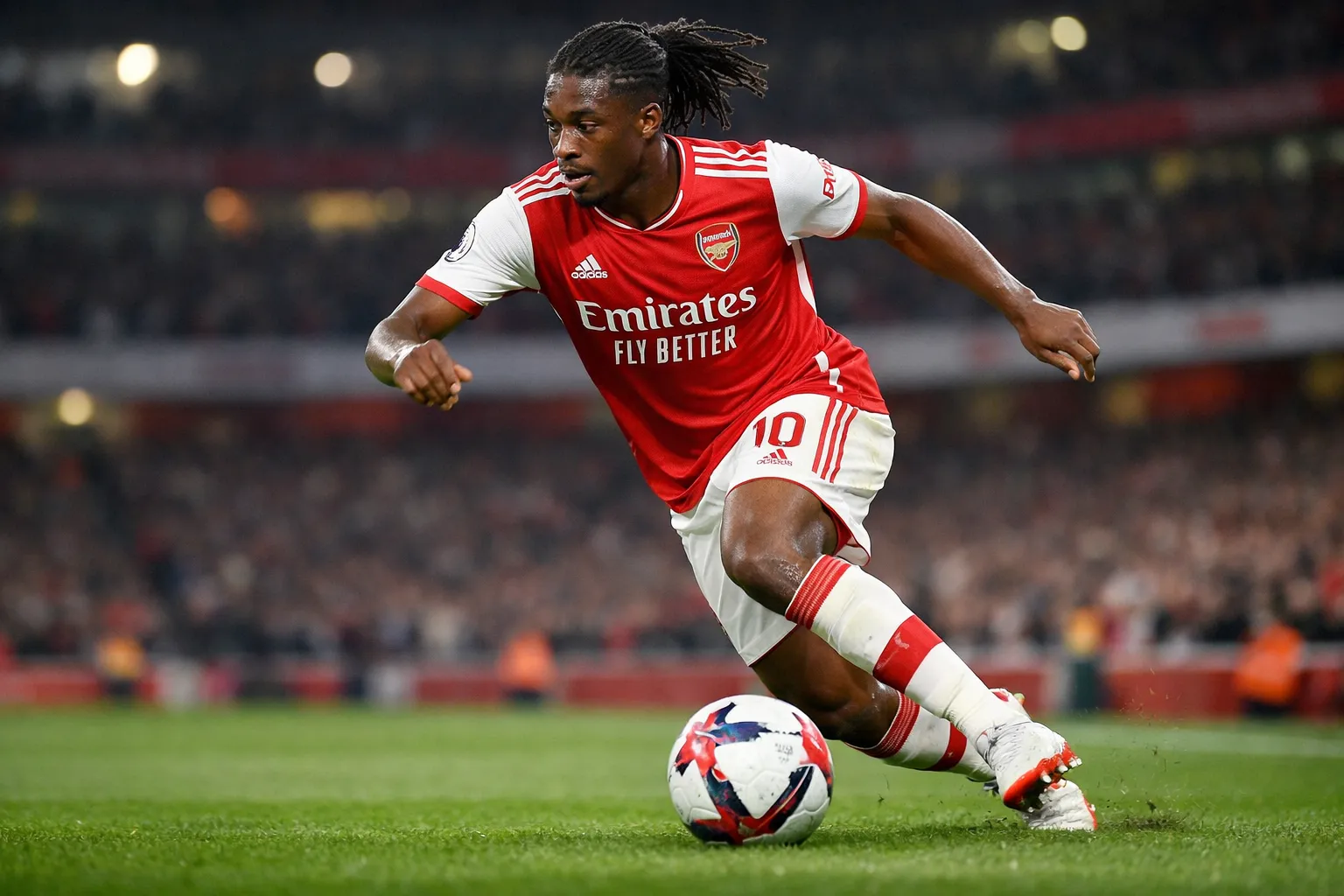
Arsenal injury news rarely lands with the kind of optimism Mikel Arteta has been craving, but Ibechi Eze’s unexpected return to training has done exactly that. With the Gunners leading the Premier League standings on 70 points and carrying a 1-0 first-leg advantage over Sporting Lisbon, the margin for error is tiny. Eze was expected to miss around six weeks with a calf issue, so seeing him back on the grass changes the mood instantly. It also changes the maths, with Martin Ødegaard and Bukayo Saka currently sidelined.
Arsenal injury news has been dominated by caution in recent weeks, so the sight of Eze joining full training felt like a plot twist. The winger’s calf injury had been framed as a medium-term absence, the kind that swallows the decisive part of a title run-in. Instead, Arteta suddenly has a player who can carry the ball, win fouls, and tilt tight matches. That’s not just depth; it’s a different attacking rhythm.
What makes this Arsenal injury news particularly significant is timing rather than sentiment. Arsenal are juggling the sharp end of two competitions, and every rotation decision has consequences for intensity and confidence. Eze’s availability can reduce the load on other wide options and offer a direct replacement profile when legs fade. In April and May, freshness often decides moments, not just matches, and Arsenal have been living on fine margins.
Calf injuries are notorious because they’re rarely linear; players can feel fine, then relapse when asked to sprint repeatedly. That’s why the Ibechi Eze return is being treated carefully even as it boosts morale, and it’s why Arsenal injury news watchers should focus on training volume rather than Instagram clips. If he’s completing high-speed work and contact drills, Arteta can plan minutes. If not, the return is still valuable as a looming option.
There’s a hidden layer to Arsenal injury news: how it changes the training ground. When a key attacker returns early, it raises the tempo in small-sided games and creates selection pressure that can sharpen everyone. Arteta loves competitive sessions, and Eze’s presence adds one more player capable of deciding a drill with a burst or a clever touch. In a squad managing fatigue, that kind of spark can be contagious.
The latest Mikel Arteta update is less about speeches and more about spreadsheets, because Arsenal’s medical room is shaping the title narrative. Arsenal injury news around Ødegaard and Saka has forced the manager into contingency planning, and it’s happening while the Premier League standings invite zero complacency. Seventy points looks strong, but the run-in is where leaders become champions. Arteta’s task is to protect output while protecting bodies.
Arsenal injury news has also created a tactical dilemma: do you preserve structure or chase explosiveness? Ødegaard’s absence removes a conductor between lines, while Saka’s absence removes the most reliable right-sided threat and ball security under pressure. That means Arsenal can look slightly more direct, sometimes by necessity rather than design. Eze’s return offers a bridge between those styles, letting Arsenal keep control without losing the ability to accelerate.
When Ødegaard is missing, Arsenal lose the player who turns possession into purpose with quick angles and disguised passes. When Saka is missing, they lose the winger who pins full-backs, protects the ball, and still produces end product when the game narrows. Arsenal injury news around both players isn’t just about who starts; it’s about how opponents defend. Teams press braver and squeeze wider because the usual escape routes aren’t guaranteed.
Arteta has built depth, but Arsenal injury news exposes how not all depth is like-for-like. Replacing Ødegaard with a runner changes the tempo; replacing Saka with a different type of winger changes the spacing. That’s why Eze matters, because he offers a profile that can connect midfield to attack and still threaten one-versus-one. Chemistry is fragile late in the season, and having a familiar, functional profile reduces tactical disruption.
Being top of the Premier League standings is a privilege, but it also tightens every muscle in the squad. Arsenal injury news becomes amplified because each absence feels like a potential swing in the table, especially with seven matches left. The run-in is rarely about brilliance every week; it’s about collecting points when you’re below your best. That’s where early returns, like Eze’s, can translate into one extra win.
The Arsenal vs Bournemouth preview will be shaped by two competing instincts: control the game, and finish it early. Bournemouth can be awkward when allowed to settle into their press triggers, and Arsenal’s recent injury issues might tempt them to be aggressive. Arsenal injury news will influence who can handle those duels and who can provide calm in the second phase. If Eze is on the bench, even that changes Bournemouth’s risk appetite.
Winning ugly is not abandoning principles; it’s applying them with fewer flourishes. Arsenal injury news has forced simpler patterns at times, like earlier crosses, quicker switches, and more shots from the edge of the box. The key is defensive rest, keeping structure behind the ball so transitions don’t become chaos. If Arsenal can keep their distances tight, they can grind out results while waiting for Ødegaard and Saka to return.
In an Arsenal vs Bournemouth preview, the obvious question is whether Arsenal can create enough without their usual right-sided automation. Eze’s value would be in carrying play through midfield pressure and forcing Bournemouth’s block to shift, opening lanes for runners. Even 20 minutes of that can change a match, particularly if Arsenal are protecting a one-goal lead. Arsenal injury news, in that sense, isn’t just availability; it’s leverage.
Champions League Arsenal nights have returned with a seriousness that matches the club’s domestic form, and the 1-0 first-leg win over Sporting Lisbon is the kind of advantage that demands maturity. Arsenal injury news complicates the second leg because rotation is both necessary and dangerous. Protecting players for the league can’t come at the expense of inviting chaos in Europe. Arteta must choose where to spend energy, and where to conserve it.
The Sporting Lisbon tie also highlights why Eze’s return is more than a feel-good story. In Europe, you often need a player who can break a press with one dribble or draw a foul to reset the game’s pulse. Arsenal injury news has reduced those options recently, particularly without Ødegaard’s press resistance and Saka’s ball retention. Eze can offer relief valves that stop momentum swings before they become storms.
Protecting a 1-0 lead is not about sitting back; it’s about controlling where the game is played. Champions League Arsenal sides that go passive often end up defending their own box for too long, inviting set pieces and second balls. Arsenal injury news impacts this because missing key outlets makes it harder to keep the ball high. With Eze available, Arsenal can carry possession into safer zones and win time intelligently.
Sporting Lisbon will look for signs of uncertainty in Arsenal’s build-up, especially if makeshift combinations appear in midfield or on the right. Arsenal injury news gives opponents a scouting clue: press the replacements, force them into rushed decisions, and attack the space behind aggressive full-backs. That’s why Arteta’s selection will prioritize composure, not just talent. If Eze is fit enough for minutes, he can help Arsenal escape pressure and calm the tempo.
From a tactical perspective, Arsenal injury news is really about how Arteta rebalances chance creation. Eze can play wide, but he also thrives drifting inside to receive on the half-turn, which makes him useful in games where Arsenal need a central overload. Without Ødegaard, Arsenal sometimes lack that interior connector who can slip a runner through. Eze can mimic parts of that role while still threatening on the outside.
The Ibechi Eze return also offers Arteta a way to protect players returning from knocks, because he can share the creative burden rather than forcing one star to play through pain. Arsenal injury news has taught Arsenal the hard way that carrying minor issues can become major ones in April. Eze’s presence allows managed minutes, late-game injections, and tactical tweaks without sacrificing quality. That flexibility is priceless when the schedule tightens.
Eze’s best use might depend on the opponent rather than the team sheet. Against a low block, he can operate as a left half-space dribbler, drawing midfielders and opening passing lanes. Against a high press, he can start wider and carry the ball into space, turning defensive recoveries into attacks. As an impact substitute, he can change the rhythm instantly, which is often what Arsenal injury news shortages have removed.
Late-season titles are often decided by small edges: a free kick in a tight game, a second ball after a corner, or a yellow card drawn at the right moment. Eze is a foul magnet because he invites contact with his close control, and that can translate into set-piece pressure. Arsenal injury news has limited those moments when Saka isn’t there to provoke defenders. Adding Eze increases Arsenal’s ability to manufacture danger even when open play feels sticky.
Every supporter reads Arsenal injury news hoping for certainty, but the truth is the final weeks are about probabilities. Arteta and the medical staff must decide when a player is ready to contribute, how many minutes they can handle, and how to avoid the dreaded recurrence. The Arsenal injury list can change daily, and each update affects training intensity and match planning. Eze returning early is a win, but it doesn’t erase the wider risk landscape.
Arsenal injury news also influences communication, because clarity matters when players are trying to manage expectations. Ødegaard and Saka are not just starters; they are reference points for how Arsenal attack and how opponents defend. If their timelines remain uncertain, Arteta must build a version of Arsenal that can win without them, not simply survive until they return. That’s why integrating Eze quickly, even in small doses, is strategically important.
The April-May period is when cumulative fatigue meets high-stakes intensity, and that’s when muscle injuries spike. Arsenal injury news will keep circling around training loads, because one extra sprint in a session can be the difference between availability and a setback. Arteta’s staff will monitor high-speed running, accelerations, and recovery markers, then tailor plans accordingly. Eze’s reintroduction will likely be staged, with controlled minutes before full starts.
Supporters tracking Arsenal injury news should look for specific cues: is Eze training fully with contact, is he involved in finishing drills, and is he completing the session rather than leaving early? Those details often signal readiness more reliably than generic “back in training” phrases. For Ødegaard and Saka, watch whether they’re doing individual work or joining rondos, because that’s usually the first step back into team rhythm. The closer Arsenal get to full-strength options, the more the title picture sharpens.
Arsenal injury news is rarely a straight line, but this week it finally points in a direction Arteta can use. Eze’s early return gives the manager a new tool for the Premier League sprint and a potential release valve in the Champions League Arsenal campaign, right when injuries to Ødegaard and Saka threaten to squeeze creativity. The next seven league games will be about discipline, rotation, and nerve, not just talent. If Arsenal can keep bodies on the pitch and integrate Eze smoothly, the run-in suddenly feels less like survival and more like opportunity.

Julian Mercer is a lifelong student of the game whose passion for football was sparked at an early age, after stepping onto the grass of Camp Nou as a six-year-old — a moment that left a lasting impression and set him on a permanent path into the sport. Since then, football has been both his lens on the world and his favourite language. Blending traditional fandom with a deep interest in tactics, squad building, and long-term team development, Julian has spent decades analysing the game from every angle. His fascination with football strategy was further shaped through years of immersive play in Football Manager, a series he has followed since the mid-1990s, developing a sharp eye for patterns, player profiles, and the fine margins that define success. At My World Of Football, Julian focuses on the stories beneath the surface — from tactical evolutions and managerial philosophies to the narratives that connect clubs, players, and supporters across generations. His writing aims to balance insight with accessibility, always grounded in a genuine love for the game.
Continue reading more football news