Myworldoffootball
Carney Chukwuemeka Austria switch sparks Rangnick call
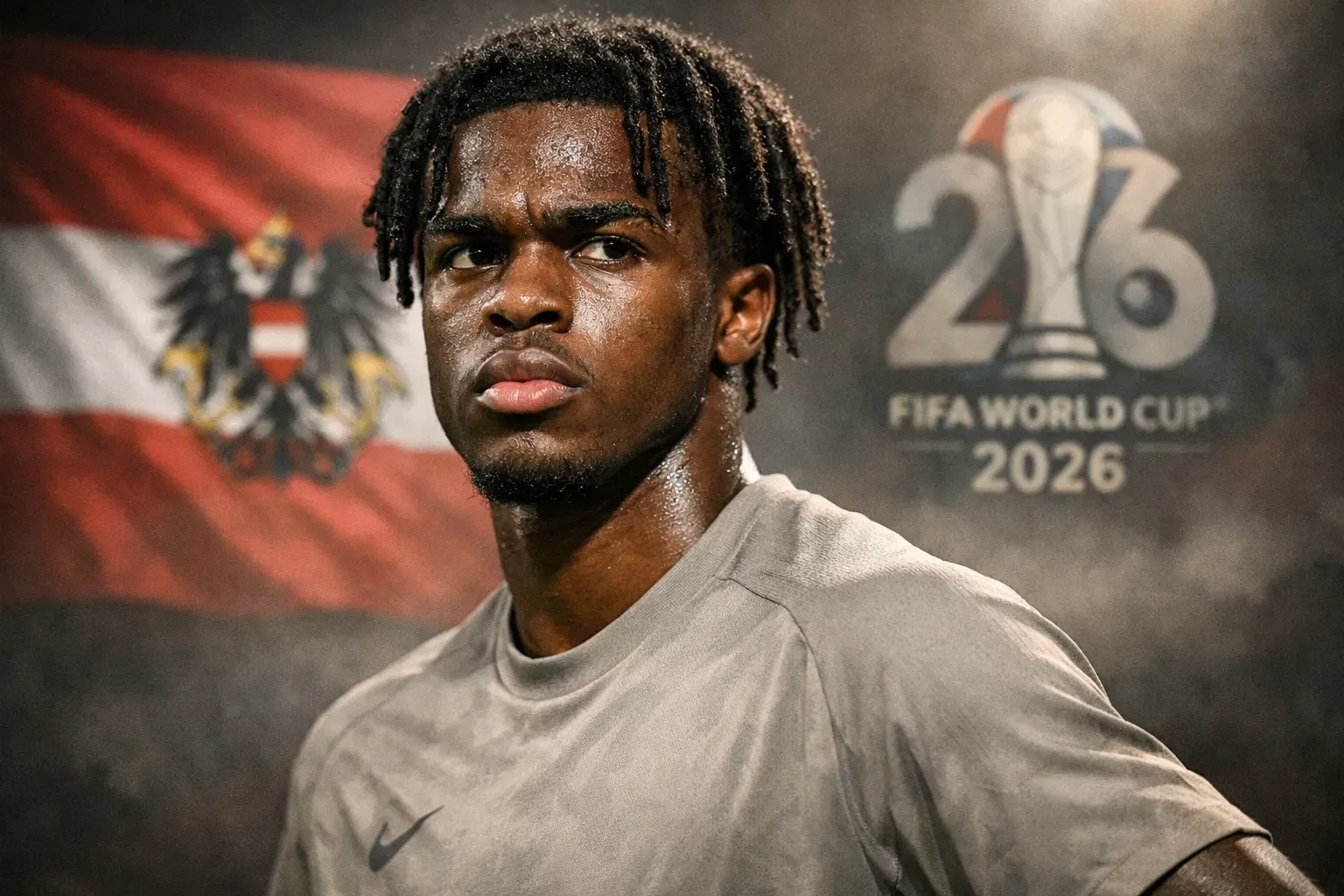
Carney Chukwuemeka Austria switch confirmed as Rangnick calls the Dortmund midfielder for Ghana and South Korea friendlies in the 2026 World Cup build-up.
Carney Chukwuemeka Austria switch confirmed as Rangnick calls the Dortmund midfielder for Ghana and South Korea friendlies in the 2026 World Cup build-up.
Football identity can be as fluid as form, and the Carney Chukwuemeka Austria switch is the kind of modern decision that reshapes careers overnight. Once framed as an England youth gem with Chelsea pedigree and Aston Villa polish, the 22-year-old is now stepping into a different anthem and a clearer international pathway. Borussia Dortmund has given him a stage that suits his talent, and Ralf Rangnick has responded with a first senior call-up. Friendlies against Ghana and South Korea are the beginning, but 2026 is the target.
The Carney Chukwuemeka Austria switch lands as a genuine jolt for anyone who tracked his England youth rise, because he was long treated as a future senior option. He captained age groups, carried games with his driving runs, and looked like the prototype of the modern, press-resistant No.8. Yet international football is about timing and opportunity as much as talent, and England’s midfield queue is brutal. Austria, by contrast, offers immediacy and responsibility.
From the FA’s perspective, the Carney Chukwuemeka Austria switch is a reminder that development pathways don’t guarantee loyalty, even when a player has worn the shirt for years. England youth football can nurture prospects brilliantly, but it cannot always provide a believable bridge to senior minutes when the top end is stacked. Chukwuemeka’s choice is less an indictment than a calculation, one that many dual-eligible players now make earlier. Rangnick has simply moved faster and sold a clearer role.
The Carney Chukwuemeka Austria switch is easiest to understand when you map England’s depth chart against Austria’s needs. England can select from multiple Champions League midfielders who play every week at elite level, and managers tend to default to proven senior performers. Austria, under Rangnick, is building a high-intensity core and actively recruiting profiles that fit his pressing principles. Chukwuemeka isn’t being asked to wait; he’s being asked to lead a new cycle.
For Chukwuemeka, the Carney Chukwuemeka Austria switch is ultimately about playing, not reminiscing about youth tournaments. He is at the age where international football either accelerates your status or becomes a lingering “what if,” and he has chosen acceleration. Austria can hand him caps, responsibility, and a tactical education tailored to his strengths. England could still admire him, but admiration doesn’t always translate into a call-up during crowded windows.
The story of the Carney Chukwuemeka Austria switch starts with geography and family, because he was born in Vienna to Nigerian parents before being raised in Northampton. That blend of identities is increasingly common in European football, and it creates legitimate choices rather than simple “switches.” Chukwuemeka’s formative years were English, his early football education was English, but his birthplace kept an Austrian door open. Rangnick has walked through it decisively.
There’s also a human element to the Carney Chukwuemeka Austria switch that gets lost in federation talking points. Players don’t experience eligibility as a legal technicality; they experience it as belonging to multiple places at once. Austria can offer him a connection to his birthplace and a national team that feels like it’s building something new. England can offer heritage through upbringing and youth caps, but senior international football is a different emotional contract.
Any discussion of the Carney Chukwuemeka Austria switch inevitably nods to Nigeria, because his heritage made the Super Eagles another plausible destination. Yet international choices are not made in a vacuum; they’re made in context of coaching, style, and the likelihood of consistent selection. Austria’s approach under Rangnick is structured and role-specific, which can appeal to a midfielder refining his game. The pull here is clarity: a defined plan, not just a famous badge.
The Carney Chukwuemeka Austria switch also reflects how FIFA eligibility rules and modern scouting turn international football into a strategic chessboard. Federations now track dual-eligible players like clubs track free agents, and the best recruiters present a pathway, not just a pitch. Rangnick has effectively sold Austria as a platform for the 2026 World Cup cycle, where Chukwuemeka can become a centerpiece rather than an understudy. That’s a powerful argument at 22.
Club form is the fuel behind any international breakthrough, and Borussia Dortmund has been the perfect launchpad for the Carney Chukwuemeka Austria switch. In the Bundesliga, he has looked sharper, braver in tight spaces, and more consistent in his off-ball work than during his stop-start spells in England. Dortmund’s tempo forces midfielders to make decisions quickly, and he has begun to play with the authority his youth reputation promised. Rangnick is clearly calling a player on the rise.
What stands out most is how Dortmund have positioned him to impact games with ball-carrying and vertical intent, two traits that translate cleanly to international football. The Carney Chukwuemeka Austria switch is not a romantic gamble; it’s anchored in evidence that he can influence matches against top athletes. When he receives between the lines, he turns pressure into progress, and that’s precisely the kind of midfielder Austria has lacked at times. His Bundesliga rhythm makes the timing feel perfect.
The Carney Chukwuemeka Austria switch carries extra weight because his Chelsea chapter was often framed as a “next big thing” story that never fully settled. At Stamford Bridge, he had flashes but not a runway, and the environment demanded instant impact amid constant competition. Dortmund, by contrast, has a track record of turning talented young players into decisive senior contributors through trust and repetition. That shift from promise to purpose is why his international value has spiked so quickly.
Even as Dortmund polish his edges, the Carney Chukwuemeka Austria switch is linked to the foundations laid at Aston Villa, where he learned to play through physical duels and transition chaos. Villa’s environment taught him how to ride tackles, protect the ball, and burst into space with long strides, which remain his signature traits. Those skills are gold in Rangnick’s system, which thrives on winning the ball and attacking quickly. Austria aren’t just getting technique; they’re getting momentum.
Rangnick’s excitement about the Carney Chukwuemeka Austria switch is rooted in fit, not hype. He wants midfielders who can press, recover, and then play forward with intelligence, and Chukwuemeka offers a rare combination of athleticism and touch. Austria have been organized and competitive under Rangnick, but they can still crave a midfielder who breaks lines on the dribble and collapses defensive shapes. Chukwuemeka’s technical ceiling gives Austria a new dimension in possession.
The first senior call-up, timed for friendlies against Ghana and South Korea, is also a smart staging ground for the Carney Chukwuemeka Austria switch. Those opponents will test different parts of his profile: Ghana’s power and counter threat, South Korea’s speed and pressing. Rangnick can evaluate him in varied game states, from controlling tempo to surviving transitions, without the immediate stakes of qualifiers. But make no mistake, the subtext is competitive minutes soon after.
The Carney Chukwuemeka Austria switch becomes even more intriguing when you consider Austria’s emerging creators, including Paul Wanner, and the possibility of building a flexible, modern midfield. Chukwuemeka can operate as a left-sided No.8, a central carrier, or even higher as a connector behind a striker, depending on the opponent. Pairing him with another technical talent could give Austria more solutions against deep blocks and counter-pressing traps. Rangnick is assembling options, not just names.
For all the celebration around the Carney Chukwuemeka Austria switch, these friendlies are auditions with consequences. International coaches have limited training time, so the players who grasp instructions quickly tend to become permanent fixtures. If Chukwuemeka shows he can press with discipline, cover space intelligently, and still carry the ball with freedom, he’ll be hard to drop. Rangnick doesn’t need him to be perfect; he needs him to be usable in multiple match plans.
The Carney Chukwuemeka Austria switch isn’t just about collecting caps; it’s about walking into a World Cup picture that could demand bravery. Austria’s looming group-stage tests against Argentina, Jordan, and Algeria create a stylistic gauntlet: elite control and genius against Argentina, tactical discipline against Jordan, and athletic intensity against Algeria. In such a group, you need players who can change the rhythm of a match, not just follow it. Chukwuemeka’s ability to carry the ball through pressure could be decisive.
Against top teams, midfield is where games are either stabilized or stolen, and that’s why the Carney Chukwuemeka Austria switch feels strategically important. Austria can be well-drilled and still struggle to escape pressure when opponents lock onto passing lanes. A midfielder who can receive under contact, pivot away, and drive 20 metres flips the field and buys oxygen for the whole side. Rangnick will also value his capacity to trigger counter-pressing after turnovers, a key weapon in tournament football.
If the Carney Chukwuemeka Austria switch leads to a World Cup meeting with Argentina, it will be the kind of stage that clarifies a player’s level instantly. Argentina suffocate space with intelligent positioning and punish careless touches, so Austria will need midfielders who can handle pressure without panicking. Chukwuemeka’s best moments at Borussia Dortmund have come when he embraces chaos and still finds a clean exit. That temperament, more than any highlight reel, is what travels in tournaments.
The Carney Chukwuemeka Austria switch could matter just as much against Jordan and Algeria, where the challenge may be breaking structure or surviving transitions rather than matching a superstar. Jordan can make games sticky and low-scoring, demanding patience and creativity between lines. Algeria can turn matches into sprints, forcing midfielders to defend large spaces and make fast decisions. Chukwuemeka gives Austria a tool for both scenarios: control through carrying, and control through athletic recovery.
Austria gain a player whose peak years align neatly with the next two international cycles, and the Carney Chukwuemeka Austria switch could become a cornerstone story if he settles quickly. He brings star potential, yes, but also a profile that is hard to coach: the blend of size, soft touch, and the confidence to demand the ball in traffic. Rangnick can build automatisms around him, using his carries to trigger runs and rotations. That’s how one call-up can evolve into a system feature.
England, meanwhile, lose optionality, and the Carney Chukwuemeka Austria switch will sting because it’s about more than one player. It’s a signal to other England youth internationals that senior pathways can feel blocked, especially in talent-rich positions. The FA will argue that quality eventually rises, but players live in the present, not the hypothetical future. If Chukwuemeka becomes a regular for Austria, it will be held up as evidence that clarity beats prestige when careers are on the line.
One underrated aspect of the Carney Chukwuemeka Austria switch is the psychological lift that comes from being actively wanted. International football can validate a player’s club form and sharpen his identity, particularly after years of being labeled “one for the future.” Rangnick’s public enthusiasm is not just media management; it’s a message to the player that he is central to the plan. That kind of trust can unlock risk-taking in possession and conviction in duels.
If Borussia Dortmund continue to give him responsibility, the Carney Chukwuemeka Austria switch could quickly look like a turning point that benefits everyone involved except England. Club rhythm breeds international authority, and international authority often feeds back into club confidence. Austria can end up with a midfielder who sets the tempo, dictates pressing triggers, and becomes the reference point for younger talents arriving behind him. In a few windows, the narrative could shift from “switch” to “leader.”
The next chapter of the Carney Chukwuemeka Austria switch will be written in the small details: first touches under pressure, recovery runs after turnovers, and whether he demands the ball when the game gets tight. Friendlies against Ghana and South Korea sound like warm-ups, but they’re really a first test of belonging and usefulness in Rangnick’s structure. If Chukwuemeka looks like he belongs at senior level, Austria’s 2026 World Cup dream gains substance. And if he shines, England’s “what might have been” conversation will only get louder.

Julian Mercer is a lifelong student of the game whose passion for football was sparked at an early age, after stepping onto the grass of Camp Nou as a six-year-old — a moment that left a lasting impression and set him on a permanent path into the sport. Since then, football has been both his lens on the world and his favourite language. Blending traditional fandom with a deep interest in tactics, squad building, and long-term team development, Julian has spent decades analysing the game from every angle. His fascination with football strategy was further shaped through years of immersive play in Football Manager, a series he has followed since the mid-1990s, developing a sharp eye for patterns, player profiles, and the fine margins that define success. At My World Of Football, Julian focuses on the stories beneath the surface — from tactical evolutions and managerial philosophies to the narratives that connect clubs, players, and supporters across generations. His writing aims to balance insight with accessibility, always grounded in a genuine love for the game.
Continue reading more football news