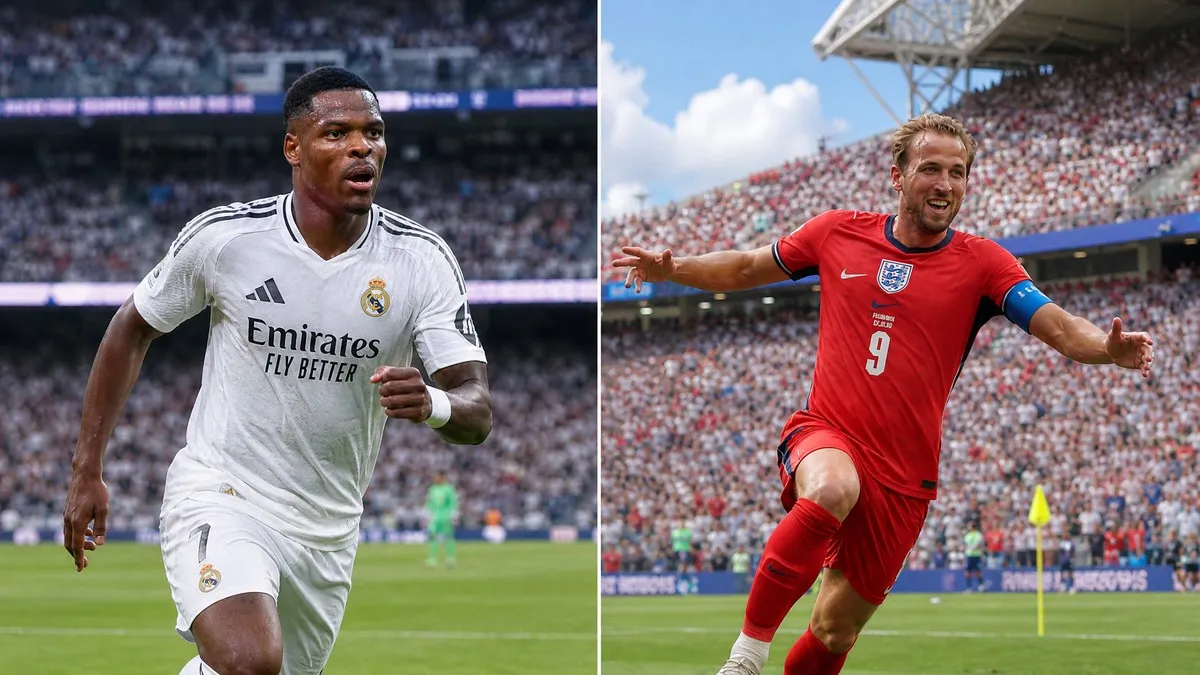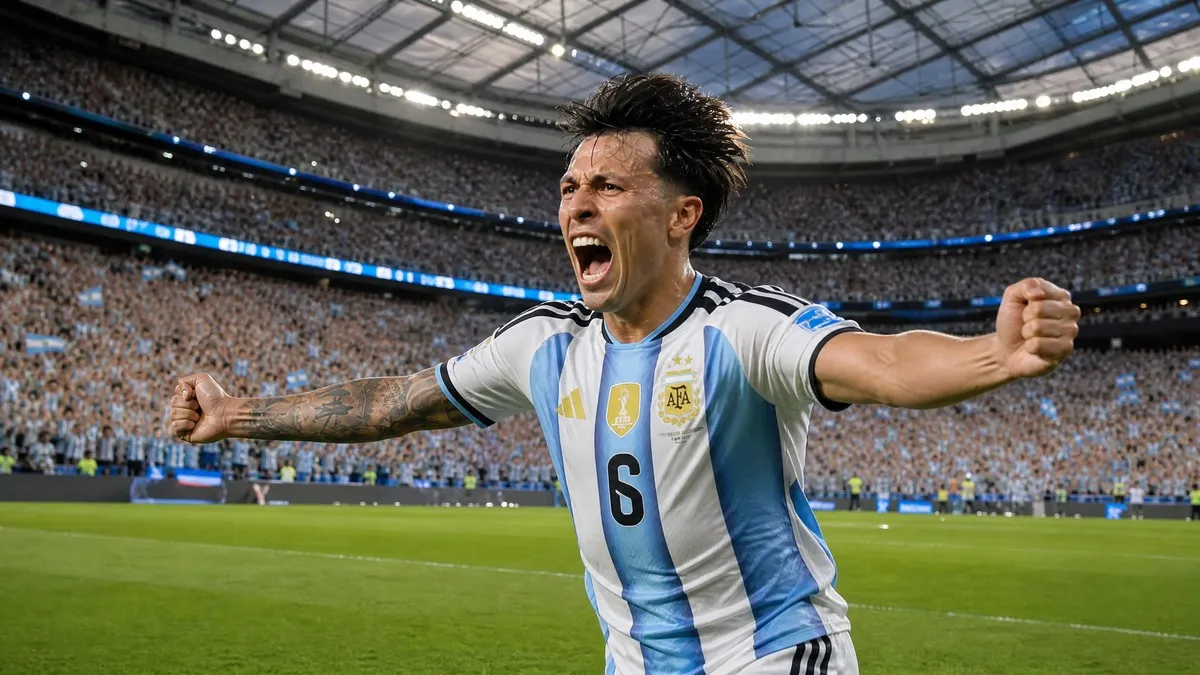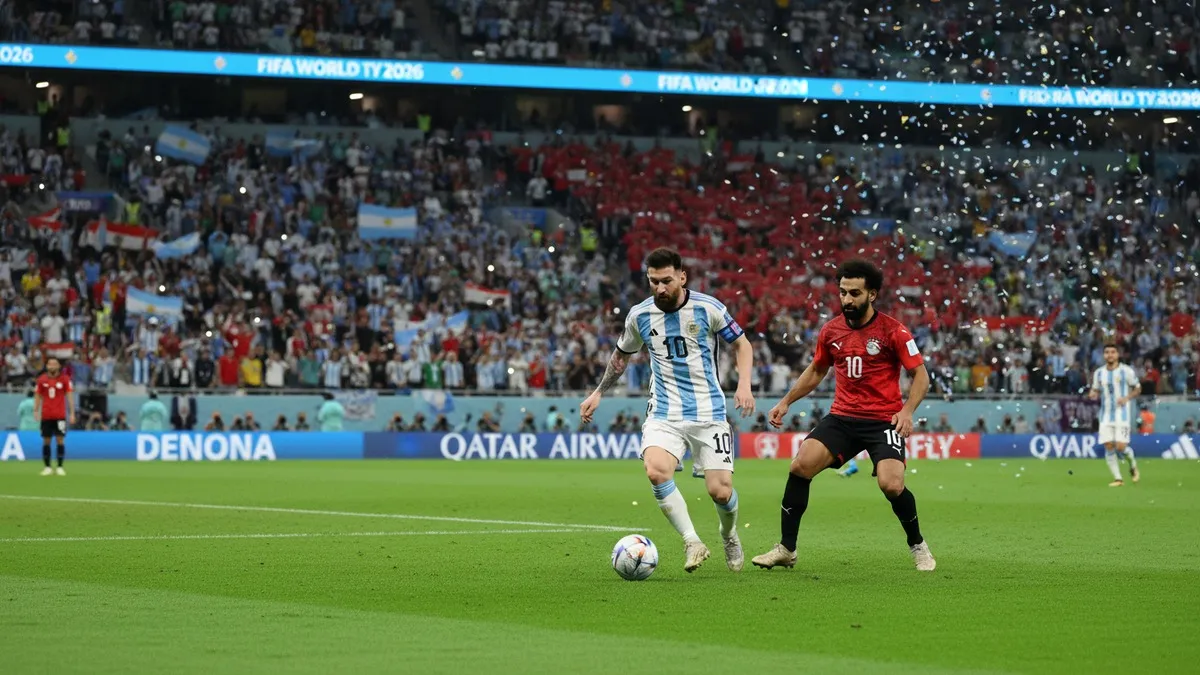
AI-generated image
Football News Today: Haaland's Madrid Links and WC Drama
Haaland's dad talks Madrid, Arsenal starts without stars, and Messi faces Salah as World Cup excitement builds.
Haaland's dad talks Madrid, Arsenal starts without stars, and Messi faces Salah as World Cup excitement builds.
Hey there, football fans. It's July 6, 2026, and the transfer buzz is heating up. Haaland's links to Madrid are making waves, while Arsenal kicks off pre-season without key players Saka and Rice. The World Cup is in full swing, with Messi set to meet Salah in a blockbuster clash. Injuries are biting at England, but they managed to edge past Mexico. Buckle up, it's a wild ride!
The Erling Haaland Real Madrid transfer chat has kicked off again because of one thing football never learns to ignore, family comments. Alf-Inge Haaland basically said Erling is happy at City, but also admitted Madrid is hard to turn down. That is not a transfer request, but it is an open door. And once that door is cracked, every quote gets treated like a timeline.
It gets louder with Jose Mourinho now in the Real Madrid dugout. Mourinho loves a statement number nine, and he also loves a narrative. If Madrid want to sell a new era, Haaland is the easiest poster boy. The funny part is City have tried to future-proof this with that massive deal to 2034. Contracts matter, but only up to the point where a player decides the story has changed.
Fabrizio Romano’s line that nothing is happening this summer is the key detail. It calms the market and it also hints at how these moves actually work. The Haaland future question is not “will he leave tomorrow?” It is “when does Madrid feel like the perfect football and commercial moment?” City can keep saying he is central to plans under the new management, but they still need to keep winning.
The World Cup performance angle is what makes this feel more than routine noise. Big tournaments reset reputations and remind everyone what elite looks like under pressure. If Haaland looks unstoppable on that stage, the Erling Haaland Real Madrid transfer becomes less gossip and more long-term strategy. Madrid fans are already dreaming of a front three with Mbappe and Vinicius, but City’s leverage stays strong while Haaland keeps scoring and stays settled.
Arsenal’s pre-season schedule 2026-27 is going to feel a bit weird at the start, because the first group of “proper” starters will be watching from the sofa. Bukayo Saka, Declan Rice, Noni Madueke and Eberechi Eze are tied up with England at the World Cup, and the three-week mandatory rest is non-negotiable. Girona on August 1 comes too soon, simple as that.
This is not about fitness tests and sharpness in a vacuum. It changes what Arteta can actually work on. Without Rice you lose the midfield organiser who makes the press stable and the build-up tidy. Without Saka you lose the right-side reference point that pins full-backs and creates space for everyone else. Madueke and Eze missing matters too, because pre-season is when new patterns settle and rotations get their first real reps.
The knock-on for the Arsenal pre-season schedule 2026-27 is that the early games risk becoming more about minutes than meaning. If England go deeper, August 5 against Real Betis could also be a patchwork lineup. That is fine for the scoreboard, but it is tricky for cohesion. Players coming back late often look half a step off, not injured, just behind the tempo and decision speed.
Arteta will probably lean hard on Arsenal youth players, and that can be a positive if he frames it right. Pre-season is where you can test a winger’s off-ball discipline, a midfielder’s scanning, a full-back’s bravery inverting. But the bar is high because this is a title defence, not a rebuild. The key is using these games to lock in principles, so when the England lads return, they slot into a functioning machine.
And no, this is not a Bukayo Saka injury update situation. It is workload management, and Arsenal should be glad they have players going deep at the World Cup. Still, the timing is awkward, and the margin at the top is thin. The best-case scenario is the stand-ins overperform, the team’s structure holds, and the Arsenal pre-season schedule 2026-27 becomes a chance to widen the trusted squad.
The knockout stage has done that classic World Cup thing where the football suddenly feels louder than everything else. But the FIFA World Cup controversies keep creeping back in between games. Iran versus the U.S. still hangs in the air, and the whispers about Omar Artan’s officiating have not gone away. Now Spain v Portugal gets its own cloud, because eligibility and discipline are stealing attention again.
Folarin Balogun’s red card getting effectively scrubbed is the spark. FIFA leaned on the FIFA Disciplinary Code to justify a reversal, but it reads like rules-by-exception to a lot of people watching. The problem is not that appeals exist. It is the lack of a clear, repeatable standard. When fans can’t predict outcomes, players and staff stop trusting the process. That is how fair play erodes.
Then you land on Cristiano Ronaldo eligibility, and it becomes combustible. If there was a supposed ban in the background, why is the timing so neat now that Portugal are heading into a marquee tie? Even if Ronaldo has done nothing wrong, the optics are brutal. Gary Neville and others are not just moaning for clicks here. They are pointing at the same thing fans see: inconsistent discipline changes games.
Belgium’s reaction says plenty. Rudi Garcia joking about the timing is funny because it is true. The Royal Belgian Football Association sounding genuinely astonished is not. That is a federation basically saying it does not know what to expect from the governing body. Add the threat of legal action and you get tournament chaos, right when the football should be the only story.
Gianni Infantino’s FIFA has made a habit of turning governance into part of the spectacle, and these FIFA World Cup controversies feel like the latest episode. The knockout stage excitement will carry on, because it always does. But every time FIFA reaches for the rulebook to explain a decision that feels political or convenient, it invites more scrutiny. And it makes the next big call even harder to believe.
Argentina vs Egypt World Cup 2026 has that proper knockout feel because both sides arrive with scars and swagger. Argentina are defending champions, but that 3-2 wobble against Cabo Verde showed they are not strolling through this tournament. Egypt, meanwhile, have already made history with their first knockout win, riding the tension of penalties against Australia. Atlanta should get a game, not a procession.
Argentina’s big issue is control. They have scored three goals in three matches, but they have also let games get messy, and that is dangerous in a World Cup knockout stage. Messi is still the reference point, drifting inside to link play and finish moves, but the team around him has to keep the ball better. If they trade punches again, they invite chaos.
Egypt’s route is clearer: stay compact, then break with purpose. Salah has created more chances than anyone in the tournament, and it is not just hopeful crosses. He is pulling full-backs wide, slipping runners in, and forcing defenders to turn. Against Argentina’s back line, the key is whether Egypt can get enough bodies close to him quickly, so it is not Salah versus three on his own.
There’s also a proper goalkeeper subplot. Emiliano Martinez loves these moments, and Argentina lean on his calm when the game tilts. Egypt have already proven they can handle shootout pressure, so if Argentina vs Egypt World Cup 2026 gets tight late, it will feel like a mental contest as much as a tactical one. The winner probably faces Switzerland or Colombia, so this is a bracket-defining night.
The England World Cup victory over Mexico at the Azteca felt like a proper turning of the page. England have carried that 1986 scar for decades, and winning a World Cup round-of-16 in that stadium is never just “another result”. Mexico rarely lose there, so doing it in a chaotic 3-2 says something about nerve, not just quality. It was loud, messy, and alive.
Thomas Tuchel deserves credit for leaning into the game’s mood rather than trying to calm it down. England didn’t win by sitting on a lead or playing safe possession. They kept making the pitch big, kept asking Mexico to run back, and trusted their attackers to take risks. That is a coaching choice. The England World Cup victory over Mexico came from accepting transitions and backing the squad’s fitness.
Then the downer: the Jordan Henderson injury is the kind that drains a camp. He was an unused sub, but those lads matter in tournaments. Henderson’s voice, standards, and experience are part of how you survive the long days between games. Needing surgery because of a freak fall over an advertising board is brutal. It also forces Tuchel to reshuffle leadership groups fast.
The squad picture gets worse with Jarell Quansah’s red card and Reece James already out. Now you are not just picking a team, you are managing minutes and roles with fewer options. FIFA tournament rules make it awkward to fix, because you cannot just call someone in like it’s a friendly. The England World Cup victory over Mexico was huge, but it has left a bill to pay before Norway.
Fans rode the full rollercoaster, from “this is Azteca again” panic to that giddy feeling of finally winning here. But the mood will swing quickly if the quarter-final turns into a patched-up defensive effort. Tuchel’s next test is psychological as much as tactical: keep the belief high, keep the discipline, and make sure the bench still feels like it belongs.
The Sandro Tonali Tottenham transfer is a proper statement, not just a shiny name for the socials. Spurs have basically told the league they are done waiting for games to come to them. Tonali gives them control, edge, and a bit of snarl in the middle. For Newcastle United, it is a tough one to swallow because he is the type you build a tempo around.
What I like is how clean the fit looks on the pitch. Tonali can play as the single pivot, but he is at his best when he has license to step up and bite into second balls, then hit that first forward pass. If Roberto de Zerbi wants Spurs to play brave, Tonali is the safety net and the accelerator. The Sandro Tonali news about Spurs being his only choice sounds dramatic, but it tracks with a player who wants a clear plan.
This also sits inside a wider Spurs transfer activity that feels unusually decisive. Six Tottenham signings in one summer, with big-ticket experience like Andy Robertson and a more functional add like Jan Paul van Hecke, suggests they are buying a spine, not just filling gaps. It is why Spurs are among the biggest spenders. The risk is obvious too. You do not get much time to gel when the league starts punching you in the mouth from week one.
Then there is the squad balancing act. Radu Dragusin heading to Fiorentina on loan hints Spurs think they are covered at centre-back, or they want a different profile for de Zerbi’s build-up. That matters because Tonali’s best work comes when the back line can feed him under pressure and hold a high line behind him. If that structure clicks, the Sandro Tonali Tottenham transfer could be the move that changes their ceiling.
Jurgen Klopp international management has always felt inevitable, but Germany is a different beast to Liverpool. Less time on the training pitch, more politics, and a squad built around short tournaments rather than weekly rhythms. Klopp Germany will still want intensity, but the trick is picking the moments to press, not trying to turn every camp into a mini pre-season.
The recent track record for former Premier League managers going international is all over the place, which is why this move is so fascinating. Chris Hughton looked a safe pair of hands with Ghana, yet international coaching punished his caution and he never really found a clear attacking identity. Frank de Boer had the Netherlands job and a talented group, but his rigid ideas felt like they arrived without enough time to bed in.
Then you get the opposite. Jesse Marsch with Canada showed what a defined plan can do quickly if players buy in, and it suited a national team setup where clarity beats complexity. Roberto Mancini’s Euro 2020 win with Italy is the gold standard for the jump. He built a vibe, rotated smartly, and made the system feel bigger than any one star.
Other examples sit in the messy middle. Gus Poyet’s Greece spell had decent structure but not enough edge in big moments, which is often where international jobs live or die. Carlo Ancelotti with Brazil sounded like a dream pairing, yet it ended flat, a reminder that big names do not solve selection balance, fitness cycles, and the pressure cooker of qualification.
Thomas Tuchel’s early England run hints at how quickly elite detail can sharpen a team, but the real test is tournament adaptation. That is the challenge for Jurgen Klopp international management too. Germany national team fans will expect swagger and control, not just running. If Klopp Germany blends his emotional lift with ruthless game management, it could finally look coherent again.
The Andrey Santos Manchester United transfer chatter is one of those that makes sense on paper, then gets messy when you look at squad maths. Santos is 22, owned by Chelsea, and already feels like he has done the loan circuit without ever getting a proper runway at Stamford Bridge. If he is pushing for a starting role, that is less drama and more logic.
United’s interest, with contact made to his camp but no bid yet, reads like classic early-window groundwork. They need legs and control in midfield, especially if they want to play quicker without losing structure. Santos profiles as a tidy ball-winner who can carry it and arrive in the box. But the “starting role” condition is the sticking point, because United rarely hand guarantees out.
Chelsea being open to selling “for the right price” tells you where he sits in the hierarchy. They have stockpiled midfielders and still keep shopping in that area. If Santos is not untouchable, it becomes a numbers game and a PSR game. That is why the Andrey Santos Manchester United transfer talk feels plausible, even before a formal approach lands.
Newcastle United interest in Santos adds proper leverage. Eddie Howe’s midfield is intense and well-drilled, and Santos would have a clearer pathway if they rotate more around Bruno Guimaraes, rather than asking him to do everything. The mention of Ederson Silva in the wider midfield market shows how clubs are chasing the same profile: athletic, secure, and able to cover ground without killing build-up.
The wild card is the managerial detail floating around. Michael Carrick being referenced as the man to offer starts does not line up with reality at United right now, so treat that part carefully. Still, the core idea holds. Santos wants stability, United need midfield options, and Chelsea will listen. Expect this Andrey Santos Manchester United transfer thread to stay warm until prices and minutes get real.
Pedri talking up Lionel Messi at this 2026 tournament is not just polite nostalgia. It is a proper nod to a player still deciding games with timing and clarity, even if the legs are not what they were. The Pedri Messi World Cup angle lands because it frames Spain’s ambition in human terms. Beat Portugal first, then maybe earn the right to chase a fairytale.
The Spain vs Portugal tie is a nasty one because it drags you into midfield detail. Spain want long spells of control, but Portugal can match that and then punch through you. Vitinha is a big reason. Pedri calling him one of the best in the world is fair. He receives under pressure, turns cleanly, and keeps the ball moving so Portugal do not need chaos to create danger.
What makes Pedri’s comments interesting is how they line up with his own Barcelona reset under Hansi Flick. When Pedri is closer to the ball more often, Spain look calmer too. Flick’s tweaks at Barcelona have leaned into quicker vertical options and more aggressive positioning, which suits Pedri’s first touch and scanning. It also means he arrives in the final third with purpose, not just as a passer.
That matters against Portugal because the game will swing on who controls the spaces either side of the holding midfielder. If Pedri can drag Vitinha into longer defensive runs, Spain can open pockets for runners beyond the ball. If Vitinha pins Pedri and forces him to play square, Portugal can set traps and counter. The Pedri Messi World Cup dream only stays alive if Spain win those small battles first.
And then there is the Messi part. A potential final against Argentina would be weirdly perfect for a Barcelona midfielder raised on Messi clips, now trying to beat him on the biggest stage. Messi at Inter Miami has managed his minutes, but at this World Cup he looks sharp in the moments that count. Pedri Messi World Cup talk is romantic, sure, but it also shows Spain believe they can go all the way.
Lionel Messi family time popping up mid-tournament feels like a small thing, but it says loads about how Argentina are managing this run. After that scrappy 3-2 against Cape Verde to book the Argentina knockout stages, he didn’t go hunting headlines. He went home. Antonela Roccuzzo posting the reunion in Miami is basically a reminder that even in Messi World Cup 2026 mode, he still needs a reset button.
On the pitch, the numbers are silly. Seven goals already, 20 in World Cup history, and he’s still doing it without looking like he’s chasing records. The key is how Argentina are building around him. They’re not asking him to sprint for 90 minutes. They’re letting him choose moments, drift into pockets, and punish teams when they lose shape. That’s why the Messi goals keep coming even as the legs get heavier.
The Cape Verde game was a good warning, though. Argentina looked comfortable, then got dragged into a messy rhythm with transitions and loose defending. That’s the danger when you’re ahead and you start thinking about the next round. Lionel Messi family time might actually help here, because it’s a mental break from the noise and the pressure. You see it in veteran squads. They need calm more than extra training.
Now you’ve got the Messi Salah matchup, and it’s a proper test of control. Salah has Egypt playing with purpose, and it’s their first knockout run with him leading the line like this. Argentina will want to slow the game, keep the ball, and stop counters early. Egypt will want chaos and quick releases. Messi’s job is the same as always: make one or two moments feel inevitable.
The Memphis Depay Eredivisie return idea has popped up again, this time via Henk ten Cate, and it makes more sense than it sounds. Depay’s deal at SC Corinthians is running down, and the Netherlands are in that awkward post-tournament moment where everyone wants fresh faces. A familiar league, familiar pressure, and weekly rhythm could be the simplest way to get him sharp again.
Depay’s recent international performances have felt heavy. Not just form, but role. He has been asked to be the finisher, the creator, and the personality, sometimes all in the same half. In Brazil he has had moments, but the tempo and travel do not always translate to the Oranje international level. An Eredivisie return would put him back in a tactical environment that suits his timing and combinations.
Ten Cate’s bigger point, though, is the one fans argue about every summer: do you rip it up or tweak it? He’s right to push back on a full overhaul. The Dutch national team are not miles away. You can see it in the calmer performances from Verbruggen, and in the directness Summerville brings when games go stale. There is a base to build on.
That is where Depay could still help, even at 32. Not as the untouchable starter, but as a specialist who raises the floor in tight qualifiers. If the Memphis Depay Eredivisie return happens, Ajax would be the obvious headline, but any top Dutch club offering minutes and structure would do. Pair that with Gravenberch growing into midfield authority, and suddenly the squad has balance and options.
The risk is obvious: the Eredivisie can flatter attackers, and international football punishes hesitation. Depay would need to show intensity without hogging the game, and the staff would need to manage him like a piece of the puzzle, not the whole picture. Still, a Memphis Depay Eredivisie return feels like a practical bridge between the old guard and the next wave.
July 19 in New Jersey is a proper marker on the calendar. The World Cup is back in North America for the first time since 1994, and the final landing at MetLife Stadium gives the whole tournament a very American feel. Big venue, big transport links, big corporate pull. That last part matters, because it shapes who actually gets through the turnstiles.
The headline with World Cup 2026 tickets is the price, and it is not just “expensive”, it is structurally expensive. FIFA ticket prices at face value sitting around $2,030 to $6,730 already pushes most normal fans out. Then dynamic pricing and premium inventory takes it to the kind of numbers you only see for Super Bowl suites, up to $30,000-plus in some sections.
Dynamic pricing is the real shift. It turns demand into a moving target, and demand for a World Cup final is basically infinite. With reports of over 500 million requests processed, you are not competing with your mates, you are competing with the world and a lot of corporate wallets. That is why people feel pressure to “act quick”, even when the numbers make no sense.
The FIFA Resale/Exchange Marketplace opening on October 2 is a good thing in theory, because World Cup resale tickets are where scams usually thrive. A central platform should mean real tickets, clear transfers, and fewer horror stories at the gates. The catch is that resale can normalise inflated prices, and it can keep the market hot right up to kick-off if supply stays tight.
MetLife Stadium being tested by the Club World Cup final earlier this year helps. It has done big events and it will do this one fine. The bigger question is atmosphere. If the lower bowl fills with VIPs who treat it like a networking event, it changes the vibe. Ticket sales phases and availability need to keep some space for actual supporters, or the final risks feeling like a very expensive neutral-site show.
The Michael Olise yellow card appeal is not just France being fussy. It is tournament management. Olise picked up a booking in the last-16 win over Paraguay and now sits one card from a suspension. With Morocco next, and a semi-final potentially after that, France are staring at a scenario where their most reliable creator could miss the night it matters most.
The FFF appeal FIFA angle hinges on how soft the incident looked. Olise and Matias Galarza got tangled in one of those post-whistle shoves, and the “shirt tug” was minimal. FIFA will say referees need to calm flashpoints early, but that is exactly why this feels messy. If you are booking a star for a token pull, you have to do the same for the instigator, every time.
That is where the disciplinary controversy FIFA conversation kicks off. The Balogun suspension has already put everyone on edge about consistency. Fans can live with strict rules. What drives people mad is different thresholds from match to match, or from team to team. The Michael Olise yellow card appeal reads like France testing whether FIFA is willing to admit an error, not just defend the original call.
On the pitch, the Olise suspension risk is huge because his output has been the glue for France. He leads the World Cup assist charts and he has made Mbappe’s life easier by feeding him early and often. Against Morocco, space will be tight and transitions will be brutal. Take away Olise’s timing and you force France into slower possession, more crosses, and more hope.
Even if FIFA bin the appeal, the bigger issue stays. France now have to manage Olise like a player on a tightrope. No silly dissent, no tactical fouls, no getting dragged into confrontations. In World Cup 2026 news, that is the real story. The best teams protect their match-winners. Right now, France are asking FIFA to help them do it.
The Folarin Balogun suspension controversy is one of those moments where the football chat turns from tactics to trust. Belgium’s FA going public is not normal “we’re disappointed” stuff. It is basically saying FIFA picked and chose which rules matter. Balogun saw red against Bosnia-Herzegovina, then turns up for a World Cup round-of-16. That jars.
The key issue is simple: automatic suspension is meant to be automatic. Both the FIFA Disciplinary Code and tournament regulations are written to stop endless arguing and protect consistency. If FIFA can wave it away, every federation will lawyer up next time. The RBFA FIFA criticism lands because it is not about Belgium wanting an edge, it is about the whole framework.
UEFA backing Belgium matters too. This is not a small federation shouting into the wind. It is a governing body basically telling FIFA that fair play in soccer is not a slogan, it is a system. Once you start bending red card suspension rules, you invite suspicion about influence, pressure, and “special cases”. That is how integrity takes slow damage.
On the football side, Rudi Garcia is right to feel stitched up. Knockout games hinge on tiny margins, and Balogun is exactly the kind of striker who changes a match with one run. Wayne Rooney calling it an “absolute disgrace” is blunt, but fans get it. The Balogun FIFA decision does not just affect Belgium. It tells everyone that soccer disciplinary actions can be negotiated.
Now FIFA has to explain the logic in plain language, not legal fog. Was it a mistaken identity, a rescinded red, a procedural error, or a loophole? If it is a loophole, close it before the next round. If it is an exception, publish the reasoning and apply it equally. Otherwise the Folarin Balogun suspension controversy will hang over the tournament like a bad smell.
Brazil going out in the round of 16 to Norway is the sort of result you double-check, even if you watched it live. This was not meant to be the night the Neymar World Cup career closed. Yet it did, with Brazil chasing the game and looking a bit stuck for ideas. Norway stayed brave, defended their box properly, and made Brazil’s big moments feel rushed and heavy.
The weird part is Neymar still leaves with a signature line in the record books. That late Neymar penalty goal made it 80 for Brazil, and it matters because it underlines how long he carried the attack across different managers, different systems, different generations. The goal did not rescue Brazil vs Norway, but it showed the same nerve he has always had when everything around him looks chaotic.
This Brazil World Cup 2023 always felt like a farewell tour that never quite started. Neymar was a surprise inclusion because of the injury, and you could tell his body was running the conversation. Two substitute cameos is not how a legend wants his final tournament to go. It also affected Brazil’s structure. They had to build a plan without him, then suddenly squeeze him into late-game scenarios.
Norway deserve more than a footnote here. They did not just sit in and hope. They picked their moments to press, they made Brazil play into traffic, and they were clinical when the openings came. Erling Haaland performance wise, he gave them a focal point that made every clearance and counter feel like a threat. Brazil’s elimination was shocking, but it was not a fluke.
Afterwards, Neymar retirement talk turned into confirmation, and it hit hard because it sounded final, not emotional in the moment. The Neymar World Cup career ends with him as only the second Brazilian after Pele to score in four World Cups, plus the all-time scoring record. It is a messy ending, but his international story was never tidy. It was huge, complicated, and unforgettable.
Keep an eye on the World Cup matches today. With Messi and Salah on the pitch, it's bound to be thrilling. Plus, check out the latest transfer news as clubs gear up for the new season.

Julian Mercer is a lifelong student of the game whose passion for football was sparked at an early age, after stepping onto the grass of Camp Nou as a six-year-old — a moment that left a lasting impression and set him on a permanent path into the sport. Since then, football has been both his lens on the world and his favourite language. Blending traditional fandom with a deep interest in tactics, squad building, and long-term team development, Julian has spent decades analysing the game from every angle. His fascination with football strategy was further shaped through years of immersive play in Football Manager, a series he has followed since the mid-1990s, developing a sharp eye for patterns, player profiles, and the fine margins that define success. At My World Of Football, Julian focuses on the stories beneath the surface — from tactical evolutions and managerial philosophies to the narratives that connect clubs, players, and supporters across generations. His writing aims to balance insight with accessibility, always grounded in a genuine love for the game.
Continue reading more football news