Myworldoffootball
Donyell Malen Oranje striker: Van Bommel’s 2026 pick
Mark van Bommel backs Donyell Malen as Oranje’s No.9 for World Cup 2026, citing Roma form, while Van der Vaart questions his finishing.
Mark van Bommel backs Donyell Malen as Oranje’s No.9 for World Cup 2026, citing Roma form, while Van der Vaart questions his finishing.
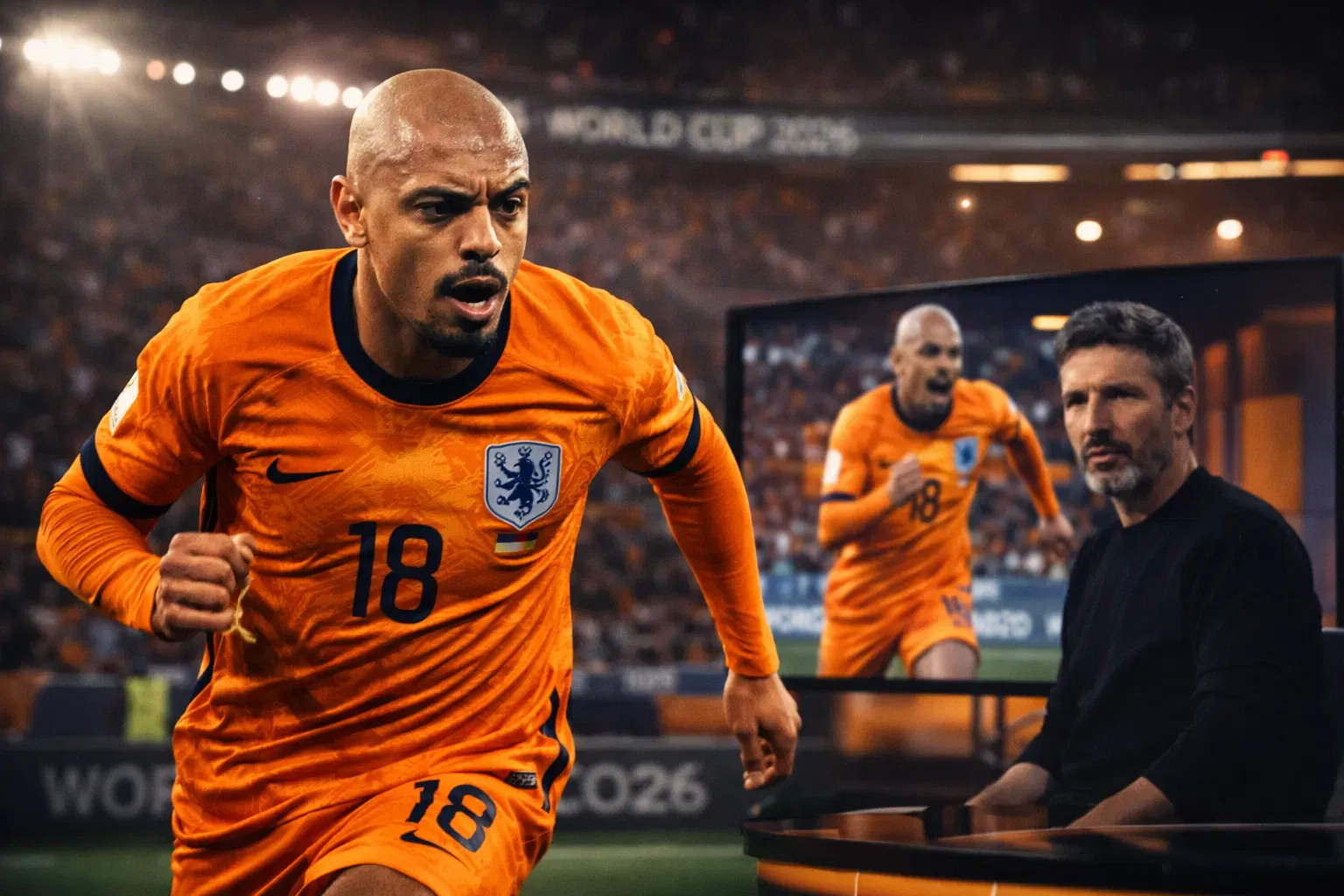
Mark van Bommel didn’t tiptoe around it on Ziggo Sport’s Rondo: if the Netherlands national team is building toward World Cup 2026, he wants Donyell Malen leading the line. The former Oranje midfielder framed it as a choice about profiles, not reputations, and his argument landed with the force of a tactical lecture. With Malen scoring freely at AS Roma and competition from Memphis Depay and Brian Brobbey, the debate has suddenly become one of the most fascinating selection battles in Europe.
Van Bommel’s endorsement was striking because it sounded like a long-term plan rather than a hot take. He described Donyell Malen as the kind of forward modern international football demands: fast across the ground, sharp in transition, and comfortable attacking space behind a high line. In that framing, the Donyell Malen Oranje striker case isn’t about replacing a name, but about choosing a weapon for specific match scripts.
On Rondo, Van Bommel also leaned into the psychological side of form, suggesting Malen is thriving under a coach who gives him trust and clear tasks. That matters for the Netherlands national team, where strikers can go months without rhythm because international windows are short and unforgiving. If you want a Donyell Malen Oranje striker era, the logic goes, you pick the forward who arrives in camp already confident, already decisive.
Fans who remember Malen at PSV will recall a forward who could look electric one week and slightly rushed the next, especially when asked to finish under pressure. Van Bommel’s point is that the player’s game has matured, and that the current AS Roma version is more direct and more ruthless in the box. That evolution strengthens the Donyell Malen Oranje striker argument because international tournaments reward simplicity and repeatable patterns.
Mark van Bommel isn’t just any pundit tossing out a preference; he’s a former elite midfielder who built his career on reading games and managing risk. When he champions a Donyell Malen Oranje striker profile, he’s implicitly talking about how the Netherlands should defend and attack as a unit. A striker’s running lanes decide where the press starts, where the midfield can squeeze, and how quickly Oranje can punish mistakes in transition.
The simplest fuel for Van Bommel’s stance is the stat line: eight goals in twelve matches at AS Roma this season. That kind of output doesn’t just suggest good finishing; it signals a forward repeatedly arriving in the right zones, on time, with conviction. For a Netherlands national team that has sometimes looked one pass short of a killer touch, the Donyell Malen Oranje striker idea becomes tempting precisely because it’s backed by weekly evidence.
Roma’s environment also matters because Serie A forces attackers to solve compact defenses, not just run into open grass. If Malen is scoring there, he’s learning to manipulate half-spaces, time near-post darts, and take shots with minimal backlift. Those are transferable skills for World Cup 2026, where opponents will often sit deep against Oranje. In that context, Donyell Malen Oranje striker isn’t hype; it’s a practical solution.
Van Bommel highlighted Malen’s speed, but the key is what that speed does to opponents before the ball is even played. A Donyell Malen Oranje striker run threatens the space behind fullbacks and center-backs, forcing defensive lines to drop a step and widening the midfield corridors. That can make Oranje’s possession game cleaner, because midfielders receive with less pressure and more forward options, even against top-level pressing sides.
Strikers live on confidence, and Van Bommel’s comment about thriving under a coach who instills belief is the kind of detail fans often underestimate. If Roma has given Malen a defined role—when to drift wide, when to attack the six-yard box—he can repeat actions without second-guessing. That clarity is gold for the Netherlands national team, and it’s central to the Donyell Malen Oranje striker narrative heading into 2026.
Picking a No.9 is never only about goals; it’s about how the entire attack behaves. Memphis Depay offers experience, personality, and the ability to drop into midfield to stitch play together, but that can also leave the box empty when Oranje needs a finisher. Brian Brobbey provides physical power and back-to-goal duels, yet he can be isolated if service is slow. The Donyell Malen Oranje striker option promises verticality and chaos.
Van Bommel’s preference reads like a choice to modernize the front line for tournament football. Against elite opponents, the Netherlands national team may not dominate possession for long stretches, so the striker has to turn brief moments into high-value chances. That is where Malen’s pace and timing become decisive tools rather than luxuries. In that scenario, Donyell Malen Oranje striker isn’t a snub to Depay or Brobbey, but a strategic bet.
Memphis Depay remains a big-game figure, and his ability to draw defenders can open shooting lanes for others. The concern, from a Van Bommel-style lens, is that Depay’s tendency to come short can slow the first wave of the counter and invite opponents to reset. If the Netherlands want to attack faster and strike earlier, the Donyell Malen Oranje striker profile naturally aligns with that ambition because his first instinct is to run beyond, not toward.
Brian Brobbey can bully center-backs and win second balls, which is valuable when Oranje is under pressure or chasing a match. But that style often demands consistent crossing quality and midfield runners arriving on time, otherwise the striker becomes a lone wrestler in the penalty area. Van Bommel’s logic suggests Malen needs less elaborate supply: one pass into space, one quick combination, one shot. That simplicity strengthens the Donyell Malen Oranje striker case in tournament conditions.
Rafael van der Vaart played the role of skeptic, and his concern is the one that always haunts fast forwards: can you trust them when the one chance arrives? He referenced a missed opportunity at the 2021 Euros, the kind of moment that lingers in national-team memory because tournaments are defined by margins. For Van der Vaart, the Donyell Malen Oranje striker debate must confront that fear head-on, not hide behind highlight reels.
It’s a fair critique because international football magnifies finishing variance. A striker can be brilliant for 80 minutes, but if he fluffs the decisive chance, the narrative becomes permanent. Van Bommel’s counter, implied more than stated, is that players evolve and that current Roma form indicates a sharper, calmer Malen. The tension between past scars and present evidence is exactly why the Donyell Malen Oranje striker conversation feels so alive.
Van der Vaart’s reference to 2021 is a reminder that fans and pundits often treat tournament chances like character tests. Miss one, and you’re labeled wasteful; score one, and you’re “clinical,” even if the underlying process is similar. The challenge for Malen is to overwrite that memory with a new signature moment in an Oranje shirt. If he does, the Donyell Malen Oranje striker label shifts from debate topic to accepted reality.
What changes a forward’s conversion rate is not only cleaner technique but better decisions: when to shoot early, when to take an extra touch, when to square it. Roma’s recent run suggests Malen is choosing higher-quality attempts and arriving in more central positions rather than snatching from angles. That’s encouraging for the Netherlands national team, because it implies sustainable improvement rather than a brief hot streak. It’s also the best rebuttal to doubts about the Donyell Malen Oranje striker project.
Van Bommel didn’t pretend the striker choice alone will carry Oranje to a trophy. He name-checked the heavyweights—France, Brazil, Argentina—as a reminder that the World Cup 2026 path will be brutal, even for a well-balanced Netherlands national team. Those sides can win matches in multiple ways: set pieces, transitions, individual magic, and suffocating control. In that landscape, selecting a Donyell Malen Oranje striker is about gaining an edge, not guaranteeing glory.
The Netherlands have often been a team of structure and collective intelligence, but tournaments increasingly reward squads with game-breakers who can punish tiny errors. Malen’s speed is one of those attributes that can tilt a match against superior talent, because it forces opponents to defend deeper and more cautiously. If Oranje can combine that threat with midfield control and defensive stability, the Donyell Malen Oranje striker choice becomes part of a broader plan to compete with the giants.
Top international sides are comfortable defending possession because they trust their shape and their goalkeeper. What unsettles them is a forward who can turn a harmless sideways pass into a foot race toward goal. A Donyell Malen Oranje striker presence changes the risk calculus for opponents like France, who love to press high with athletic defenders. If they leave space, Malen can attack it instantly, and that threat alone can buy Oranje breathing room in midfield.
Against Brazil or Argentina, the Netherlands national team may get fewer clear chances, so the quality of those chances matters more than the quantity. That’s where Van Bommel’s preference makes sense: Malen can convert broken moments into shots without needing a long buildup. One turnover, one through ball, one sprint, and Oranje are in behind. In tournament football, that repeatable transition pattern is a compelling reason to back the Donyell Malen Oranje striker option.
If Malen is to be the main man, the Netherlands national team must design relationships that maximize his strengths rather than asking him to mimic Depay’s playmaking. That means wingers who can occupy fullbacks, midfielders who can play early vertical passes, and fullbacks who provide width so Malen can stay central. The Donyell Malen Oranje striker concept works best when the team commits to speed of thought and speed of execution, especially after regains.
It also requires clarity about what Malen is not. He doesn’t need to be a constant target for aerial duels, and he shouldn’t be forced into endless back-to-goal wrestling if that blunts his best weapon. Van Bommel’s comments hint at a simpler idea: give Malen confidence, give him space, and let him attack the box. If Oranje can do that consistently, the Donyell Malen Oranje striker debate may fade into consensus.
International camps are short, so selection often comes down to who executes the coach’s plan quickest. Malen can win the job by showing repeatable movements: curved runs across the near post, timed sprints between center-back and fullback, and immediate counter-pressing after losing the ball. Those habits are visible in training and translate directly to match minutes. If he delivers them, the Donyell Malen Oranje striker choice becomes less about opinion and more about functional fit.
Any decision that sidelines a star like Memphis Depay or limits Brian Brobbey’s minutes must be handled carefully. Oranje can frame it as a toolbox rather than a hierarchy: Depay for matches that require creativity between lines, Brobbey for physical battles and late-game chaos, and Malen for vertical threat and early strikes. That approach keeps competition healthy while still committing to a clear first choice. It’s also the most diplomatic way to establish Donyell Malen Oranje striker as the primary plan for 2026.
The truth is the Netherlands national team doesn’t need unanimity from pundits to move forward; it needs a striker who can deliver under the harshest lights. Van Bommel sees Donyell Malen as that player because Roma’s form suggests a forward growing into his prime, with speed that can scare even the best back lines. Van der Vaart’s doubts keep the conversation honest, reminding everyone that finishing defines legacies. If Malen turns club sharpness into Oranje decisiveness, the Donyell Malen Oranje striker era could arrive right on time for World Cup 2026.

Julian Mercer is a lifelong student of the game whose passion for football was sparked at an early age, after stepping onto the grass of Camp Nou as a six-year-old — a moment that left a lasting impression and set him on a permanent path into the sport. Since then, football has been both his lens on the world and his favourite language. Blending traditional fandom with a deep interest in tactics, squad building, and long-term team development, Julian has spent decades analysing the game from every angle. His fascination with football strategy was further shaped through years of immersive play in Football Manager, a series he has followed since the mid-1990s, developing a sharp eye for patterns, player profiles, and the fine margins that define success. At My World Of Football, Julian focuses on the stories beneath the surface — from tactical evolutions and managerial philosophies to the narratives that connect clubs, players, and supporters across generations. His writing aims to balance insight with accessibility, always grounded in a genuine love for the game.
Continue reading more football news