Myworldoffootball
Liverpool Champions League exit: Carragher slams Slot
Jamie Carragher targets Arne Slot tactics after Liverpool Champions League exit to PSG, questioning Mohamed Salah benching, Isak gamble, and Ekitike injury.
Jamie Carragher targets Arne Slot tactics after Liverpool Champions League exit to PSG, questioning Mohamed Salah benching, Isak gamble, and Ekitike injury.
Liverpool’s European night ended with the kind of blunt finality that leaves Anfield arguments raging for days, as Paris Saint-Germain sealed a 2-0 win and a 4-0 aggregate dismissal. The Liverpool Champions League exit wasn’t just about missed chances or PSG’s polish; it became a referendum on Arne Slot tactics under pressure. Jamie Carragher’s criticism landed hardest on one decision: Mohamed Salah benching, in a tie that demanded Liverpool’s most reliable goal threat. When the dust settled, the questions only grew louder.
PSG played the second leg like a side that understood exactly what knockout football rewards: control without panic, and punishment without mercy. Liverpool needed early momentum to shake a 2-0 deficit, yet the match drifted into PSG’s preferred rhythm, with Liverpool chasing shadows and losing duels in key zones. By the time PSG struck, it felt like inevitability rather than surprise. The Liverpool Champions League exit was being written in slow motion.
The 4-0 aggregate scoreline was harsh on Liverpool’s effort but honest about their lack of incision across both legs. PSG’s defensive distances were tight, their midfield circulation quick enough to escape pressure, and their transitions carried real bite. Liverpool, by contrast, looked like a team searching for a shortcut to chaos without the tools to sustain it. In that context, the Liverpool Champions League exit became as much tactical as emotional.
When a comeback is required, the first 20 minutes are supposed to feel like a storm, yet Liverpool’s pressing came in bursts rather than waves. PSG were happy to let Liverpool run, then stepped around the pressure with simple angles and calm first touches. Each time Liverpool tried to speed the game up, they left space behind their midfield line, and PSG used it to slow the contest back down. That pattern set the tone for the Liverpool Champions League exit.
There was a maturity to PSG’s approach that Liverpool couldn’t disrupt, especially once the visitors had a lead to protect. They took the sting out of the crowd with long spells of possession, drew fouls in safe areas, and forced Liverpool into rushed decisions in the final third. Even when Liverpool won second balls, PSG’s shape reset quickly enough to deny clear lanes. It was a clinical illustration of why the Liverpool Champions League exit felt so definitive.
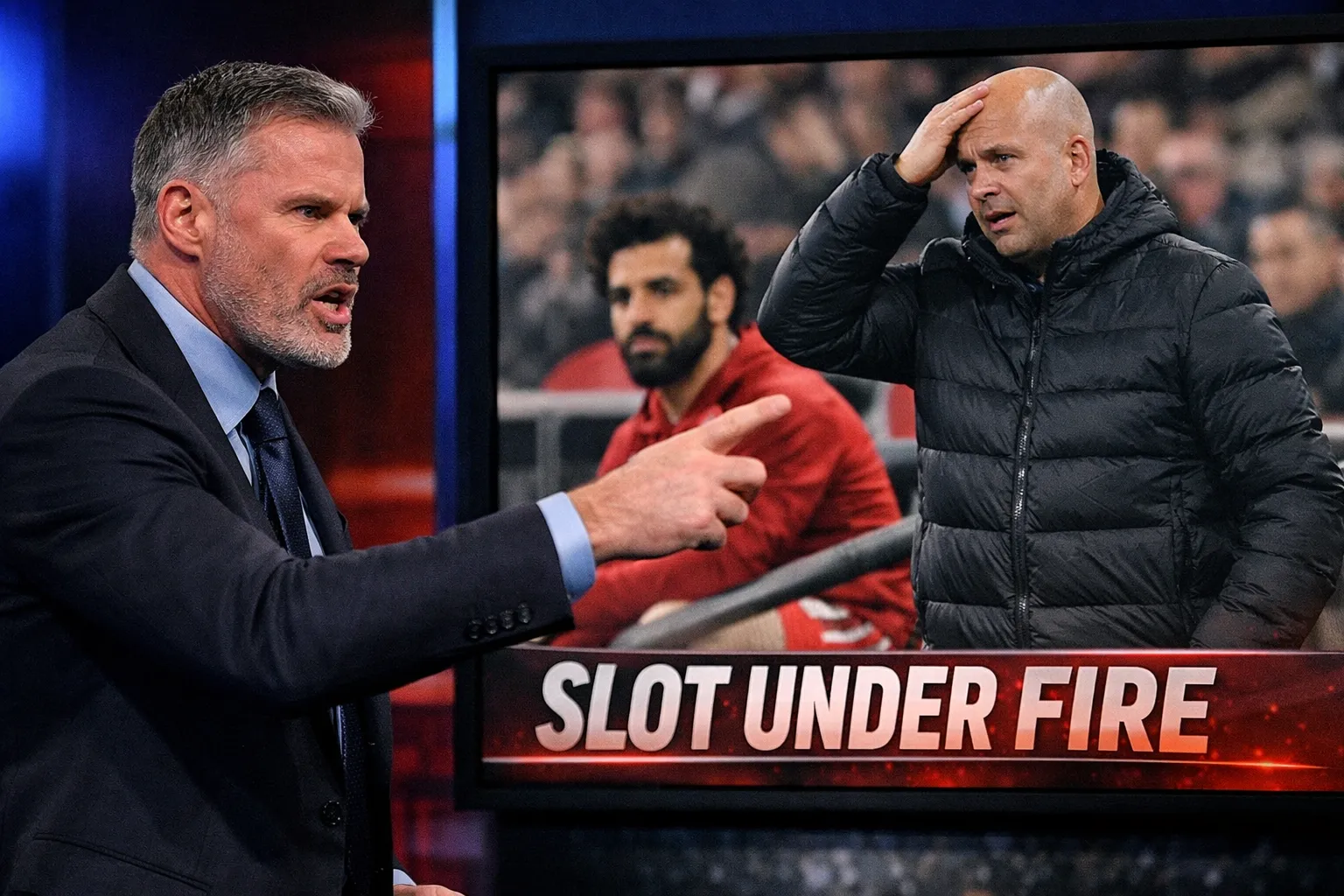
Jamie Carragher criticism didn’t focus on effort or desire, because Liverpool didn’t look like a team that downed tools. Instead, he zeroed in on decision-making, arguing that Arne Slot tactics seemed to fight the reality of the tie rather than embrace it. In a night that demanded Liverpool’s sharpest attacking lineup and most aggressive choices, Carragher saw caution and experimentation. The Liverpool Champions League exit, in his view, was worsened by self-inflicted limitations.
Carragher’s most stinging point was that Liverpool appeared to start the match without their most obvious route to a goal. When margins are thin and time is precious, you don’t usually take your top scorer out of the opening script. That is why Mohamed Salah benching became the symbol of the night, and why the Liverpool Champions League exit quickly turned into a debate about priorities. Carragher framed it as a gamble that never needed to be taken.
Managers often talk about “fresh legs” and “tactical surprises,” but knockout ties are unforgiving when the surprise weakens your own strengths. Carragher suggested that Slot’s plan looked like it was built to win a different match, not to overturn a deficit against elite opposition. The longer Liverpool went without a clear chance, the more the initial selection felt like a constraint. That’s where Jamie Carragher criticism tied directly into the Liverpool Champions League exit.
When Liverpool eventually tried to raise the tempo and sharpen their attacking patterns, it felt like a reaction rather than an intention. Carragher’s wider point was that elite European ties punish hesitation, and Liverpool’s first-half approach gave PSG too much comfort. By the time changes were made, PSG had already banked minutes and confidence, and Liverpool were forcing plays that weren’t on. It’s a familiar story in many Liverpool Champions League exit campaigns: urgency arriving after control is lost.
Mohamed Salah benching is the kind of headline that doesn’t need embellishment, because it cuts straight to what fans understand instinctively. In the biggest moments, you want your biggest difference-maker on the pitch, even if he’s not at his absolute best. Salah’s presence alone changes how opponents defend, how full-backs position themselves, and how much space opens for runners. Removing that gravity from the start made the Liverpool Champions League exit feel avoidable to many.
There is also a psychological layer that Carragher hinted at, because selection decisions send messages to both teams. PSG would have felt a jolt of relief seeing Salah absent from the first whistle, while Liverpool’s own attacking unit had to build confidence without their usual reference point. In a tie where belief was already fragile, that mattered. The Liverpool Champions League exit became, in part, a story about self-denial at the worst time.
Salah isn’t just a scorer; he is a structural element that pins defenders and creates predictable chaos. His ability to receive under pressure, drive inside, and force double teams gives Liverpool a consistent way to progress into the box even when patterns break down. Without him, Liverpool’s right side can become too polite, with possession circulating rather than threatening. That’s why Mohamed Salah benching felt like removing the team’s most reliable lever against PSG, accelerating the Liverpool Champions League exit.
As the first half wore on and Liverpool’s attacks turned into hopeful crosses and speculative shots, the absence of Salah became louder than any tactical explanation. Carragher’s reaction captured what many were thinking: if you’re going out, go out with your best weapon firing, not wrapped in cotton. When Salah eventually appeared, the tie already had PSG’s stamp on it, and Liverpool were chasing a moving target. In that sense, Mohamed Salah benching became the defining image of the Liverpool Champions League exit.
Slot’s other lightning-rod choice was starting Alexander Isak despite a four-month absence, a decision that immediately looked like a bet against match rhythm. Fitness isn’t just about running; it’s about timing presses, anticipating second balls, and making contact cleanly when chances arrive. Isak’s touch looked heavy, his movement half a second late, and his duels lacked conviction. When he was withdrawn at halftime, it felt like an admission that the plan had misfired, deepening the Liverpool Champions League exit narrative.
It’s not that Isak lacks quality, but the context was unforgiving: Liverpool needed a forward who could set the tone with intensity and sharpness. Instead, PSG’s centre-backs defended comfortably, stepping in front of him and forcing Liverpool’s build-up to detour wide. Carragher framed it as a selection that ignored the basic truth of knockout football: you cannot manufacture match sharpness on a night like this. The Liverpool Champions League exit, therefore, carried the scent of an avoidable experiment.
A comeback often requires a striker who can be messy in the box, relentless in the press, and ruthless with half-chances. Isak’s strengths are usually smoother—timed runs, clean finishing, clever link play—yet those qualities depend on rhythm and service that Liverpool couldn’t establish. With Liverpool forcing the pace, he looked disconnected from the midfield and isolated between PSG’s lines. That mismatch made the gamble feel more puzzling as the Liverpool Champions League exit drew closer.
Taking a striker off at halftime is always a loud managerial statement, and in this case it amplified Jamie Carragher criticism of Arne Slot tactics. It suggested the staff realised too late that the starting setup lacked the bite required, and it put extra pressure on the players asked to rescue the situation. PSG, meanwhile, read it as confirmation that Liverpool were searching rather than executing. The substitution became a microcosm of the Liverpool Champions League exit: bold idea, harsh reality.
Florian Wirtz arrived with the kind of transfer fee that guarantees scrutiny, especially on nights when Liverpool need imagination and incision. Carragher questioned whether Wirtz imposed himself enough on a game that demanded leadership with the ball, not just tidy touches. Against PSG’s compact midfield, Wirtz struggled to find pockets where he could turn and accelerate play, and his final pass rarely carried menace. In a Liverpool Champions League exit, expensive signings are judged on defining moments, and he didn’t provide one.
Part of the issue was structural, because Liverpool’s build-up often bypassed the central areas where Wirtz is most dangerous. When the ball went wide early, his involvement became reactive rather than controlling, arriving late to second phases rather than dictating the first. PSG were happy to let him receive with his back to goal, then collapsed on him before he could spin. That dynamic made the Liverpool Champions League exit feel like a night where Liverpool’s creativity never properly ignited.
Wirtz’s reputation is built on receiving between lines and turning small advantages into big chances, either through disguised passes or quick combinations around the box. Liverpool needed him to connect midfield to attack, especially with Mohamed Salah benching removing a direct threat from the right. Yet PSG’s midfield screened intelligently, and Liverpool’s tempo was too inconsistent to open the seams. The result was a performance that looked neat but not decisive, which is exactly what gets highlighted after a Liverpool Champions League exit.
Carragher’s critique wasn’t simply about one match, but about what big-money players represent in defining fixtures. When Liverpool spend heavily, supporters expect a player who can bend a tie with one action, even if the wider team struggles. Wirtz may still become that figure, but this was a night when he looked more like a passenger than a driver. In the glare of a Liverpool Champions League exit, nuance disappears and impact becomes the only currency.
The match’s grim coda was the serious injury to Hugo Ekitike, a moment that shifted the conversation from tactics to availability and risk. Ekitike injury news matters because Liverpool’s schedule doesn’t soften just because Europe has ended; if anything, the domestic demands intensify. Losing a forward option now threatens rotation plans and forces Slot to lean harder on players already carrying heavy minutes. The Liverpool Champions League exit was painful enough, but the injury added a lingering cost.
From a squad-management perspective, injuries after European elimination can create a strange double hit. You lose the prestige and momentum of the Champions League, then immediately face league fixtures where fatigue and frustration can bleed into performance. With a crucial Merseyside derby against Everton looming, Liverpool cannot afford a thin bench or compromised attacking options. Ekitike injury news therefore becomes part of the same storyline: the Liverpool Champions League exit didn’t just end a campaign, it complicated the next one.
Liverpool’s best football under Slot has often relied on coordinated pressing and aggressive attacking substitutions, which require depth and freshness. If Ekitike is sidelined, those late-game changes become more predictable, and opponents can plan for Liverpool’s patterns with greater confidence. It also increases the risk of overusing key attackers, which can dull sharpness in decisive league matches. In that way, Ekitike injury news extends the consequences of the Liverpool Champions League exit into the weeks ahead.
The Merseyside derby rarely cares about form or fatigue, but it will care about Liverpool’s emotional state after a Liverpool Champions League exit. Slot now has to reset the group quickly, ensuring disappointment doesn’t turn into hesitation, while also managing the physical toll of a demanding season. Carragher’s criticisms will hover in the background, because derbies amplify every selection call. If Salah returns to the XI and Liverpool respond with authority, the narrative can pivot fast; if not, the Liverpool Champions League exit will feel like the start of a wobble.
Liverpool will move on, because football always forces the next chapter, but this Liverpool Champions League exit will linger as a lesson in how quickly elite ties punish uncertainty. Jamie Carragher criticism may sound harsh, yet it reflects a simple supporter truth: when the stakes are highest, fans want clarity, bravery, and the best players on the pitch. Arne Slot tactics will be judged not only by ideas, but by timing, and this time the timing looked off. With Ekitike injury news adding urgency, Liverpool’s response in the Premier League must be immediate, ruthless, and unmistakably Liverpool.

Julian Mercer is a lifelong student of the game whose passion for football was sparked at an early age, after stepping onto the grass of Camp Nou as a six-year-old — a moment that left a lasting impression and set him on a permanent path into the sport. Since then, football has been both his lens on the world and his favourite language. Blending traditional fandom with a deep interest in tactics, squad building, and long-term team development, Julian has spent decades analysing the game from every angle. His fascination with football strategy was further shaped through years of immersive play in Football Manager, a series he has followed since the mid-1990s, developing a sharp eye for patterns, player profiles, and the fine margins that define success. At My World Of Football, Julian focuses on the stories beneath the surface — from tactical evolutions and managerial philosophies to the narratives that connect clubs, players, and supporters across generations. His writing aims to balance insight with accessibility, always grounded in a genuine love for the game.
Continue reading more football news