Myworldoffootball
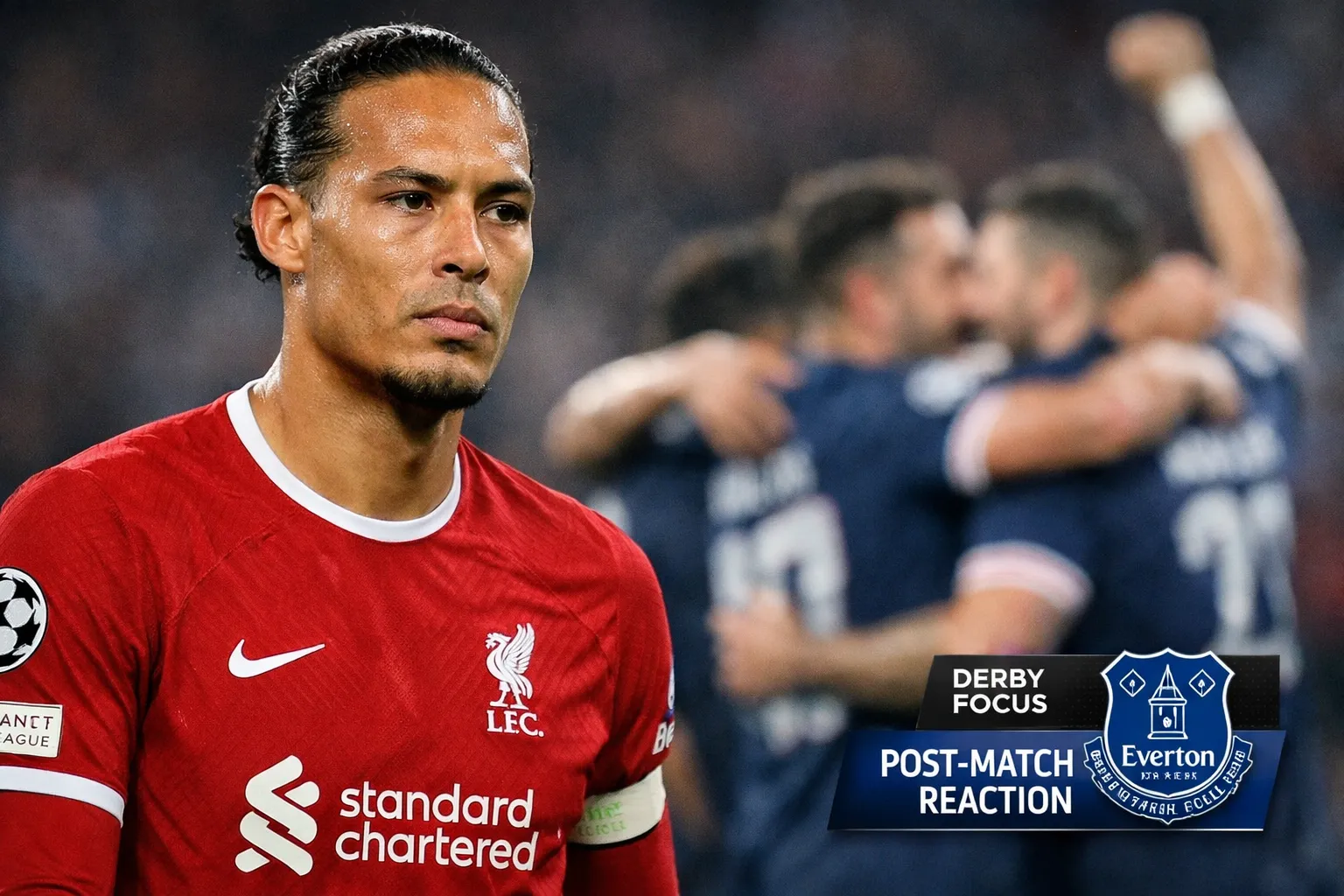
Liverpool Champions League exit: Van Dijk reacts
Virgil van Dijk reflects on Liverpool Champions League exit after PSG defeat, Ekitike injury, and focus shifting to Premier League derby vs Everton.
Virgil van Dijk reflects on Liverpool Champions League exit after PSG defeat, Ekitike injury, and focus shifting to Premier League derby vs Everton.
Anfield has staged comebacks that live forever, but this time the noise couldn’t bend the tie back toward Liverpool. The 2-0 defeat to Paris Saint-Germain sealed a brutal 4-0 aggregate, confirming a Liverpool Champions League exit that felt as much psychological as tactical. Virgil van Dijk didn’t hide from it, calling the standard short of what the club demands and admitting PSG deserved to go through. Now the questions turn sharp: how did it unravel, and how quickly can Liverpool reset for domestic survival?
The night began with a sense of obligation rather than hope, as if everyone inside Anfield knew the margin required and still willed it into being. Liverpool pressed with more bite than in Paris, but the same theme returned: promising moves without the final incision. When PSG scored, the air changed instantly, and the Liverpool Champions League exit started to feel inevitable rather than merely possible. It was a defeat that exposed the gap between intensity and execution.
A 4-0 aggregate is unforgiving, and it frames the Liverpool Champions League exit as a collapse rather than a narrow miss. Liverpool had spells where they pinned PSG back, forced hurried clearances, and created half-chances that demanded better decision-making. Yet the finishing never matched the build-up, with shots snatched or delayed until the angle closed. In Europe, that hesitation is fatal, and PSG punished it with clinical, controlled moments.
PSG didn’t need to dominate possession to dominate the tie; they needed to control risk, and they did it with ruthless maturity. Their midfield screened central lanes, forced Liverpool wide, and turned transitions into breathing space rather than chaos. Every time Liverpool tried to accelerate, PSG either slowed the tempo with smart fouls or escaped pressure with one clean pass. That composure is why the Liverpool Champions League exit felt like running uphill.
Liverpool’s best periods were undermined by a lack of conviction in the box, where the final touch looked heavy and the final shot looked rushed. Attacks that should have ended with a clear strike instead ended with an extra pass, a blocked effort, or a hopeful cross. It’s the kind of waste that inflates frustration and invites counterpunches. In the end, the PSG defeat was as much about Liverpool’s missed moments as PSG’s taken ones.
Virgil van Dijk’s comments cut through the noise because they carried accountability rather than excuse-making. He spoke like a captain who understands that standards are not negotiated on European nights, especially at a club built on continental myth. By stating “PSG deserved to go through,” he framed the Liverpool Champions League exit as a fair outcome, not a robbery. That honesty can sting, but it also sets the tone for what comes next.
There was also a sense of frustration in van Dijk’s tone, the kind that comes from feeling the tie drift away without a decisive response. Liverpool were more spirited at Anfield, yet spirit alone doesn’t rewrite a scoreboard, and he knew it. The Liverpool Champions League exit leaves leadership duties heavier, because the squad must process disappointment without letting it rot into doubt. Van Dijk’s role now is to keep standards loud in training and calm in public.
When a captain concedes that the opponent deserved progression, he’s not waving a white flag; he’s demanding honesty as the starting point for improvement. Van Dijk’s message was that Liverpool can’t cling to narratives about atmosphere, history, or near-misses if the football doesn’t match. That matters after a Liverpool Champions League exit, because denial is seductive and destructive. His words were a reminder that elite teams take their medicine quickly.
Defenders often wear the optics of defeat, even when the root cause is waste at the other end, and van Dijk knows that dynamic well. A 4-0 aggregate suggests structural failure, but it also reflects how thin the margins became once Liverpool failed to score first. PSG’s goals arrived with a sense of inevitability because Liverpool’s attacking inefficiency kept the tie stretched and anxious. That’s why the Liverpool Champions League exit felt like a team-wide shortfall, not one line’s collapse.
European ties often hinge on one pivotal decision, and Liverpool will replay the overturned penalty in their minds for weeks. At 0-0, or even at 1-0 with momentum building, a spot-kick can change the emotional temperature of a stadium and the tactical choices of both managers. Instead, the reversal landed like a punch, and the Liverpool Champions League exit gained an extra layer of bitterness. It wasn’t the sole reason, but it was a turning point in belief.
What made the controversy feel heavier was how it intersected with Liverpool’s broader problem: they needed something to break their way, and nothing did. When the call was changed, PSG seemed to grow calmer, while Liverpool’s attacks became more frantic and less precise. The Liverpool Champions League exit is easier to accept when you’re beaten cleanly, but harder when you feel a key moment slipped away. Still, the harsh truth remains that Liverpool didn’t do enough across 180 minutes.
Footballers talk about “flow,” and controversial decisions can puncture it instantly, especially in a stadium feeding on emotion like Anfield. After the penalty was overturned, Liverpool looked like a side trying to force the script, shooting early or crossing without targets. Those choices are rarely conscious; they’re the product of rising urgency and shrinking time. In that sense, the Liverpool Champions League exit wasn’t just tactical, it was psychological under pressure.
The best Champions League teams don’t wait for justice or luck; they create outcomes that leave no room for debate. PSG did that by taking their chances and managing the tie like adults, while Liverpool relied too much on momentum and emotion to carry them. That’s the clearest Champions League analysis from this Liverpool Champions League exit: elite sides turn big nights into controlled performances. Liverpool turned it into a chase, and chases usually end in exhaustion.
As if the scoreline wasn’t heavy enough, the match was marred by the sight of Hugo Ekitike going down with what looked like a serious Achilles issue. The immediate fear around a rupture is the timeline, because it can erase a season and alter a career’s rhythm. In a tie already slipping away, the injury introduced a sombre hush that transcended rivalry. It was a reminder that the Liverpool Champions League exit happened on a night with genuine human cost.
An Achilles injury doesn’t just sideline a player; it demands months of rehab, patience, and mental resilience, and the early talk of nine months felt chillingly plausible. For PSG, it’s a blow to squad depth and attacking rotation, and for Ekitike it’s a cruel interruption at a key stage of development. Liverpool’s players were visibly affected, because footballers recognize that pain instantly. The PSG defeat became, for a moment, secondary to concern.
For a forward, the Achilles is tied to everything: first-step acceleration, sharp changes of direction, and the confidence to plant and explode without hesitation. Even after medical clearance, players often need time to trust the tendon again in match chaos. That’s why the Hugo Ekitike injury, if confirmed as a rupture, is more than a nine-month absence; it’s a long road back to instinctive movement. Nights like the Liverpool Champions League exit should be about football, not fragility.
Anfield can be ruthless, but it’s also deeply football-literate, and serious injuries draw a different kind of silence. The atmosphere shifted from rage and urgency to something quieter, as players from both teams checked on Ekitike and the game slowed. Liverpool still needed miracles, yet the moment reminded everyone that careers can pivot on a single step. In the emotional ledger of the Liverpool Champions League exit, that incident added gravity and empathy.
Ryan Gravenberch’s message was simple and necessary: the season doesn’t end with Europe, even when it feels like a door slamming shut. Liverpool squad morale is fragile after a heavy aggregate defeat, because it questions identity as much as form. Players start to wonder whether effort is enough, whether quality is slipping, and whether pressure is becoming weight. Gravenberch’s insistence on refocusing was less cliché than survival instinct after the Liverpool Champions League exit.
The dressing room mood was described as somber, and that’s natural when you’ve been outclassed across two legs. But there’s a fine line between disappointment that fuels work and disappointment that breeds resignation. Liverpool must choose the first, because the Premier League table won’t offer sympathy for a Liverpool Champions League exit. Gravenberch, still adapting to the demands of English intensity, sounded like someone who understands that momentum can be rebuilt only through action.
Managers often talk about “parking” a European disappointment, but players can’t just switch off the images of missed chances and conceded goals. The hangover shows up in small things: half a yard late to a duel, a shot passed instead of taken, a risk avoided. Clearing it requires sharp training sessions, honest video review, and leaders setting the emotional temperature. After this Liverpool Champions League exit, the reset has to be immediate and collective.
Gravenberch sits at the crossroads of Liverpool’s transitions, where one clean turn can launch an attack and one loose touch can invite pressure. In the wake of the PSG defeat, Liverpool need midfielders who keep playing forward without becoming reckless. His calmness, when paired with urgency, can help Liverpool regain rhythm and confidence in domestic matches. If the Liverpool Champions League exit exposed a lack of control, the fix begins in midfield responsibility.
There is no gentle landing after Europe; Liverpool’s next step is a Premier League derby against Everton, a fixture that punishes emotional weakness. The timing is brutal, because a Liverpool Champions League exit can either sharpen focus or drain it, and the derby will reveal which way the squad leans. Everton will smell vulnerability and turn the match into a fight for second balls and set pieces. Liverpool must match that edge while rediscovering fluency in attack.
The top-four race is the immediate reality, and it reframes everything from rotation to risk-taking. Liverpool can’t afford a slump that stretches beyond one week, because the margins in the Premier League are as tight as in Europe, just more relentless. The Liverpool Champions League exit also removes a midweek distraction, which should, in theory, allow sharper preparation and fresher legs. But freshness means nothing if confidence is cracked, and that’s the true battle Klopp’s side must win.
Derbies often ignore form, and Everton’s clearest path is to make the game ugly: break rhythm, contest every aerial ball, and target moments of transition. After the PSG defeat, Liverpool’s defenders and midfielders must be especially alert to second phases and set-piece scrambles. The derby will test whether Liverpool can stay patient without becoming passive, and aggressive without losing structure. Responding well is the fastest way to put the Liverpool Champions League exit into the past.
Liverpool’s urgent fixes are obvious: sharper finishing, cleaner final passes, and more composure when the first plan breaks down. They also need better game management, because chasing matches can become a habit when early chances go begging. The Premier League doesn’t offer the luxury of “nearly,” and the table won’t care about a Liverpool Champions League exit. If Liverpool can turn pain into precision, the season can still be rescued, even if Europe is gone.
The Liverpool Champions League exit will linger because it wasn’t a single bad half; it was a tie that revealed recurring flaws at the highest level. Van Dijk’s honesty, Gravenberch’s insistence on refocus, and the sobering Hugo Ekitike injury all shaped a night that felt bigger than a scoreline. Liverpool now have to channel that disappointment into domestic clarity, starting with Everton and the top-four sprint. The best response to a PSG defeat isn’t a speech, it’s a performance that restores belief.

Julian Mercer is a lifelong student of the game whose passion for football was sparked at an early age, after stepping onto the grass of Camp Nou as a six-year-old — a moment that left a lasting impression and set him on a permanent path into the sport. Since then, football has been both his lens on the world and his favourite language. Blending traditional fandom with a deep interest in tactics, squad building, and long-term team development, Julian has spent decades analysing the game from every angle. His fascination with football strategy was further shaped through years of immersive play in Football Manager, a series he has followed since the mid-1990s, developing a sharp eye for patterns, player profiles, and the fine margins that define success. At My World Of Football, Julian focuses on the stories beneath the surface — from tactical evolutions and managerial philosophies to the narratives that connect clubs, players, and supporters across generations. His writing aims to balance insight with accessibility, always grounded in a genuine love for the game.
Continue reading more football news