Myworldoffootball
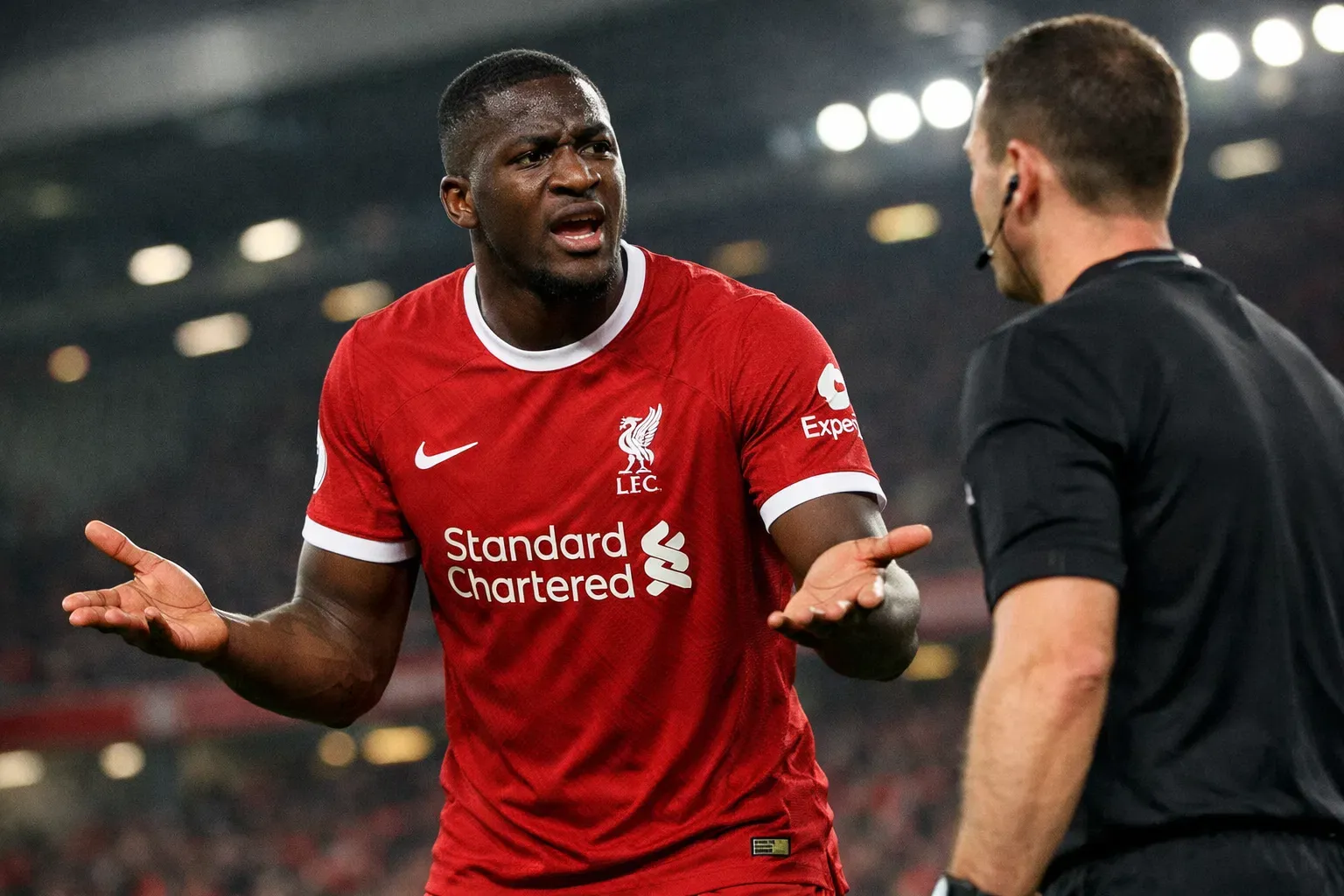
Liverpool PSG Champions League: Konate fumes at schedule
Liverpool PSG Champions League quarter-final: Konate hits out at Premier League scheduling as PSG gain rest advantage before Anfield second leg.
Liverpool PSG Champions League quarter-final: Konate hits out at Premier League scheduling as PSG gain rest advantage before Anfield second leg.
Liverpool walked out of Paris with a 2-0 deficit and a sense that the tie is being fought on two fronts: the pitch and the calendar. In this Liverpool PSG Champions League quarter-final, Desire Doue and Khvicha Kvaratskhelia punished moments of hesitation, leaving Anfield to host a second leg loaded with jeopardy. Yet the post-match story quickly shifted to Ibrahima Konate, whose frustration at Premier League scheduling captured a wider debate about player welfare and competitive balance.
Ibrahima Konate did not dress up his feelings after the first leg, pointing directly at Premier League scheduling and the lack of protection for clubs juggling Europe. He framed the Liverpool PSG Champions League setback as more than a bad night, arguing that the rhythm of recovery, training, and travel is now a decisive factor. When players say the calendar is shaping outcomes, it is not deflection, it is a warning about limits.
Konate’s comments also landed because they echoed what supporters have been muttering for years: English teams often carry a heavier domestic load than their continental rivals. In this Liverpool PSG Champions League tie, PSG’s ability to step away from weekend intensity creates a different preparation environment. Liverpool, by contrast, must switch from European damage control to league duty and back again, risking both freshness and focus.
The Premier League sells its relentlessness as a feature, but in European weeks it can look like a flaw. Konate’s point is that the league rarely bends to help clubs in the Champions League quarter-finals, even when the margins are tiny. In a Liverpool PSG Champions League context, that rigidity can translate into slower legs in the final half-hour, or a half-step lost when tracking runners like Kvaratskhelia.
Player welfare is often discussed as a medical and moral concern, but it is increasingly a tactical variable. Rotation plans become compromised when every league point matters, and recovery windows shrink when travel and media obligations pile up. Konate’s frustration after Liverpool PSG Champions League defeat is rooted in that reality: fatigue doesn’t just cause injuries, it changes decision-making speed, duels won, and the sharpness of pressing triggers.
PSG’s weekend off before the second leg is the headline, but the advantage begins earlier than that. When a team can tailor micro-cycles—hard session, taper, tactical rehearsal, then full recovery—it can arrive at a Champions League quarter-finals night feeling crisp. In the Liverpool PSG Champions League first leg, PSG looked like a side with time to prepare patterns and rehearse pressing traps, especially in wide areas.
Liverpool were not outplayed in every phase, yet PSG’s control of tempo felt connected to freshness and clarity. The home side pressed with coordination, then dropped into compactness without losing distances, forcing Liverpool into rushed passes and awkward angles. In a Liverpool PSG Champions League tie, those subtle wins matter because they create the platform for stars to decide it, and PSG had more of those platforms across 90 minutes.
Rest is not only physical; it is psychological, and PSG looked mentally ready for the moments that swing knockout football. They attacked transitions with conviction and defended their box with a calm that suggested repetition on the training ground. Liverpool PSG Champions League nights are often decided by who is most composed when the stadium noise spikes, and PSG’s preparation time seemed to translate into steadier choices under pressure.
The phrase “PSG fixture advantage” can sound like a fan excuse until you map it onto the realities of elite performance. Extra days allow for targeted work on set-piece routines, opponent-specific triggers, and recovery protocols that keep hamstrings and calves from tightening late on. In a Liverpool PSG Champions League quarter-final, those margins can determine whether a defender reaches a cutback or whether a forward gets half a yard to finish.
Desire Doue’s goal carried the imprint of modern PSG: fearless youth mixed with a system that creates space for decisive actions. Liverpool were punished for a brief lapse in spacing, and Doue attacked the moment with the kind of certainty that turns good prospects into match-winners. In a Liverpool PSG Champions League first leg, scoring first is a strategic weapon, because it changes the risk profile for both teams instantly.
Khvicha Kvaratskhelia then delivered the second blow, the sort that makes a two-goal deficit feel heavier than the scoreboard suggests. His directness forced defenders into uncomfortable body positions, and his final action had the ruthless simplicity of a top winger. Liverpool PSG Champions League ties are often framed by star power, and Kvaratskhelia’s contribution underlined why PSG believe this is their year to go deep.
Liverpool’s defensive issues were not simply individual mistakes; they were structural moments where the chain reaction broke. When the press arrives a fraction late, the back line is asked to defend larger spaces, and that is where Doue and Kvaratskhelia thrive. In the Liverpool PSG Champions League first leg, Liverpool’s distances occasionally stretched, creating lanes for diagonals and cutbacks that PSG were eager to exploit.
Konate’s game is built on assertiveness—stepping in, winning duels, and imposing himself physically—yet knockout football punishes mistimed bravery. When a defender jumps out and the midfield screen is not perfectly aligned, the space behind becomes a target. The Liverpool PSG Champions League narrative around Konate is therefore complicated: he is essential to Liverpool’s best defending, but he also feels the schedule strain that can blunt reaction times.
Liverpool now face Fulham in the Premier League with a dilemma that every elite club recognises: rotate and risk points, or go strong and risk fatigue. The problem is intensified by the Liverpool PSG Champions League deficit, because chasing a comeback demands energy, intensity, and emotional fuel. Fulham are not a convenient opponent either; they can press, counter, and punish any drop in sharpness at set pieces.
This is where Premier League scheduling becomes more than a complaint and starts to feel like a competitive handicap. PSG can plan a full week around Anfield, while Liverpool must navigate a league fixture that carries its own stakes and pressure. In the Liverpool PSG Champions League context, the Fulham match preview is really a preview of Liverpool’s resource management: minutes, muscle load, and the mental freshness required to believe in a turnaround.
Liverpool’s coaching staff must decide where to spend their intensity: in London against Fulham, or saved for the Anfield siege. Expect a blend—key leaders to maintain rhythm, plus targeted rotation to protect legs that have been running hot for months. The Liverpool PSG Champions League comeback requires speed in wide areas and aggression in duels, so preserving those attributes may matter more than chasing a perfect XI on Saturday.
Fulham’s threat is that they can turn a slightly flat performance into a long afternoon, especially if Liverpool’s second balls and counter-pressing are half a step slow. They will look for transitions into the channels and moments to isolate defenders, forcing repeated sprints that accumulate fatigue. In the shadow of Liverpool PSG Champions League urgency, the danger is not only dropping points, but also picking up knocks that damage the second-leg plan.
Overturning 2-0 is difficult but not unfamiliar territory for Liverpool at Anfield, where the crowd can turn pressure into a force multiplier. The first requirement is control: not sterile possession, but controlled aggression that keeps PSG pinned while guarding against counters. In a Liverpool PSG Champions League second leg, emotion must be channelled into structure, because chaos is exactly what PSG’s attackers want to exploit.
Liverpool also need a cleaner attacking map than they showed in Paris, with better timing of runs and more variety in how they enter the final third. PSG will expect early pressure and will plan to survive the initial storm, so Liverpool must sustain intensity beyond the first 20 minutes. The Liverpool PSG Champions League comeback will likely depend on scoring first, but also on avoiding the killer away goal-style punch that effectively ends the night.
Liverpool’s best European performances are built on coordinated pressing triggers and a midfield that hoovers up second balls. If those elements return, PSG’s build-up can be forced into rushed clearances and uncomfortable wide passes, feeding Anfield’s momentum. In the Liverpool PSG Champions League second leg, the midfield duel is not glamorous, but it is decisive: win the scraps, and the front line gets more repeats of dangerous attacks.
When open play becomes tense and crowded, set pieces often provide the cleanest path to goals, especially early. Liverpool have the aerial presence to hurt PSG, and an Anfield crowd loves nothing more than a corner that feels like a penalty. In a Liverpool PSG Champions League comeback scenario, one well-executed dead-ball routine can flip belief instantly, forcing PSG to defend deeper and giving Liverpool the territory they crave.
Konate’s outburst matters because it fits a broader pattern: players and coaches increasingly feel that domestic structures do not reflect European competition realities. The Premier League’s commercial success depends on constant high-stakes fixtures, yet that very intensity can undermine English clubs when they reach the sharp end in Europe. The Liverpool PSG Champions League quarter-final has become a case study, with PSG’s lighter schedule shining a harsh light on England’s packed calendar.
There is also a cultural element, where the expectation is that top squads should simply “cope” because they have depth. But depth is not infinite, and cohesion suffers when rotations become forced rather than planned. In the Liverpool PSG Champions League run-in, Liverpool’s challenge is to stay competitive on multiple fronts without burning out, while PSG can streamline priorities with greater freedom and fewer domestic obstacles.
Meaningful change would require coordination between broadcasters, league administrators, and clubs, which is notoriously difficult when money and tradition are involved. Small adjustments—like protecting Champions League quarter-finals weeks with smarter scheduling—could help, but they demand collective will. The Liverpool PSG Champions League controversy may generate noise, yet the system tends to move slowly unless multiple clubs feel the pain at the same time and push together.
Konate is not a politician; he is a defender who feels every sprint, every landing, and every awkward twist in a season that never really pauses. When he talks about Premier League scheduling, he is translating a dressing-room reality that fans rarely see: constant management of soreness, sleep, and mental load. The Liverpool PSG Champions League debate, then, is not just about fairness, but about how close to the edge elite players are asked to operate.
Liverpool now head into a week that could define their season, with Fulham first and then the Anfield reckoning that will either ignite a comeback or confirm a painful exit. The Liverpool PSG Champions League storyline is no longer only about Doue’s finish or Kvaratskhelia’s brilliance, but about whether Liverpool can summon one of their famous European nights while carrying the weight of a relentless domestic schedule. Konate’s frustration has put player welfare in the spotlight, and the response will come in performances, not press conferences.

Julian Mercer is a lifelong student of the game whose passion for football was sparked at an early age, after stepping onto the grass of Camp Nou as a six-year-old — a moment that left a lasting impression and set him on a permanent path into the sport. Since then, football has been both his lens on the world and his favourite language. Blending traditional fandom with a deep interest in tactics, squad building, and long-term team development, Julian has spent decades analysing the game from every angle. His fascination with football strategy was further shaped through years of immersive play in Football Manager, a series he has followed since the mid-1990s, developing a sharp eye for patterns, player profiles, and the fine margins that define success. At My World Of Football, Julian focuses on the stories beneath the surface — from tactical evolutions and managerial philosophies to the narratives that connect clubs, players, and supporters across generations. His writing aims to balance insight with accessibility, always grounded in a genuine love for the game.
Continue reading more football news