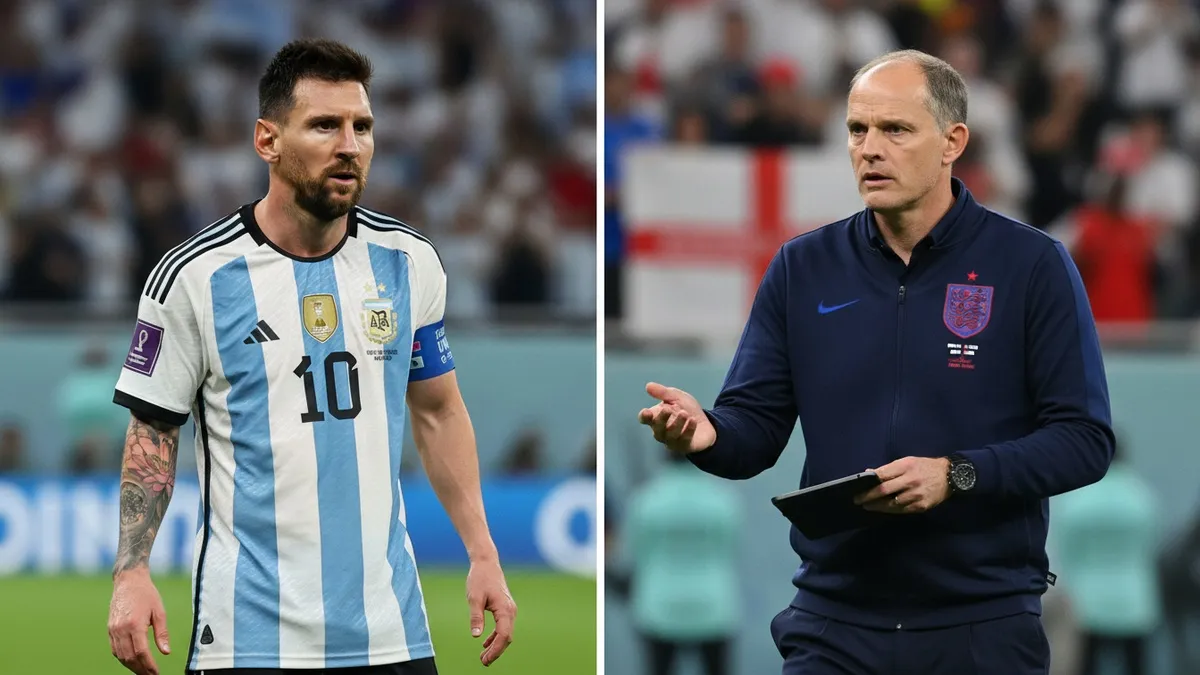
Manchester United performance analysis amid Shearer critique
Manchester United performance analysis after Shearer’s criticism, Newcastle loss, Scholes-Carrick tension, and Villa test shaping Champions League hopes.
Manchester United performance analysis after Shearer’s criticism, Newcastle loss, Scholes-Carrick tension, and Villa test shaping Champions League hopes.
Alan Shearer rarely sounds genuinely baffled on television, but Manchester United have managed it. After a limp 2-1 defeat at Newcastle United, the Premier League’s all-time leading scorer looked at the table, saw United sitting third, and essentially asked: how? This Manchester United performance analysis isn’t about one bad afternoon; it’s about a season of muddled attacking ideas, flat body language, and a growing sense that results are outpacing performances. With Aston Villa next, the scrutiny is only intensifying.
Shearer’s point wasn’t that Manchester United can’t win games; it was that they keep winning without looking like a coherent, dangerous side. In this Manchester United performance analysis, third place becomes less a badge of control and more a statistical mirage built on moments. Newcastle’s intensity exposed how often United drift through halves waiting for a spark rather than manufacturing pressure with structure and tempo.
That’s why Alan Shearer criticism landed so sharply: it echoed what fans have muttered for months while watching sterile possession and isolated forwards. The Newcastle United victory felt inevitable once United’s early energy evaporated, because the patterns were familiar. This Manchester United performance analysis keeps circling back to the same issue—too few runners, too little threat between the lines, and too much reliance on Bruno Fernandes improvising something from nothing.
Newcastle didn’t need a tactical masterclass; they needed conviction in duels, aggressive second-ball hunting, and quick entries into the channels. This Manchester United performance analysis shows how easily United’s midfield gets stretched when opponents play forward early and force recovery runs. Once Newcastle pinned United’s wide players deep, the away side’s transitions became long sprints rather than coordinated counters, and their forwards were left feeding on scraps.
The Premier League standings can flatter a team that’s efficient in both boxes, but Shearer’s disbelief was rooted in the eye test. In this Manchester United performance analysis, United’s underlying rhythm looks more mid-table than top-three: spells of passivity, low shot volume in key moments, and a habit of conceding territory. Champions League qualification is the prize, yet the performances often resemble a side clinging on rather than one imposing itself.
The most damning part of the Newcastle loss was how little United offered once they fell behind. This Manchester United performance analysis highlights an attack that too often becomes predictable: wide circulation, a hopeful cross, then a reset. When the press is beaten, there’s rarely a coordinated second wave arriving in the box, leaving the striker outnumbered and the cutback lanes empty, even in moments that should scream opportunity.
Shearer singled out the forward positions, and it’s hard to argue. In this Manchester United performance analysis, the front line’s movement lacks synchronization, so defenders can hold their shape rather than being dragged into uncomfortable decisions. Bruno Fernandes remains the exception—constantly demanding the ball and forcing passes through traffic—but even he can’t carry the entire creative load every week without the team’s spacing and timing improving.
Bruno Fernandes plays like a man trying to drag the game forward by the collar, but that urgency can become chaotic without support. This Manchester United performance analysis shows how opponents increasingly target the moments when Bruno vacates his zone to press or receive, then counter into the space he leaves. United need a second reliable progression route—either a runner beyond the last line or a midfielder who can dictate tempo—so everything isn’t funnelled through one outlet.
Aaron Ramsdale isn’t at United, yet his name keeps surfacing in Premier League chatter about elite margins and dependable distribution under pressure. In this Manchester United performance analysis, the point is comparative: top sides want their build-up to start cleanly, especially when the press is fierce. Whether or not Ramsdale is ever relevant to United, the broader lesson stands—small technical security at the back can change how brave a team feels further forward.
When Paul Scholes comments become public criticism of Michael Carrick, it’s never just a throwaway opinion; it’s a cultural moment. This Manchester United performance analysis has to account for atmosphere as well as shape, because United’s ecosystem is unusually loud. Former players carry megaphones, and their words seep into fan discourse, media narratives, and—inevitably—dressing-room consciousness, especially when results wobble after a high-profile defeat.
Scholes’ surprise at Carrick’s approach, and the directness with which he voiced it, added another layer of pressure to a club already living under a microscope. In this Manchester United performance analysis, the key is not whether Scholes is right or wrong, but what it signals: a lack of unity around the footballing direction. When legends question Michael Carrick tactics so openly, it amplifies every sideways pass and every blunt attacking sequence.
At most clubs, criticism is noise; at United, it can feel like an institutional verdict. This Manchester United performance analysis notes how the “Class of ’92” generation still shapes expectations, often framing games through the lens of dominance and swagger. When that standard is invoked, current players can look timid by comparison, and managers can appear temporary. Scholes’ words therefore sharpen the stakes of every selection and substitution.
The Michael Carrick tactics debate, fair or not, centres on whether United are building a repeatable attacking structure or simply surviving on individual quality. This Manchester United performance analysis points to recurring issues: slow circulation, limited third-man runs, and an absence of automatisms in the final third. If Carrick wants the criticism to fade, United must show a recognisable plan—one that creates chances even on days when Bruno Fernandes isn’t producing magic.
Aston Villa arriving on the calendar feels less like another fixture and more like an audit. This Manchester United performance analysis frames it as a credibility test: can United play with authority against a well-coached opponent, or will they retreat into reactive football? Champions League qualification is the headline objective, and being third should mean control, yet the mood around Old Trafford suggests fragility rather than certainty.
Villa’s threat is particularly awkward for United because they can hurt you in multiple ways—pressing high, countering quickly, or patiently probing. This Manchester United performance analysis suggests United must improve their rest defence, because turnovers have been killing them. If United lose the ball with full-backs high and midfielders disconnected, Villa will run into open grass all afternoon, turning a top-four race into a weekly anxiety spiral.
First, United need sharper spacing between midfield and attack so possession doesn’t become a series of lonely duels. This Manchester United performance analysis also prioritises faster ball speed, because slow passing invites pressure and forces riskier decisions later. Finally, the front line must commit to coordinated runs—one to stretch, one to check, one to arrive late—so chances are created by design, not desperation.
United’s worst moments often come right after they score or concede, when emotional swings override decision-making. This Manchester United performance analysis argues that game-state management is as tactical as any formation: knowing when to slow the tempo, when to draw fouls, and when to keep the ball in safe zones. Against Villa, the team that controls the “five-minute windows” after key events will probably control the match.
While United wrestle with performance doubts, Liverpool are dealing with expectation shock under Arne Slot. The conversation around Liverpool top-five finish has turned from ambition to necessity, and that shift is brutal in a club accustomed to title races. This Manchester United performance analysis widens the lens because the league’s pressure points are connected: when big clubs wobble, the table compresses, and every dropped point becomes a headline.
Slot’s challenge is partly tactical, partly psychological. Liverpool can still look vibrant, but the season has had too many flat patches, and the margin for error is shrinking. This Manchester United performance analysis notes the contrast: United are high in the Premier League standings despite scepticism, while Liverpool’s performances have sometimes been better than their position suggests. The common thread is that neither club feels fully settled in its identity.
At elite clubs, “project” talk lasts only as long as results allow it. This Manchester United performance analysis draws a parallel with United’s own volatility: when performances are questioned, the manager’s runway shortens. For Slot, a Liverpool top-five finish isn’t just about Champions League revenue; it’s about authority in the dressing room, transfer leverage, and convincing supporters that the direction of travel is upward.
United can’t pretend Liverpool’s chase is irrelevant, because it changes the emotional temperature around every United match. This Manchester United performance analysis explains the dynamic: if Liverpool build momentum, United’s third-place cushion feels smaller even if the points say otherwise. Conversely, if Liverpool stumble, United get breathing room—but that can breed complacency, the very habit Shearer is warning against when he questions their Champions League qualification credentials.
The most useful thing about Alan Shearer criticism is that it forces a hard look at what’s real. This Manchester United performance analysis isn’t a call for panic; it’s a demand for honesty about recurring shortcomings. United can still finish strongly, but not if they keep treating matches as puzzles to be solved by individual moments. The run-in will reward teams with repeatable patterns, emotional control, and ruthless penalty-box efficiency.
There is also a cultural component that United must manage better. Paul Scholes comments about Michael Carrick tactics may be uncomfortable, but they reflect a club where debate is constant and standards are unforgiving. This Manchester United performance analysis suggests the healthiest response is not to swat away criticism, but to produce performances that make the debate irrelevant: sharper pressing triggers, braver passing, and a front line that looks hungry rather than hopeful.
Success in the final weeks won’t be defined only by a Champions League qualification stamp. This Manchester United performance analysis argues that supporters want to see a team that can dominate phases, create chances in clusters, and respond to setbacks with composure. If United finish third while still looking blunt and reactive, the summer will be filled with doubt. If they finish third with a clear identity, optimism returns quickly.
Possession can be cosmetic, and United have had plenty of it in matches where they still looked toothless. This Manchester United performance analysis recommends tracking chance quality—cutbacks, central shots, and entries into the six-yard corridor—because that reveals whether the attack is functioning. Against sides like Villa, Newcastle, and the league’s best pressing units, the teams that generate high-value chances usually win, regardless of how pretty the passing looks.
United’s season is at a crossroads where the table says one thing and the football says another. Shearer’s disbelief, the spotlight on Bruno Fernandes’ burden, and the noise from Paul Scholes comments about Michael Carrick tactics all point to a club that needs clarity fast. This Manchester United performance analysis ultimately comes down to urgency: fix the attacking cohesion, manage game states, and match opponents’ intensity. Do that against Aston Villa and beyond, and Champions League qualification becomes earned, not accidental.

Julian Mercer is a lifelong student of the game whose passion for football was sparked at an early age, after stepping onto the grass of Camp Nou as a six-year-old — a moment that left a lasting impression and set him on a permanent path into the sport. Since then, football has been both his lens on the world and his favourite language. Blending traditional fandom with a deep interest in tactics, squad building, and long-term team development, Julian has spent decades analysing the game from every angle. His fascination with football strategy was further shaped through years of immersive play in Football Manager, a series he has followed since the mid-1990s, developing a sharp eye for patterns, player profiles, and the fine margins that define success. At My World Of Football, Julian focuses on the stories beneath the surface — from tactical evolutions and managerial philosophies to the narratives that connect clubs, players, and supporters across generations. His writing aims to balance insight with accessibility, always grounded in a genuine love for the game.
Continue reading more football news