Manchester United transfer targets: Tonali & Ederson
Manchester United transfer targets include Sandro Tonali and Atalanta’s Ederson as a post-Casemiro midfield rebuild leads the summer window plans.
Manchester United transfer targets include Sandro Tonali and Atalanta’s Ederson as a post-Casemiro midfield rebuild leads the summer window plans.
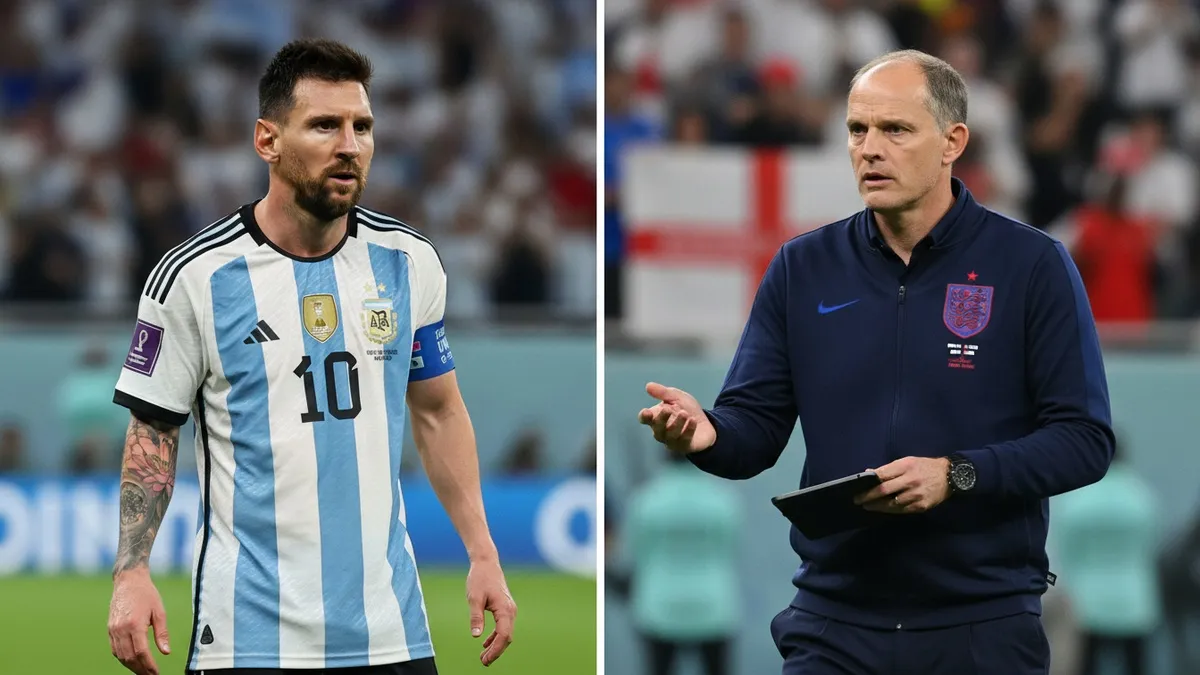
Manchester United are stepping into a defining summer transfer window with a clear message: the midfield has to be rebuilt for a Champions League return, not patched up. The latest Manchester United transfer targets are ambitious and stylistically deliberate, with Newcastle United’s Sandro Tonali and Atalanta’s Ederson shortlisted to inject legs, control, and tempo. After Casemiro’s departure, United want midfielders who can press, carry, and recover, aligning with Michael Carrick’s developing tactical vision.
There’s a difference between buying names and buying solutions, and Manchester United transfer targets this summer read like a blueprint rather than a wish list. United’s recruitment is being framed around energy and repeatability, the traits that allow a side to survive big European nights and relentless Premier League transitions. With Casemiro no longer the safety net, the club is prioritising midfielders who can defend forward and still play through pressure.
That’s why Manchester United transfer targets have narrowed toward profiles that can cover huge distances without losing technical sharpness. Tonali and Ederson are both comfortable in contested spaces, and both are used to systems where midfielders must do two jobs at once. United’s pitch is simple: come lead a new spine, become the engine of a Champions League project, and thrive in a role built for high-intensity football.
Casemiro leaving isn’t just about replacing tackles and experience; it’s about replacing an entire method of defending. United often protected him by dropping deeper, but the next iteration aims to compress the pitch and win the ball earlier. That shift changes the type of midfielder required, which is why Manchester United transfer targets lean toward mobile, duel-winning players who can sprint back, step up, and still keep possession moving.
Michael Carrick’s coaching identity is increasingly tied to control through positioning and quick circulation, but also to hard running when possession is lost. In that model, the midfield can’t be static or overly specialised, because transitions decide matches in modern football. Manchester United transfer targets are therefore being filtered through an “all-action” lens, seeking players who can press high, cover wide spaces, and progress the ball without slowing attacks.
Among the Manchester United transfer targets, Sandro Tonali is the one that instantly changes the conversation because he feels like a statement. He has played 53 matches for Newcastle United this season, and that availability matters as much as his quality in possession. Tonali’s game is built on rhythm: crisp passing, aggressive counter-pressing, and the ability to arrive in zones where second balls decide momentum. United see him as a tone-setter.
Newcastle United, of course, won’t view Tonali as a convenient market opportunity, and that’s where the story gets complicated. They’ve built a midfield identity around intensity and vertical play, and Tonali has become central to that. Still, Manchester United transfer targets don’t get much bigger than prising away a rival’s core starter, and United will likely sell the idea of role clarity, European spotlight, and a midfield designed around him.
Tonali’s appeal isn’t just his passing range; it’s how he plays at speed without looking rushed. He can receive under pressure, open his body, and find the next pass quickly, which is essential if Carrick wants United to play through the middle more often. For Premier League transfers, that combination of technique and intensity is rare, and it’s why Manchester United transfer targets keep circling back to Tonali as the premium option.
Newcastle United can credibly take a hard line because Tonali is under contract and is already embedded in their system. That means any deal would likely require a fee that reflects not only ability but also disruption, plus the political cost of strengthening a domestic competitor. Manchester United transfer targets can be expensive, but the Tonali chase is also about leverage, and United may need creativity in add-ons or player exchanges to shift the dial.
While Tonali is the headline, Ederson has become the most intriguing of the Manchester United transfer targets because he looks like a ready-made Premier League athlete. He has made 41 appearances for Atalanta this season, thriving in a system that demands constant movement and bravery in duels. Ederson covers ground effortlessly, carries the ball through pressure, and tackles with timing rather than desperation. United reportedly weighing a €45 million bid signals genuine intent.
Atalanta midfielders often arrive in England battle-tested, and Ederson’s development suggests he could adapt quickly to Premier League transfers. He’s used to chaotic games where midfielders must protect the back line and still support attacks, which mirrors the demands United face weekly. For Manchester United transfer targets, Ederson also offers squad-building logic: he can play as a No.8, a double-pivot runner, or even as the “connector” behind a more creative partner.
Ederson’s carrying is the kind that flips the pitch, not just a safe dribble into traffic. He can break the first line, force defenders to step out, and create the space for runners to attack. In Carrick’s vision, that matters because United have often relied too heavily on wide transitions, leaving the middle underused. Manchester United transfer targets like Ederson promise a more central route to goal, powered by physicality and composure.
At €45 million, Ederson sits in that bracket where he’s too expensive to be a rotation piece but not so costly that he must be a superstar immediately. The key is role definition: is he the ball-winner, the carrier, or the box-to-box runner arriving late? Manchester United transfer targets succeed when the plan is precise, and United must ensure Ederson’s minutes and responsibilities are clear from day one to avoid a slow start.
Every big rebuild is also a financial puzzle, and Manchester United transfer targets have to be pursued within the modern constraints of profitability and sustainability rules. That’s partly why the club is building a layered midfield shortlist instead of gambling on one blockbuster. Tonali would likely command a premium fee, while Ederson’s price is more predictable, and both would require wage planning that doesn’t repeat past mistakes. United want upgrades without creating another imbalance.
Premier League transfers now move at the speed of opportunity, meaning United must be ready to pivot if Newcastle United slam the door or Atalanta raise the price. The club’s approach looks more like a portfolio than a single bet: one elite target, one high-value target, and at least one developmental profile. Manchester United transfer targets, in that sense, are being pursued with contingency built in, not as a last-minute scramble when negotiations stall.
Midfield markets often depend on one deal unlocking another, and United know that waiting too long can inflate fees. If Newcastle United sense desperation, they can hold firm, while Atalanta are famously tough negotiators who prefer auctions to private bargains. Manchester United transfer targets must therefore be advanced early, with clear walk-away points and parallel conversations running. The best windows are won by controlling timing, not just by spending money.
One signing rarely fixes a midfield that lacks both athletic coverage and technical continuity. United have suffered when injuries or form dips leave them with limited profiles, forcing tactical compromises. By targeting Tonali and Ederson together, Manchester United transfer targets reflect the idea of building a unit: one player to set tempo and press, another to carry, duel, and protect. Two additions also allow rotation, which is essential for Champions League schedules.
Contingency isn’t a sign of uncertainty; it’s a sign of competence, and that’s why Carlos Baleba is mentioned alongside the headline Manchester United transfer targets. Brighton have become a reference point for talent identification, and Baleba’s profile fits the modern midfield trend: athletic, technically secure, and capable of learning multiple roles. If Tonali proves impossible and Ederson becomes a bidding war, Baleba offers a different route to the same end goal.
Baleba also represents a strategic twist in Premier League transfers, where buying from a domestic rival can be both expensive and practical. The adaptation risk is lower because the player already understands the league’s speed, physicality, and tactical variety. For Manchester United transfer targets, that matters because the club can’t afford another season of midfield bedding-in time. They need players who can contribute quickly while still having long-term upside.
Baleba’s standout trait is how calmly he handles pressure, using body positioning to protect the ball and simple passes to keep moves alive. He isn’t just a runner; he’s a stabiliser who can help a team play through the middle without panicking. In Carrick’s system, that could translate into a useful pivot option or a progressive No.8. Manchester United transfer targets like Baleba are about building tomorrow’s core, not just fixing today’s issues.
Brighton rarely sell cheaply, and they prefer buyers who move decisively rather than dragging talks into August. That means United would need to identify Baleba as a true priority, not a late fallback, if they want a realistic chance. Manchester United transfer targets often fail when they become reactive, and Brighton punish indecision with price hikes. If United do move, it will likely be early, clean, and backed by a clear development plan.
The most exciting part of these Manchester United transfer targets is what they would allow United to become, rather than what they would simply replace. A Tonali-Ederson midfield could press higher, recover faster, and sustain attacks longer, reducing the chaotic back-and-forth that has defined too many matches. With better midfield coverage, the back line can hold a braver line, and the front players can receive the ball in more dangerous positions.
There’s also a psychological shift when a team knows it can win midfield duels repeatedly. United have too often looked stretched, with huge gaps between lines, making every turnover feel like a crisis. Manchester United transfer targets like Tonali and Ederson would shrink those gaps through work rate and positioning, giving Carrick the platform to implement a more controlled style. That’s the difference between hoping for Champions League and belonging there.
Champions League football punishes thin squads, especially in midfield where running loads are brutal and suspensions accumulate. United can’t rely on one ever-present anymore, because modern seasons demand rotation without a drop in intensity. Manchester United transfer targets are therefore chosen with durability and repeat sprint ability in mind, which is why Tonali’s 53-match season and Ederson’s 41 appearances stand out. Availability is a skill, and United are shopping for it.
When midfielders press with conviction, everything else becomes easier: defenders step up, wingers gamble, and the team controls territory. United’s best eras have always had a midfield identity, whether it was relentless running or calm control under pressure. These Manchester United transfer targets hint at a culture reset, where intensity becomes non-negotiable rather than optional. If Carrick is serious about imprinting his vision, the midfield is where that message must start.
United’s summer will ultimately be judged by whether the midfield feels transformed on opening day, not by how loud the rumours were in June. Sandro Tonali and Ederson are compelling Manchester United transfer targets because they address the same problem from complementary angles: one sets rhythm and leads the press, the other carries, duels, and closes space with athletic authority. With Carlos Baleba as a credible alternative, United’s recruitment looks more prepared than impulsive. If they execute, the Champions League return won’t just be a destination—it will be the standard.

Julian Mercer is a lifelong student of the game whose passion for football was sparked at an early age, after stepping onto the grass of Camp Nou as a six-year-old — a moment that left a lasting impression and set him on a permanent path into the sport. Since then, football has been both his lens on the world and his favourite language. Blending traditional fandom with a deep interest in tactics, squad building, and long-term team development, Julian has spent decades analysing the game from every angle. His fascination with football strategy was further shaped through years of immersive play in Football Manager, a series he has followed since the mid-1990s, developing a sharp eye for patterns, player profiles, and the fine margins that define success. At My World Of Football, Julian focuses on the stories beneath the surface — from tactical evolutions and managerial philosophies to the narratives that connect clubs, players, and supporters across generations. His writing aims to balance insight with accessibility, always grounded in a genuine love for the game.
Continue reading more football news