Myworldoffootball
Michael Olise transfer news: Bayern block PSG move
Michael Olise transfer news: Bayern Munich reject PSG interest, plan a 2031 contract extension and pay rise, forcing PSG to consider other targets.
Michael Olise transfer news: Bayern Munich reject PSG interest, plan a 2031 contract extension and pay rise, forcing PSG to consider other targets.
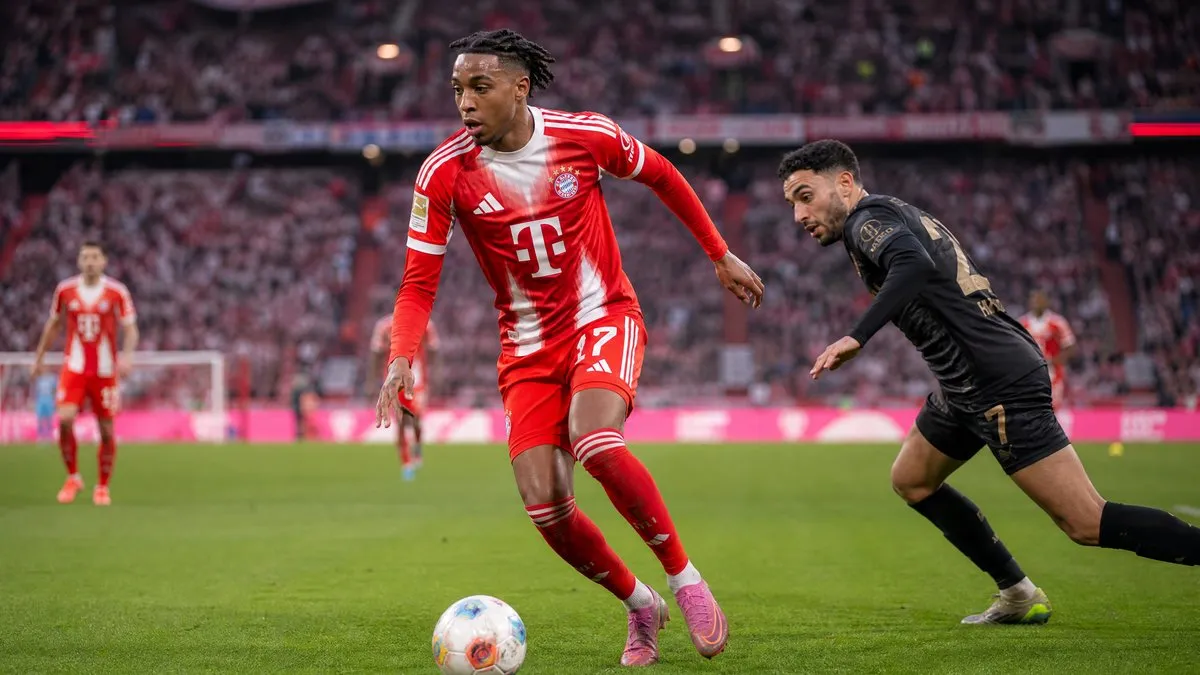
Michael Olise transfer news has taken a sharp turn in Paris, because PSG’s long-running admiration is meeting a granite wall in Munich. Bayern Munich have not merely cooled the discussion; they have shut it down with a message that Olise is central to everything they are building. With the winger producing 22 goals and 31 assists in 52 appearances, Bayern see a franchise-level talent, not a negotiable asset. PSG now face a familiar modern problem: even extraordinary money can’t always buy a cornerstone.
Michael Olise transfer news rarely arrives without noise, but Bayern’s stance has been unusually clean and emphatic. The Bundesliga giants have told intermediaries and interested parties that the player is not for sale, even if PSG come armed with eye-watering numbers. In an era when €200 million bids can at least start a conversation, Bayern’s refusal signals a deeper strategic priority. They are protecting a project, not just a price tag.
The firmness matters because it reframes the entire market around elite wide players. PSG’s interest is logical given their need for creators and match-winners, yet Bayern are behaving like a club that has already replaced uncertainty with control. This is not posturing for leverage; it is a club acting as though the decision has already been made internally. Michael Olise transfer news, in this case, is less about pursuit and more about a door being locked.
Bayern’s executives view Olise as a cornerstone because his output is paired with tactical elasticity. He can start wide, drift into the half-space, or play as a narrow creator behind a striker, which makes him a coach’s dream in Champions League ties. Those 22 goals and 31 assists are not empty numbers; they reflect repeated decisive actions in final-third moments. That blend of efficiency and imagination is precisely why Bayern won’t entertain PSG.
When a club publicly shrugs at hypothetical €200 million or even €500 million offers, it is making a statement to the market. Bayern are signalling that their sporting identity and continuity matter more than the one-time sugar rush of a mega sale. For PSG, this is a reminder that football transfers at the top end are increasingly shaped by project credibility, not just wage power. Michael Olise transfer news becomes a case study in modern leverage.
The clearest way to kill speculation is paperwork, and Bayern’s solution is a contract extension designed to stretch far into the next decade. Their intention to tie Olise down until 2031 is not just long; it is symbolic, a declaration that he is part of the club’s prime years ahead. It also makes any future negotiation structurally difficult, because remaining years translate directly into negotiating strength. Michael Olise transfer news is being met with Bayern’s preferred weapon: time.
Alongside the length comes the money, because elite players expect elite acknowledgement. Bayern are preparing a substantial salary increase that matches Olise’s status and his production, ensuring he feels valued while also discouraging opportunistic approaches. This is the classic big-club retention play, but with an added edge: it is being deployed against PSG, a club known for testing resolve. The contract extension is meant to make the entire conversation feel pointless.
An Olise contract running to 2031 offers more than financial comfort; it offers clarity about his place in the hierarchy. Players at his level want to know they are not just another star in a rotating cast, and Bayern are effectively promising that he will be a reference point. That matters in a dressing room where roles can shift quickly after one poor European night. Michael Olise transfer news fades when the player’s own incentives align with staying put.
Bundesliga news often revolves around whether German clubs can keep their best talent from richer leagues, and Bayern are flipping that narrative. By moving early and aggressively on an extension, they set a benchmark for how to protect a peak-age attacker from external pressure. The league benefits when its headline performers remain visible week after week, and Bayern benefit by keeping their competitive edge. Michael Olise transfer news, ironically, becomes a story about Bundesliga power.
It is difficult to overstate what 53 direct goal contributions in 52 appearances does to a player’s perceived value. Those figures place Olise among Europe’s most productive wide attackers, and they also explain why PSG have kept him on their radar for so long. In a team that often faces deep defensive blocks in Ligue 1, a winger who can create in tight spaces is priceless. Michael Olise transfer news persists because the profile fits PSG’s needs perfectly.
For Bayern, the same numbers support the argument that selling would be self-sabotage. Clubs can replace goals, perhaps, but replacing a dual-threat creator who scores and supplies at that rate is far harder, especially when the replacement must also handle Champions League pressure. Bayern are essentially saying the market cannot offer them a better solution than the one already in their squad. That is why even absurd fees are being dismissed without drama.
Some hot seasons can be explained by finishing luck, but Olise’s impact looks repeatable because it is rooted in decision-making. He creates separation with timing rather than pure speed, and he regularly finds high-value passes that break lines instead of chasing low-percentage crosses. His goals also come from varied situations, suggesting he is not dependent on one pattern. Michael Olise transfer news is fueled by the sense that this isn’t a one-year spike.
PSG’s interest is not just about star power; it is about solving structural issues in possession. They need someone who can carry the ball through pressure, combine quickly around the box, and still deliver end product when chances are scarce. Olise offers that blend, which is why the club’s admiration has lasted through multiple recruitment cycles. Yet Michael Olise transfer news now reads like a wish list item that Bayern refuse to put on the shelf.
When Bayern refuse to negotiate, PSG have to decide whether to waste weeks on an impossible deal or pivot early. That is why alternative names are already surfacing, with AS Monaco’s Maghnes Akliouche among the most intriguing. PSG’s recruitment department has learned that good windows are about timing, not just targets, and missing early opportunities can snowball into late-window panic. Michael Olise transfer news, by closing one door, forces PSG to open another.
Akliouche represents a different type of bet, one with upside and developmental runway rather than proven superstar certainty. In Ligue 1, PSG can also sell the pathway and the spotlight, arguing that domestic familiarity reduces adaptation risk. Still, switching targets is not as simple as swapping names on a list, because the tactical requirements and personality fit have to match the coach’s vision. PSG’s pivot shows how football transfers are increasingly about portfolio building, not single purchases.
Akliouche offers technical quality and close control that could translate into PSG’s positional play, but he is not yet the finished product Olise appears to be. That difference changes expectations, because PSG would be buying potential and hoping to accelerate it under pressure-heavy conditions. The upside is that a younger profile can be molded to specific roles, especially if the coaching staff commits to him. Michael Olise transfer news pushes PSG toward a more developmental gamble.
There is also a political and practical logic to PSG looking within Ligue 1. Domestic deals can be negotiated with fewer cross-border complications, and PSG can leverage their status to sell a clear narrative of national dominance and European ambition. Monaco, however, are shrewd sellers, and any deal would still be expensive and complex. Michael Olise transfer news may be blocked by Bayern, but it still shapes PSG’s next move in the local market.
Bayern’s refusal is most convincing when viewed through the lens of squad planning rather than emotion. They want a stable core that can carry them through multiple Champions League campaigns, and Olise fits the age, performance level, and stylistic identity they are targeting. Keeping him is not merely about winning next weekend; it is about controlling the club’s attacking evolution for years. Michael Olise transfer news, therefore, is being treated as a threat to continuity.
In Munich, the language around “project” is not marketing fluff; it is an internal framework for decision-making. Bayern have seen what happens when elite attackers leave and replacements need time to settle, and they are choosing to avoid that turbulence. By making Olise a non-negotiable piece, they are also sending a message to the rest of the dressing room about ambition and stability. The club is building a team that expects to compete deep into spring every year.
Bayern have historically been selective with long deals, but when they commit, it is usually because they see a player as a reference point. A contract extension to 2031 would give them control over timing, allowing them to decide if and when a sale ever makes sense. It also reduces the risk of annual speculation destabilising the player’s season. Michael Olise transfer news becomes quieter when the contract structure itself discourages drama.
Other German clubs will watch this situation closely because it offers a template for resisting external raiders. The league’s competitive balance often hinges on whether top performers stay long enough to create storylines and rivalries that endure. Bayern, by keeping Olise, reinforce their own dominance but also keep the Bundesliga’s star wattage high. Michael Olise transfer news thus doubles as Bundesliga news about power retention and strategic ruthlessness.
This episode highlights a shift in the pecking order of persuasion. PSG can still offer elite wages and global branding, but Bayern can offer something equally compelling: sporting clarity, institutional stability, and a proven pathway to the final stages of Europe’s biggest competition. When Bayern say no, it carries weight because they can back it up with a coherent plan and a track record. Michael Olise transfer news illustrates that the richest bidder is not always the most convincing suitor.
It also underlines how top clubs increasingly treat key players as strategic assets rather than tradable commodities. The language of “not for sale at any price” used to sound theatrical, yet now it is a rational stance when a player’s contribution is irreplaceable within the system. For PSG, the lesson is to diversify recruitment routes and avoid becoming dependent on one marquee target. For Bayern, the lesson is that decisive communication can end a saga before it begins.
Those numbers are deliberately provocative because they test whether a club is truly committed to its sporting plan. Bayern’s dismissal suggests they believe the cost of replacement, adaptation, and potential performance drop would outweigh even historic revenue. They also know that selling an icon-level attacker can create a vacuum in leadership and identity, not just goals. Michael Olise transfer news becomes a referendum on how clubs value certainty versus cash.
PSG now have to decide whether to chase a different star abroad, invest in Ligue 1 talent like Akliouche, or reshape their attacking plan with internal solutions. The key is moving quickly, because the best opportunities disappear once pre-season plans solidify across Europe. Bayern’s clarity forces PSG into clarity of their own, which could actually improve their window by preventing a prolonged distraction. Michael Olise transfer news may end with Bayern, but it will echo through PSG’s strategy.
Michael Olise transfer news was supposed to be another glamorous PSG chase, yet it has turned into a lesson in modern elite-club power. Bayern Munich have drawn a line, backed it with a proposed 2031 contract extension and a major salary bump, and framed Olise as a central pillar rather than a sellable asset. PSG, faced with an immovable stance, must adapt and explore alternatives such as Maghnes Akliouche while recalibrating their wider recruitment plan. In a market obsessed with fees, this saga shows that the strongest currency can still be conviction.

Julian Mercer is a lifelong student of the game whose passion for football was sparked at an early age, after stepping onto the grass of Camp Nou as a six-year-old — a moment that left a lasting impression and set him on a permanent path into the sport. Since then, football has been both his lens on the world and his favourite language. Blending traditional fandom with a deep interest in tactics, squad building, and long-term team development, Julian has spent decades analysing the game from every angle. His fascination with football strategy was further shaped through years of immersive play in Football Manager, a series he has followed since the mid-1990s, developing a sharp eye for patterns, player profiles, and the fine margins that define success. At My World Of Football, Julian focuses on the stories beneath the surface — from tactical evolutions and managerial philosophies to the narratives that connect clubs, players, and supporters across generations. His writing aims to balance insight with accessibility, always grounded in a genuine love for the game.
Continue reading more football news