Myworldoffootball
Paul Simonis Eredivisie return: Sparta’s next boss?
Sparta Rotterdam eye Paul Simonis as Maurice Steijn’s successor. Could a Paul Simonis Eredivisie return reshape their top-eight push?
Sparta Rotterdam eye Paul Simonis as Maurice Steijn’s successor. Could a Paul Simonis Eredivisie return reshape their top-eight push?
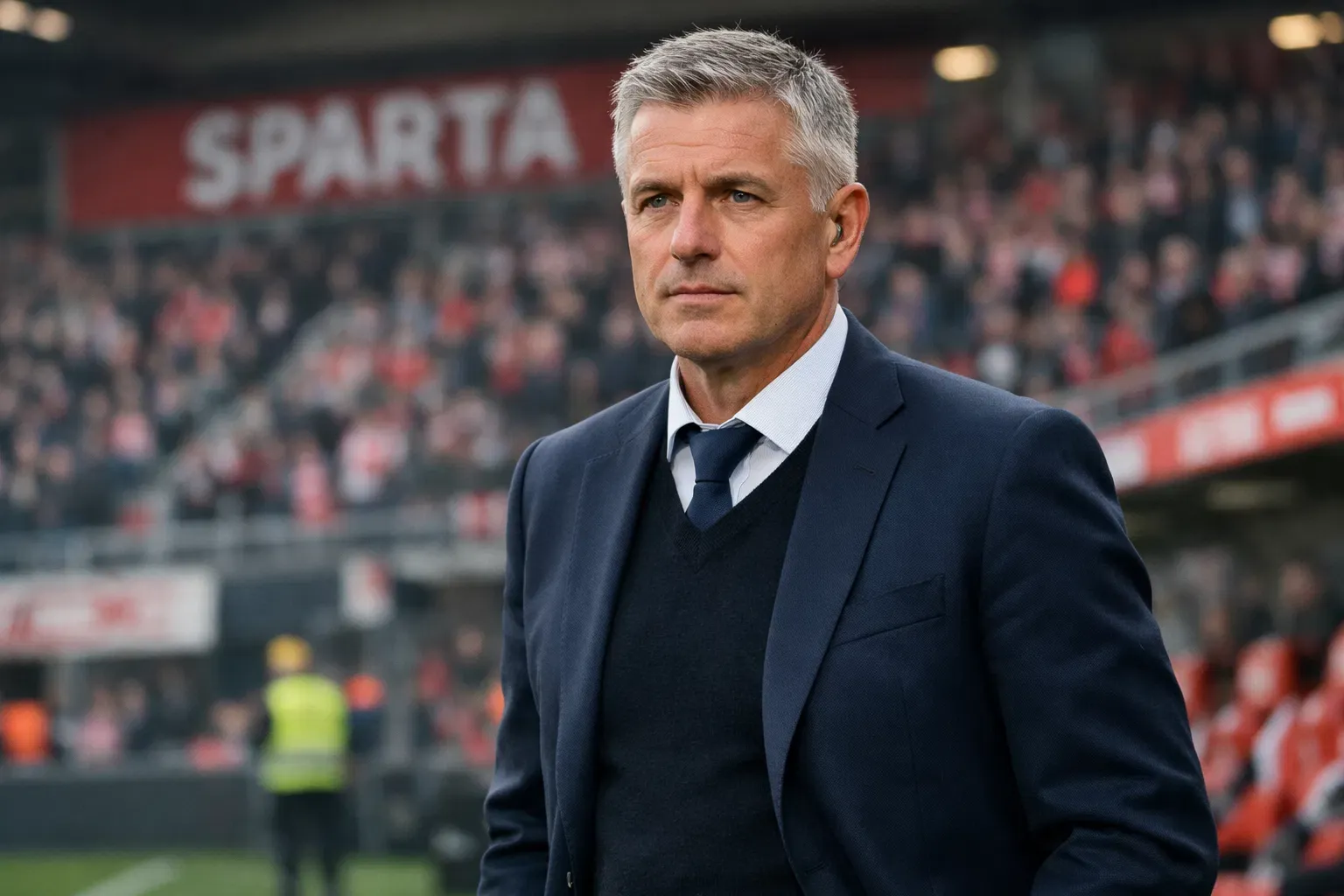
Sparta Rotterdam are approaching one of those moments that can define an entire season, and maybe the next two. With Maurice Steijn set to depart when his contract is not renewed, the club’s shortlist is already sparking debate across Dutch football. Voetbal International has pointed to a familiar name: Paul Simonis, once a youth coach at Sparta, now suddenly linked to a high-profile comeback. A Paul Simonis Eredivisie return would be both nostalgic and risky, especially with Sparta sitting eighth and chasing European relevance.
Steijn’s exit is not being framed as a crisis, but it does land like a fork in the road. Sparta Rotterdam have been competitive, organised, and hard to beat, yet the ceiling still feels negotiable. Finishing eighth keeps the club in the conversation for European play-offs, but it also exposes how thin the margins are between a “good season” and a missed opportunity. That’s why the Paul Simonis Eredivisie return story has immediate traction in Rotterdam.
What makes this decision so delicate is Sparta’s identity: pragmatic, development-friendly, and allergic to chaos. The next coach must protect the club’s structure while also finding a way to add attacking bite, especially against the league’s mid-table rivals. With FC Utrecht and AZ often setting the standard for “best of the rest,” Sparta need a coach who can steal points without losing their spine. A Paul Simonis Eredivisie return is being discussed precisely because it promises continuity with sharper ambition.
When a coach knows his contract won’t be renewed, the final weeks can become a strange psychological space. Players start thinking about their own futures, and agents begin nudging narratives into the public sphere. Sparta Rotterdam can’t afford any drift, because eighth place is not safe and the play-off race is brutal. The board’s timing matters, and the Paul Simonis Eredivisie return talk could stabilise the mood by offering a clear direction.
Being eighth sounds comfortable until you look at how quickly a couple of poor results can flip the table. One bad fortnight can turn a “European push” into a scramble for respectability, especially with clubs like FC Utrecht capable of going on a run. Sparta Rotterdam’s next appointment therefore has to be more than a name; it has to be a plan. The Paul Simonis Eredivisie return is being weighed as a plan that can land quickly and take effect fast.
Voetbal International’s reporting has framed Simonis as a strong candidate, and the appeal is easy to map. He knows the club’s internal rhythms from his time in the youth setup, which matters at Sparta Rotterdam where pathway thinking isn’t a slogan but a necessity. The club also values coaches who can communicate clearly and build training-ground habits that translate into points. In that sense, a Paul Simonis Eredivisie return reads less like sentiment and more like strategic comfort.
There’s also a recruitment logic behind it, because a coach’s network can shape a summer window. Sparta Rotterdam do not operate like the league’s richest sides, so they need clarity in profiles: hungry, coachable players who can be improved. Simonis has worked in environments where development is non-negotiable, and that aligns with Sparta’s constraints. The Paul Simonis Eredivisie return narrative gains strength because it fits the club’s operational reality, not just its memories.
In the Eredivisie, “knowing the club” can be an empty phrase, but at Sparta Rotterdam it can be decisive. The training ground, the academy expectations, and the way supporters read effort all form a particular ecosystem. Simonis having lived that ecosystem means fewer translation errors when he sets standards. If the board want a smooth handover after Maurice Steijn, the Paul Simonis Eredivisie return offers a ready-made cultural fit.
Journalist Valentijn Driessen previously floated the idea that Simonis could return to the Netherlands, and those comments now look like the first domino. Speculation in Dutch football often becomes self-fulfilling, because it nudges clubs into acting before rivals do. If Sparta Rotterdam believe Simonis is attainable, they may move quickly to avoid a bidding war. That urgency is part of why the Paul Simonis Eredivisie return chatter has accelerated from “maybe” to “watch this space.”
Simonis’ rise accelerated when he impressed at Go Ahead Eagles, a club that demands bravery without the financial safety net of bigger neighbours. Winning the KNVB Beker is not just a medal; it is a pressure test that exposes whether a coach can handle knockout tension, tactical adaptation, and the emotional spikes that come with a cup run. That success is now central to the Paul Simonis Eredivisie return case. Sparta Rotterdam see it as evidence he can create belief, not just structure.
What made that KNVB Beker run resonate was the sense of identity: a team playing with purpose rather than merely surviving. Coaches who can give mid-sized clubs a clear pattern of play are rare, because they must balance ambition with the realities of squad depth. Sparta Rotterdam are searching for exactly that balance after Maurice Steijn. A Paul Simonis Eredivisie return would be sold to supporters as an upgrade in ceiling, grounded in a trophy-winning blueprint.
Knockout football rewards clarity, and Simonis’ Go Ahead Eagles showed they could execute a plan under stress. Sparta Rotterdam have often looked disciplined, but discipline alone doesn’t always win the “must-win” matches that decide European play-off places. The lesson from the KNVB Beker triumph is that underdogs can dictate moments if they trust their automatisms. That’s why the Paul Simonis Eredivisie return is framed as a chance to add edge and conviction to Sparta’s existing base.
Rotterdam supporters respect graft, but they also crave a team that can hurt opponents with intent. Simonis’ reputation is not of a reckless idealist; it’s of a coach who can be pragmatic without becoming passive. That blend matters for Sparta Rotterdam, who often face opponents with more individual quality. If the club believe a Paul Simonis Eredivisie return brings a more proactive version of pragmatism, it becomes an attractive evolution rather than a gamble.
The Wolfsburg chapter complicates the story, because a dismissal always invites easy conclusions. Yet context matters: the Bundesliga can be unforgiving, and clubs with bigger budgets often demand immediate transformation rather than gradual building. Simonis walking into that environment after his Dutch success was a step up in scale and scrutiny. For Sparta Rotterdam, the question isn’t whether he was sacked, but what he learned. A Paul Simonis Eredivisie return could be powered by those lessons.
Coaches often come back sharper after experiencing a different football culture, especially one where tactical detail and squad management are magnified. Wolfsburg would have tested Simonis’ communication with high-profile players and his ability to navigate boardroom expectations. Sparta Rotterdam won’t replicate that intensity, but they will benefit from a coach who has seen what elite standards look like. The Paul Simonis Eredivisie return pitch can therefore be framed as “Bundesliga schooling” brought home to a club ready to grow.
German football tends to be relentless about transition moments, rest defence, and physical duels, and those themes are increasingly relevant in the Eredivisie too. Sparta Rotterdam already value compactness, but they sometimes struggle to turn regains into sustained attacks. If Simonis brings sharper transition coaching from Wolfsburg, that could be a competitive edge against similar-level sides. A Paul Simonis Eredivisie return becomes intriguing if it upgrades Sparta’s details rather than reinventing their identity.
There is, however, a classic post-sacking trap: coaches can become conservative, trying to avoid mistakes rather than chasing wins. Sparta Rotterdam can’t afford a timid appointment, because the club’s league position demands momentum and brave decision-making. The board will want to know whether Simonis remains the same assertive coach who won the KNVB Beker, or whether Wolfsburg left scars. The Paul Simonis Eredivisie return will only work if it’s driven by confidence, not caution.
Even if Sparta Rotterdam are the frontrunner, they are not operating in a vacuum. The Eredivisie coaching market is a carousel, and clubs such as FC Utrecht often move aggressively when they sense an opportunity. AZ, meanwhile, set a benchmark for long-term planning, which influences how other clubs think about continuity and style. Sparta’s decision must therefore be both fast and smart. The Paul Simonis Eredivisie return is attractive partly because it could be wrapped up before rivals complicate the picture.
Sparta Rotterdam also have to consider perception: appointing a coach with recent visibility can help with recruitment, ticket buzz, and internal belief. But they must avoid choosing a name over a fit, especially when the squad needs specific development. The strongest appointments in this league are usually the ones that align sporting philosophy with budget reality. If Sparta can present the Paul Simonis Eredivisie return as a coherent project, they can punch above their weight in a competitive landscape.
The Eredivisie is often decided in a mini-league of mid-table clashes, where points are traded with brutal efficiency. Sparta Rotterdam’s European hopes depend on beating direct rivals and avoiding the silly draws that feel harmless until May. A coach must therefore be a specialist in preparation, motivation, and in-game tweaks. Simonis’ cup pedigree hints at that skill set, which is why the Paul Simonis Eredivisie return is being viewed as a practical solution, not a romantic one.
Sparta’s academy connection is not just about promoting teenagers; it’s also about building a club-wide playing language. A coach with prior experience inside the system can align first-team demands with youth development, making recruitment more efficient. That matters when you’re competing with FC Utrecht’s resources or AZ’s pipeline. Simonis already understands the club’s developmental constraints, and that makes the Paul Simonis Eredivisie return feel like a multiplier across departments, not just a first-team hire.
Supporters will immediately ask what changes on the pitch, because eighth place suggests a team that is decent but not decisive. Sparta Rotterdam’s next coach must keep their defensive organisation while improving chance creation, especially when opponents sit deep. Simonis’ past work suggests he values structure with purposeful movement, which could help Sparta turn sterile possession into high-quality shots. The Paul Simonis Eredivisie return conversation will ultimately be judged by whether it promises more goals without gifting chaos.
The next 10 matches, whether under an interim plan or with a clear successor announced, will shape the atmosphere around the club. If Sparta drift, the appointment becomes a rescue mission; if they surge, it becomes a platform for growth. That’s why the board’s communication matters as much as the name. A Paul Simonis Eredivisie return would be easiest to sell if it’s presented as the next step of an upward curve, not a reaction to uncertainty.
Modern Eredivisie success often comes down to how well you manage the moments immediately after losing or winning the ball. Sparta Rotterdam can be compact, but they sometimes lack the controlled aggression to pin teams back after a regain. Simonis’ reputation suggests a coach who can set clear pressing triggers and train repeatable transition patterns. If that shows up quickly, the Paul Simonis Eredivisie return could turn Sparta from stubborn opponents into a side that dictates tempo in key phases.
Replacing Maurice Steijn is not only tactical; it’s emotional, because players will have relationships and routines tied to the current staff. The next coach must win the room quickly without throwing everything out, and that takes clarity, honesty, and consistent selection logic. Simonis’ prior Sparta Rotterdam experience could shorten the “getting to know you” period, especially with academy-linked players. A Paul Simonis Eredivisie return would be judged by how swiftly the squad buys into a new voice.
Sparta Rotterdam are not chasing headlines for the sake of it; they’re trying to protect a promising league position while setting a smarter course beyond this season. The reporting that Paul Simonis is a strong candidate fits the club’s preference for coaches who marry development with results, and his KNVB Beker success gives the idea real weight. Still, the Wolfsburg dismissal adds complexity, and the board must decide whether the learning outweighs the scar tissue. If it happens, a Paul Simonis Eredivisie return could be the bold, stabilising move that keeps Sparta eighth—and pushes them higher.

Julian Mercer is a lifelong student of the game whose passion for football was sparked at an early age, after stepping onto the grass of Camp Nou as a six-year-old — a moment that left a lasting impression and set him on a permanent path into the sport. Since then, football has been both his lens on the world and his favourite language. Blending traditional fandom with a deep interest in tactics, squad building, and long-term team development, Julian has spent decades analysing the game from every angle. His fascination with football strategy was further shaped through years of immersive play in Football Manager, a series he has followed since the mid-1990s, developing a sharp eye for patterns, player profiles, and the fine margins that define success. At My World Of Football, Julian focuses on the stories beneath the surface — from tactical evolutions and managerial philosophies to the narratives that connect clubs, players, and supporters across generations. His writing aims to balance insight with accessibility, always grounded in a genuine love for the game.
Continue reading more football news