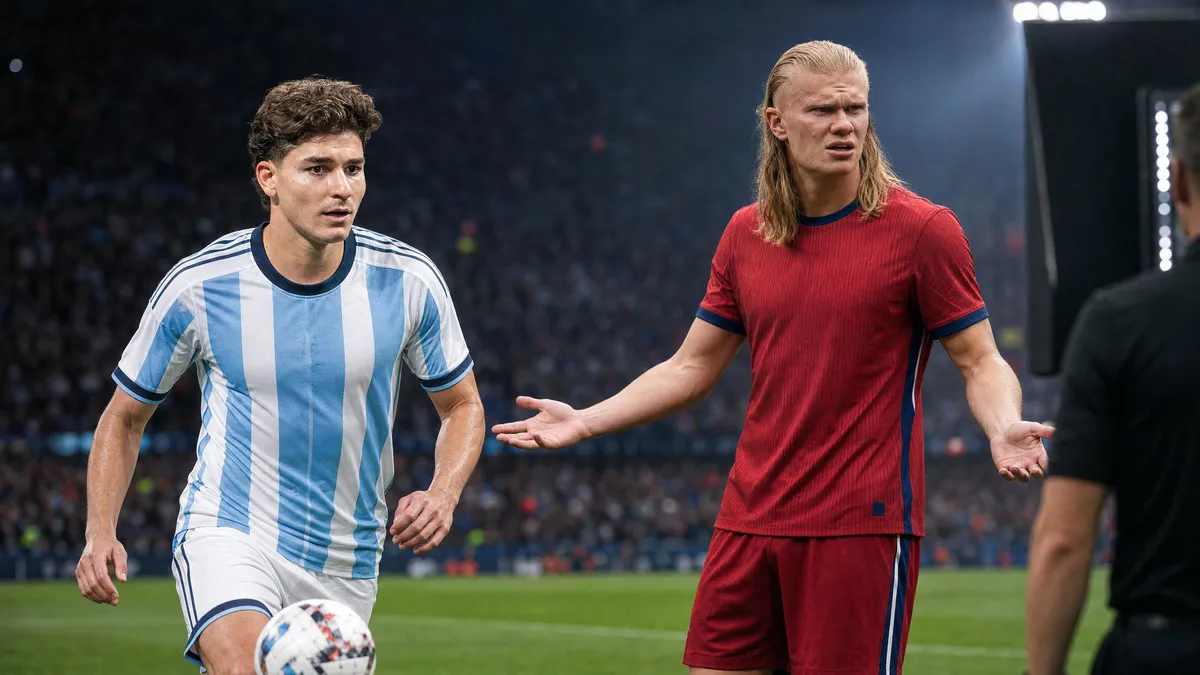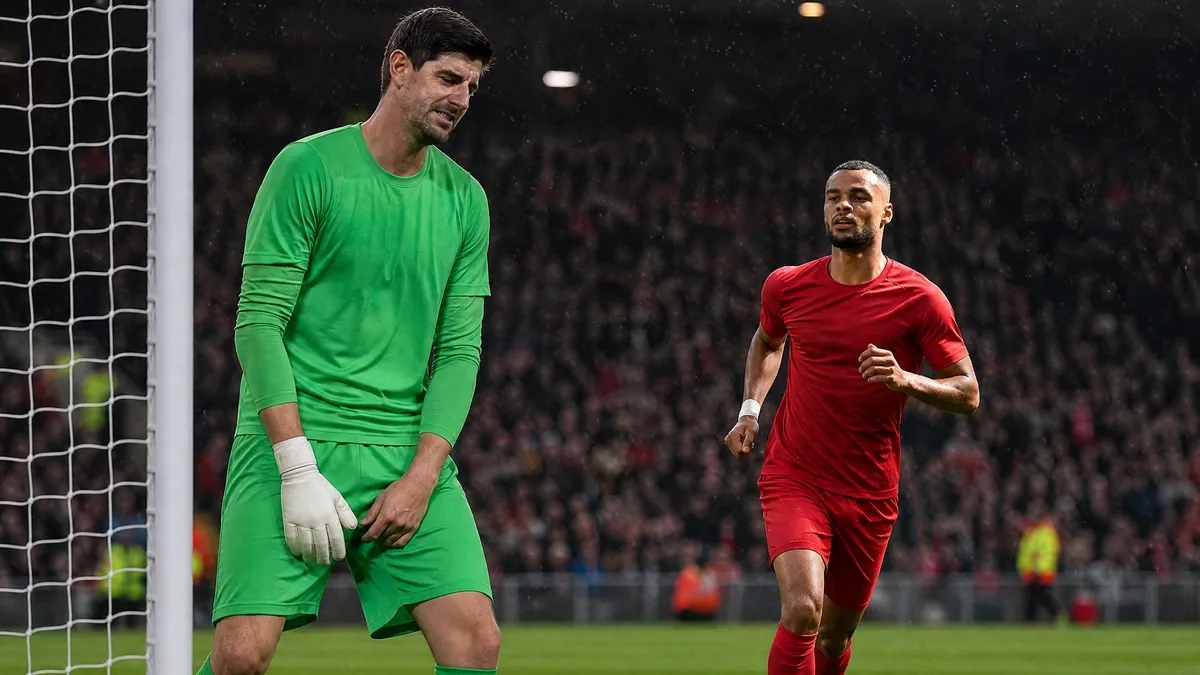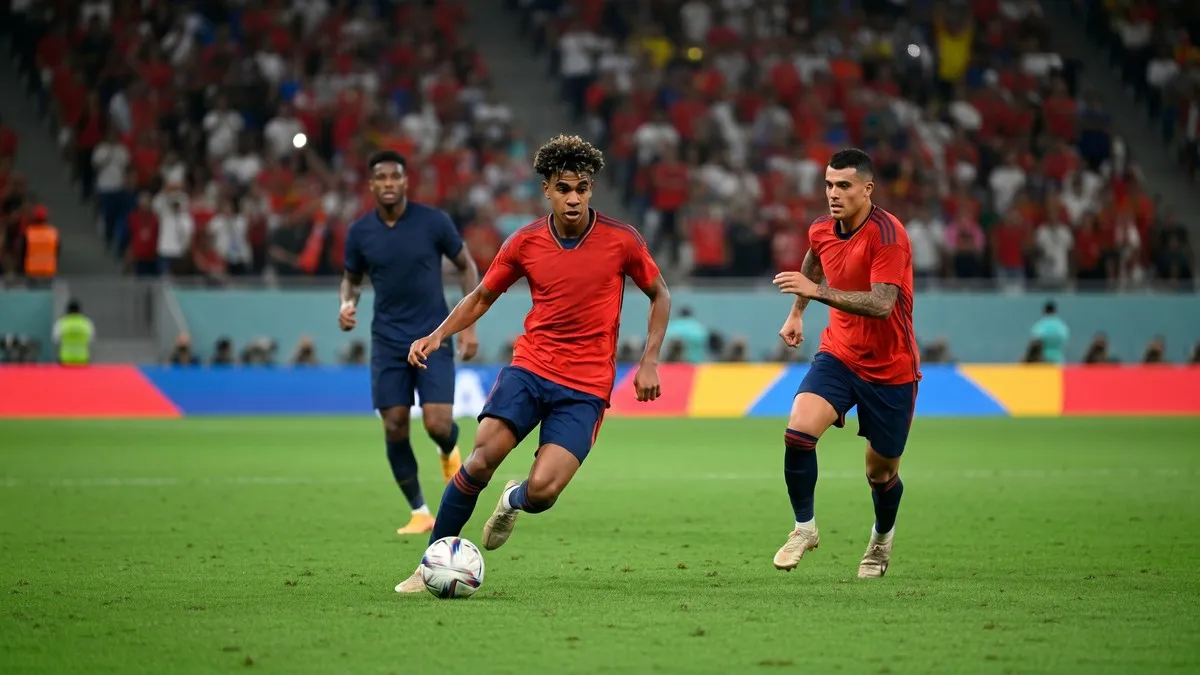
AI-generated image
Football News Today: Yamal's big test and England's woes
Pedro Porro shines for Spain as Yamal faces France. England's tough World Cup journey continues as they prepare for Argentina.
Pedro Porro shines for Spain as Yamal faces France. England's tough World Cup journey continues as they prepare for Argentina.
It's a big day in football with Spain gearing up for their semi-final against France. Youngster Yamal is under the spotlight. Meanwhile, England are facing challenges ahead of their clash with Argentina. Will they overcome the Messi factor? Plus, transfer rumors are heating up, especially with Arsenal eyeing Julian Alvarez. Let’s dive into the latest stories making waves in the beautiful game.
Pedro Porro Spain World Cup talk used to feel like a stretch, because he started this cycle as the safe option off the bench. Now he looks like a proper first-choice right-back, not just a runner. Luis de la Fuente has leaned into Porro’s aggression and timing, and it has changed Spain’s right side. Against top teams, that matters more than tidy passing for the sake of it.
The big shift is his relationship with Lamine Yamal. Spain have had plenty of talented wingers, but this one needs a full-back who reads his pauses and bursts. Porro has started to underlap when Yamal stays wide, then overlap when Yamal comes inside. That trust is the point. You can see the little chats, the pointing, the “go now” cues. Pedro Porro Spain World Cup minutes are no longer about surviving. They are about creating.
That unbeaten run, 36 matches, is both comfort and weight. It is easy to talk about confidence, but it also tightens legs in a semi-final when the first mistake feels historic. Spain’s best version lately has been ruthless about fixing small things mid-game: when to press, when to slow it, when to bait the pass and jump. Porro fits that because he is vocal and he reacts quickly when the pattern changes.
France, though, is a different kind of problem. Kylian Mbappe pulls full-backs into horrible decisions: step out and he spins, sit off and he builds speed. Spain vs France here could be decided by how well Porro and the right-sided centre-back share that load, and how much help Yamal gives back. The good news for La Roja is they are not short of threats either. Pedro Porro Spain World Cup form gives them another route to goal.
England have done more air miles than anyone left in this tournament, and it is not a cute stat now we are at the World Cup semi-finals. Over 14,000 miles is a lot of hotel changes, body clocks and recovery sessions squeezed between flights. The England World Cup travel disadvantage matters because the margins are tiny at this stage, especially against a side that can control tempo like Argentina.
Travel fatigue is not just about heavy legs. It is about rhythm. Training becomes lighter, tactical work gets chopped up, and little knocks hang around longer. Gareth Southgate’s squad depth helps, but England’s best version still leans on a settled spine and familiar patterns. If Argentina can slow the game early, keep the ball, and make England chase, that travel disadvantage starts to show in decision-making.
Then there’s the psychological side. The football statistics about the first semi-final winner often taking the final are the sort of thing players swear they ignore, but it hangs in the air for fans and media. England are chasing a first final in 60 years, so any perceived edge for the other side gets magnified. Argentina, as holders, look comfortable living in that pressure.
England’s route through this match is still clear. Harry Kane has to be more than a finisher. He needs to pin Argentina’s centre-backs, buy fouls, and give England breathers when the press starts to fade. The England World Cup travel disadvantage becomes manageable if England can turn the game into set-piece moments and controlled transitions, not long stretches of defending Messi-led possession.
Messi is still the problem you cannot fully solve. You just try to limit his easy touches between the lines and stop the quick wall passes that pull midfielders out. England vs Argentina will swing on who dictates pace. If England start fast and keep the ball with purpose, they can flip the narrative and make Argentina do the running for once.
Lionel Messi World Cup 2026 has turned into that familiar feeling again: Argentina look calm because he makes them calm. Eight goals at 39 is ridiculous, and becoming the tournament’s all-time leading scorer just adds another layer to the aura. But Gary Pallister comments about him being “more mortal now” ring true. Messi doesn’t win every sprint or every duel anymore. He wins moments.
That shift matters for Argentina vs England. You do not stop him by going toe-to-toe like it’s 2012. You stop him by starving the spaces he wants, especially that pocket just outside the box where he can slip runners in or shoot early. England’s centre-backs cannot step out blindly. The holding midfielder has to screen first, then the nearest full-back tucks in, and the wide man tracks the underlap. Boring, but necessary.
England have their own match-winners, and this is where it gets tasty. Harry Kane performance in this tournament has been about timing, not just goals. He drops, pins, then spins into the box when the second ball lands. Jude Bellingham impact is even bigger because he can carry through pressure and force Argentina’s midfield to foul or retreat. If England can make Argentina defend facing their own goal, Messi spends longer walking.
The indoor setting in Atlanta helps too. No heat chaos, no energy-sapping second half where legs go and Messi’s brain stays sharp. It should be a cleaner tactical contest, which suits England if they keep their nerve. Still, Lionel Messi World Cup 2026 is about endings and beginnings. Messi is chasing a second straight title and England are chasing a 60-year release. The team that handles the big moments, not the big names, goes to the final.
The Julian Alvarez Arsenal transfer talk feels like the kind of swing champions take when they are already good and want to stay there. Arsenal have just won the Premier League and still came up short in Europe, which usually points to one thing: more goals in tight games. Alvarez is not a “needs chances” striker. He creates chaos, presses, and finishes.
Atletico Madrid being open to selling is the eyebrow-raiser. They do not usually wave attackers out the door unless the fee is silly, and €150m is properly silly. But it also tells you how the market sees Alvarez: elite, durable, and adaptable. For Arsenal, the question is not talent. It is whether paying that number blocks other needs, like a wide threat or midfield depth.
Barcelona hovering matters because player preference still drives these deals, even when the selling club would rather do business elsewhere. If Alvarez has his heart set on Barca, Arsenal need a proper pitch, not just wages. That is where Mikel Arteta comes in. He can sell a role, a system, and minutes. The Julian Alvarez Arsenal transfer only becomes real if Alvarez believes he is the main man, not another rotation piece.
Tactically, you can see why Arteta likes him. Alvarez can play as the nine, but he also links like a second striker, which suits Arsenal’s box midfield and the way their wingers attack the far post. He would also raise the press level straight away, which is how Arsenal suffocate teams at the Emirates. Compare that to Viktor Gyokeres, who offers power and direct running but less variety between the lines.
The presence of other targets like Bradley Barcola hints Arsenal are building options, not betting everything on one negotiation. That is smart because this one could drag. Manchester United interest adds noise, but Atletico Madrid hold the leverage and can wait. For now, the Julian Alvarez Arsenal transfer looks like a statement attempt: expensive, complicated, but very on-brand for a club trying to turn one title into a run.
The Lucas Digne PSG transfer feels like one of those moves that makes sense the moment you hear the numbers. A €10 million clause for a proven international full-back is tidy business, especially with Fabrizio Romano saying a verbal agreement is in place for after the World Cup. PSG get a familiar face who knows Ligue 1, and Villa get a clean exit without a messy negotiation.
For PSG, this is less about glamour and more about control. Nuno Mendes is first choice, but the season always turns on availability, not talent. Digne gives Luis Enrique a steady option for league rotation and those awkward Champions League nights when you need a full-back who will just do his job. The Lucas Digne PSG transfer also helps squad balance, because it reduces the need to shuffle centre-backs wide.
Digne’s World Cup form is the real driver here. France have leaned on his timing and delivery, and it has reminded everyone he still plays with edge when the stakes rise. That matters for PSG, who can look a bit flat domestically until spring. A backup who has started big games, managed hostile atmospheres, and understands title pressure is worth more than a younger punt.
Over at Villa, this is quietly big Aston Villa news because it unblocks minutes. Ian Maatsen has been stuck in that awkward zone where he is good enough to contribute but keeps watching a senior pro soak up the starts. If Digne goes, Maatsen’s impact could be immediate, whether as a true left-back or higher up as a runner in front of a more conservative wide player.
Villa still have to replace Digne’s experience, though. You lose set-piece quality, leadership, and a known baseline of performance, even if he was not always spectacular. But the timing helps. The Lucas Digne PSG transfer lands after the World Cup, when squads reassess and the market loosens. If Villa reinvest smartly, Maatsen plus a younger competitor could end up more dynamic than the current setup.
Youri Tielemans transfer news is moving fast after Belgium’s World Cup exit, and it makes sense why United are pushing now. They have lost Casemiro and they are short on reliable midfield minutes with Manuel Ugarte injured. A €41m release clause is clean business in today’s market. No long saga, no bidding war, just a decision and a medical.
From a football point of view, Tielemans fits the gap United actually have. He is not a pure destroyer, and he is not just a passer who hides. He likes receiving under pressure, turning, and playing forward early. That matters if Bruno Fernandes is going to stay high and risk the ball. United need someone who can connect phases without slowing everything down.
At Aston Villa he looked like a midfielder who finally had a settled role and a manager who trusted his range. He can play as the left-sided eight, he can sit a bit deeper, and he can still arrive on the edge for shots. That versatility is why this Youri Tielemans transfer news feels more practical than glamorous. United’s midfield has been too rigid for months.
The World Cup performance adds a bit of shine, but it also underlines a point. Tielemans has always had goals in him when the team structure gives him lanes to attack. Those two big strikes against Senegal were not random, they came from timing and confidence. If the five-year deal happens, the real test is balance. United still need legs around him, but with Bruno he can make the game feel simpler.
The Morgan Rogers Arsenal transfer chatter feels like the first proper statement swing of the summer. Arsenal have just had a season where the margins were tiny at the top end, and Arteta clearly wants more punch and variety in the front line. Rogers fits that idea. He can carry the ball, play off either side, and still arrive in the box like a midfielder.
But £130 million is not just a “big fee”, it is a line in the sand from Aston Villa. They are basically saying he is a cornerstone, not a negotiable asset. Villa also know the market is warped for elite attackers, especially ones with Premier League output and physicality. If Arsenal go near that number, the Morgan Rogers Arsenal transfer becomes a record-setting move, and that brings pressure before he even kicks a ball.
It also matters what Arsenal are losing. Leandro Trossard edging toward Besiktas would remove a reliable problem-solver, the guy you throw on when a game is sticky. That is why the Christos Tzolis link makes sense as a parallel track. He is more of a direct winger than Trossard, more about running at full-backs and hitting shots early. Different profile, but it keeps the rotation healthy.
Villa’s stance gets even firmer with Youri Tielemans reportedly heading to Manchester United. Lose a controller like that and you do not want to sell another key starter unless the money is silly. Arsenal transfer news always circles big names, but this is about leverage as much as scouting. If Romano’s read is right, Arsenal will keep options open, weigh the opportunity cost, and decide whether Rogers is worth breaking the market for.
The Bellingham Tuchel exchange has been treated like a headline crisis, but it really feels like football people talking past each other. Tuchel’s “sloppy” line after Norway lands because he’s blunt and because England always gets judged like a finished product. Bellingham pushing back is not disrespect. It’s a senior player protecting the group, and that matters in a tournament week.
Gary Pallister calling it a storm in a teacup is fair, mainly because conditions and context get ignored. England’s Norway game had the kind of pitch, weather, and tempo that turns clean build-up into a scrap. Tuchel’s criticism reads like a coach watching on a screen, wanting control and patterns. Bellingham’s point is simpler: sometimes you win ugly, and you do not throw teammates under the bus.
What makes the Bellingham Tuchel exchange stick is Bellingham’s status now. Six World Cup goals from midfield areas changes how everyone speaks about him. He is not “the kid” anymore. He sets standards, and he also sets tone. Under Gareth Southgate leadership, England’s best moments have come when the squad feels protected, then the top players take responsibility in the big minutes.
England vs Argentina preview wise, the semi-final is a proper style clash. Argentina will try to slow the game, draw fouls, and live off momentum swings. England need to start fast, keep their rest defence tidy, and avoid cheap turnovers that feed transitions. If Bellingham stays decisive around the box and England keep their heads, the noise around the Bellingham Tuchel exchange fades quickly.
Leandro Trossard transfer news has moved from vague interest to proper “this could happen” territory. If Florian Plettenberg is right, Arsenal and Besiktas have already settled on €20 million, which is the hard part in most deals. Now it is on the player. After Belgium’s World Cup exit to Spain, Trossard has space to think, and Besiktas are basically waiting by the phone.
From Arsenal’s side, the logic is clear even if it stings a bit. Trossard has been useful across the front line, and 36 goals in 174 games is solid output for a player who often starts as the “solution” rather than the star. But a €20m fee for someone in his late twenties, with a crowded attacking depth chart, is the kind of business that funds the next move.
The timing matters too. Arsenal’s recent run to the Champions League final raised the bar, and that changes squad planning. You need players who accept rotation without losing edge, and Trossard has done that. But if Mikel Arteta wants a narrower group with clearer roles, a sale makes sense. It also opens minutes for others and keeps the wage bill flexible for Arsenal transfer updates later in the window.
For Besiktas, Trossard Besiktas is a statement swing. Turkish Süper Lig clubs can sell the project well, but they still need players who can decide games and handle pressure. Trossard’s appeal is his decision-making in tight areas and his ability to play left, central, or as a second striker. If the contract offer is as strong as reported, it is a classic trade: Champions League contender status versus being the main man.
One small subplot is how Arsenal replace the “plug-and-play” minutes. Jurriën Timber is a different profile, but his return helps the squad cope with rotation and injuries, which makes selling an attacker less scary. Still, football transfers are about margins. If Trossard goes, Arsenal need another reliable scorer off the bench, not just another promising name.
Rodri talking about Lamine Yamal anxiety management hits because you can see it on the pitch. When Yamal feels the game slipping, he speeds everything up. One more dribble, one more forced pass, one more shot from the wrong angle. It is not a talent issue. It is tempo and breath. In a World Cup semi-final, that urgency can turn into cheap turnovers and easy counters.
Spain need him brave, but not frantic. France defend in blocks and they love when you get impatient. If Yamal chases the headline moment, he plays into their hands, especially with how quickly they spring wide and attack space. The best version of him is the one who pauses, pins the full-back, then picks the simple option. That is Lamine Yamal anxiety management in football terms.
The funny thing is the criticism about goals misses what he actually gives Spain. He is already warping defensive shapes, dragging a second man over, and creating the extra half-second for midfielders to play. Being the youngest European to win 10 major tournament matches is not a stat you luck into. It shows he keeps performing in big moments, even when the end product is not perfect.
Rodri Spain captain stuff matters here because he is basically Spain’s metronome and security guard in one. He knows when the team needs calm. He also knows the kid listens. Since Euro 2024, Yamal’s decision-making has improved, and you can tell he accepts coaching rather than fighting it. If Rodri can keep him connected to the team rhythm, Spain vs France becomes less about chaos and more about control.
Spain’s recent wins over France will help, but this is still a different beast. France can be quiet for an hour then decide the match in two actions. That is why Yamal performance analysis comes back to patience. If he manages his anxiety, stays present, and keeps making France shift side to side, the big chance will arrive. And if it does, Spain will fancy finishing the job.
Tobias Lauritsen transfer news is getting loud because the deal shape is rare: a starting-level Eredivisie striker available for free. Sparta Rotterdam gave him a platform and he looked like a nightmare for centre-backs, all elbows, timing, and a proper target man’s feel for second balls. On a free, the conversation shifts from “can you afford him?” to “can you build around him?”
Feyenoord’s interest makes sense if they want a different profile up top. Ayase Ueda offers movement and pressing, but they have lacked a reliable focal point when games turn into box territory and crosses. Lauritsen gives you that outlet, plus a way to pin defences so the wingers and number 10 can play off him. The catch is obvious: they cannot stockpile strikers, so someone has to move first.
PSV are a bit trickier to read. They usually want a forward who can run channels and combine quickly, not just win headers. But Tobias Lauritsen transfer news fits their planning because they are still weighing what they want from the next nine. If Myron Boadu is part of their thinking, that’s a totally different striker type. Lauritsen would be the “change the game state” option when opponents sit deep.
Outside the Netherlands, Sampdoria and Leicester City feel like interest with strings attached. Sampdoria can offer Serie A romance if the project is stable, but wages and direction matter. Leicester’s pull is real, yet the Championship and Premier League line changes everything in terms of budget and squad needs. For Lauritsen, the smartest move might be staying in the Eredivisie where his strengths are already proven.
The key with Tobias Lauritsen transfer news is not just who signs him, but what it does to the rest of the window. Feyenoord selling a striker could open funds and minutes. PSV waiting could mean he becomes the bargain they pounce on late. Either way, a free agent who changes how you attack is the kind of market opportunity clubs regret missing.
Joan Laporta talking up Lionel Messi World Cup 2026 from Dallas is not just nostalgia. It is a president watching the sport bend around one player again. Eight goals in six games at 39 is not a nice story, it is a competitive problem for everyone else. Messi is not drifting through moments. He is deciding matches early and then managing them.
The big line is the record: 21 World Cup goals, top of the all-time list. Records can be trivia, but this one changes how teams defend Argentina. You cannot just “survive” Messi anymore because he is finishing like a striker, not a playmaker having a final dance. The movement is sharper, the shots are earlier, and he is getting to rebounds first.
Laporta also knows what this does for Barcelona’s image. Messi is still the club’s most powerful reference point, even while he plays for Inter Miami. When the Barcelona president praises his physical condition, he is really praising a standard. It is a reminder that elite habits last. It also keeps Barça in the conversation during a tournament where club identities usually fade.
Then there is the future bit, and it matters. Lamine Yamal taking big minutes on the international stage makes Barcelona’s rebuild feel real, not theoretical. Laporta name-checking Anthony Gordon is interesting too, because it shows he is tracking impact, not just academy romance. If Argentina beat England in the semi, Lionel Messi World Cup 2026 becomes another chapter in the legend. But Barça will be watching Yamal’s next step just as closely.
Samuel Eto’o sticking his neck out for Kylian Mbappe feels like more than a legend doing legend things. He’s pointing at something French football has wrestled with for years: the way the biggest star can still be treated like he’s on probation. Kylian Mbappe appreciation at home never seems to match the numbers, even when those numbers are basically historic.
Twenty World Cup goals since 2018 is silly territory. That’s not “future great” talk, that’s already-on-the-wall stuff. Yet the conversation in France keeps circling back to what he should do next, or what he hasn’t done in a specific moment, rather than what he’s already delivered. Eto’o’s Samuel Eto’o comments land because he knows how narratives can swallow performances.
When Eto’o asks whether Mbappe’s mixed heritage shapes public perception, it’s uncomfortable, but it’s not random. France has a long habit of turning players into symbols, then judging them through politics, identity, and whatever social debate is loudest that week. Mbappe has spoken on social issues too, and that always raises the stakes. Kylian Mbappe appreciation becomes a referendum on more than football.
Now it funnels into the semi-final against Spain, where the margins get brutal. Mbappe is still in the Golden Boot mix, but the little detail hanging over him is he’s never scored in a World Cup semi-final. That’s the kind of stat people use to build a whole “clutch” story. If he pops one here, it flips instantly, and the scrutiny shifts to someone else.
There’s also the Real Madrid factor hovering in the background. Once you wear that shirt, the standards go up, but so does the cynicism from outside. Eto’o, with his Barcelona and Inter Milan history, knows how club identity colours everything. France World Cup 2026 should be about what Mbappe is doing on the pitch. The rest is noise, but it’s loud noise.
The scramble for World Cup 2026 tickets has gone properly mad. Over 500 million requests tells you this is not just fans getting organised early, it is a global pile-on. The expanded 48-team format means more matches and more host cities, but it also spreads demand across North America like a travelling festival. People want the experience as much as the football.
Dynamic pricing is the bit that changes the whole game. FIFA ticket prices now behave more like flights than fixtures. You might see $60 seats for early group games in some World Cup host cities, then watch the same category rocket once a big nation drops into that venue. It rewards flexibility and punishes anyone who needs fixed dates, especially families and travelling supporters.
With the ticket lottery results done, the sense of “I missed my chance” is real, even if loads of fans are still hunting. That is why the FIFA ticket marketplace reopening matters. World Cup resale tickets through the official channel are boring, but safe. It cuts out most of the scam risk and keeps tickets tied to real accounts. It also means prices can climb, because sellers know desperation is rising.
The football itself is already feeding the frenzy. Norway turning Brazil over is the kind of shock that makes neutrals buy in, while England v Mexico going down to the wire is exactly what pulls casual fans into “maybe we should go” mode. Add the history, Brazil’s five titles, Messi’s records, Klose’s goals, and you get why the Final is pushing five figures.
If you are trying to buy World Cup tickets now, the smart play is to pick a city and a phase, not a specific matchup. Follow availability on the official portal, set a budget ceiling, and accept you might trade prestige for value. The tournament is 104 matches across 34 days. There will be plenty of great nights that are not the Final.
The Marcos Leonardo Ajax transfer feels like Ajax trying to stop the bleeding up front and do it fast. After a season where chances came and went without that cold finish, they have gone for a striker who lives for the six-yard box. The interesting bit is how decisive it looks. Freek Jansen’s Voetbal International analysis nailed it: this one moved quickly, unlike the drawn-out sagas Ajax fans have suffered lately.
Leonardo is not coming in as a project. Jordi Cruijff comments have basically framed him as the answer to a goals problem, which is brave because Ajax shirts get heavy when the expectations crank up. Technically, Leonardo suits the club’s usual ideas. He likes receiving on the half-turn, he’s sharp in tight spaces, and he attacks the gaps between centre-backs instead of waiting for perfect service. That profile matters when opponents sit deep in the Eredivisie.
That’s where the Kasper Dolberg departure talk starts to feel real. Dolberg’s best version was always about timing and clean finishing, but the last couple of years have been stop-start and the output has not matched the reputation. Wout Weghorst brought effort and presence, but Ajax still lacked that striker who makes one touch count in crowded areas. The Marcos Leonardo Ajax transfer is a clear message that patience is running out for “nearly” strikers.
The Al-Hilal transfer details also add pressure. When Ajax spend like this, it is not to be mid-table comfortable. It is to chase titles and make Europe feel normal again. Leonardo will get chances, but he will also get judged on ruthless numbers, not pretty touches. If he hits the ground running, it reshapes Ajax striker news for months. If he starts slow, the noise will be loud.
Keep an eye on the semi-finals today. The drama is just heating up. Who will make it to the final? Stay tuned for more updates.

Julian Mercer is a lifelong student of the game whose passion for football was sparked at an early age, after stepping onto the grass of Camp Nou as a six-year-old — a moment that left a lasting impression and set him on a permanent path into the sport. Since then, football has been both his lens on the world and his favourite language. Blending traditional fandom with a deep interest in tactics, squad building, and long-term team development, Julian has spent decades analysing the game from every angle. His fascination with football strategy was further shaped through years of immersive play in Football Manager, a series he has followed since the mid-1990s, developing a sharp eye for patterns, player profiles, and the fine margins that define success. At My World Of Football, Julian focuses on the stories beneath the surface — from tactical evolutions and managerial philosophies to the narratives that connect clubs, players, and supporters across generations. His writing aims to balance insight with accessibility, always grounded in a genuine love for the game.
Continue reading more football news