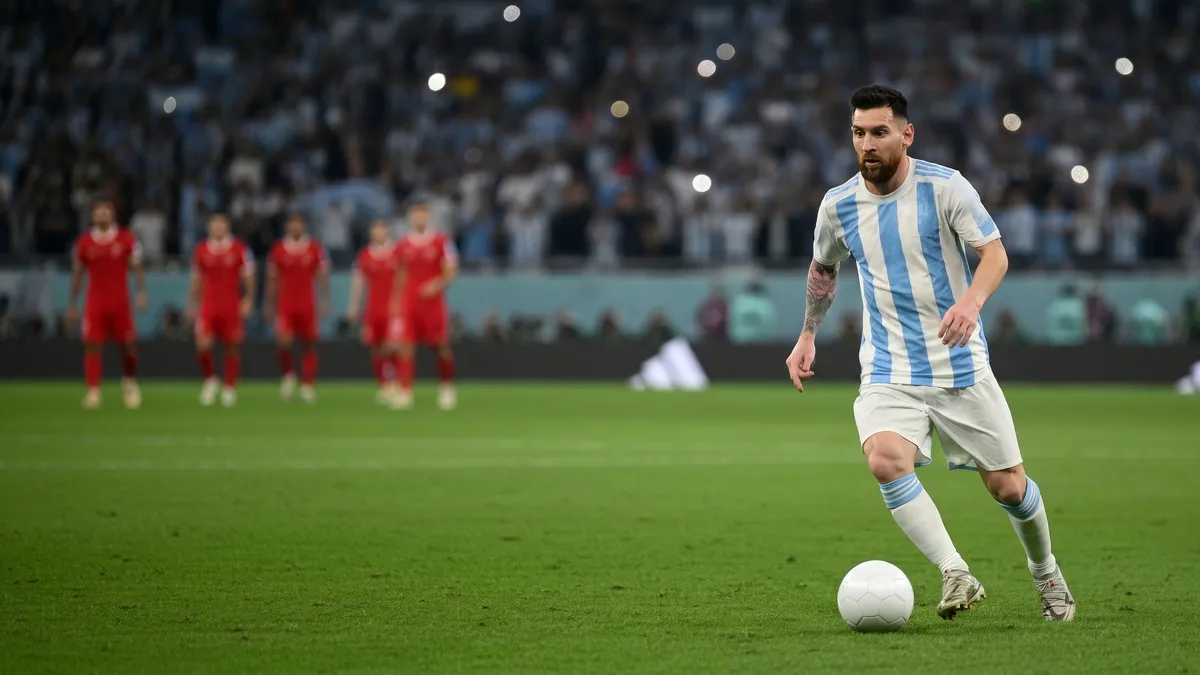
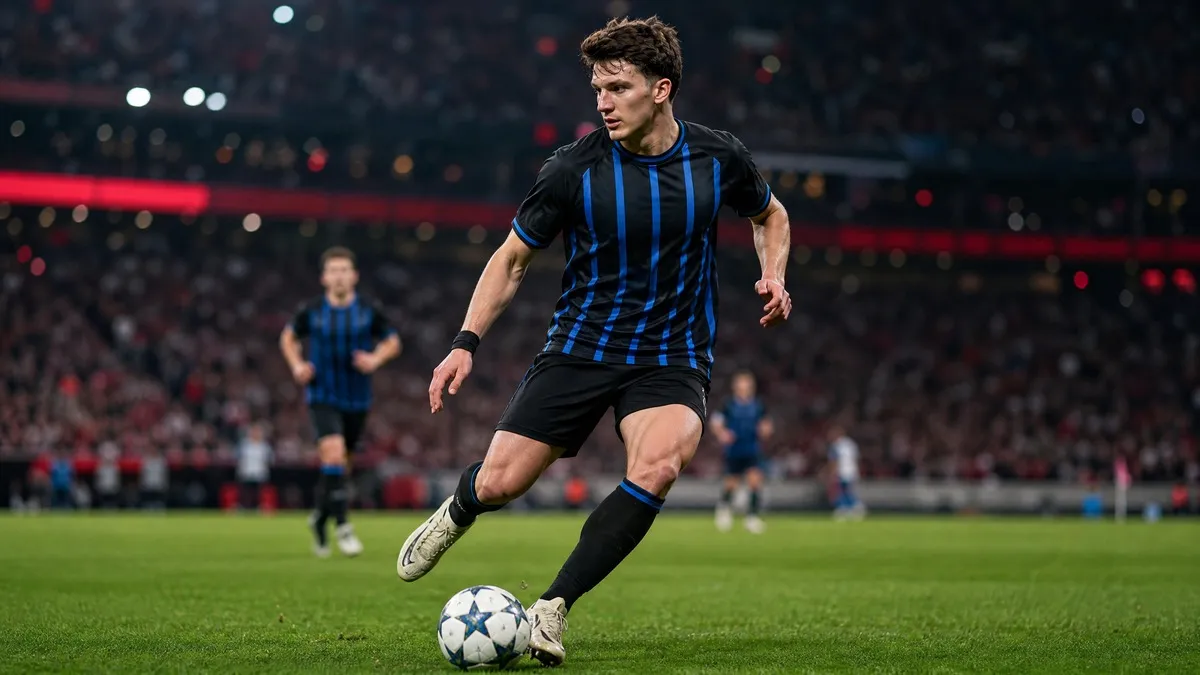
PSG Arsenal matchfixing storm after VAR penalty row
PSG and Arsenal drew 1-1 as a disputed VAR penalty triggered PSG Arsenal matchfixing claims, referee bias debate, and fresh Champions League controversy.
PSG and Arsenal drew 1-1 as a disputed VAR penalty triggered PSG Arsenal matchfixing claims, referee bias debate, and fresh Champions League controversy.
Paris Saint-Germain and Arsenal served up a 1-1 draw that felt less like a football match and more like a referendum on modern officiating. One penalty, one VAR check, and one unshaken referee decision turned a tense Champions League night into a digital wildfire of suspicion. Within minutes, “PSG Arsenal matchfixing” was trending in pockets of football social media, propelled by anger, disbelief, and the sense that big games now come with bigger doubts. The scoreline was simple, but the arguments around it were anything but.
The flashpoint arrived when Cristhian Mosquera tangled with Khvicha Kvaratskhelia in the box, a moment that looked routine in real time and radioactive in replay. Referee Daniel Siebert pointed to the spot quickly, and the atmosphere shifted from competitive to combustible. Even before the VAR graphic appeared, players’ body language screamed expectation of intervention. Instead, the original call stood, and the “PSG Arsenal matchfixing” discourse began its sprint.
What made the incident so volatile was not just the contact, but the context: a tight game where margins were already microscopic. Arsenal had been trying to manage PSG’s rotations, while PSG hunted the kind of decisive moment that turns control into goals. When the penalty arrived, it felt like an external force had entered the narrative. That is why “PSG Arsenal matchfixing” claims found oxygen, regardless of whether the evidence truly supported them.
In the slow-motion replays, Mosquera’s movement looked like a defender trying to recover position rather than a player launching a reckless lunge. Kvaratskhelia’s touch nudged the ball into space, and the contact came as both adjusted their stride, creating the kind of collision referees interpret differently. Some saw a clear trip, others saw minimal impact amplified by forward momentum. The split interpretation fed “PSG Arsenal matchfixing” chatter, because ambiguity is the fuel of conspiracy.
Kvaratskhelia’s role became a talking point because elite attackers are trained to invite contact and protect the ball in dangerous zones. He didn’t need to “dive” for the moment to look theatrical; the mechanics of a clipped run can do that on their own. Still, fans asked why VAR decisions didn’t demand a higher threshold in a match of this magnitude. As soon as the review ended without an overturn, “PSG Arsenal matchfixing” became shorthand for disbelief.
VAR exists to correct “clear and obvious” errors, but it also carries the burden of expectation, especially in Champions League controversy moments. Here, the review felt like a tease: it promised clarity, then delivered the same outcome with no public explanation beyond the standard signals. That gap between process and transparency is where frustration thrives. For many watching, the lack of an overturn wasn’t proof of correctness, it was proof of something missing.
Supporters from both sides ended up annoyed for different reasons, which is usually a sign the system has failed to communicate. Arsenal fans believed the threshold for a penalty was too low, while PSG fans argued that contact in the box is contact in the box. The debate quickly stopped being about this specific incident and became about patterns, reputations, and assumptions. In that environment, “PSG Arsenal matchfixing” turns from a phrase into a mood.
Siebert’s decision-making was scrutinized not only for the penalty, but for the flow of the game around it: advantage calls, minor fouls, and the tone set early. When a big call lands, every earlier judgment gets re-litigated as supporting evidence for referee bias. That is the harsh reality of elite officiating, where perception can outweigh the written laws. The online leap to “PSG Arsenal matchfixing” reflected that cumulative suspicion more than any single freeze-frame.
The uncomfortable truth is that VAR decisions can be consistent with protocol while still feeling inconsistent to fans. The “clear and obvious” standard is subjective, and the on-field referee’s authority acts like a shield for borderline calls. In this match, the review seemed to confirm that ambiguity protects the original whistle. That dynamic, repeated across competitions, convinces supporters that outcomes can be nudged. It’s exactly the psychological space where “PSG Arsenal matchfixing” thrives.
Arsenal fan reactions online were immediate and emotional, ranging from clipped sarcasm to outright allegations of corruption. Many posts framed the moment as another chapter in a perceived history of Arsenal being on the wrong end of European officiating. The phrase “PSG Arsenal matchfixing” was used less as a legal claim and more as a protest banner. In modern fandom, outrage is also community-building, and this incident gave it a focal point.
On the other side, some neutrals and PSG supporters pushed back by criticizing Arsenal’s approach, calling it “anti-football” and arguing the Gunners invited pressure. That critique wasn’t purely tactical; it was moralizing, implying Arsenal didn’t “deserve” a clean night. These arguments often run parallel to officiating debates, because fans look for reasons that confirm their emotional conclusion. The result was a messy discourse where “PSG Arsenal matchfixing” sat beside style wars and tribal point-scoring.
Platforms reward certainty, not nuance, so a 20-second clip becomes a courtroom exhibit rather than a piece of a larger match. Once influencers and fan accounts frame a narrative, the algorithm delivers it to those most likely to agree, hardening views in minutes. In that sense, “PSG Arsenal matchfixing” didn’t need evidence to spread; it needed shareable outrage. The tragedy is that genuine questions about officiating standards get buried under the loudest accusations.
When a team’s tactics are cautious, any controversial decision against them feels like punishment for pragmatism. Arsenal’s controlled spells and defensive discipline were interpreted by critics as negativity, which made the penalty feel, to some, like “justice” rather than misfortune. That framing infuriated Arsenal supporters, who saw it as moving the goalposts from rules to aesthetics. The collision of these ideas made “PSG Arsenal matchfixing” a proxy for wider resentment about how teams are judged.
Lost in the storm was the fact that the match itself was gripping, with PSG trying to dominate central zones and Arsenal looking to spring into space. PSG’s possession phases were designed to isolate defenders and create one-versus-one situations, exactly the kind that can lead to penalties. Arsenal, meanwhile, aimed to keep their structure intact and force PSG wide, accepting that moments of chaos might still arrive. The “PSG Arsenal matchfixing” narrative often ignored how tactical pressure manufactures these incidents.
The 1-1 draw also reflected two teams who, for long stretches, canceled each other out with smart positioning and selective risk. Arsenal’s resistance wasn’t passive; it was calculated, built on denying PSG clean entries and surviving the crowd’s momentum. PSG’s control wasn’t sterile; it was probing, looking for the single breakdown a referee might interpret decisively. When the penalty happened, it felt like tactics meeting fate, which is why “PSG Arsenal matchfixing” sounded plausible to the already suspicious.
For Mosquera, the cruel part is that defenders can play 89 controlled minutes and still be defined by one contested action. His duel with Kvaratskhelia was always going to be high-risk because of the winger’s balance and acceleration. Whether the foul was undeniable or debatable, the optics were unforgiving: a trailing defender, a forward going down, and a referee pointing. In the aftermath, “PSG Arsenal matchfixing” talk amplified scrutiny on Mosquera as if he were the story, not the system.
Kvaratskhelia’s best skill is not just dribbling past opponents, but forcing them into decisions they don’t want to make. He shapes his body to shield, then accelerates at the moment defenders reach, which often produces contact that looks accidental but is structurally induced. That’s part of elite wide play, and it’s why coaches buy these players for Champions League nights. Still, when the whistle follows, fans reach for darker explanations, and “PSG Arsenal matchfixing” becomes the label for their discomfort.
Referee bias is one of football’s most persistent myths and, occasionally, its uncomfortable reality, but proving it is far harder than feeling it. The laws around penalties include subjective elements: “careless,” “reckless,” “impedes,” and the interpretation of “attempts to play the ball.” In this match, the call lived in that grey zone, making it a perfect Rorschach test. Those predisposed to distrust PSG’s European nights saw “PSG Arsenal matchfixing” as an obvious conclusion.
The deeper issue is that elite competitions have not solved the communication problem: fans don’t hear what VAR is checking, what angles matter, or why the threshold is met. Without that, supporters fill the silence with assumptions about status, money, and institutional preference. PSG, as a club associated with power and spotlight, becomes an easy target for suspicion. That is why “PSG Arsenal matchfixing” resonated even among neutrals who simply wanted consistency, not scandal.
Most penalty debates collapse because viewers confuse “there was contact” with “the contact caused the fall,” and then add their own expectations about fairness. A referee might judge that a defender’s leg position created an obstacle, while a fan might judge the attacker could have stayed up. Both can be argued from the same footage, which is why these decisions rarely feel settled. In that uncertainty, “PSG Arsenal matchfixing” becomes a blunt instrument, replacing analysis with accusation.
When a Champions League controversy dominates headlines, it chips away at the competition’s aura, which is built on the idea that the best win because they are the best. The fear is not that one match is “rigged,” but that small officiating choices accumulate into structural advantage for certain clubs. UEFA has tried to standardize VAR decisions, yet the viewing public experiences them as episodic and inconsistent. Each new incident makes “PSG Arsenal matchfixing” easier to believe, even if it remains unproven.
The immediate consequence of the 1-1 draw is that both teams leave with work to do, but the emotional consequence is that the next leg—or next European outing—will be refereed in a fog of suspicion. Arsenal will feel they must be cleaner, more clinical, and perhaps more assertive to avoid letting officials shape the narrative. PSG will feel they must win without controversy to avoid every success being questioned. The “PSG Arsenal matchfixing” storyline ensures the next big call will be judged twice as harshly.
Clubs also respond to these moments in subtle ways, from briefing media to emphasizing “respect” for officials while quietly compiling clips for UEFA. Players adapt too, becoming either more cautious in the box or more dramatic in contact situations, depending on what they believe gets rewarded. That is the unintended consequence of shaky trust: behavior changes, and the sport shifts. If the competition wants fewer “PSG Arsenal matchfixing” flare-ups, it needs fewer grey-zone decisions and better explanations when they happen.
Arsenal’s challenge is to avoid letting grievance become identity, because teams that feel persecuted often play as if they’re waiting for disaster. The best response is to dominate phases so thoroughly that a single call can’t define the night, and to be ruthless in both boxes. That means sharper transitions, smarter pressing triggers, and fewer recovery tackles that invite interpretation. If they do that, “PSG Arsenal matchfixing” fades into background noise rather than a rallying cry.
PSG can’t control what fans post, but they can control the clarity of their performances, and that matters in the court of public opinion. When PSG win with authority—multiple goals, obvious superiority—controversy loses its grip because the match has too many decisive moments. The problem comes when tight games hinge on one whistle, because that’s when PSG officiating suspicions flare. Another night like this, and “PSG Arsenal matchfixing” will follow them into every away ground.
The draw will be remembered for a penalty more than for the football, and that is a shame because both teams showed why they belong on the Champions League stage. Yet the modern game is defined as much by VAR decisions and trust as by goals and tactics, and this match exposed that fault line. Whether you think the call was correct or not, the reaction tells its own story about confidence in officiating. Until transparency improves, “PSG Arsenal matchfixing” will remain the phrase fans reach for when certainty disappears.

Julian Mercer is a lifelong student of the game whose passion for football was sparked at an early age, after stepping onto the grass of Camp Nou as a six-year-old — a moment that left a lasting impression and set him on a permanent path into the sport. Since then, football has been both his lens on the world and his favourite language. Blending traditional fandom with a deep interest in tactics, squad building, and long-term team development, Julian has spent decades analysing the game from every angle. His fascination with football strategy was further shaped through years of immersive play in Football Manager, a series he has followed since the mid-1990s, developing a sharp eye for patterns, player profiles, and the fine margins that define success. At My World Of Football, Julian focuses on the stories beneath the surface — from tactical evolutions and managerial philosophies to the narratives that connect clubs, players, and supporters across generations. His writing aims to balance insight with accessibility, always grounded in a genuine love for the game.
Continue reading more football news