Myworldoffootball
PSG Lens match postponement sparks Ligue 1 row
PSG Lens match postponement approved to aid PSG Liverpool Champions League plans, angering Lens in the Ligue 1 title race after Luis Campos comments.
PSG Lens match postponement approved to aid PSG Liverpool Champions League plans, angering Lens in the Ligue 1 title race after Luis Campos comments.
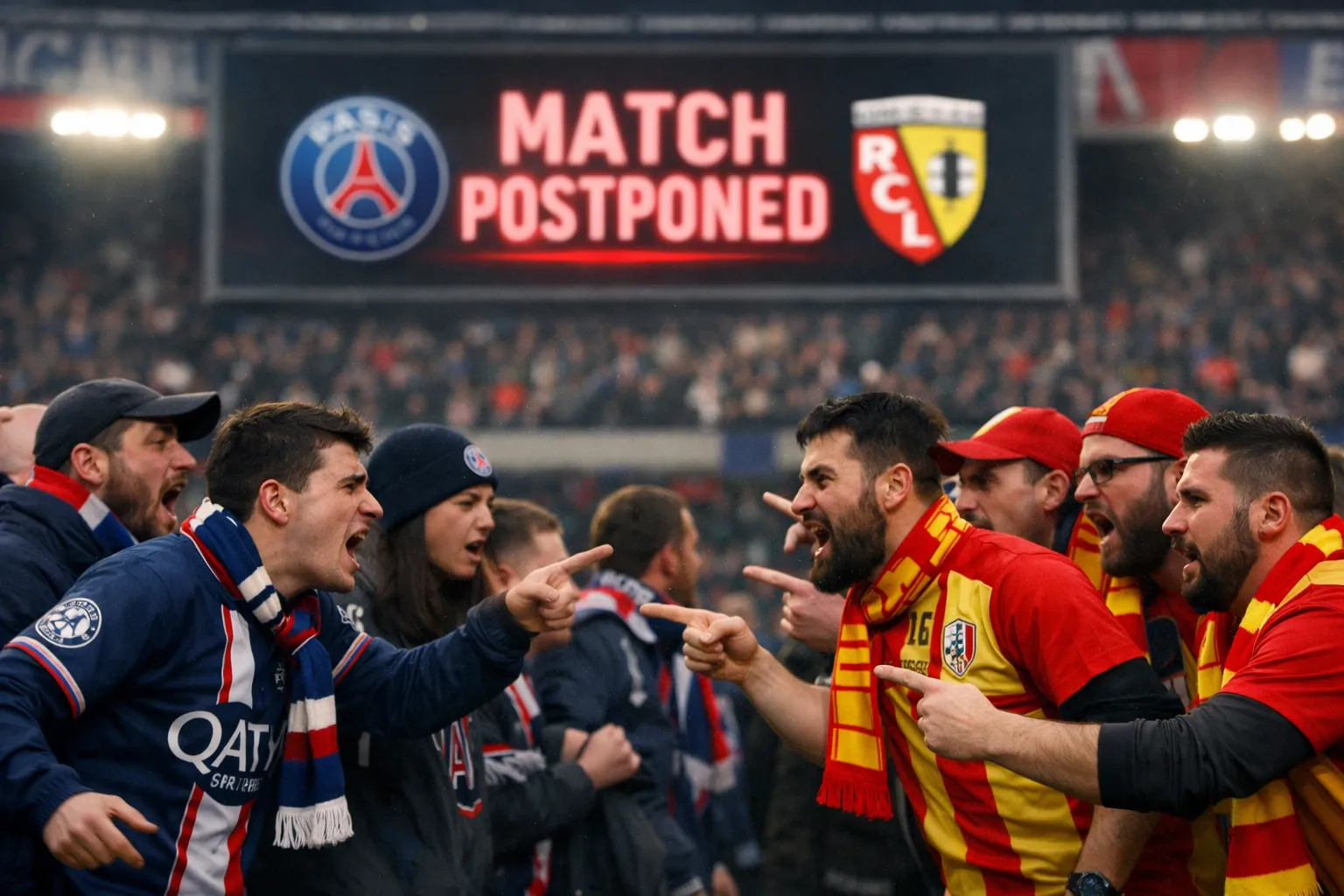
There are postponements that feel routine, and then there are postponements that feel like a political decision dressed up as logistics. The PSG Lens match postponement has landed firmly in the second category, because it touches every nerve in French football: fairness, power, and the uneasy balance between domestic competition and the Champions League. With RC Lens only a point behind Paris Saint-Germain, the calendar tweak looks less like admin and more like advantage. Add Luis Campos’ controversial explanation, and you have a flashpoint.
The PSG Lens match postponement was approved with a clear sporting logic: give Paris Saint-Germain breathing room ahead of their Champions League tie with Liverpool. Originally set for April 11, the game had the feel of a title-decider, not just another Friday night fixture. Lens’ proximity in the table turns any scheduling change into a competitive talking point. When the leaders gain time, the chasers inevitably ask who benefits most.
In isolation, moving one match might seem harmless, yet the Ligue 1 title race is defined by margins, momentum, and psychology. The PSG Lens match postponement removes a high-pressure domestic test from the immediate aftermath of European exertions. It also denies Lens the chance to attack Paris at a moment when fatigue and rotation might have been unavoidable. That is why Lens opposition has been so vocal, framing the decision as a structural tilt.
April 11 was not just a date; it was a narrative fork in the season, with PSG and Lens set to collide while the table remained tight. In a Ligue 1 title race where confidence can swing on one late goal, timing is everything. The PSG Lens match postponement interrupts the natural rhythm of form and pressure. It also changes how both coaches plan training cycles, recovery blocks, and squad selection weeks in advance.
Lens opposition has leaned hard on the idea of sporting integrity, arguing that rescheduling a direct title rival’s fixture is different from shifting a mid-table meeting. With Lens one point behind, any PSG schedule conflict resolution looks like a lever that can alter the championship’s texture. The PSG Lens match postponement, in their view, creates uncertainty about equal treatment across the league. Fans hear “integrity” and translate it into “rules for some, not for all.”
Paris Saint-Germain have long behaved like a club whose season is judged in Europe, and the PSG Liverpool Champions League tie is the kind of marquee test that shapes boardroom thinking. The PSG Lens match postponement is therefore consistent with PSG’s strategic instincts, even if it fuels resentment. PSG will now host Liverpool at Parc des Princes on April 7, a showcase night that demands peak freshness. In modern elite football, the calendar is a competitive tool.
Yet the Champions League argument is never neutral in France, because it collides with Ligue 1’s ongoing fight for credibility and competitive drama. The PSG Lens match postponement signals that the domestic title, while important, can be rearranged around European priorities. For neutral fans, that creates a familiar tension: should the league help its flagship club chase continental glory, or protect the week-to-week sanctity of the competition? The answer depends on whose interests you consider “French football.”
For PSG’s staff, a PSG schedule conflict is not only about travel and rest days; it is about managing minutes for star players and avoiding muscle injuries in decisive weeks. The PSG Lens match postponement buys flexibility for rotation, especially around the Liverpool tie’s tactical demands. It can also reduce the need for risky “play through fatigue” decisions that haunt clubs in April. From PSG’s perspective, it is pragmatic, even if it looks privileged.
Ligue 1 officials face a constant dilemma: assist clubs in Europe to raise the league’s coefficient and prestige, while keeping domestic competition credible. The PSG Lens match postponement becomes a symbol of that struggle because it involves the top two. When the league bends for PSG Liverpool Champions League needs, it sets a precedent that other clubs will cite later. The danger is that fans begin to see fixtures as negotiable, rather than earned and endured.
If the PSG Lens match postponement was already combustible, Luis Campos comments poured fuel on it. PSG’s sporting director cited respect for Liverpool’s history regarding the Hillsborough disaster as part of the scheduling context, implying sensitivity around dates and commemoration. Even if the intention was to sound considerate, the phrasing landed awkwardly, and critics quickly labelled it tasteless. In football, tragedy is not a rhetorical device, and supporters are quick to police that boundary.
The backlash matters because it shifts the story from sporting fairness to moral judgment, and those debates rarely resolve neatly. The PSG Lens match postponement could have been framed as simple workload management or competition policy, but the Hillsborough disaster reference dragged it into a different emotional register. Campos became the lightning rod, and Lens opposition found fresh ammunition to argue that the process was mishandled. The controversy now follows PSG into every press conference until the rescheduled date is announced.
Football tragedies sit in a sacred space, especially Hillsborough, which remains a living wound in English football culture. When Luis Campos comments invoked it amid a PSG schedule conflict, many heard opportunism rather than empathy. The PSG Lens match postponement then felt justified through an emotional shield, which rarely convinces skeptical audiences. Even respectful intentions can sound like a deflection when the practical issue is competitive advantage. That is why the reaction has been swift and unforgiving.
PSG’s problem is that the Luis Campos comments have changed what journalists and fans want to talk about. Instead of focusing on PSG Liverpool Champions League tactics, the conversation turns to tone, taste, and accountability. The PSG Lens match postponement becomes a case study in how not to communicate sensitive reasoning. For a club already perceived as powerful, any misstep reinforces the caricature of entitlement. In a tight Ligue 1 title race, perception can be as corrosive as points dropped.
Lens are not objecting for theatre; they are objecting because the PSG Lens match postponement changes their competitive pathway. A head-to-head at a specific moment can be a strategic chance to pounce, especially when PSG are juggling Europe and domestic pressure. Lens wanted the match when it was scheduled, because that timing might have forced PSG into rotation or compromised intensity. When that opportunity disappears, it feels like the league has moved the goalposts mid-race.
There is also a psychological element that cannot be ignored. Chasing teams often build their belief around upcoming “six-pointers,” and the PSG Lens match postponement delays that emotional crescendo. It can cool momentum, disrupt preparation, and shift attention to other fixtures where points are harder to bank. Lens opposition is therefore as much about mindset as mathematics. A one-point gap in the Ligue 1 title race is a fragile thing, and timing can make it brittle or resilient.
Lens now have to sustain pressure without the immediate catharsis of facing PSG, and that is a different kind of stress. The PSG Lens match postponement means every Lens result will be compared to an absent benchmark, with fans constantly recalculating “games in hand” scenarios. Coaches prefer clarity, not hypothetical tables. Lens opposition, in that sense, is also a plea for straightforward competition. If they want to win the Ligue 1 title race, they must turn frustration into focus.
Fairness in football is rarely perfect, but leagues try to approximate it through consistent rules and transparent reasoning. The PSG Lens match postponement challenges that ideal because the benefit appears asymmetric, even if the administrative process was lawful. Lens argue that equal obstacles—fatigue, travel, fixture congestion—should apply to everyone, especially at the top. When PSG schedule conflict solutions are granted, rivals ask why their own hardships were treated as normal. That is the integrity debate in its simplest form.
Postponing a game is easy; finding a clean new date is the hard part, especially with European fixtures, domestic cups, and international breaks crowding the calendar. The PSG Lens match postponement now forces Ligue 1 to locate a window that does not create a new imbalance. If the rescheduled match lands between Champions League legs or before a crucial run-in, the controversy will simply reboot. The league must show its workings, because secrecy breeds suspicion in a title race this tight.
PSG’s calendar is particularly unforgiving because the PSG Liverpool Champions League tie is only the start of what they hope is a deep European run. That means the PSG Lens match postponement could echo forward, affecting not just April but the entire spring. Lens, meanwhile, will insist that the new date does not hand PSG a softer landing or extra recovery. The optics matter: it must look like compromise, not capitulation to the league’s biggest brand.
Rescheduling creates the dreaded “games in hand” fog that distorts how fans experience the table week to week. The PSG Lens match postponement will leave supporters arguing over whether a lead is real or theoretical, and that uncertainty can cheapen matchday drama. Ligue 1 title race narratives thrive on clarity: win, lose, move on. If the postponed fixture is pushed too late, it risks becoming a final-week grenade. The league must decide whether it wants suspense or stability.
Because PSG carry financial and cultural weight, every administrative decision involving them is viewed through a lens of power. The PSG Lens match postponement therefore requires unusually clear communication: who requested what, which committees voted, and which criteria were applied. Without that, Lens opposition will continue to frame the episode as favoritism. The league can’t control what fans believe, but it can control how much information it provides. In a season defined by fine margins, credibility is a competitive asset.
In the short term, PSG get what they wanted: a cleaner runway into the PSG Liverpool Champions League night at Parc des Princes on April 7. That match will dominate attention, and if PSG perform well, the postponement will be defended as smart planning. But if PSG stumble, the PSG Lens match postponement will look like a failed attempt to game the calendar. Either way, the decision has ensured that every PSG result will be interpreted as evidence for or against the move.
For Lens, the task is to keep the Ligue 1 title race alive long enough for the postponed meeting to matter, and that is where the real sporting drama sits. The PSG Lens match postponement has not removed the confrontation; it has delayed it, possibly making it even more intense. Fans will arrive with weeks of accumulated arguments about fairness, Luis Campos comments, and what the league should represent. When the rescheduled date finally arrives, it won’t feel like a normal fixture—it will feel like a verdict.
PSG can’t rewind the Luis Campos comments, but they can manage what comes next by being disciplined and empathetic in communication. The PSG Lens match postponement controversy is now partly about respect, not just scheduling, and that requires care. A clear acknowledgment that certain references were unhelpful would reduce the noise. Without that, every question becomes an interrogation, and the squad ends up answering for an executive’s phrasing. In a Champions League week, that distraction is self-inflicted.
When the PSG Lens match postponement is finally resolved on the pitch, the game could carry layered consequences: points, pride, and a referendum on Ligue 1’s governance. If Lens win, they can claim the delay didn’t break their momentum, and they can reignite the integrity argument with sporting authority. If PSG win, they will argue the schedule conflict was handled correctly and the best team prevailed. Either outcome will echo beyond the scoreboard, because the controversy has already written extra meaning into the fixture.
The simplest truth is that the PSG Lens match postponement has turned a high-level football problem into a cultural argument about what competitions owe their participants. PSG want the best chance to beat Liverpool, Lens want the same rules to apply when the title is on the line, and Ligue 1 wants to look both ambitious and fair. Luis Campos comments ensured the debate became messier than it needed to be. Now the league must reschedule wisely, and the teams must settle the rest the only way football ever really does: by playing.

Julian Mercer is a lifelong student of the game whose passion for football was sparked at an early age, after stepping onto the grass of Camp Nou as a six-year-old — a moment that left a lasting impression and set him on a permanent path into the sport. Since then, football has been both his lens on the world and his favourite language. Blending traditional fandom with a deep interest in tactics, squad building, and long-term team development, Julian has spent decades analysing the game from every angle. His fascination with football strategy was further shaped through years of immersive play in Football Manager, a series he has followed since the mid-1990s, developing a sharp eye for patterns, player profiles, and the fine margins that define success. At My World Of Football, Julian focuses on the stories beneath the surface — from tactical evolutions and managerial philosophies to the narratives that connect clubs, players, and supporters across generations. His writing aims to balance insight with accessibility, always grounded in a genuine love for the game.
Continue reading more football news