Myworldoffootball
Sean Dyche Tottenham rumors: truth behind Spurs link
Sean Dyche Tottenham rumors unpacked as Dyche denies talks, rejects money motives, and Spurs choose Robert De Zerbi after the Igor Tudor exit.
Sean Dyche Tottenham rumors unpacked as Dyche denies talks, rejects money motives, and Spurs choose Robert De Zerbi after the Igor Tudor exit.
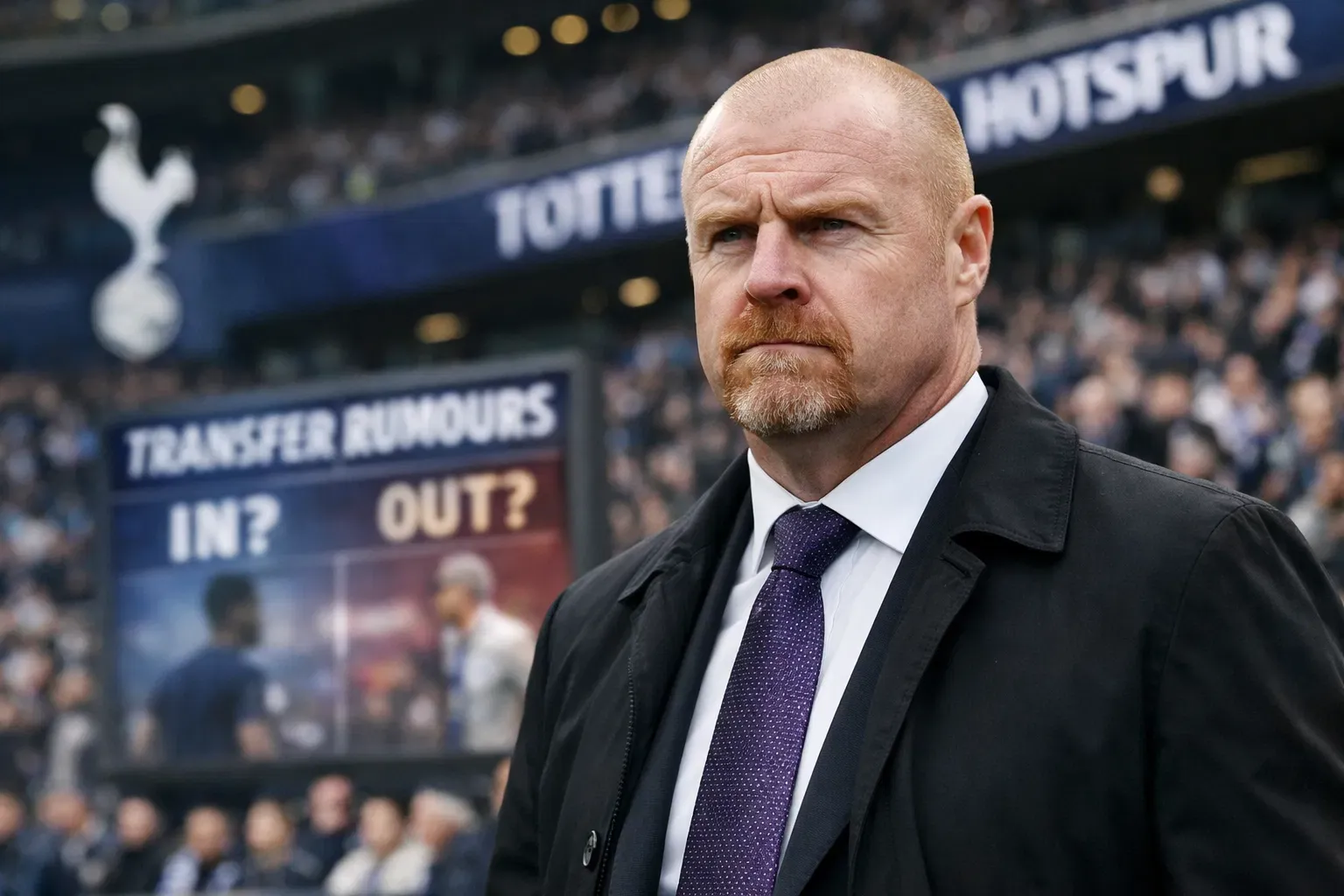
For a few jittery weeks in north London, the rumor mill spun so loudly that even the most hardened Premier League news junkies started treating it like fact. Sean Dyche Tottenham rumors gathered pace after Igor Tudor’s exit, with whispers that the former Nottingham Forest boss was in the frame and conveniently “in London” at the right time. Dyche has now put a firm full stop on the chatter, insisting there were no talks, no flirtation, and no temptation—no matter the money.
It was the kind of coincidence football loves to inflate into a storyline: Tottenham Hotspur manager vacancy, a well-known coach recently out of work, and a reported sighting in the capital. Sean Dyche Tottenham rumors fed off that neat overlap, because it sounded plausible enough to repeat on radio phone-ins and social feeds. Spurs were casting a wide net for an Igor Tudor replacement, and Dyche’s name arrived in that familiar “shortlist” haze.
Dyche’s own account punctures the narrative with blunt simplicity, the sort that leaves little room for interpretation. He said he never spoke to Tottenham Hotspur, never entered discussions, and never had the kind of contact that turns speculation into substance. Sean Dyche comments were framed as a reality check on how quickly football gossip becomes “news” once it has the right ingredients. In his view, the timeline was a coincidence, not a clue.
Tottenham supporters have lived through enough managerial churn to recognize patterns, and the Dyche link fit the template. He is Premier League-proven, he has a clear identity, and he’s the sort of appointment that can be sold as “stability” when a club wants to calm the noise. Sean Dyche Tottenham rumors also benefited from the sense that Spurs were exploring every stylistic option after Tudor, from pragmatists to ideologues.
Leaving Nottingham Forest in February meant Dyche was visible, available, and suddenly part of the football conversation again. That availability matters because it turns a coach into a blank canvas for other people’s projections, especially during a Spurs managerial search that felt open-ended. Sean Dyche Tottenham rumors were amplified by the idea that a recently departed manager might be eager for the next big job. Dyche’s stance, though, was that availability doesn’t equal appetite.
The clearest line from Dyche was also the most devastating for the rumor industry: there were no talks with Spurs. He didn’t dress it up with “not at this time” or “the club went another way,” the phrases that often leave a door ajar. Sean Dyche Tottenham rumors, he argued, were simply unfounded, and he treated them as an example of how narratives can be built without any sourcing fans would recognize as meaningful. It was denial without diplomacy.
That matters because Tottenham Hotspur manager speculation is rarely neutral; it shapes expectations and can even shape how candidates are perceived. If a coach is framed as “close” to a job, he can look rejected when the appointment goes elsewhere, even if nothing happened. Dyche’s rebuttal protected him from that false storyline, while also reminding supporters that the Spurs managerial search had its own internal logic. Sean Dyche Tottenham rumors, in that light, were noise rather than process.
In today’s Premier League news cycle, “contact” can mean anything from an agent-to-agent feeler to a formal interview, and fans often assume the most dramatic version. Dyche’s language suggested none of it occurred, not even the casual probing that usually precedes a serious approach. Sean Dyche Tottenham rumors had implied there was at least a spark, but he described a total absence of dialogue. That is a significant distinction, because it reframes Spurs as never truly considering him.
Even when a story is false, it can stick to a manager’s reputation like mud on boots after a wet Tuesday night. Being linked to Tottenham can make a coach seem like he’s waiting for a “bigger” job, which can irritate future employers or complicate negotiations. Sean Dyche Tottenham rumors also create fan judgments—some embrace the idea, others mock it—before the coach has said a word. Dyche’s decision to address it directly was a way to control the narrative.
Dyche didn’t just deny talks; he went further, insisting that financial incentives would not have tempted him to take the Spurs job. That line landed because it cuts against the common assumption that Premier League managers chase the biggest wage packet available. Sean Dyche Tottenham rumors had painted him as a candidate ready to step into a high-profile role, but he framed the decision as one of personal fulfillment and professional logic. Money, he suggested, isn’t the only scoreboard.
The subtext is about risk, and Tottenham is a job that comes with a particular kind of exposure. Spurs are ambitious, impatient, and permanently compared to clubs with deeper recent trophy histories, which can make the managerial seat feel like it’s on wheels. Dyche’s remarks hinted that the downside—reputation damage, short tenure, the churn—can outweigh the upside, even at elite salaries. Sean Dyche Tottenham rumors, then, weren’t just wrong; they were misreading his priorities.
Managers talk about “projects,” but they live in a world where a bad month can end a contract, and Dyche’s comments reflected that reality. The Spurs role, especially as an Igor Tudor replacement, carried the expectation of immediate impact and stylistic clarity, with little patience for transitional bumps. Sean Dyche Tottenham rumors ignored how coaches weigh longevity against glamour, and Dyche sounded like someone who has learned the true cost of instability. He was effectively pricing in the stress, not the salary.
Supporters are used to carefully packaged statements that avoid offending anyone, so Dyche’s bluntness felt unusually candid. Saying “no amount of money” is a strong sentence in a sport where finances often dictate choices, and it invites fans to think about what motivates managers beyond status. Sean Dyche Tottenham rumors became a vehicle for a wider conversation about authenticity in the game. Whether fans agreed with him or not, they could understand the logic behind refusing a job that might not fit.
Once Igor Tudor was out, Tottenham’s leadership needed a reset that could satisfy both the dressing-room demands and the wider identity debate around the club. The Spurs managerial search was portrayed as broad, with multiple candidates considered, because Spurs were choosing not just a coach but a direction. Sean Dyche Tottenham rumors existed inside that uncertainty, yet the eventual outcome suggested Tottenham’s shortlist leaned toward a different footballing philosophy. In other words, the club’s endgame never matched the Dyche narrative.
Spurs ultimately appointed Robert De Zerbi, a decision that signaled a preference for proactive structure, possession patterns, and a coach associated with modern tactical trends. That appointment also helped explain why Dyche’s name never truly belonged in the conversation, at least if Tottenham had a clear stylistic brief. Sean Dyche Tottenham rumors, when viewed next to De Zerbi’s profile, look like a mismatch that got oxygen because it was clickable. The club chose a blueprint, not a headline.
De Zerbi’s appeal lies in the idea of control: controlling the ball, controlling space, and controlling matches through rehearsed movements. Tottenham’s choice suggested they wanted a Tottenham Hotspur manager who could impose a recognizable style quickly, even if it carries risk in the early weeks. Sean Dyche Tottenham rumors were always pointing the opposite way, toward resilience and game-state management rather than elaborate buildup. The final decision clarified that Spurs were chasing a particular aesthetic as much as results.
When a club keeps its process quiet, the absence of information becomes an invitation for speculation to masquerade as insight. Tottenham’s search, by all accounts, involved several names, which meant there were plenty of gaps for pundits to fill with “I’m hearing” updates. Sean Dyche Tottenham rumors thrived in that vacuum, because they provided a concrete, familiar character in an otherwise abstract hunt. The lesson is that secrecy protects negotiations, but it also fuels misinformation.
Dyche’s departure from Nottingham Forest in February created a natural moment of reassessment, and those moments always attract links to bigger stages. Tottenham is one of the league’s loudest stages, so the jump felt narratively tidy even if it wasn’t real. Sean Dyche Tottenham rumors were, in part, a symptom of the way English football treats managers like movable pieces on a board, sliding them into the next vacancy regardless of fit. Dyche’s rebuttal was a reminder that managers have agency too.
There’s also a respect element in how Dyche framed it, because he didn’t sound like someone desperate to get back in at any cost. He spoke about fulfillment, implying that the right job is one that aligns with values, working conditions, and the likelihood of being allowed to build. That is a pointed contrast to the perception of Spurs as a high-wire act, where the coach is always one bad run from crisis meetings. Sean Dyche Tottenham rumors, then, were the wrong story about the right moment.
By dismissing the Spurs job so emphatically, Dyche effectively outlined what he does want: a role where the risk is manageable and the purpose is clear. That could mean a club with a defined structure, realistic expectations, and leadership that backs the coach through turbulence. Sean Dyche Tottenham rumors may have been false, but the conversation they sparked offered clues about his criteria going forward. He sounded like someone who values fit over fame, and that narrows the field in a useful way.
Nottingham Forest pressure is often survival-based, with the weekly drama of points, margins, and momentum, while Tottenham pressure is narrative-based, tied to identity, trophies, and the club’s place in the hierarchy. Both can be intense, but they ask different things of a manager’s personality and methods. Sean Dyche Tottenham rumors blurred that distinction, assuming pressure is pressure and money is money. Dyche’s stance suggested he understands those pressures are not interchangeable, and neither are the jobs.
Beyond the specifics, this episode is another case study in how quickly the Premier League cycles through coaches and stories. A vacancy appears, a list emerges, and within hours the public starts arguing about candidates as if the decision is being made on social media. Sean Dyche Tottenham rumors were especially instructive because they were so confidently repeated despite Dyche insisting there was nothing to discuss. It highlights how the industry’s appetite for certainty often outruns the facts.
It also underlines the precarious nature of the job, where even being linked to a role can become part of a manager’s public record. For Tottenham, the Tudor exit and De Zerbi arrival will be judged on results, but the search itself becomes a storyline, with winners and losers assigned by perception. Dyche refused to be cast as either, and his comments pushed back against the idea that every manager is waiting by the phone. Sean Dyche Tottenham rumors ended with a denial, but the dynamics that created them remain.
Being mentioned alongside Tottenham can signal status, suggesting a manager is considered top-tier, yet it can also set traps. If fans think a coach is “nearly appointed,” they may treat him as a missed opportunity or a bullet dodged, depending on their biases, and that judgment lingers. Sean Dyche Tottenham rumors carried that double edge, offering visibility while risking caricature. Dyche’s proactive dismissal was a way to avoid becoming a meme in someone else’s managerial soap opera.
Once a new coach starts winning, the rumor list becomes trivia; once results wobble, it becomes ammunition. If De Zerbi thrives, Tottenham’s decision-making will be praised and names like Dyche will be framed as never suitable. If Spurs struggle, the same names will be resurrected as “safer options,” and Sean Dyche Tottenham rumors could reappear as a nostalgic what-if. That is the strange afterlife of managerial speculation, where truth matters less than hindsight narratives.
For now, Dyche has done what managers rarely manage in the middle of a media storm: he drew a clean line under it. Sean Dyche Tottenham rumors may have entertained fans during a chaotic Spurs managerial search, but his message was that there was no conversation, no negotiation, and no scenario where money would have changed his mind. Tottenham have moved on with the Robert De Zerbi appointment, and Dyche has reclaimed control of his own storyline. In a league addicted to churn, that kind of clarity is almost radical.

Julian Mercer is a lifelong student of the game whose passion for football was sparked at an early age, after stepping onto the grass of Camp Nou as a six-year-old — a moment that left a lasting impression and set him on a permanent path into the sport. Since then, football has been both his lens on the world and his favourite language. Blending traditional fandom with a deep interest in tactics, squad building, and long-term team development, Julian has spent decades analysing the game from every angle. His fascination with football strategy was further shaped through years of immersive play in Football Manager, a series he has followed since the mid-1990s, developing a sharp eye for patterns, player profiles, and the fine margins that define success. At My World Of Football, Julian focuses on the stories beneath the surface — from tactical evolutions and managerial philosophies to the narratives that connect clubs, players, and supporters across generations. His writing aims to balance insight with accessibility, always grounded in a genuine love for the game.
Continue reading more football news