Myworldoffootball
Tottenham Hotspur relegation battle worsens after 3-0
Tottenham Hotspur relegation battle deepens after a 3-0 Forest loss. Bruno Saltor comments on pain, Igor Tudor absence, and crucial fixtures.
Tottenham Hotspur relegation battle deepens after a 3-0 Forest loss. Bruno Saltor comments on pain, Igor Tudor absence, and crucial fixtures.
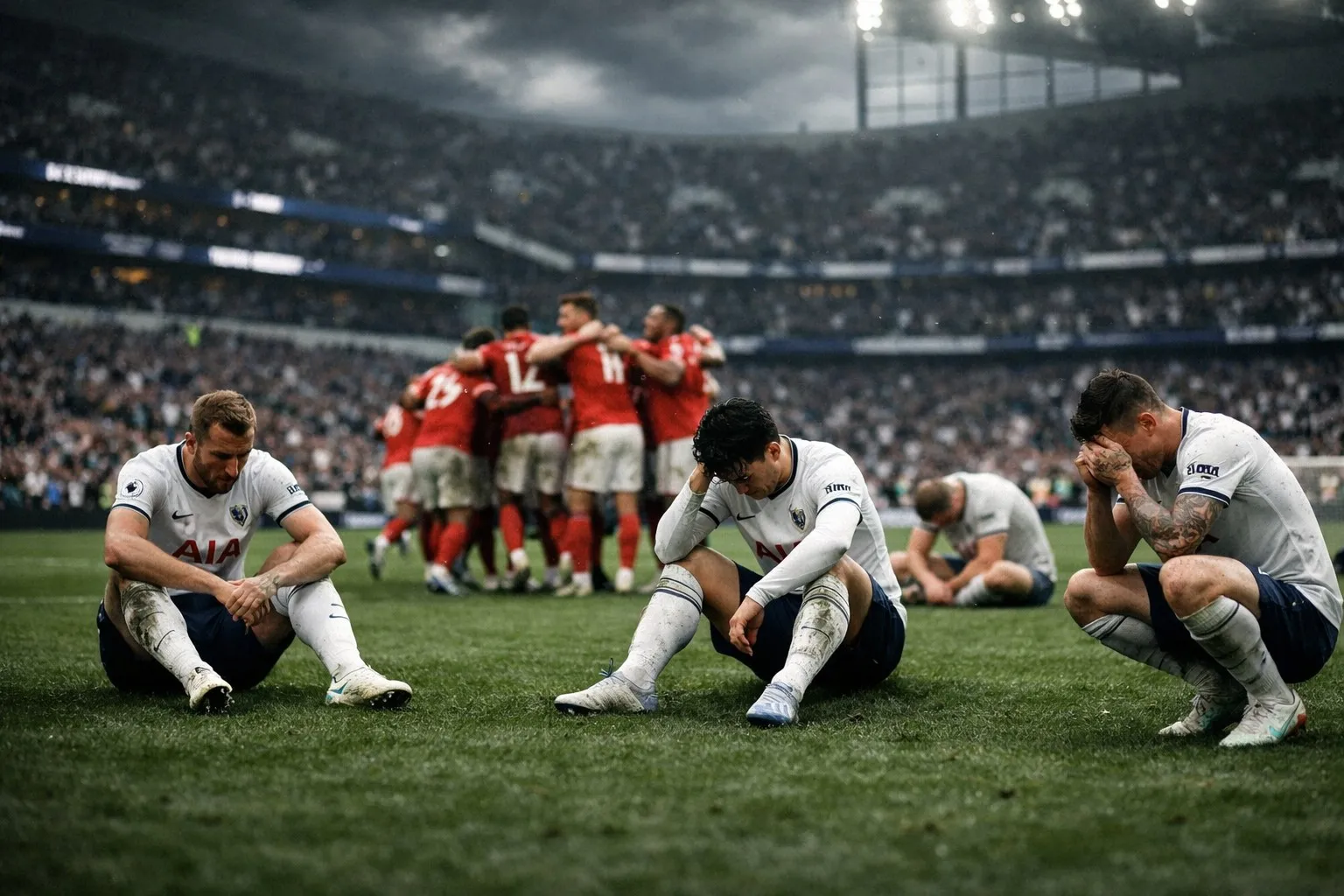
Tottenham Hotspur walked off their own pitch to a familiar, grim soundtrack: away-end cheers, home-end disbelief, and a league table that keeps tightening like a vice. The Tottenham Hotspur relegation battle is no longer a gloomy talking point for rivals; it is a weekly reality for Spurs supporters watching a side short on confidence and consistency. Nottingham Forest’s 3-0 win in north London felt like a verdict on form as much as a single match. With Igor Tudor absent, Bruno Saltor became the voice of a crisis that is now impossible to dress up.
Bruno Saltor comments rarely sound like spin, and his post-match tone reflected a club trying to process the emotional cost of repeated setbacks. He called the situation “really painful,” and it landed because it matched what everyone could see: players shrinking after mistakes, shoulders dropping after the first goal, and a stadium that went quiet far too early. In the Tottenham Hotspur relegation battle, psychology is as decisive as tactics, and Spurs look bruised.
Saltor also stressed the need for consistency, a word that has become Spurs’ missing ingredient across this brutal run. Six defeats in seven matches is not simply a wobble; it is a pattern that points to structural problems in both performance and belief. The Tottenham Hotspur relegation battle has turned into a test of resilience, and right now Spurs are failing the simplest exam: staying competitive for 90 minutes regardless of the scoreline.
When an assistant speaks publicly in place of the manager, every phrase is weighed by players who want reassurance and clarity. Saltor’s honesty can help because it validates the hurt rather than pretending it doesn’t exist, and footballers respond to authenticity when the pressure is suffocating. In the Tottenham Hotspur relegation battle, the dressing room must feel united against the problem, not defensive about it. His message implicitly challenged senior players to set standards quickly.
Saltor pointed to Spurs fan support, and it is more than a polite nod when the season is sliding toward danger. Fans can turn anxiety into energy if they sense effort and togetherness, but they can also transmit fear if the performance looks passive. The Tottenham Hotspur relegation battle demands a relationship reset between team and stands, built on intensity and honesty. Spurs need the crowd to believe again, and that starts with visible fight.
The Nottingham Forest victory was not a smash-and-grab; it was a controlled, ruthless away performance that punished Spurs’ uncertainty. Forest looked like a team that understood the stakes, defending with discipline and breaking with purpose, while Tottenham drifted between shapes and ideas. In the Tottenham Hotspur relegation battle, games swing on small moments—first duels, second balls, reactions to setbacks—and Forest won too many of them. The 3-0 scoreline reflected how quickly Spurs unravelled.
Forest’s goals carried a familiar warning for Spurs: once the first concession arrives, the defensive line becomes hesitant and the midfield stops protecting space. That is how a manageable match turns into a spiral, and it is why this Tottenham Hotspur relegation battle feels so alarming. The home side struggled to build attacks with conviction, and when they did create half-openings, the final action lacked composure. Forest, by contrast, played like a team that expects to survive.
What made the Nottingham Forest victory so damaging was its simplicity, executed with precision. Forest kept Spurs in front of them, closed central lanes, and waited for loose touches or rushed passes to trigger counters. In the Tottenham Hotspur relegation battle, opponents don’t need to be spectacular; they need to be organised and opportunistic, because Spurs are gifting momentum. Forest’s transitions repeatedly found space behind Spurs’ midfield, forcing defenders into uncomfortable choices.
Tottenham’s worst habit is not conceding a goal; it is the emotional dip that follows. Heads turn, communication drops, and the next five minutes become frantic rather than focused, which is exactly when opponents smell blood. The Tottenham Hotspur relegation battle punishes that fragility because every match is a pressure cooker. Forest sensed the wobble and leaned into it, turning Spurs’ anxiety into their own confidence with each successful duel and clearance.
The Premier League standings now read like a warning label for Spurs. Seventeenth place with 30 points from 31 games is the kind of line that usually belongs to teams already planning the Championship, and it equals the club’s lowest tally at this stage since 1914-1915. That historical comparison is not trivia; it is a measure of how far standards have fallen. The Tottenham Hotspur relegation battle is real because the numbers say it is, not because anyone wants drama.
Forest’s win nudged them up to 16th, while West Ham sit in the relegation zone at 18th, and that cluster is where panic spreads. The margins are thin, and one good week can flip the narrative, but Spurs have not earned the right to assume a good week is coming. In the Tottenham Hotspur relegation battle, fixture lists and “games in hand” mean little if performances keep collapsing. Spurs need points, quickly, and preferably before fear becomes permanent.
Being 17th is not comfort; it is a trap, because it tempts teams into thinking survival is still in their control while the cushion shrinks. Every dropped point becomes heavier, and every opponent senses vulnerability, especially in direct clashes around the relegation zone. The Tottenham Hotspur relegation battle is intensified by that psychological arithmetic: players start counting matches instead of playing them. Spurs must treat 17th as an emergency, not a temporary inconvenience.
Relegation fights are contagious, and the Premier League standings shape behaviour as much as talent does. Forest will take belief from winning at Tottenham, and teams below Spurs will take belief from seeing Spurs lose again at home. The Tottenham Hotspur relegation battle therefore isn’t only about Tottenham’s fixtures; it’s also about the confidence Spurs are handing out to rivals. When a big club looks uncertain, everyone else starts to think the impossible is possible.
Igor Tudor absence from media duties, due to personal reasons, was understandable on a human level, yet it still underlined how fragile Spurs’ public leadership looks right now. In crisis, supporters crave a clear message from the figurehead, not because words solve problems, but because they set direction. The Tottenham Hotspur relegation battle demands a steady hand, and the optics of the assistant fronting up after a 3-0 home loss inevitably raised questions. Saltor handled it, but the club needs Tudor back, visible and decisive.
Inside the training ground, the bigger issue is continuity: are Spurs receiving one consistent set of demands, or are they oscillating between fixes and reactions? The Tottenham Hotspur relegation battle is no time for mixed signals, especially when confidence is low and errors are multiplying. Tudor’s immediate task, once he returns to the spotlight, is to simplify: define non-negotiables, pick a stable spine, and build a plan that survives setbacks. Right now Spurs look like a team waiting for good news rather than creating it.
Saltor’s presence in front of the cameras matters because assistants often become translators between the manager’s ideas and the players’ reality. His job is to protect the group while still demanding more, and that balance is delicate when results are this bad. The Tottenham Hotspur relegation battle has turned every press conference into a referendum on character, and Saltor’s calm honesty helped avoid a combustible mood. But messaging must be matched by training-ground intensity, or it becomes empty.
Managers under pressure can be tempted to change everything at once, chasing a spark, but that often creates confusion and fear. In the Tottenham Hotspur relegation battle, Tudor’s smartest move may be to pick a clear structure and repeat it until it becomes habit. Players in trouble want certainty: where to stand, when to press, who covers which space, and how to respond after conceding. Spurs don’t need novelty; they need reliability and leadership in moments of stress.
Six defeats in seven matches is not just a statistical slump; it is an emotional drain that seeps into decision-making. Players start to play safe, passes go sideways, and the instinct to attack becomes an instinct to avoid blame. Saltor spoke about the toll, and it was visible in the body language after Forest’s goals, when Spurs looked like they were bargaining with the match rather than fighting it. The Tottenham Hotspur relegation battle is as much about restoring courage as it is about improving shape.
Spurs fan support can be a force, but it is also a mirror, reflecting what the team gives them. When supporters see sprinting, tackling, and collective anger, they respond with noise; when they see hesitation, they respond with nervousness. The Tottenham Hotspur relegation battle requires Spurs to win back their own stadium, not through pretty football alone, but through commitment that survives adversity. Against Forest, the atmosphere faded because belief did, and that must change fast.
In relegation fights, one mistake rarely stays isolated; it becomes the trigger for the next one because players rush to fix things immediately. That urgency leads to forced passes, mistimed presses, and positional gambles that open more space for opponents. The Tottenham Hotspur relegation battle is punishing Spurs because the team is reacting emotionally rather than strategically. The solution is not simply “try harder,” but to slow the game down, manage moments, and accept that ugly phases are survivable.
Supporters can forgive a lot when they recognise a coherent plan and honest effort, even if the quality isn’t perfect. They want to see players taking responsibility after errors, teammates encouraging rather than blaming, and a tactical approach that makes sense in the context of survival. The Tottenham Hotspur relegation battle is not the time for luxury football that collapses after one setback. If Spurs show grit and organisation, Spurs fan support will follow, and that can become a competitive edge.
The international break arrives like a pause button, but it won’t fix anything unless Spurs use it to reset habits and sharpen focus. The upcoming fixtures, starting with Sunderland and then Brighton, represent a mini-season where every match feels like a final. In the Tottenham Hotspur relegation battle, you don’t need a perfect run; you need a functional one, built on points accumulation and emotional control. Spurs must target specific returns from this stretch, because hope without a plan is just denial.
Sunderland and Brighton offer different problems, yet both will test Spurs’ current weaknesses: defending transitions, handling pressure after conceding, and sustaining intensity across halves. The Tottenham Hotspur relegation battle will be shaped by whether Spurs can turn matches into controlled contests rather than chaotic sprints. That means smarter game management, more compact spacing, and a willingness to win ugly when necessary. If Spurs keep chasing “statement performances,” they may miss the simple points required to survive.
Matches against teams in and around the relegation zone carry double value, not only in points but in belief. Beat a direct rival and you gain ground while damaging their momentum, which can swing the mood of the whole run-in. The Tottenham Hotspur relegation battle therefore makes Sunderland a pressure game, not a routine fixture, and Spurs must approach it with clarity and aggression. A slow start would be disastrous, because it would invite doubt back into the stadium immediately.
Brighton can punish teams that press without coordination, pulling them out of shape and exploiting gaps, so Spurs must be disciplined. In the Tottenham Hotspur relegation battle, that discipline includes knowing when to keep possession for rest, when to go long to relieve pressure, and how to protect the centre when attacks break down. Spurs don’t need to dominate for 90 minutes; they need to avoid self-inflicted wounds. A compact, pragmatic approach could be the difference between a point and another damaging defeat.
Tottenham have reached the stage where the conversation is no longer about style, long-term projects, or what Spurs might become next season; it is about survival, week by week, moment by moment. The Tottenham Hotspur relegation battle will be decided by whether this group can turn pain into purpose, and whether Tudor and Saltor can translate honesty into solutions. Forest’s 3-0 win was a brutal snapshot of where Spurs are, but the table still offers a route out. Spurs must take it with urgency, unity, and a clear plan before history becomes fate.

Julian Mercer is a lifelong student of the game whose passion for football was sparked at an early age, after stepping onto the grass of Camp Nou as a six-year-old — a moment that left a lasting impression and set him on a permanent path into the sport. Since then, football has been both his lens on the world and his favourite language. Blending traditional fandom with a deep interest in tactics, squad building, and long-term team development, Julian has spent decades analysing the game from every angle. His fascination with football strategy was further shaped through years of immersive play in Football Manager, a series he has followed since the mid-1990s, developing a sharp eye for patterns, player profiles, and the fine margins that define success. At My World Of Football, Julian focuses on the stories beneath the surface — from tactical evolutions and managerial philosophies to the narratives that connect clubs, players, and supporters across generations. His writing aims to balance insight with accessibility, always grounded in a genuine love for the game.
Continue reading more football news