Myworldoffootball
Waldemar Anton transfer news: Dortmund contract fight
Waldemar Anton transfer news heats up as Dortmund open extension talks amid interest from Man United, Aston Villa and Atlético, plus defensive reshuffles.
Waldemar Anton transfer news heats up as Dortmund open extension talks amid interest from Man United, Aston Villa and Atlético, plus defensive reshuffles.
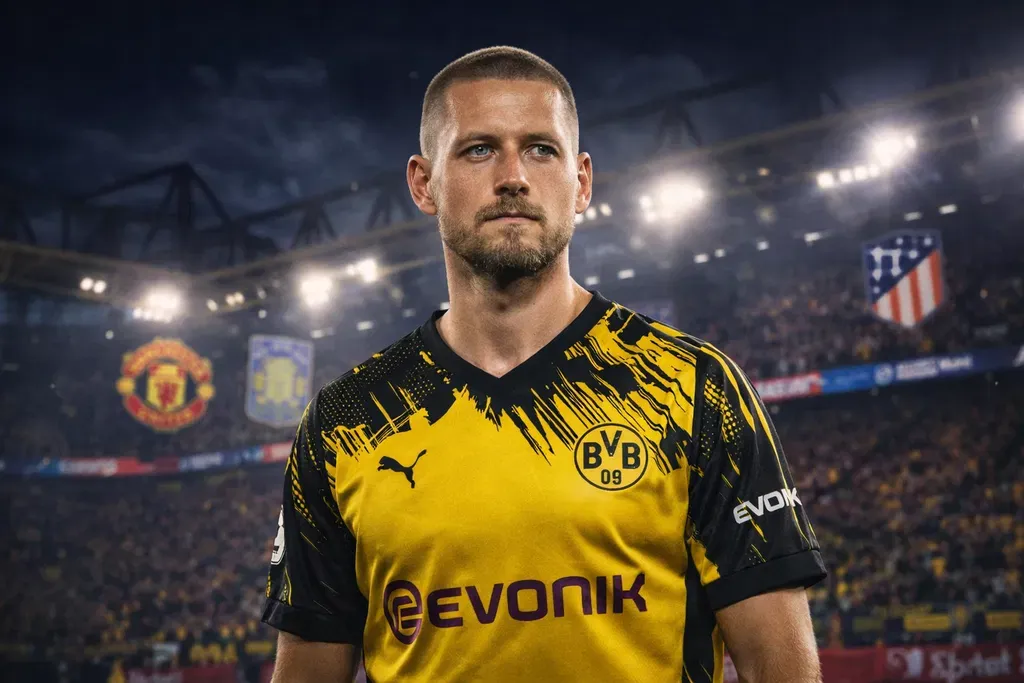
Borussia Dortmund have spent the season trying to stabilise a defence that has rarely enjoyed a settled run, and one name has increasingly looked like the glue: Waldemar Anton. That form has inevitably sparked Waldemar Anton transfer news across Europe, with Manchester United, Aston Villa and Atlético Madrid all circling and monitoring his situation. Dortmund’s leadership know what happens when key pieces hesitate, so Sebastian Kehl has moved early with contract-extension talks. The stakes are high because the next few months could define Dortmund’s entire defensive hierarchy.
The loudest Waldemar Anton transfer news is not just about interest, but about timing, because Dortmund are planning a defensive reset while rivals smell opportunity. Anton’s current deal reportedly runs to 2028, which should mean control, yet modern football rarely respects contract length when a player’s value spikes. Dortmund want to avoid the slow drift that turns “secure” assets into unsettled starters. Kehl’s decision to open discussions now signals urgency, not panic.
What makes this Waldemar Anton transfer news feel different is that it’s tied to performance rather than potential, and that changes Dortmund’s negotiating posture. Anton has not been a project player; he has been a ready-made organiser who looks comfortable against top-level pressing and transition waves. When a defender’s mistakes are minimal, coaches start building structures around him, and that’s where retention becomes strategic. Dortmund can’t treat him like a rotation option if Europe treats him like a leader.
Anton’s standout stretch came when Dortmund needed competence more than charisma, particularly during Nico Schlotterbeck’s absence, and he delivered with understated authority. He has played like a defensive leader who reads danger early, keeps distances tight, and makes the simple pass that stops counter-press traps from forming. That reliability is exactly why Waldemar Anton transfer news has traction: clubs hunt for defenders who lower chaos. Dortmund’s staff will argue his value is not flashy, it’s structural.
By initiating extension talks, Kehl is trying to get ahead of the summer’s rumour economy, where every quiet week becomes another burst of Waldemar Anton transfer news. Dortmund know that once Premier League clubs start positioning, the story can shift from “interest” to “inevitable move” almost overnight. An improved contract, even with performance-based adjustments, helps reset the conversation toward commitment. It also gives Dortmund leverage if they must negotiate from strength rather than fear.
Manchester United’s interest fits a familiar pattern: they want defenders who can survive open-field moments and still play out under pressure, and Anton’s recent form checks those boxes. From Dortmund’s view, the Premier League’s financial gravity is the real threat, because salary escalation can turn a sensible renewal into a difficult compromise. That’s why Waldemar Anton transfer news involving England carries extra weight. If United move from monitoring to formal talks, the temperature rises quickly.
Aston Villa’s presence in Waldemar Anton transfer news is arguably even more telling, because it suggests Anton is being evaluated as a “win-now” piece for ambitious, well-coached teams. Villa have built a reputation for targeting players who can immediately execute a tactical plan, and Anton’s discipline would suit a side that values compactness and controlled aggression. Dortmund can’t dismiss that pull, especially if Villa can offer a key role and a clear project. In modern recruitment, clarity is currency.
United’s recent seasons have exposed how quickly a back line can unravel without consistent decision-making, and Anton’s low-error profile is exactly what their scouts will highlight. The Waldemar Anton transfer news angle here is less about star power and more about dependability in high-volume defending. He’s shown he can absorb pressure, defend the box, and avoid the rash moments that turn games. Dortmund will know that United’s interest often becomes noisy, and noise can unsettle dressing rooms.
Villa’s rise has been powered by structure, and Anton’s strengths align with teams that demand spacing discipline and repeatable actions. In Waldemar Anton transfer news terms, Villa represent the “football fit” option, where a player can see the tactical logic immediately and feel valued as a cornerstone. Dortmund must counter that with their own clarity, explaining where Anton sits when Schlotterbeck returns and how minutes will be shared. If Dortmund can’t offer a defined status, rivals will.
Atlético Madrid’s interest adds a different flavour to Waldemar Anton transfer news, because it’s less about money and more about identity. Diego Simeone’s teams have long prized defenders who embrace duels, protect central zones, and treat concentration as a craft, and Anton’s season suggests he can thrive in that environment. For Dortmund, Atlético are a reminder that elite clubs outside England can still be persuasive. A move to La Liga also carries lifestyle and legacy appeal.
The Bundesliga context matters too, because Dortmund are trying to keep top domestic performers from becoming stepping stones. When a player like Anton rises quickly, the league’s internal market often becomes a launching pad to bigger wages elsewhere, and Dortmund have lived that cycle repeatedly. Waldemar Anton transfer news therefore becomes symbolic: can Dortmund keep a defender who looks like a long-term pillar? The answer will influence how future recruits view Dortmund’s pathway and ambition.
Atlético can offer something that resonates with defenders: a system where defensive excellence is not merely appreciated, but celebrated. In Waldemar Anton transfer news, that’s crucial because players often want their best skill to be central to the project, not a side note. Anton’s ability to stay switched on, manage space, and win key duels would be amplified in Simeone’s framework. Dortmund must pitch their own competitive vision, especially in Europe, to match that sporting pull.
Dortmund’s brand has long balanced development with competitiveness, but keeping peak performers is the step that turns a “selling club” narrative into a “building club” reality. Waldemar Anton transfer news is a test case because his value is rising inside a position where cohesion matters more than highlights. If Dortmund can extend him with a meaningful role and salary progression, it signals intent to hold the spine. If not, it reinforces the idea that top form equals an exit route.
The contract extension talks reportedly being handled under the current sporting leadership, and potentially continuing under Ole Book, are complicated by Dortmund’s wage architecture. Anton’s deal running to 2028 gives Dortmund time, but time doesn’t stop a player’s market from moving faster than internal budgets. The Waldemar Anton transfer news cycle will keep returning to one question: will Dortmund pay him like a core starter or like a useful piece? Negotiations often hinge on that psychological line more than the headline number.
Adding pressure is the expectation that Nico Schlotterbeck will become Dortmund’s top earner at around €14 million per season, a figure that inevitably becomes a reference point. Dortmund can argue that wages reflect role, seniority, and marketability, but players and agents read it as a map of status. Waldemar Anton transfer news becomes sharper when a defender feels he’s performing at a comparable level but living in a different salary universe. Keeping harmony means explaining the hierarchy without diminishing contribution.
Linking Anton’s salary adjustments to performance metrics sounds pragmatic, and it can help Dortmund keep a lid on fixed costs while rewarding excellence. Yet Waldemar Anton transfer news will note the downside: bonuses can feel uncertain compared to guaranteed wages offered elsewhere, especially from Premier League clubs. Defenders also face the randomness of injuries and tactical shifts that can affect appearance-based triggers. Dortmund must design incentives that feel achievable and respectful, not like hurdles that protect the club more than the player.
Schlotterbeck’s importance is unquestioned, but Dortmund need to manage how his return reshapes minutes, leadership, and dressing-room influence. The Waldemar Anton transfer news storyline intensifies if Anton senses he will slide back into a secondary lane after carrying responsibility during absences. Dortmund’s coaches must communicate a plan where both can coexist, whether as a rotating partnership or as part of a flexible back line. The best retention pitch is not just money; it’s a future in which the player matters.
Dortmund’s defensive planning is being squeezed from multiple angles, including the sense that Niklas Süle could be heading toward the exit and that Emre Can’s long-term injury reduces midfield cover. When that safety net disappears, central defenders face more direct waves, and the value of a calm organiser rises. That’s why Waldemar Anton transfer news feels so consequential: Dortmund may not be able to replace his reliability with a simple signing. Losing him would create a chain reaction in recruitment and tactics.
Squad building is rarely linear, and Dortmund’s next window might require both replacing departures and upgrading depth, which is expensive even before you consider paying to keep a breakout performer. Waldemar Anton transfer news is therefore tied to budget choices: spend on a new centre-back, spend on a defensive midfielder, or spend to retain the one defender who has already proven he can hold the line. Dortmund supporters understand this dilemma because they’ve watched windows where one unresolved issue multiplies into three. The club can’t afford a domino effect.
If Süle moves on, Dortmund lose a specific set of tools: physical dominance, recovery speed in certain matchups, and experience managing big-game aerial battles. Waldemar Anton transfer news then becomes part of a broader question about the squad’s balance, because you can’t replace different defender types with one generic solution. Anton’s strengths are more about reading and timing, which complement but don’t replicate Süle’s attributes. Dortmund would need a carefully planned pairing strategy, not a rushed replacement.
A long-term injury to a midfield shield changes everything for defenders, because the first line of resistance weakens and the back line faces more direct runs. In that context, Waldemar Anton transfer news matters because Anton has shown he can manage spacing and step out intelligently without losing the second ball. Dortmund may need to adjust pressing triggers and rest defence, but that takes time and training. Keeping a defender who already understands these patterns is a shortcut to stability.
Dortmund’s best argument is footballing: Anton can be a defensive leader in a team that wants to compete deep into the Champions League and chase the Bundesliga’s top spots. To win the Waldemar Anton transfer news battle, Dortmund must frame him as a pillar of the next cycle, not merely a stopgap during injuries. That means guaranteeing meaningful minutes, giving him responsibility in build-up, and aligning his role with the team’s long-term tactical identity. Players stay when they feel central, not convenient.
The club also need to be proactive with supporters, because fan sentiment can influence how a player perceives his standing. If Dortmund communicate that Anton’s performances are valued and that retention is a priority, it reduces the sense that he’s destined to be sold. Waldemar Anton transfer news thrives in silence, where every rumour becomes a story of inevitability. Dortmund don’t need to reveal numbers, but they do need to show intent, especially as other clubs brief interest to keep pressure on negotiations.
A credible sporting plan could involve building a flexible defensive unit where Anton and Schlotterbeck alternate roles based on opponent profiles, rather than a strict starter-and-backup model. That approach can neutralise the status anxiety that fuels Waldemar Anton transfer news, because it frames rotation as strategy, not demotion. Dortmund can also explore systems that use a back three in certain matches, making room for multiple centre-backs while improving rest defence. Tactical flexibility is often a contract tool in disguise.
Dortmund’s financial pitch has to feel fair, even if it can’t match Premier League extremes, and that means creating a pathway where Anton’s earnings reflect his importance over time. Waldemar Anton transfer news will cool if an extension includes a clear salary bump, achievable bonuses, and perhaps a leadership-related structure that recognises his role. Dortmund must protect the wage spine, but they can still signal ambition by paying core performers appropriately. In elite squads, respect is often measured in decimals on a payslip.
Ultimately, Waldemar Anton transfer news is less about a single rumour and more about Dortmund’s ability to protect the foundations of a team in transition. Anton has earned the right to be treated as more than depth, and the interest from Manchester United, Aston Villa and Atlético Madrid proves the market agrees. With Schlotterbeck’s salary set to reset the internal scale, and with Süle and Emre Can situations complicating the defensive picture, Dortmund’s next steps must be decisive. If they act with clarity and conviction, they can keep a leader and avoid another summer of unnecessary turbulence.
Julian Mercer is a lifelong student of the game whose passion for football was sparked at an early age, after stepping onto the grass of Camp Nou as a six-year-old — a moment that left a lasting impression and set him on a permanent path into the sport. Since then, football has been both his lens on the world and his favourite language. Blending traditional fandom with a deep interest in tactics, squad building, and long-term team development, Julian has spent decades analysing the game from every angle. His fascination with football strategy was further shaped through years of immersive play in Football Manager, a series he has followed since the mid-1990s, developing a sharp eye for patterns, player profiles, and the fine margins that define success. At My World Of Football, Julian focuses on the stories beneath the surface — from tactical evolutions and managerial philosophies to the narratives that connect clubs, players, and supporters across generations. His writing aims to balance insight with accessibility, always grounded in a genuine love for the game.
Continue reading more football news