Myworldoffootball
William Saliba injury news after Arsenal PSG final
William Saliba injury news dominates after Arsenal’s Champions League defeat to PSG on penalties, with France World Cup squad fears and recovery timeline.
William Saliba injury news dominates after Arsenal’s Champions League defeat to PSG on penalties, with France World Cup squad fears and recovery timeline.
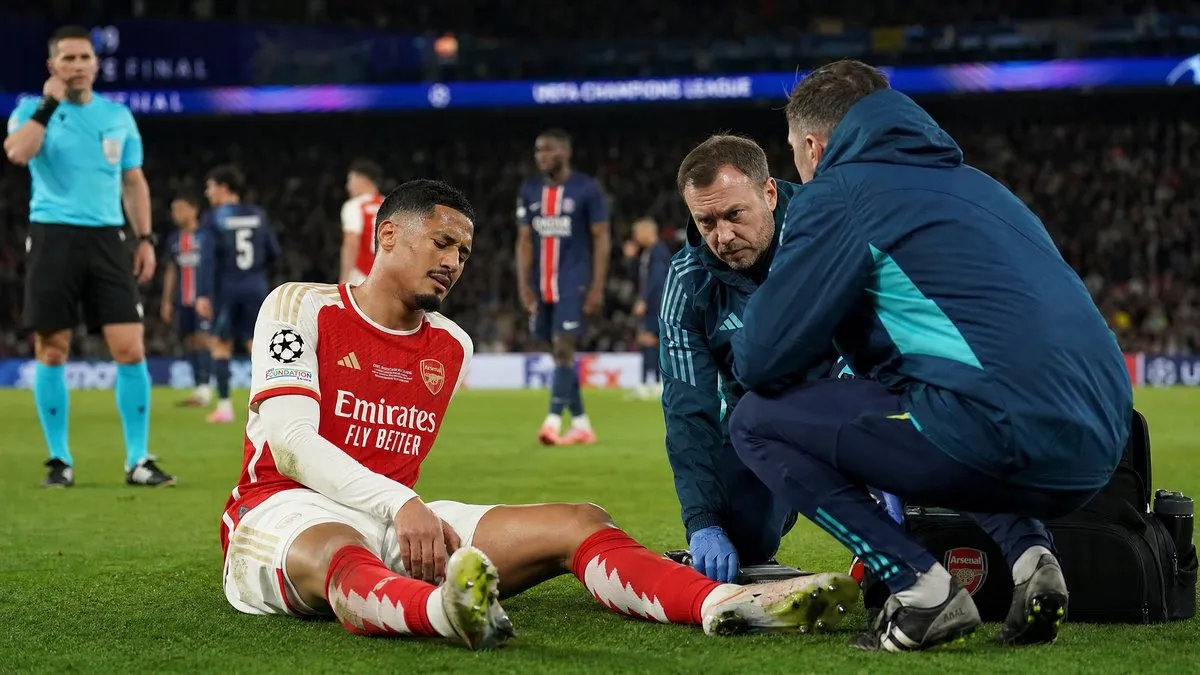
Arsenal’s night of near-glory in Budapest ended with the cruelest twist: a penalty shootout defeat to Paris Saint-Germain after a 1-1 draw, and a fresh wave of William Saliba injury news that could stretch far beyond north London. Saliba, 25, was immense for long spells yet appeared to be nursing a problem that worsened across 120 draining minutes. The immediate pain of a European exit now mixes with anxiety about his availability for France as the World Cup in North America begins on June 11.
For Arsenal supporters, the final felt like a movie that refused to end, then delivered the bleakest possible conclusion. PSG’s composure in the PSG penalty shootout was decisive, but the bigger aftershock inside Arsenal’s camp was the emerging William Saliba injury news that followed the final whistle. Saliba had started despite a minor issue, and the extra-time workload seemed to turn discomfort into something more serious.
The defender’s importance to Mikel Arteta’s structure is so fundamental that any doubt becomes headline material instantly. Arsenal’s build-up, their ability to squeeze the pitch, and their calm under pressure all lean heavily on Saliba’s athletic coverage and clean first pass. That is why William Saliba injury news sits alongside the result itself as the defining conversation from Budapest. One blow would have been bad; two feels destabilising.
Even before extra time, the match demanded repeated high-speed recoveries, aerial duels, and constant scanning for PSG’s runners between the lines. Saliba’s game is built on timing and stride length, but a minor knock can quickly turn those strengths into vulnerabilities when fatigue bites. As the clock moved past 90 minutes, you could sense him managing moments rather than dominating every one. That shift is central to the latest William Saliba injury news.
This Arsenal Champions League defeat wasn’t just emotionally draining; it was physically punishing in the way finals often are. The tempo spikes, the stoppages, and the extended periods of defending deep force defenders into awkward sprints and last-ditch blocks. Saliba’s willingness to play through pain speaks to his mentality, yet it also raises questions about risk management in the biggest games. Now Arsenal must balance short-term disappointment with long-term protection.
In the hours after the final, the conversation shifted from missed penalties to scans, swelling, and recovery windows. Arsenal will be careful with messaging, but the tone around the training ground tends to reveal plenty, especially when a key starter is involved. The club’s immediate priority is a clear diagnosis, because the difference between a minor strain and a more complex issue is measured in weeks. Every update becomes part of the William Saliba injury news cycle.
Arteta’s staff will also reflect on the decision to start Saliba despite the initial complaint. Finals invite players to hide problems, and managers to accept calculated risks, but the extra 30 minutes can punish those gambles. The first Saliba recovery update will likely focus on pain response and functional movement rather than dramatic predictions. Still, with June 11 looming, even a “small” injury can feel enormous for club and country.
When teams say a player “played through a minor injury,” it often means the problem was manageable in a normal 90-minute rhythm but uncertain in the chaos of a final. Adrenaline can mask pain, and defenders in particular will sacrifice comfort to keep their line intact. The concern is that compensating for one sore area can create secondary issues elsewhere. That’s why the latest William Saliba injury news will be monitored for knock-on effects.
Arsenal’s long-term planning revolves around stability in central defence, and Saliba is the cornerstone of that plan. Rushing him risks recurrence, and recurrence risks turning a short absence into a season-shaping problem. The club also knows that France’s schedule will intensify the moment he returns, making load management critical. Any Saliba recovery update that sounds cautious is not pessimism; it’s professional self-preservation in elite sport.
For Didier Deschamps, the timing could not be worse, because tournament squads are built on certainty and rhythm. The France World Cup squad planning hinges on defenders who can handle transitions, defend big spaces, and stay calm when the pressure spikes. Saliba ticks those boxes and has become increasingly central to France’s evolving back line. That is why William Saliba injury news lands in Clairefontaine like an alarm bell rather than a routine club concern.
Deschamps is famously pragmatic, and he will already be mapping contingency plans. International football offers fewer training days, so a player carrying even a small issue can become a tactical liability. The coach’s staff will demand clarity on what Saliba can do at full speed, not just what he can tolerate in a straight line. Until that clarity arrives, Didier Deschamps defensive options will dominate the conversation around France’s preparation.
France have depth, but not every defender offers Saliba’s blend of pace, anticipation, and distribution under pressure. He enables a higher line, reduces the need for midfielders to drop, and helps France control territory rather than simply survive. In tournament football, those margins decide knockout ties, especially against elite pressing sides. That is why William Saliba injury news is being treated as a potential structural problem, not merely a selection headache.
Ibrahima Konaté is an obvious solution on paper, yet partnerships are not built on paper; they’re built on repetition and trust. If Saliba misses time, Deschamps must decide whether to keep the same defensive principles or adjust to different profiles. Konaté’s strengths can change how France defend wide spaces and set-piece zones, which then affects the midfield screen. The latest Didier Deschamps defensive options debate is really about preserving a system, not just swapping names.
Back at Arsenal, the immediate football question is brutally simple: how do you replace a defender who makes difficult defending look routine? Saliba’s ability to win duels without fouling, step into midfield at the right moment, and recover when Arsenal lose the ball is rare. If the William Saliba injury news turns into a multi-week absence, Arteta must rethink how aggressively he can press and how high he can hold his line. The dominoes fall quickly.
Gabriel’s role becomes even more important in this scenario, because he often provides the emotional edge and aerial dominance that complements Saliba’s calm control. Without Saliba, the left-right balance of Arsenal’s centre-backs changes, and so does the distribution pattern from deep. That affects the full-backs, the pivot, and even the wingers’ starting positions. In other words, William Saliba injury news isn’t isolated; it’s tactical weather that changes the whole matchday climate.
Gabriel can lead a defence, but leadership also requires a stable partner who reads the same cues. Saliba’s presence allows Gabriel to be proactive, stepping into challenges knowing the space behind is covered. Remove that safety net and Gabriel may need to defend more conservatively, which can pull Arsenal’s line deeper than Arteta prefers. The club’s response to the William Saliba injury news will include recalibrating risk, not just selecting a replacement.
Saliba’s progressive passing is a quiet superpower, because it breaks pressure without forcing Arsenal into hopeful balls. If he’s absent, opponents can press with more confidence, squeezing Arsenal’s midfield and daring the centre-backs to play through tight lanes. That can lead to longer sequences without control, exactly what Arteta tries to avoid against top opposition. This is why every Saliba recovery update matters tactically as well as medically.
Injuries are never just physical, and the psychological timing here is especially harsh. Saliba will be processing the sting of a final lost on penalties while also confronting uncertainty about his body and his next competitive minutes. That combination can drain even the most composed professionals, particularly when a World Cup is close enough to feel real. The constant churn of William Saliba injury news can add pressure, because every headline turns rehab into a public countdown.
Arsenal’s staff will try to create a calmer bubble around him, but modern football rarely allows silence. Teammates will ask questions, fans will speculate, and national-team watchers will track every hint from training clips. The challenge is to keep Saliba focused on controllables: sleep, recovery work, and gradual reloading of intensity. The best Saliba recovery update is often the quiet one, where progress happens without drama.
Finals are unique because players repeatedly push beyond normal thresholds, sprinting into collisions they might avoid in a league match. A small muscle issue can become a strain when a defender has to spin, accelerate, and decelerate dozens of times under stress. Extra time magnifies that risk, as technique deteriorates with fatigue and compensation patterns creep in. That context is essential to understanding the current William Saliba injury news after Budapest.
With the tournament starting June 11, each week has a different weight than it would in a normal calendar. Players aren’t just trying to be “available”; they’re trying to be sharp enough to start against elite opponents without fear. Deschamps will want Saliba at full intensity, not at 80 percent with a bandaged routine. That is why William Saliba injury news is being treated as a race against time rather than a standard rehab story.
The next phase is about information and patience, two things football rarely handles well. Arsenal will assess the exact nature of the problem, then map a return-to-play plan that protects Saliba’s long-term availability. France will seek constant updates, because tournament planning requires firm decisions on roles, set-piece assignments, and leadership groups. Until the picture clears, William Saliba injury news will remain the thread connecting Arsenal’s disappointment to France’s anxiety.
Contingency planning will run in parallel, from Arsenal’s depth chart to Deschamps’ shortlist of alternatives. For Arsenal, that might mean adjusting their defensive line, giving more protection from midfield, or changing how the full-backs invert. For France, it means weighing profiles: pace versus aerial dominance, distribution versus pure defending. The key is that neither side can afford sentimentality; Didier Deschamps defensive options will be judged by cold tournament logic.
If Saliba can’t make it, France may lean into a more physically dominant pairing, potentially involving Konaté, to protect the box and win set-piece battles. That could come with a trade-off in build-up fluidity, pushing more responsibility onto midfielders to progress the ball. Deschamps might also choose a slightly deeper line to reduce exposure in behind, depending on opponents. All of these scenarios sit beneath the surface of William Saliba injury news.
Even if this injury proves minor, it highlights how thin margins can be when one elite defender is missing. Arsenal may look at depth differently, seeking a profile that can replicate at least part of Saliba’s skill set without forcing a total tactical rewrite. That doesn’t mean panic buying, but it does mean strategic insurance, especially after an Arsenal Champions League defeat that exposed how fine the line is between triumph and regret. The next Saliba recovery update could quietly shape recruitment conversations.
For now, Arsenal and France share the same hope: that the early William Saliba injury news proves more scare than saga, and that smart management turns a painful night in Budapest into a temporary detour rather than a defining setback. Arsenal must heal from a final lost in the harsh spotlight of a shootout, while Saliba has to rebuild confidence in his body one session at a time. With June 11 approaching fast, every day matters, and every step forward will be watched.
Julian Mercer is a lifelong student of the game whose passion for football was sparked at an early age, after stepping onto the grass of Camp Nou as a six-year-old — a moment that left a lasting impression and set him on a permanent path into the sport. Since then, football has been both his lens on the world and his favourite language. Blending traditional fandom with a deep interest in tactics, squad building, and long-term team development, Julian has spent decades analysing the game from every angle. His fascination with football strategy was further shaped through years of immersive play in Football Manager, a series he has followed since the mid-1990s, developing a sharp eye for patterns, player profiles, and the fine margins that define success. At My World Of Football, Julian focuses on the stories beneath the surface — from tactical evolutions and managerial philosophies to the narratives that connect clubs, players, and supporters across generations. His writing aims to balance insight with accessibility, always grounded in a genuine love for the game.
Continue reading more football news