Myworldoffootball
World Cup safety concerns: Koeman, Dumfries warn FIFA
Ronald Koeman and Denzel Dumfries urge FIFA responsibility on World Cup safety concerns as Amnesty flags human rights issues in 2026 hosts.
Ronald Koeman and Denzel Dumfries urge FIFA responsibility on World Cup safety concerns as Amnesty flags human rights issues in 2026 hosts.
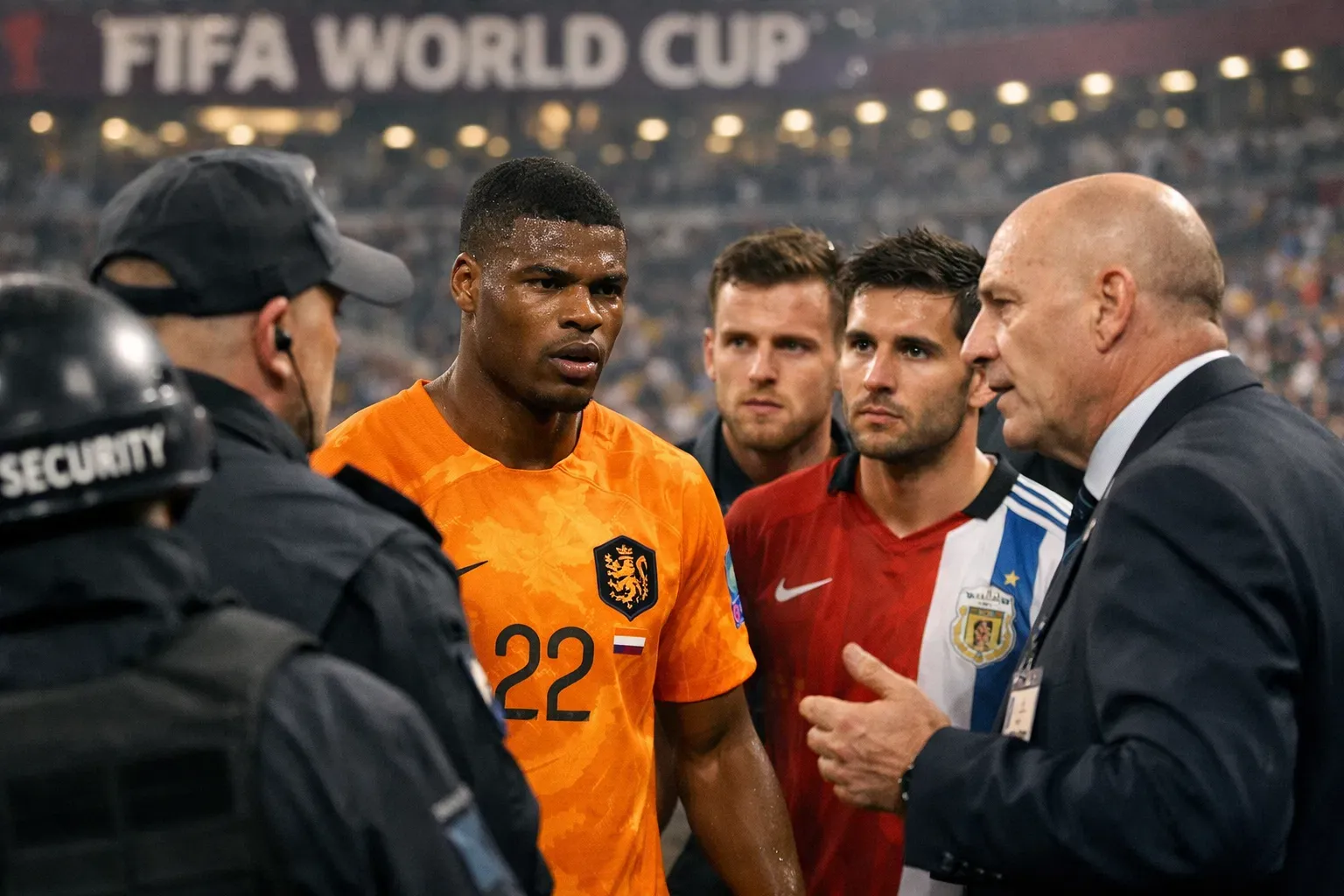
With the 2026 tournament spread across Canada, Mexico, and the USA, the conversation around football is shifting from tactics to logistics, rights, and reassurance. Ronald Koeman and Denzel Dumfries have both stepped into that space, voicing World Cup safety concerns that many supporters quietly share. Amnesty International has amplified the urgency by highlighting human rights issues in each host nation, from policing to migration and discrimination. The message from the Netherlands camp is simple: a safe tournament can’t be assumed, it must be built, explained, and enforced.
Koeman’s stance is striking because it isn’t dressed up as diplomacy; it’s framed as basic duty of care. He argues that World Cup safety concerns are not an optional “off-pitch” topic but a core part of staging the biggest event in sport. Players need to know the environment is controlled and predictable, and fans need to travel without feeling they’re taking a personal risk. In Koeman’s view, the football should be the only uncertainty.
What makes his intervention land is the timing: long before kickoff, while plans can still be shaped. Koeman is effectively telling FIFA responsibility doesn’t begin when a crisis hits, but when the host plan is being written. That includes transport between venues, policing standards, stadium perimeters, and emergency response coordination across three jurisdictions. If World Cup safety concerns are real, he suggests, then clarity must arrive early and publicly.
Koeman links organization to performance, because uncertainty off the field bleeds into focus on it. A national team camp is built on routine, controlled movements, and predictable security protocols, especially at a World Cup. If players are fielding questions from family about travel risks or reading conflicting guidance about local laws, that background noise becomes draining. For Koeman, reducing World Cup safety concerns is part of protecting preparation.
Koeman is careful not to frame this as players needing to “fix” politics, but as FIFA responsibility to set enforceable standards. He’s essentially arguing that football’s governing bodies have the leverage: contracts, host agreements, and operational control. When Amnesty International points to human rights issues, Koeman’s response is that FIFA must translate those warnings into safeguards. World Cup safety concerns should trigger governance, not just statements.
Dumfries approaches the subject with the perspective of someone who knows what tournaments feel like from the inside, but he speaks like a supporter too. He stresses that fans are not background scenery; they are the event’s heartbeat, and their trust is fragile. World Cup safety concerns, for him, are about whether families feel comfortable traveling, wearing colors, and celebrating in public spaces. A safe tournament is one where joy doesn’t require vigilance.
His comments also reflect how modern footballers understand their audience. Supporters are more informed, more skeptical, and quicker to question the gap between glossy marketing and lived reality. Dumfries is effectively saying that FIFA responsibility includes respecting that intelligence and communicating honestly. If organizers want full stadiums and vibrant fan zones, they must prove they’ve planned for safety rather than hoping enthusiasm will drown out World Cup safety concerns.
Dumfries’ emphasis pushes the conversation beyond the usual “secure venue” checklist. Fan safety includes transport corridors, late-night movement after matches, and the policing of crowded public celebrations. It also includes protection from harassment, discrimination, and arbitrary enforcement that can target visitors unfamiliar with local norms. When Amnesty International raises human rights issues, Dumfries’ point is that those issues can show up in fan experiences, not just headlines.
Even if players are heavily protected, they still feel the mood of a tournament through crowd behavior and media narratives. Dumfries hints at a reality teams understand: tension outside the stadium can seep inside it. If supporters are anxious or incidents dominate coverage, the event’s spirit changes, and the football becomes secondary. Addressing World Cup safety concerns early is not only ethical, it preserves the emotional energy that makes a World Cup special.
Amnesty International’s warnings matter because they are specific, not abstract. The organization has repeatedly urged sports bodies to account for human rights issues such as discriminatory policing, risks to migrants, treatment of protesters, and vulnerabilities for minority groups. In a three-country World Cup, those risks don’t disappear; they multiply because standards and enforcement can vary wildly. World Cup safety concerns become harder when the “rules of the environment” change from city to city.
The tournament’s geographic spread is a logistical marvel, but it’s also a governance stress test. Canada, Mexico, and the USA each have different legal systems, policing cultures, and political pressures that can shape public security decisions. Amnesty International is effectively asking FIFA responsibility to mean harmonized protections, not fragmented promises. If human rights issues are flagged now, the response must be operational, measurable, and consistent to reduce World Cup safety concerns.
In a single-host tournament, responsibility can be traced to one state apparatus and one organizing committee. In 2026, accountability can become a shell game unless FIFA sets clear lines of authority. If an incident happens in a host city, who answers: local police, national government, FIFA, or the local organizing committee? Amnesty International’s focus on human rights issues is a warning that blurred responsibility can worsen World Cup safety concerns.
There’s a temptation in football to label rights discussions as political distractions, but Amnesty International frames them as predictable risk factors. Discriminatory enforcement, unsafe detention practices, or aggressive crowd control aren’t debates; they’re conditions that can affect real people quickly. Koeman and Dumfries are essentially translating that into football language: if you want a safe tournament, you manage these risks like you manage weather, transport, and medical planning. That’s how World Cup safety concerns are reduced.
FIFA responsibility is often described in slogans—“legacy,” “unity,” “inclusion”—but Koeman’s comments challenge FIFA to show the machinery behind the slogans. Standards need to be written, published, and enforced with consequences if hosts fall short. Without that, World Cup safety concerns become a trust problem: fans and players hear promises but don’t see the plan. In 2026, credibility will depend on whether FIFA can demonstrate control across borders.
The key is enforcement, because voluntary commitments are easy to sign and easy to ignore. FIFA has leverage through hosting agreements, commercial contracts, and operational requirements tied to match staging. If Amnesty International identifies human rights issues, FIFA can require mitigation plans, training, and independent monitoring rather than relying on local assurances. The more transparent FIFA is, the less oxygen there is for rumors, and the more World Cup safety concerns can be addressed with facts.
Minimum standards can’t just mean metal detectors and perimeter fences. They should include clear protocols for crowd management, anti-discrimination enforcement, emergency medical response, and safe transit routes to and from venues. They should also cover how fans interact with law enforcement, including language access and complaint mechanisms. When Koeman asks for clarity, he’s asking for this kind of detail, because World Cup safety concerns live in the practicalities.
Supporters tend to trust independent reporting more than federation press releases, especially when human rights issues are involved. FIFA responsibility could be strengthened by allowing credible third-party monitors to publish findings before and during the tournament. That transparency would also protect hosts who are doing good work, by separating evidence from speculation. If FIFA wants to calm World Cup safety concerns, it should welcome scrutiny, because secrecy is what makes anxiety spread.
Koeman’s intervention also points at national football associations, because they are the bridge between FIFA and the people actually traveling. Associations can’t just hand players an itinerary and fans a ticket link; they need to provide guidance that reflects real conditions. World Cup safety concerns should shape planning for accommodation zones, transport options, and liaison with local authorities. If something goes wrong, supporters will ask what their association did to prepare them.
For teams, duty of care includes security briefings, cultural guidance, and contingency planning for disruptions. For fans, it includes clear communication on safe routes, local laws, and support channels if they face problems. Amnesty International’s focus on human rights issues raises the stakes because it suggests vulnerabilities may be systematic, not accidental. Associations can’t solve everything, but they can demand information from FIFA responsibility structures and share it transparently to reduce World Cup safety concerns.
The Dutch federation can treat this as professionalism rather than protest, building a model other nations can copy. That could mean publishing travel guidance early, coordinating with embassies, and creating fan liaison teams trained to handle discrimination or policing disputes. Koeman and Dumfries aren’t calling for panic; they’re calling for preparation. If the Netherlands approach is calm and practical, it can reduce World Cup safety concerns while keeping the focus on football.
There’s a fine line between listening to players and turning them into public relations shields. Dumfries’ remarks show players want a safe tournament, but FIFA responsibility should not rely on athletes to carry the messaging burden. Players should be consulted on travel routines, family protocols, and mental comfort, because those details matter. When players feel heard, they can focus on performance, and World Cup safety concerns become a planning problem, not a media storm.
The 2026 World Cup will be experienced as much in airports, metros, and city centers as in stadium seats. That’s where World Cup safety concerns often become real: crowded fan zones, post-match surges, and unfamiliar policing styles. The cross-border nature of the tournament adds another layer, because supporters may attend matches in multiple countries within days. If the journey feels uncertain, the event’s promise of celebration turns into a logistical gamble.
Organizers also need to plan for the modern realities of misinformation and online amplification. A single incident, even if isolated, can shape perceptions across the entire tournament within minutes. That means FIFA responsibility includes rapid, credible communication and visible problem-solving, not just damage control. Amnesty International’s human rights issues warnings should be treated as early indicators, allowing organizers to address vulnerabilities before they become headlines. That proactive posture is how World Cup safety concerns are contained.
Supporters don’t just worry about safety in the streets; they worry about being turned around at borders or caught in bureaucratic confusion. With three hosts, documentation requirements and enforcement can vary, and travelers may not know what changes between a domestic flight and a cross-border trip. Clear, centralized guidance from FIFA responsibility channels would help, ideally coordinated with national associations. When travel feels predictable, World Cup safety concerns drop significantly for ordinary fans.
Major tournaments attract not only fans but also demonstrations, opportunistic crime, and intense policing in public areas. Amnesty International’s attention to human rights issues suggests that over-policing or discriminatory practices could become flashpoints if not managed carefully. FIFA and hosts should train officers in crowd facilitation, de-escalation, and non-discrimination, especially around fan zones. If public space is handled well, the tournament feels open and festive; if not, World Cup safety concerns dominate the narrative.
Koeman and Dumfries aren’t trying to drain the color from 2026; they’re trying to protect it. Their insistence on clarity, organization, and FIFA responsibility is really a demand that the world’s biggest football party be run like a serious operation, not a hopeful improvisation. With Amnesty International spotlighting human rights issues, the next step must be transparent standards, independent oversight, and practical guidance for travelers. If those pieces arrive early, World Cup safety concerns can fade into the background where they belong, leaving the football to take center stage.

Julian Mercer is a lifelong student of the game whose passion for football was sparked at an early age, after stepping onto the grass of Camp Nou as a six-year-old — a moment that left a lasting impression and set him on a permanent path into the sport. Since then, football has been both his lens on the world and his favourite language. Blending traditional fandom with a deep interest in tactics, squad building, and long-term team development, Julian has spent decades analysing the game from every angle. His fascination with football strategy was further shaped through years of immersive play in Football Manager, a series he has followed since the mid-1990s, developing a sharp eye for patterns, player profiles, and the fine margins that define success. At My World Of Football, Julian focuses on the stories beneath the surface — from tactical evolutions and managerial philosophies to the narratives that connect clubs, players, and supporters across generations. His writing aims to balance insight with accessibility, always grounded in a genuine love for the game.
Continue reading more football news