
SC Heerenveen
HEE Netherlands
SC Heerenveen Stadium
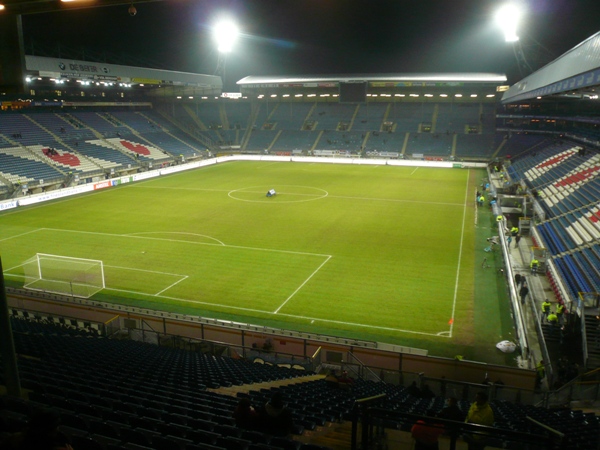
Abe Lenstra Stadion
The Abe Lenstra Stadion is the home of SC Heerenveen, located at Abe Lenstra Boulevard 23Q in Heerenveen, Friesland, in the northern Netherlands. The stadium holds 27,224 spectators and was opened in 1994, replacing the older De Frissel ground that had been the club's home since the 1950s. Named after Abe Lenstra, the legendary Heerenveen player who is widely considered one of the greatest Dutch footballers of the mid-20th century, the stadium is a modern, fully covered four-stand venue that provides one of the Eredivisie's better matchday environments. Lenstra, who played in the 1940s and 1950s, was a creative attacking midfielder of extraordinary talent and is honoured with a statue outside the ground.
SC Heerenveen have been a consistent Eredivisie presence and have made significant contributions to Dutch football through their development of homegrown talent. The club produced Ruud van Nistelrooy, who developed at Heerenveen before moving to PSV, Manchester United, Real Madrid, and international stardom. Other notable alumni include goalkeeper Sander Westerveld and various Dutch internationals. Heerenveen have also attracted talented foreign players throughout their history, including Brazil internationals such as Afonso and Brazilian-Dutch players who used the club as a stepping stone to European football.
The Abe Lenstra Stadion generates strong atmospheres for important matches and is one of the larger grounds in northern Dutch football, reflecting Heerenveen's importance as the footballing hub for the Friesland region. The club draws support from across Friesland, a province with its own distinct language and culture, and the stadium serves as a rallying point for regional identity. Heerenveen's consistent Europa League qualification periods in the late 2000s and 2010s demonstrated their ability to compete above their means, and the Abe Lenstra Stadion hosted group stage matches that brought European visitors to the Dutch north for the first time.