
Cracovia Kraków
CRA Poland
Cracovia Kraków Stadium
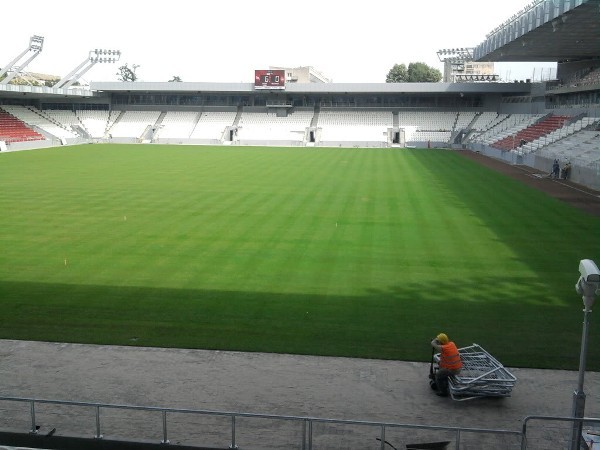
Stadion Cracovii im. Józefa Piłsudskiego
KS Cracovia, one of Poland's oldest football clubs, plays at Stadion Cracovii im. Józefa Piłsudskiego, located in Kraków, Poland's most culturally rich city and former royal capital. Named after Józef Piłsudski, the iconic Polish statesman who led the nation to independence in 1918, the stadium has a capacity of approximately 15,016 spectators after significant reconstruction completed in phases between 2010 and 2015. The modern facility replaced an earlier ground on the same historic site and features contemporary stands while maintaining the traditional football atmosphere of one of Polish football's most storied venues.
KS Cracovia, founded in 1906, is one of the oldest football clubs in Poland and Central Europe, and its history intertwines with some of the most dramatic episodes of the twentieth century. The club's home matches at the Piłsudski Stadium are infused with a sense of history — Kraków itself is a city of extraordinary cultural heritage, with Wawel Castle, the Main Market Square, and the Jewish Kazimierz district all within walking distance. Cracovia's rivalry with Wisła Kraków, known as the "Holy War" (Święta Wojna), is one of the most intense derbies in Polish football, and these matches at the Piłsudski stadium generate some of the most passionate atmospheres in the Ekstraklasa.
The stadium's location in the heart of Kraków, close to Błonia park and the Planty gardens, gives it a unique urban setting. The redevelopment brought the ground into line with Ekstraklasa standards while preserving the intimate character of a historic club's home. Cracovia's consistent presence in Polish football's top tier reflects the club's deep roots and broad supporter base in one of Europe's most visited cities. The Piłsudski Stadium continues to serve as a gathering point for Kraków's football community and as a symbol of the city's engagement with one of the oldest football traditions in Poland.