
Fiorentina
FIO Italy
ItalyFiorentina Stadium
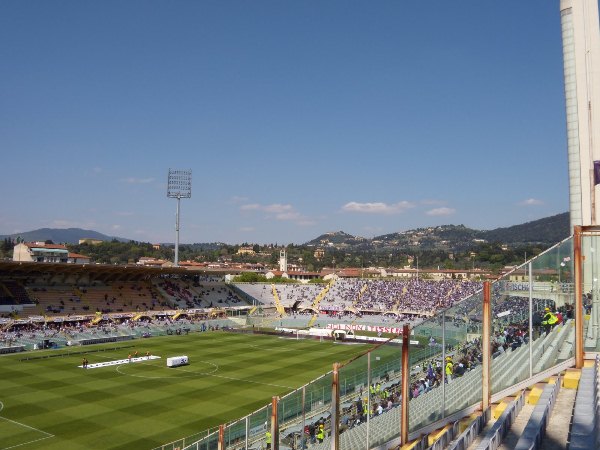
Stadio Artemio Franchi
The Stadio Artemio Franchi is the historic home of ACF Fiorentina, located at Viale Manfredo Fanti 14 in the Campo di Marte district of Florence, Tuscany. The stadium holds 43,147 spectators and was inaugurated in 1931, designed by the celebrated Italian architect Pier Luigi Nervi as a modernist masterpiece of reinforced concrete. Formally named after Artemio Franchi, the long-serving president of the Italian Football Federation who also headed UEFA, the stadium is internationally recognised as one of the finest examples of 20th-century sports architecture in the world, with its dramatic spiral staircases, cantilevered overhangs, and marathon tower making it a protected historical monument.
Fiorentina have used the Franchi as the setting for their most celebrated achievements and heartbreaks. The club won two Serie A titles, in 1956 and 1969, and reached the European Cup final in 1957. In more recent times, the team built around Gabriel Batistuta in the 1990s and early 2000s became one of Serie A's most beloved squads. Batistuta, the Argentine striker who scored 168 Serie A goals for the club across 11 seasons, is considered one of the greatest players in Fiorentina's history and his statue stands outside the ground. The stadium has also hosted international matches, including Italy's friendly against England in 1973, and was a venue for the 1990 FIFA World Cup.
The Franchi's status as a protected heritage structure has created a complex challenge for Fiorentina, who have sought UEFA-grade improvements while preserving the architectural integrity that makes the ground irreplaceable. Major renovation plans have been subject to lengthy planning processes involving Florence City Council, the Italian Ministry of Culture, and football authorities. The current owners, including the Commisso family, have advocated for a new stadium or substantial renovation to bring the Franchi's facilities in line with modern expectations for Champions League football. The stadium's future remains one of Italian sport's most significant ongoing debates, balancing sporting need against architectural heritage.