
Fredericia
 Denmark
Fredericia Stadium
Monjasa Park
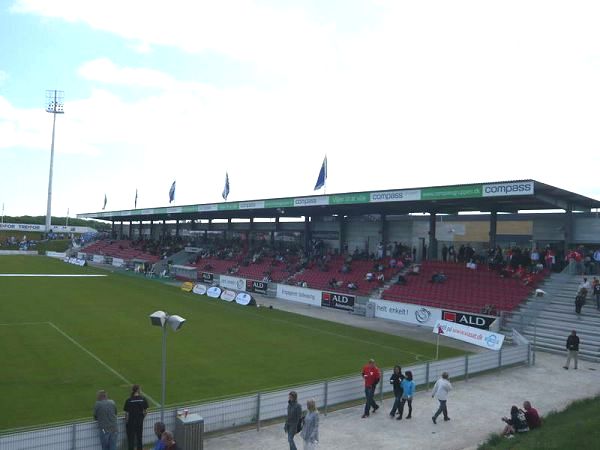
Monjasa Park is the home of Fredericia fBK (BoldklubKlubben), located at Vestre Ringvej 102 in Fredericia, a strategically situated city in the Little Belt strait region of Jutland, connecting the Jutland peninsula to the island of Funen via the Little Belt bridge. The stadium holds 10,000 spectators and serves a club with a history going back to 1991 in its current form, and competing in the Danish Superliga in recent seasons. Named after the Monjasa oil trading company through a commercial arrangement, the stadium provides functional top-flight facilities for a club competing from a city whose most famous historical feature is the 17th-century fortification ramparts that still encircle much of the city.
Fredericia has established themselves in the Superliga in recent years, earning promotion and competing at the top level of Danish football for the first time in the club's recent history. The club's rise has been driven by focused investment and development, and their Superliga participation brings top-flight football to a city that had been absent from the national stage for many years. The Little Belt location gives Fredericia a unique geographic position as a bridge city connecting the Danish mainland to the islands, and the club draws support from both the south Jutland and north Funen communities.
Monjasa Park provides a solid Superliga environment and sells out for important fixtures. Fredericia's famous Tatanka ramparts - ancient defensive earthworks that surround the old town - and its 17th-century history as a fortified strategic position in the Danish realm give the city a distinctive historical character. The football club's recent Superliga membership represents a new chapter in Fredericia's sporting history, and the community enthusiasm for top-flight football in this small city of approximately 40,000 people reflects the broad base of Danish football culture across Jutland.