Gil Vicente
GVFC Portugal
Gil Vicente Stadium
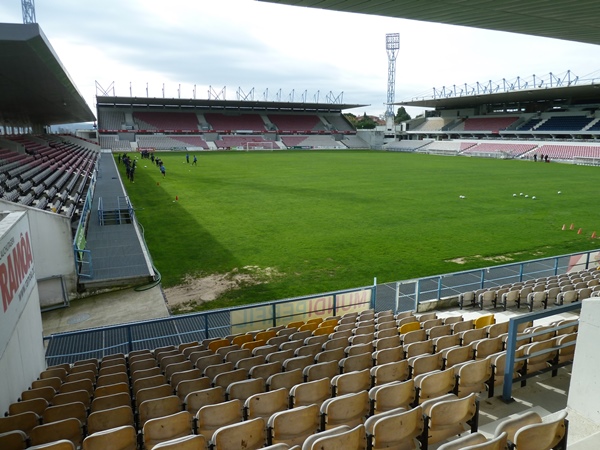
Estádio Cidade de Barcelos
The Estadio Cidade de Barcelos is the home of Gil Vicente FC, located on the national road 103 in Barcelos, Braga district of northern Portugal. The stadium holds 12,046 spectators and serves as the football home of the club from Barcelos, a town in the Cavado valley celebrated throughout Portugal and the world as the origin of the famous Galo de Barcelos - the painted ceramic cockerel that has become an international symbol of Portuguese culture and luck. Gil Vicente are named after the 16th-century Portuguese playwright of the same name, one of the founders of Portuguese literature, giving the club a distinctive cultural identity.
Gil Vicente FC have spent periods in the Primeira Liga and the lower divisions of Portuguese football, establishing themselves as a consistent top-flight presence in recent years. The club is backed by a group of investors who have brought stability and gradual improvement in resources. Their home performances at the Estadio Cidade de Barcelos, with supporters close to the pitch, have provided a genuine home advantage against larger clubs. The club's location in the Cavado valley, between Braga and the Atlantic coast, places them in one of Portugal's most football-passionate regions, with a loyal local following that has sustained the club through periods in both the Primeira Liga and the second division.
The stadium's location in Barcelos, a town famous for its weekly Thursday market - one of Portugal's largest and most traditional - and for the Barcelos cockerel legend gives the club a unique cultural context within Portuguese football. The Estadio Cidade de Barcelos provides functional facilities for Primeira Liga football, with ongoing improvements undertaken to maintain standards. Gil Vicente's identity as one of Portuguese football's most characterful smaller clubs, competing against Porto, Benfica, and Sporting with significantly smaller resources, reflects the competitive challenge and pleasure of provincial Portuguese football at the top level.