IFK Göteborg
GOT Sweden
IFK Göteborg Stadium
Nya Ullevi
IFK Göteborg, the most successful Swedish club in European football history, plays at Gamla Ullevi in central Gothenburg. The rebuilt stadium, opened in 2009 with a capacity of 18,800 spectators, serves as IFK Göteborg's home for Allsvenskan matches, while larger games have historically been held at the Scandinavium arena or the larger Ullevi stadium. IFK Göteborg is by far the most decorated Swedish club internationally, having won the UEFA Cup (now Europa League) twice — in 1982 and 1987 — achievements that remain the high-water mark of Scandinavian club football in European competition.
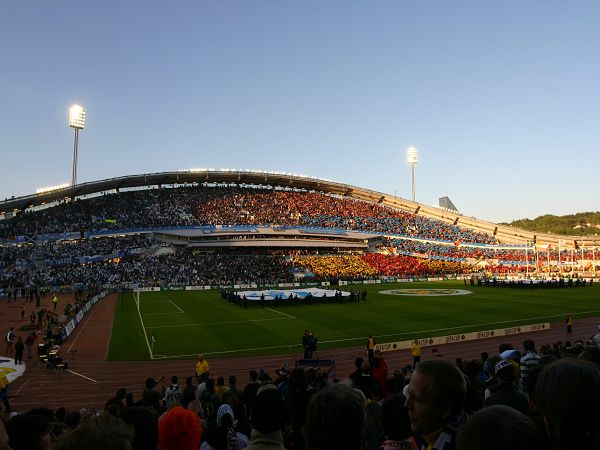
IFK Göteborg's European triumphs are among the most celebrated in Scandinavian football history. Their 1987 UEFA Cup victory over Dundee United — with the second leg at Ullevi in Gothenburg — drew enormous crowds and generated scenes of tremendous celebration. The club has won the Swedish championship 18 times, making them Sweden's most decorated domestic club, and has participated in the UEFA Champions League on multiple occasions, reaching the quarter-finals in 1986–87 during an extraordinary European campaign. Players including Thomas Ravelli, Stefan Rehn, and Henrik Larsson emerged from IFK's system to represent Sweden at the highest levels of the international game.
IFK Göteborg's use of Gamla Ullevi provides a compact and atmospheric setting for their Allsvenskan campaigns, with the historic ground giving an appropriate backdrop to matches involving one of Sweden's most venerated sporting institutions. The club's rich European heritage and Gothenburg's status as Sweden's premier port city give IFK a particular character and gravitas within Swedish football. Recent seasons have seen the club work to return to the commanding position they occupied in Swedish and European football during their 1980s golden era, and Gamla Ullevi serves as the base from which those contemporary ambitions are pursued.