
Benfica
SLB Portugal
Benfica Stadium
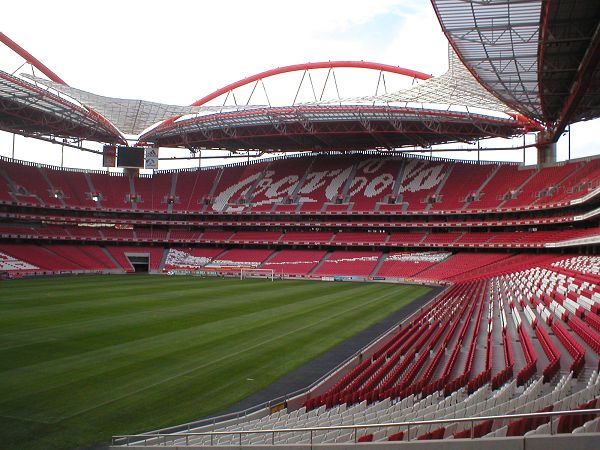
Estádio do Sport Lisboa e Benfica
The Estadio da Luz - formally the Estadio do Sport Lisboa e Benfica - is the majestic home of SL Benfica, located on Avenida Eusebio da Silva Ferreira in the Luz district of Lisbon. The stadium holds 68,100 spectators, making it the largest stadium in Portugal and one of the largest in the Iberian Peninsula. The current ground was inaugurated in October 2003 for the UEFA Euro 2004 tournament, replacing the original Estadio da Luz that had been built in 1954 and was demolished to make way for its successor. Named "the Stadium of Light" and formally honouring Eusebio - the legendary Mozambican-Portuguese striker who is one of football's immortal figures - the ground is one of European football's great arenas.
SL Benfica are one of the most successful clubs in European football history, with 38 Primeira Liga titles and two European Cup triumphs in 1961 and 1962, both against Barcelona and Real Madrid respectively. The club produced Eusebio, who scored 473 goals in 440 appearances and was considered by many as the world's finest player in the 1960s, losing the 1966 World Cup Golden Boot to the same player. The Estadio da Luz has hosted UEFA Champions League finals in 2014 and is a regular venue for Portugal's domestic cup finals. It held the 2004 Euro final between Greece and Portugal, one of football's greatest upsets, watched by a capacity crowd in the stadium that had been purpose-built for the tournament.
The Estadio da Luz's capacity of 68,100 makes it one of Western Europe's largest club grounds, and Benfica's extraordinary fanbase - stretching across Portugal and the Portuguese diaspora worldwide - means the ground regularly fills for top Champions League and domestic fixtures. The red-and-white scarves of the Eagles filling the vast curved bowl create one of European football's most dramatic visual spectacles. Benfica hold the distinction of having the world's largest officially registered membership among football clubs. The stadium's modern infrastructure includes extensive commercial facilities, a museum, and elite hospitality, making it one of Portugal's most significant cultural and sporting landmarks.