
Porto
FCP Portugal
Porto Stadium
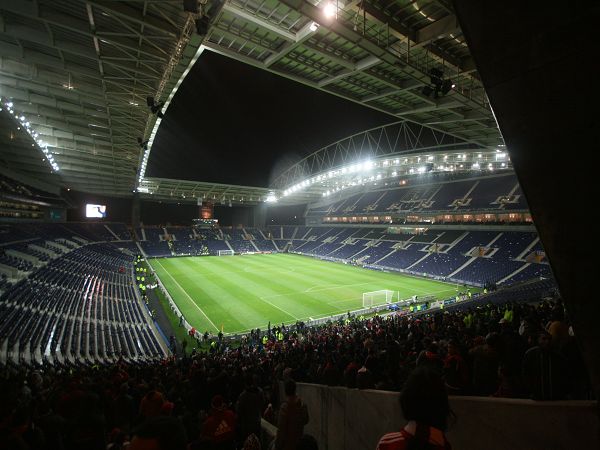
Estádio Do Dragão
The Estadio do Dragao is the spectacular home of FC Porto, located on Via Futebol Clube do Porto in the Antas area of Porto, Portugal. The stadium holds 50,033 spectators and was inaugurated in November 2003, replacing the historic Estadio das Antas that had served the club since 1952. Built for the UEFA Euro 2004 tournament hosted by Portugal, the Dragao was designed by Manuel Salgado Arquitectos in a bold, modern style with distinctive cantilevered roof sections above the four stands. The name "Dragao" - the Dragon - refers to the club's famous logo, and the stadium has quickly established itself as one of Portugal's most celebrated football venues.
FC Porto are Portugal's most successful club by trophy count, with 30 Primeira Liga titles, numerous Copa de Portugal and Supercup victories, two UEFA Champions League triumphs (1987 and 2004), two UEFA Cup wins, and an Intercontinental Cup. The 2004 Champions League victory under Jose Mourinho, defeating Monaco 3-0 in the Gelsenkirchen final with Deco, Carlos Alberto, and Dmitri Alenichev, remains one of European football's greatest upsets of the modern era. The Dragao has hosted numerous Champions League group stage and knockout matches, welcoming Europe's elite clubs to Porto consistently. Icons including Joao Pinto, Fernando Gomes, Paulo Futre, Deco, Hulk, James Rodriguez, and Ruben Neves have all graced the club's colours.
The Estadio do Dragao's architecture is striking and functional, with a compact, enclosed design that creates outstanding acoustics and a fierce home atmosphere. The Nascente and Poente stands generate the most noise, and the ultras groups occupying the curve behind the goal create an intense visual and auditory spectacle. Porto's consistent Champions League participation means the Dragao hosts European elite competition regularly. The stadium sits above the Douro river valley on Porto's eastern hillside, and the surrounding city of Porto - a UNESCO World Heritage city of extraordinary medieval and azulejo tile architecture - provides one of European football's most beautiful urban settings.