
Dinamo Zagreb
GNK Croatia
Dinamo Zagreb Stadium
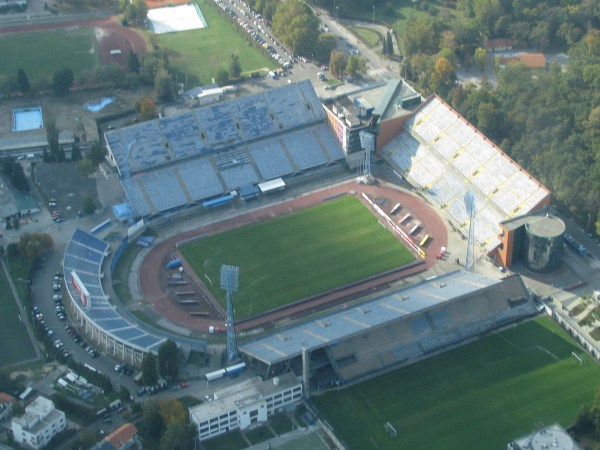
Stadion Maksimir
Stadion Maksimir, the historic home of GNK Dinamo Zagreb, is situated in the Maksimir neighbourhood of Zagreb, Croatia. Originally opened on 5 May 1912 as the ground of local club HAŠK, the stadium underwent fundamental reconstruction after World War II and became the permanent home of Dinamo Zagreb in 1948. With a current operational capacity of 25,912 (reduced from its full 35,423 due to earthquake damage to the east stand), Maksimir holds an enduring place in Croatian football history. Its record attendance of 64,138 was set on 19 July 1973 during a match between NK Zagreb and NK Osijek, reflecting an era when the stadium could accommodate massive crowds.
Maksimir has been the stage for numerous historic events. It hosted matches at the UEFA Euro 1976, including the Netherlands versus Czechoslovakia semi-final and the third-place match. The stadium also served as a central venue for the 1987 Summer Universiade held in Zagreb. Perhaps most famously, it was the scene of the Dinamo Zagreb–Red Star Belgrade riot on 13 May 1990, a landmark moment in the lead-up to Croatian independence. Croatia's first international match in the modern era was played at Maksimir on 17 October 1990 against the United States. The stadium has also hosted memorable concerts — U2's 360° Tour across two nights in June 2009 drew a combined crowd of 124,012 people.
Maksimir is currently undergoing significant planning for a complete rebuild. Following the 2020 Zagreb earthquake, which damaged the east stand and rendered it unusable, discussions have accelerated around the construction of a fully new 35,000-seat stadium on the same site. In February 2025, the Croatian government and City of Zagreb formally unveiled plans with joint funding of €175 million, with demolition expected once the adjacent Kranjčevićeva Stadium is upgraded by end of 2026. The new Maksimir is anticipated to open by late 2028 or early 2029, ensuring one of football's most historically charged venues continues its legacy for future generations.