
Bologna
BOL Italy
ItalyBologna Stadium
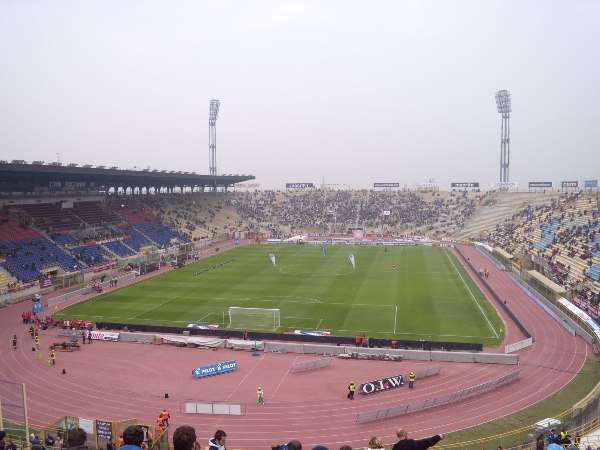
Stadio Renato Dall'Ara
The Stadio Renato Dall'Ara is the historic home of Bologna FC 1909, located at Via Andrea Costa 174 in the Ravone district of Bologna, Emilia-Romagna. The stadium holds 36,532 spectators and was inaugurated in 1927 as the Stadio Littoriale, a grand Fascist-era construction built to commemorate the fifth anniversary of the March on Rome. Substantially expanded in 1990 for the FIFA World Cup, the stadium was formally renamed in 1983 to honour Renato Dall'Ara, the beloved club president who oversaw Bologna's most successful period in the 1930s and 1940s. The ground combines Art Deco architectural heritage with a functional, updated modern interior.
Bologna FC are one of Italy's most historic clubs, with seven Serie A titles, all won before 1964. The Stadio Dall'Ara has been the home of all these championship eras and carries a profound sense of footballing heritage. The club produced celebrated players including Giuseppe Meazza (who played for Bologna as well as the Milan clubs), Fulvio Bernardini, and later more modern talents. After decades of mid-table Serie A existence, Bologna experienced a dramatic renaissance under coach Thiago Motta from 2022 to 2024, finishing fifth in Serie A in 2023-24 and qualifying for the Champions League for the first time in their history. The Dall'Ara, and the passionate Rossoblu support, provided the backdrop for this extraordinary resurgence.
The 1990 World Cup renovation modernised the stadium significantly, with new stands and the installation of floodlighting for evening matches. The ground hosted several group stage and round of sixteen matches in 1990. Further renovation has been ongoing, with long-standing plans for a comprehensive redevelopment to create a modern UEFA-grade facility while preserving the stadium's historic tower and Art Deco exterior. Bologna's historic Champions League qualification has accelerated the urgency of these plans. The Stadio Renato Dall'Ara, nestled between the Apennines foothills and the university city's ancient porticoes, remains one of Italian football's most characterful venues.