
Sporting Braga
SCB Portugal
Sporting Braga Stadium
Estádio Municipal de Braga
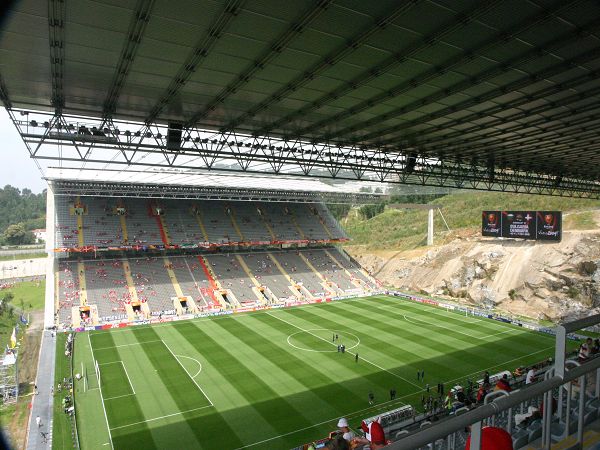
The Estadio Municipal de Braga is one of the most architecturally extraordinary football stadiums in the world, located on Avenida do Estadio in Braga, in the Minho region of northern Portugal. The stadium holds 30,286 spectators and was inaugurated in October 2003 for the UEFA Euro 2004 tournament, built directly into the granite rock face of Monte Castro on the city's outskirts. Designed by architect Eduardo Souto de Moura, the stadium has only two stands - north and south - with the eastern end left open to reveal the quarried rock face and the western end providing views over the city of Braga and the Minho valley. This breathtaking design earned Souto de Moura the Pritzker Architecture Prize in 2011, the field's highest honour.
Sporting Braga have established themselves as Portugal's consistent fourth-major club, winning their first Taca de Portugal in 1966 and adding further cups in subsequent decades, as well as reaching the UEFA Cup final in 2011 - their finest European achievement. The Estadio Municipal provided the backdrop for that remarkable run, with Braga defeating Benfica in the semi-final before losing on aggregate to Porto in the all-Portuguese final. Champions League group stage participation has brought Europe's elite clubs to this remarkable stadium, creating one of European football's most visually unusual venues. The club has also appeared in the Europa League and Conference League regularly, maintaining consistent European presence from their northern Portuguese base.
The stadium's unique design has made it one of the most photographed sports venues in the world and a must-visit destination for architecture and football enthusiasts. The rock face behind one goal, the hanging cables supporting the roof, and the open western end give the Estadio Municipal de Braga a character unlike any other ground in world football. Braga is one of Portugal's most important historical cities, with roots going back to Roman times when it was the regional capital Bracara Augusta, and the stadium's dramatic incorporation of the local granite landscape creates a powerful sense of place. The club draws passionate support from across the Minho region and has consistently punched above its weight on the European stage.