
Hajduk Split
HAJ Croatia
Hajduk Split Stadium
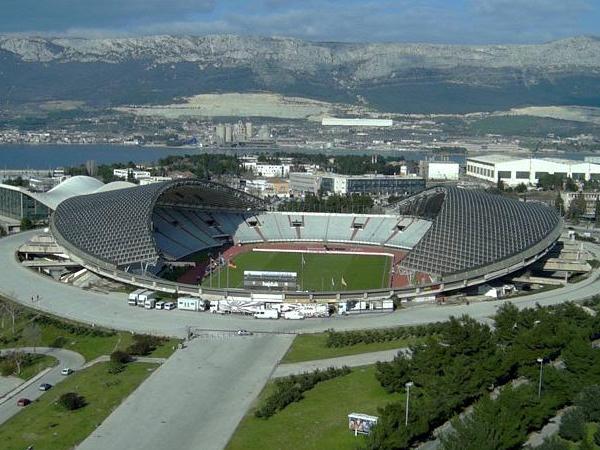
Stadion Poljud
Stadion Poljud, known affectionately as "Poljudska ljepotica" (the Poljud beauty), has been the proud home of HNK Hajduk Split since its inauguration on 12 September 1979. Designed by celebrated Croatian architect Boris Magaš and located in the Spinut neighbourhood of Split, the stadium is instantly recognisable for its sweeping, seashell-inspired roof structure. With a current seating capacity of 33,987, Poljud originally held up to 62,000 spectators before being converted to an all-seated venue in the 1990s. In November 2015, the stadium was officially designated a protected cultural heritage site in Croatia — a fitting tribute to one of the most architecturally distinctive football grounds in Europe.
Poljud has hosted numerous memorable football occasions as well as major international events. It served as a venue for the 1990 European Athletics Championships and the 2010 IAAF Continental Cup, and has regularly been used for Croatia national team fixtures. In club football, Hajduk Split have generated some of the most passionate atmospheres witnessed in Croatian football within its stands, particularly in European matches. Beyond sport, the stadium became a beloved venue for the electronic music festival Ultra Europe between 2013 and 2019, drawing more than 150,000 attendees across its three-day events. A record single-event attendance of 50,000 was registered for Yugoslavia's match against France in the 1979 Mediterranean Games.
The stadium is currently undergoing a phased renovation programme announced in October 2024. The works focus on adapting the roof, reinforcing the concrete structure, upgrading electrical installations, and installing a new video and audio system. Reconstruction is being carried out in stages to allow Hajduk Split to continue playing home matches throughout the process. The project reflects the city of Split's commitment to preserving Poljud as a world-class venue while respecting its status as a cultural landmark of the region.