
Sparta Rotterdam
SPR Netherlands
Sparta Rotterdam Stadium
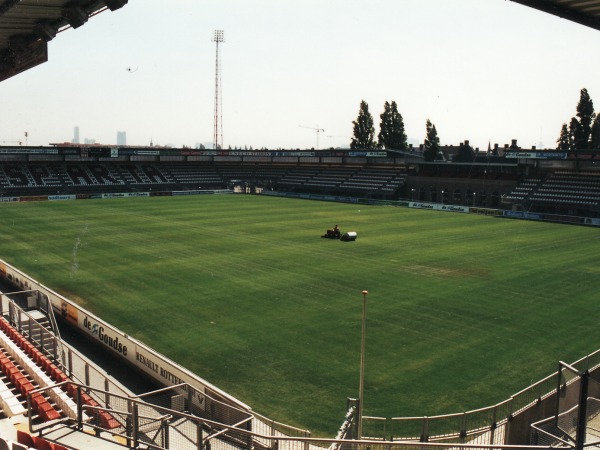
Sparta-Stadion Het Kasteel
Het Kasteel - formally the Sparta-Stadion Het Kasteel - is the historic home of Sparta Rotterdam, located at Spartapark Noord 1 in the Spangen district of Rotterdam, South Holland. The stadium holds 11,026 spectators and is one of the oldest professional football grounds in the Netherlands still in use at professional level. Founded in 1888, Sparta Rotterdam are the Netherlands' oldest professional football club, and the ground has been associated with the club since the early twentieth century. The name "Het Kasteel" translates as "The Castle", reflecting the imposing red-brick clubhouse building that dominates the stadium's entrance and gives the ground its distinctive historical character.
Sparta Rotterdam have a proud tradition as the oldest Dutch professional club and were one of the country's leading teams in the early decades of the twentieth century, winning six Dutch championships in the period before World War Two. The club has spent much of its modern history in the lower reaches of Dutch professional football, alternating between the Eredivisie and Eerste Divisie. However, Sparta's community identity and historic significance keep them culturally relevant in Rotterdam's football landscape despite competing in the shadow of Feyenoord, one of the Eredivisie's most powerful and best-supported clubs.
Het Kasteel's modest capacity and traditional character make it one of the Eredivisie's most charming venues for visitors. The iconic red-brick clubhouse is a listed building of historical and architectural significance, and the compact stadium creates an intimate matchday atmosphere that connects supporters closely with the action on the pitch. Sparta Rotterdam's supporter culture is passionate and loyal despite the club's lower profile. The Spangen district of Rotterdam, a densely urban and culturally diverse area, gives the club a distinct local identity. Plans for redevelopment of Het Kasteel have been discussed to improve facilities while preserving the heritage building and the ground's historical character.