Myworldoffootball
2026 World Cup Preview: Favorites, Stadiums, Stars
2026 World Cup preview with favorites, 16 North American stadiums, Mercedes-Benz Stadium upgrades, Neymar injury update, USMNT schedule, Golden Boot picks.
2026 World Cup preview with favorites, 16 North American stadiums, Mercedes-Benz Stadium upgrades, Neymar injury update, USMNT schedule, Golden Boot picks.
The 2026 World Cup preview practically writes itself: a 48-team tournament spread across North America, blockbuster stadiums, and a shortlist of contenders stacked with superstars. From France’s relentless depth to Argentina’s big-game nerve and Spain’s technical rebirth, the title race feels wide open before a ball is kicked. Add a headline-grabbing Neymar injury update hanging over Brazil and you’ve got genuine intrigue. With 16 venues ready to roar, this is shaping up as football’s biggest traveling carnival.
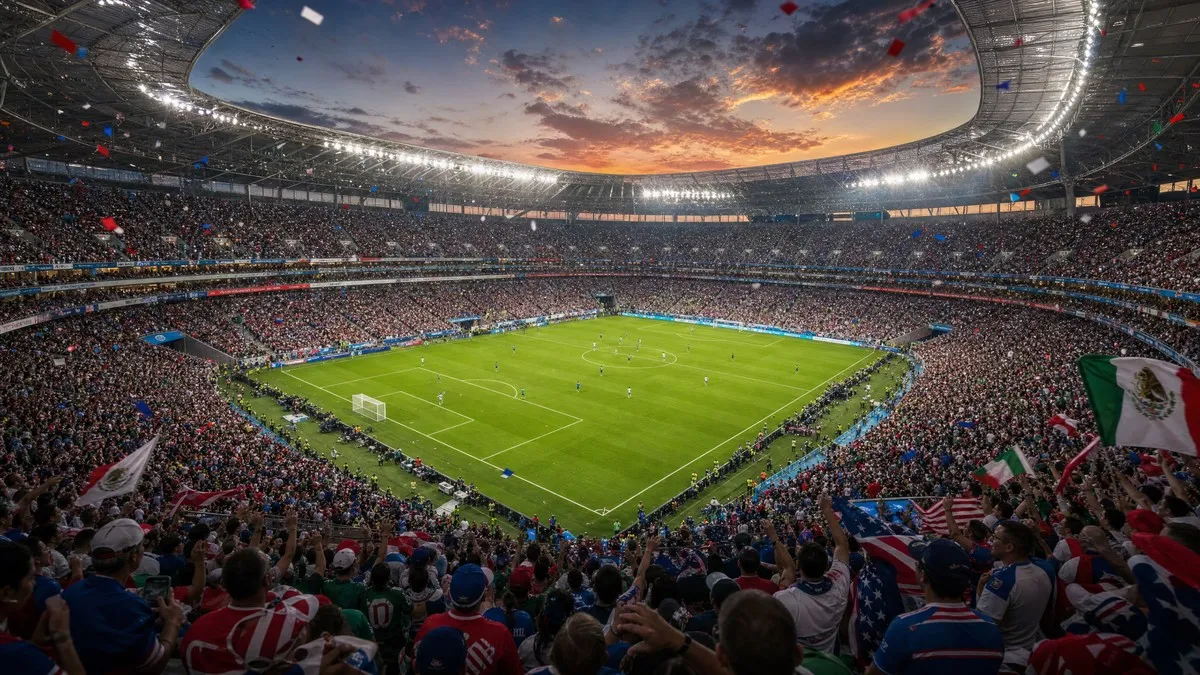
Any serious 2026 World Cup preview has to start with the footprint: 16 venues across the United States, Canada, and Mexico turning the tournament into a continent-wide road show. The scale changes everything, from travel rhythms to recovery windows, and it will reward squads with depth and smart rotation. For fans, it means a menu of atmospheres—domes, open bowls, altitude edges, and coastal humidity—all capable of shaping a match’s tempo.
When people talk about stadiums hosting World Cup matches, they often focus on capacity and spectacle, but the hidden story is logistics. Teams will need to manage training bases, time zones, and turnaround days with the precision of an NBA schedule. In this 2026 World Cup preview, that’s why experienced tournament managers matter as much as star forwards. The nations that treat travel like a competitive advantage, not a nuisance, will arrive fresher in the knockouts.
Atlanta’s Mercedes-Benz Stadium is the kind of venue built for mega-events, yet it has still been tuned to meet World Cup standards in everything from pitch specifications to operational flow. In this 2026 World Cup preview, it stands out as a modern cathedral: steep stands that trap noise, premium sightlines, and a roof-and-lighting setup that can make an evening kickoff feel cinematic. Expect it to host a match that becomes a tournament touchstone.
Beyond the glamour, this 2026 World Cup preview is really about adaptation. Some venues will test lungs with altitude, others will stress legs with summer heat, and the distances between host cities can complicate recovery. Coaches will lean on sports science, hydration protocols, and squad rotation more than ever, especially with the expanded field. The teams that embrace the grind early could look sharper when the bracket tightens.
Every 2026 World Cup preview circles back to the same trio because the evidence is hard to ignore. France can roll out two starting XIs of international quality, with pace, power, and a ruthless transition game that punishes mistakes. Argentina carry the aura of recent triumphs and an identity that survives pressure moments. Spain, meanwhile, have been rebuilding their edge, blending possession control with more direct, vertical options in the final third.
Calling them World Cup favorites isn’t just about names; it’s about repeatable tournament traits. France win duels and break lines quickly, Argentina keep their heads when games go chaotic, and Spain can suffocate opponents by hoarding the ball. In this 2026 World Cup preview, each has a different path to the trophy, but all three have the one thing you can’t fake: a system that holds up when legs get heavy and margins shrink.
Kylian Mbappe remains the headline act for France, a forward who can turn a cautious group game into a highlight reel in one sprint. Even with the constant club chatter that follows stars at Paris Saint-Germain, his international role is clear: attack space, force defensive concessions, and finish with icy efficiency. This 2026 World Cup preview expects France to rotate aggressively early, then unleash their fastest, most vertical version when the knockouts demand clarity.
Argentina’s edge in this 2026 World Cup preview is their comfort in tight games, where a single set piece or counterattack can decide everything. Spain’s counter is control—long spells of possession that reduce variance and wear down opponents mentally. The clash of those philosophies could define the tournament if the bracket aligns, because Argentina thrive in chaos while Spain try to delete it. Either way, the winner will likely be the one that adapts first.
No 2026 World Cup preview feels complete without Brazil, but the mood is more complicated when the conversation starts with a Neymar injury update. Brazil’s attack has often been designed around Neymar’s gravity—how he draws defenders, slows the game, and then accelerates it with one pass. When his fitness is uncertain, the entire team’s balance changes. The question isn’t only whether he plays, but what version of him shows up.
Brazil can still field match-winners, yet tournament football is about relationships, not just talent. In this 2026 World Cup preview, Neymar’s status influences who takes responsibility between the lines, who becomes the primary chance creator, and who gets the set-piece keys. If he’s limited, Brazil may lean into a more collective rhythm, pressing higher and attacking quicker to avoid stagnation. If he’s fully fit, they can dictate with patience and flair.
The most realistic scenario in this 2026 World Cup preview is that Brazil manage minutes, especially early, and build match sharpness across the group stage. Without full Neymar availability, they may prioritize width and early crosses, asking runners to attack the box instead of waiting for a central magician. That can look less romantic, but it can be brutally effective in tournament settings. The key is avoiding predictability when opponents sit deep.
A Neymar injury update isn’t just medical; it’s psychological, because teammates and opponents react to the headline. In this 2026 World Cup preview, Brazil’s dressing room must project certainty even if plans are changing daily. Rivals will sense vulnerability if Brazil look hesitant, but they’ll also fear a “comeback narrative” that can energize a squad. The first match matters because it sets the emotional temperature for everything that follows.
The United States will live inside the spotlight, and any 2026 World Cup preview must address what hosting does to expectations. Home support can lift energy levels, but it also amplifies every missed chance and every defensive wobble. The USMNT World Cup schedule will be dissected for travel demands, rest days, and opponent styles, because the path matters when margins are tight. The goal is to turn familiarity into confidence, not complacency.
For the USMNT, the opportunity is to make the tournament feel like a month-long home stand where momentum can snowball. In this 2026 World Cup preview, that means managing emotions in the group stage, where a single early win can unlock belief. The coaching staff will want controlled aggression: press with purpose, attack with speed, and avoid the chaotic stretches that invite counters. Hosting is a gift, but it demands maturity.
If the USMNT World Cup schedule breaks kindly, it can allow consistent training routines and reduce the fatigue that often hits younger squads. This 2026 World Cup preview sees that as a potential edge, particularly if the US can keep their defensive structure intact while feeding quick transitions. Home crowds can also tilt refereeing gray areas—nothing dramatic, just the subtle pressure that makes 50-50s feel slightly different. It’s an advantage if handled calmly.
The flip side in this 2026 World Cup preview is that hosting compresses patience. A nervous start can turn stadium noise into tension, and tension can turn simple passes into turnovers. The USMNT must accept that not every game will be pretty, especially against compact opponents who want to frustrate. The best host teams treat pressure as a resource, not a threat, and they keep playing their way even when the moment feels huge.
Goals make legends, and Golden Boot predictions are the fun side quest of any 2026 World Cup preview. The expanded tournament format could increase matches for the finalists, which often helps elite finishers pad totals, but it also adds fatigue and rotation. The leading candidates tend to come from teams expected to go deep, because volume matters as much as brilliance. Still, one explosive group stage can change the entire race.
Kylian Mbappe will dominate most Golden Boot predictions because he generates chances without needing perfect service. Harry Kane belongs in the conversation too, even if tournament narratives can swing wildly around England, because he’s reliable from open play and ruthless from the penalty spot. In this 2026 World Cup preview, Kane’s club form at Tottenham Hotspur and his ability to drop deep could be a tactical cheat code, especially against teams that defend the box well.
Harry Kane’s scoring profile fits tournament football: he doesn’t need ten touches in the box to find the net, and he stays composed when games slow down. In this 2026 World Cup preview, his biggest asset may be decision-making, because knockout matches often become moments rather than performances. If England create enough set-piece pressure, Kane’s penalty-taking could tilt the Golden Boot predictions in his favor. The challenge is ensuring service doesn’t dry up.
Every 2026 World Cup preview should leave room for a surprise scorer, because a favorable group can inflate totals before defenses tighten. A forward who feasts on early mismatches can build an uncatchable lead, especially if their team keeps playing aggressively even after qualification is secured. That’s why Golden Boot predictions aren’t only about the best striker; they’re about context, teammates, and whether a coach rotates or lets a hot hand chase history.
The beauty of a tournament this large is that surprises are not a glitch; they’re a feature. In this 2026 World Cup preview, the dark-horse tier will believe more than ever because the expanded field creates new pathways and unfamiliar matchups. A disciplined underdog can ride a hot goalkeeper, a set-piece routine, and a little bracket luck into the final eight. Once there, pressure flips, and the favorite suddenly has everything to lose.
Still, the trophy usually returns to a team with elite chance creation and emotional control, and that’s why the established World Cup favorites keep resurfacing. France, Argentina, and Spain bring systems that travel, and systems are what survive when legs go and nerves spike. This 2026 World Cup preview also keeps circling Brazil because their ceiling is always the highest if the pieces align. The tournament will likely be decided by one night, one stadium, one swing of momentum.
Some World Cups are remembered by goals; others are remembered by places, and the stadiums hosting World Cup matches in 2026 will produce their own folklore. In this 2026 World Cup preview, Mercedes-Benz Stadium in Atlanta feels like a prime candidate for a signature moment—an upset, a comeback, or a penalty shootout that leaves fans hoarse. The continent-wide setup means multiple “home” atmospheres, each with its own soundtrack and identity.
The most honest 2026 World Cup preview admits that certainty is impossible, because one red card, one injury, or one missed penalty can rewrite a month. That’s why even the World Cup favorites prepare for discomfort, and why the Neymar injury update matters beyond Brazil—it’s a reminder of how fragile plans are. Expect the eventual champions to be the team that suffers first, adapts fastest, and grows into the tournament’s rhythm. The winner won’t just play best; they’ll learn best.
This 2026 World Cup preview comes down to a simple promise: the biggest stage is about to get bigger, louder, and more unpredictable across 16 North American venues. France’s depth, Argentina’s steel, and Spain’s control set the benchmark, while Brazil’s ceiling depends on the next Neymar injury update and how quickly they find balance. Keep one eye on the USMNT World Cup schedule, because home energy can spark a run, and the other on Golden Boot predictions, where Mbappe and Kane loom large. Whatever happens, this tournament is built for unforgettable nights.

Julian Mercer is a lifelong student of the game whose passion for football was sparked at an early age, after stepping onto the grass of Camp Nou as a six-year-old — a moment that left a lasting impression and set him on a permanent path into the sport. Since then, football has been both his lens on the world and his favourite language. Blending traditional fandom with a deep interest in tactics, squad building, and long-term team development, Julian has spent decades analysing the game from every angle. His fascination with football strategy was further shaped through years of immersive play in Football Manager, a series he has followed since the mid-1990s, developing a sharp eye for patterns, player profiles, and the fine margins that define success. At My World Of Football, Julian focuses on the stories beneath the surface — from tactical evolutions and managerial philosophies to the narratives that connect clubs, players, and supporters across generations. His writing aims to balance insight with accessibility, always grounded in a genuine love for the game.
Continue reading more football news