AI-generated image
Football News Today: Tzolis to Arsenal and Messi's Era Ends
Christos Tzolis makes a record move to Arsenal. Messi retires after a tough World Cup final. Plus, Premier League and Jupiler Pro League updates.
Christos Tzolis makes a record move to Arsenal. Messi retires after a tough World Cup final. Plus, Premier League and Jupiler Pro League updates.
Another day, another whirlwind in football. Christos Tzolis has officially joined Arsenal for a record fee, raising questions on the fit. Meanwhile, Lionel Messi's retirement after Argentina's World Cup final defeat marks the end of an era. With Premier League transfers heating up and controversies brewing in the Jupiler Pro League, there's plenty to unpack today. Grab a drink and let’s dive into the latest stories.
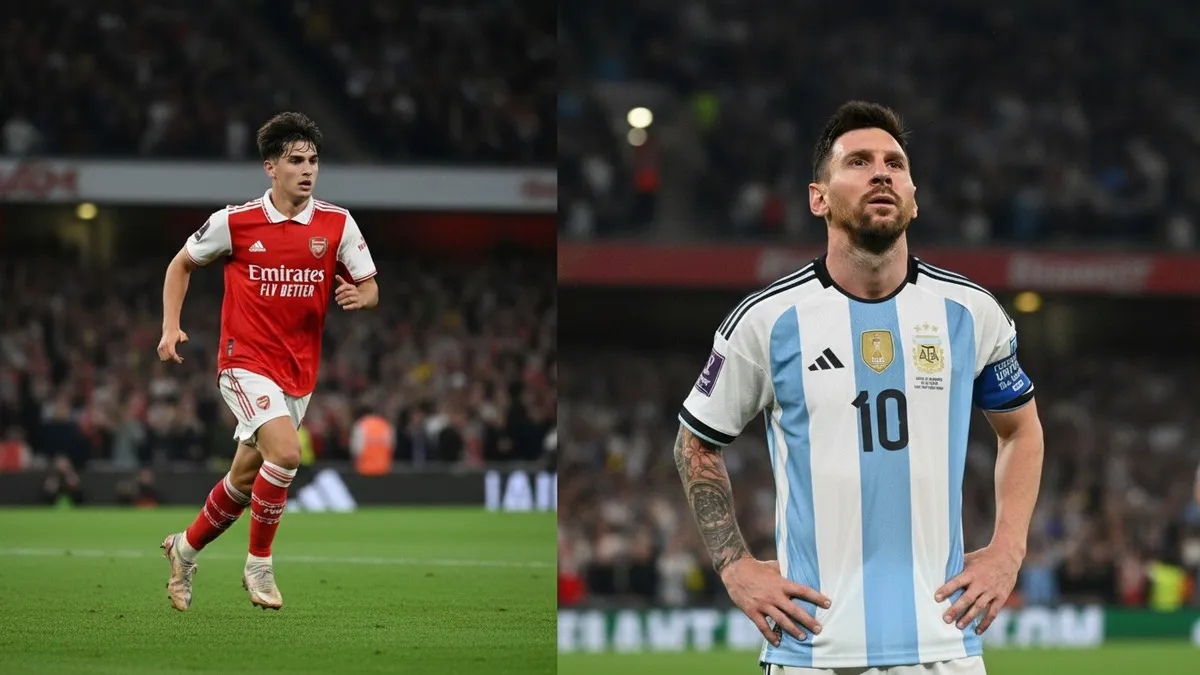
The Christos Tzolis transfer to Arsenal is a proper statement, not just because it breaks the Jupiler Pro League outgoing record at €40m, but because it underlines how seriously Arsenal are treating squad depth. Brugge turning a €6.5m punt into a league-record sale is elite business. Still, a big fee from Belgium always comes with the same question: is the step up about talent, or about timing?
Tzolis’s numbers at Club Brugge are ridiculous for a winger. 43 goals and 45 assists in 108 games is output you normally associate with a main man, not a rotation option. Two straight Player of the Season awards tells you it was not just a hot streak. He carried games, attacked the box, and made final-third decisions quickly. That matters if Arsenal want someone who can decide matches late.
Where the Christos Tzolis transfer to Arsenal gets interesting is the tactical fit. Arsenal’s wide players have to press hard, track runners, and still have the legs to explode in transition. Tzolis has played across the line, but the Premier League punishes anyone who switches off for two seconds. If he lands on the left, he competes with an established starter. If he plays right or as a false nine, his off-ball work has to hit Arteta’s standards instantly.
There’s also the mental side. He’s 24, not a kid, and 34 Greece caps means he’s seen pressure, but London pressure is different. Arsenal transfer news always turns into a referendum after two games. The number 17 shirt is fine, but the fee makes him a talking point. If he adapts his end product to tighter spaces and keeps his intensity, this could look like a bargain in 18 months.
The 2026 World Cup always leaves a weird hangover. One minute you are living off knockouts and late-night debates, next minute you are back on training-ground photos and leaked medicals. But Premier League transfers 2026 have snapped into focus fast because clubs cannot wait around. The market feels sharper too. Less noise, more targeted deals, even if the prices still look silly.
Tottenham going for Sandro Tonali is the clearest statement. They have needed a proper midfield organiser for ages, someone who can take the ball under pressure and keep the tempo when games get messy. Tonali is not just a passer. He tackles, he covers, he drags standards up. If Spurs want to control matches instead of trading punches, this is the kind of signing that changes their ceiling.
Chelsea making Morgan Rogers the most expensive British player at £117m is peak modern football, but it is not automatically madness. They are paying for availability, homegrown value, and the idea he can be a multi-role attacker for the next five years. The pressure is brutal though. In Chelsea transfer news, big fees become the story, and that can swallow a player if the system around him is still unsettled.
The smaller clubs have not gone quiet either, and that is what makes Premier League transfers 2026 interesting. Ipswich breaking their record for Emersonn at £26.5m is a proper gamble, but it is also a survival move. Goals cost. Bournemouth doing similar with Alvaro Rodriguez shows the same logic. Meanwhile Aston Villa transfers look tidy. Joao Gomes for £38m to replace Tielemans is sensible, and Palace picking up Oscar Mingueza on a free is the kind of smart, flexible deal that wins you points in February.
The Christos Tzolis Arsenal transfer is a proper statement, not just because it is €40 million and a Jupiler Pro League record. It is the profile of player Arsenal have been leaning into lately. A winger who can play both sides, carry the ball, and actually finish. Brugge numbers like 43 goals and 45 assists in 108 games do not happen by accident.
What makes this move interesting is that Tzolis is not walking into a rebuilding project. He is joining a title machine with standards set by Mikel Arteta. That changes the pressure. At Brugge he could be the main man. At Arsenal he has to fit the structure, press on cue, and make the simple pass when the game needs it. That is the real test.
People will bring up Norwich, and it is fair. His Premier League spell there was messy, but it was also a young player in a struggling side, often chasing games and touches. Arsenal is the opposite. He will get the ball in better areas, with runners around him, and patterns that create 1v1s. The Christos Tzolis Arsenal transfer is partly about giving Arteta another dribbler who can hurt low blocks.
His Champions League run last season matters too, especially with him facing Arsenal and seeing the speed of their defending up close. That is a better reference point than old Norwich clips. The big question is where he lands in the rotation. If he can offer end product off the bench and keep the level when starters rest, the fee looks sensible. A sharp Tzolis debut at the Emirates will buy him patience fast.
The England World Cup failure will get pinned on moments in the boxes, but the bigger issue sits on the bench. Modern international football is obsessed with marginal gains, and rightly so. Everyone has GPS numbers, sleep data, recovery plans, even set-piece departments. Yet all that detail is pointless if the main decision is emotional: picking the biggest names even when their legs are gone.
Harry Kane and Declan Rice ended up as symbols of that. Kane’s touch and burst looked half a yard short, and when your whole attack is built around him dropping in and linking, that half yard kills you. Rice, usually the metronome, looked like he was playing within himself, safer, slower. It is not about blame. It is about whether sports management has the courage to act on the evidence.
The frustrating part is we have seen other sides make the ugly calls. Belgium have benched senior stars when the tempo demanded it. Spain have rotated ruthlessly, trusting structure over reputation. That is tactical flexibility, and it protects the team from one player’s fitness dip becoming a national crisis. England’s approach felt like loyalty first, and it fed the England World Cup failure narrative.
History keeps shouting the same lesson. Teams carry a knock because the player is “needed”, then the match turns into a slow bleed. John Stones is a good example of how fine margins can swing either way. When he is sharp, England’s build-up breathes. When he is managing his body, everyone else has to cover, and the whole shape changes without a single tactical tweak.
Fans are not asking for cold-hearted selections. They just want consistency. If marginal gains matter, then minutes, intensity, and player fitness have to matter more than status. The next cycle has to be about building a squad plan, not a starting XI carved in stone. Otherwise the next England World Cup failure will look painfully familiar.
Ayase Ueda transfer news is doing the rounds again and Giovanni van Bronckhorst is trying to keep the temperature down. You can hear the subtext though. Feyenoord know what they’ve got. Ueda just won the Eredivisie top scorer crown with 25 goals, and that changes the whole conversation. Once a striker proves he can carry an attack week after week, the club stops talking about “interest” and starts talking about leverage.
The Nacho Ferri signing is the wrinkle. On paper it looks like depth, but it also gives Feyenoord options if the market gets noisy. Ferri arriving does not automatically demote Ueda, but it does create a proper Feyenoord striker hierarchy question. If Van Bronckhorst can rotate without the level dropping, he can protect Ueda’s minutes and value. If Ueda stays, Ferri can be eased in. If Ueda goes, Ferri is suddenly plan A, whether he is ready or not.
The money side is where Ayase Ueda transfer news gets real. A 20 million euro valuation is the public line, but Feyenoord clearly want it higher, and they should. Goals are the hardest thing to buy, and Ueda’s record last season was not padded with penalties and tap-ins only. Still, Van Bronckhorst’s comments about budget constraints are a reminder of the Dutch reality. Feyenoord do not sell because they want to. They sell because the model demands it.
That’s why player retention becomes a negotiation tool as much as a sporting one. If Feyenoord can show they are willing to keep Ueda, the bidding has to match the pain of losing him. Casper Tengstedt being mentioned in the wider striker market just underlines how quickly clubs move when one deal stalls. The best outcome for Feyenoord is simple: keep Ueda for the start of the season, stay strong in talks, and only move if the fee funds more than just a replacement.
Archie Brown transfer news is getting loud because the profile makes sense. He is 24, left-footed, quick over the ground, and he plays with that modern full-back confidence in the final third. The path is unusual too: West Brom and Derby youth, then Switzerland with Lausanne-Sport, then Gent, and now Fenerbahce. That sort of graft tends to sharpen a player.
Fenerbahce paid roughly £7m and now they are talking closer to £17m, which is basically the “we do not want to sell” price. Ismail Kartal has every reason to dig in. Brown gives them width, set-piece threat, and a reliable outlet when games get sticky. With two years left plus an option, Fenerbahce hold the leverage unless Brown pushes hard for that England return.
What makes this Archie Brown transfer news feel more than agent noise is the fit at both Premier League clubs. Manchester United cannot keep building plans around Luke Shaw’s availability. When he is fit, great, but the minutes are never guaranteed. United also like full-backs who can step into midfield or overlap hard, and Brown’s tempo and ball-carrying tick those boxes without needing the team to babysit him.
Chelsea’s angle is simpler. They have churned the left-back slot for years and the latest move out of Marc Cucurella leaves a gap for someone who can actually turn possession into chances. Brown’s output last season, five goals and seven assists in 38, hints at end product rather than just nice touches. The risk is the jump in intensity, but the transfer market price is still sensible.
If it happens, it will come down to timing and guarantees. United can offer a clearer route if Shaw’s fitness plan stays cautious. Chelsea can offer minutes if they stop hoarding options and commit. Fenerbahce will ask for cash up front, not clever add-ons. For Brown, this is the window where the Premier League feels realistic, not hypothetical.
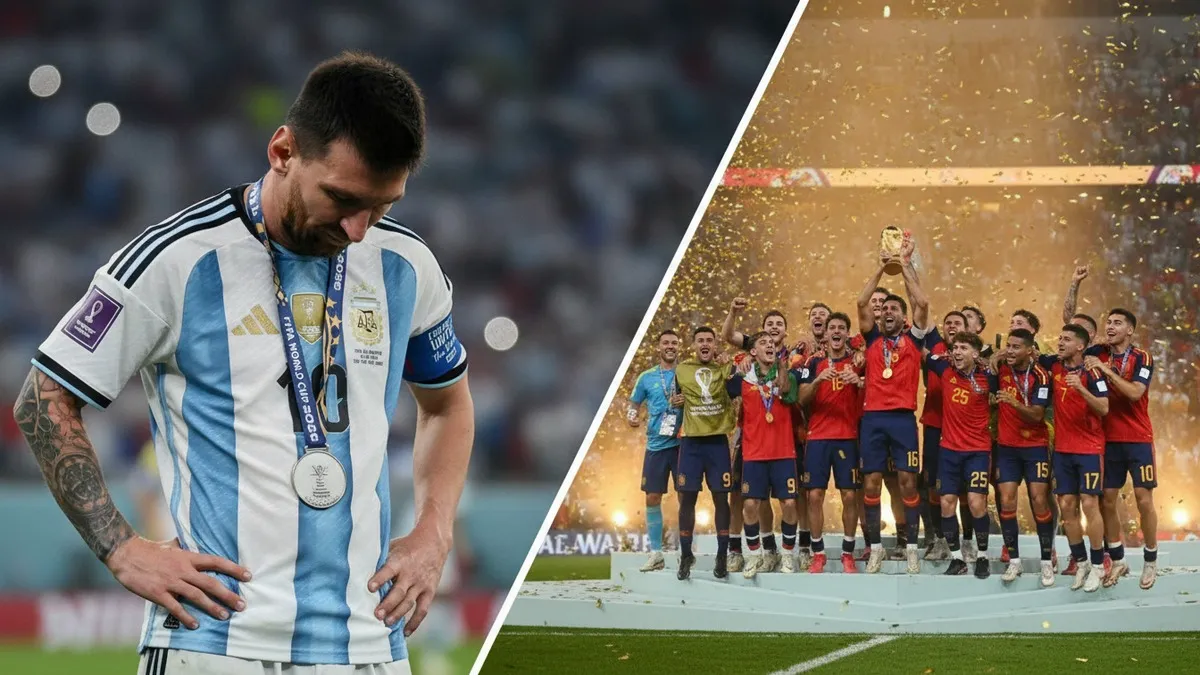
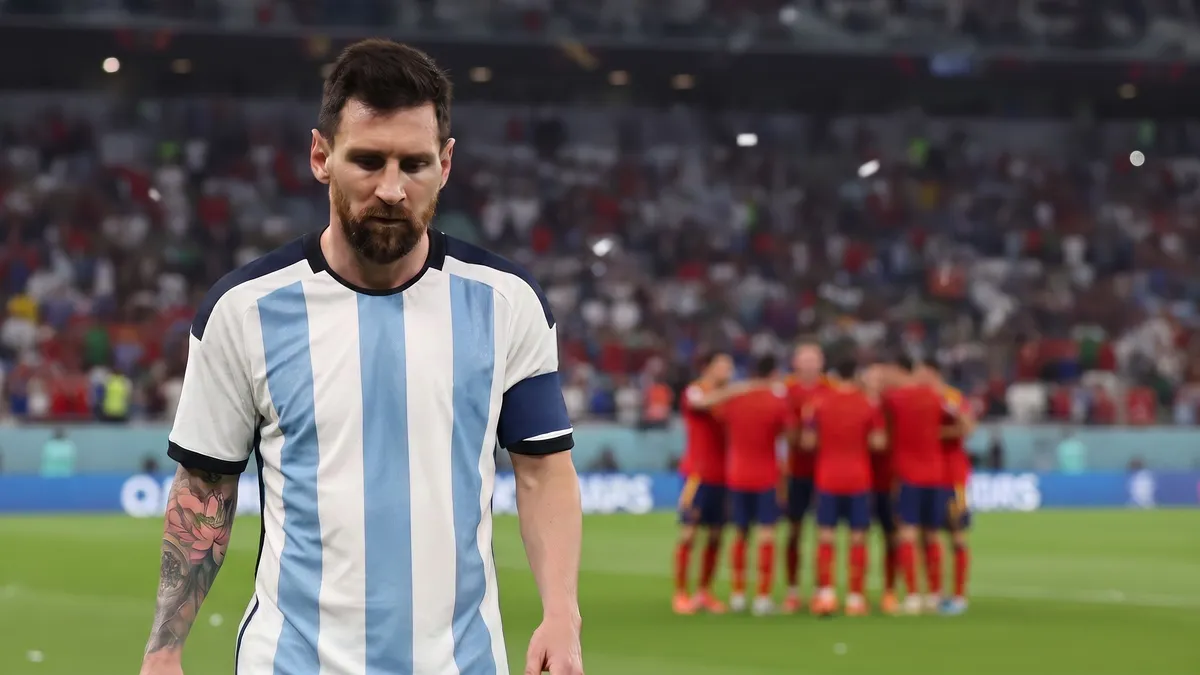
The Argentina World Cup final defeat to Spain will sting because it felt so tight, so controllable, right up until it wasn’t. A 1-0 loss after extra time is the kind of scoreline that tells you both teams were scared of giving an inch. Spain managed the ball, slowed the game, and waited for Argentina to blink. Argentina never really did, but fatigue and pressure turn small moments into match-winners.
The behind-the-scenes clips from New York Stadium made the mood even clearer. Messi’s speech wasn’t fireworks, it was a steady hand. He kept banging on about composure and doing the simple things. That matters in finals, especially for a group that’s lived on emotion for years. It also hints at where Argentina are at now: they still need Messi’s calm to set their rhythm when the temperature rises.
Then Martinez at half-time was the opposite energy, and it fit the match. When games get cagey, you need someone to demand urgency, second balls, and a bit of nastiness in the duels. Martinez has always been that guy, whether it’s with Argentina or at Aston Villa. His message was basically: stop waiting for the game to happen to you. The problem was Spain never let Argentina build sustained pressure.
Enzo Fernandez’s red card turned the Argentina World Cup final defeat from tense into brutal. In extra time, down a man, you do not get to choose your moments anymore. You defend deeper, you chase shadows, and any plan to press or counter with structure goes out the window. Spain were smart enough to keep moving Argentina side to side until the gap appeared, then punished it.
Now the bigger question is what comes next. If this was Messi’s last World Cup, it closes an era that started with him carrying expectation like a backpack full of bricks. Argentina’s transition is not just about replacing goals or assists. It is about replacing authority, the voice in the huddle, and the belief that one moment of quality can flip a final. That is the hard part.
The Crysencio Summerville transfer to Al-Hilal feels like the cleanest sign yet of where the market has drifted. West Ham United going down made a sale inevitable, but €75 million is still a monster number for a winger whose last season was played in a struggling side. Al-Hilal are not buying “potential” here. They are buying certainty, profile, and a player who can decide games from wide areas.
For Summerville himself, it is hard to argue with the logic. Reports of around €16 million a year is life-changing money, and nearly four times what AS Roma were putting on the table. Roma can sell a project, a city, and European nights, but they cannot win a straight financial shootout. The Crysencio Summerville transfer becomes a reminder that “sporting reasons” only stretch so far when the gap is that big.
From West Ham’s side, relegation flips the whole timeline. You either keep your best assets and risk a messy Championship year, or you cash in and rebuild fast. If they really bank something close to that €75 million package, they can reshape the squad for a promotion push and still have room to keep a couple of leaders. The sting is obvious though. Losing your spark after going down can turn a bounce-back season into a slog.
Al-Hilal are also circling Ousmane Dembélé, and that matters for how we read this. If they can even open the door on a player valued around €100 million, it tells you the Saudi Pro League is not just shopping in the “available” aisle anymore. The Crysencio Summerville transfer looks like step one of a wider plan: stack elite wide options, raise the league’s level, and make the next wave of targets take the call seriously.
The Argentina FIFA investigation feels like the inevitable sequel to a final that ended with more noise than football. Spain’s 1-0 win at MetLife should have been the story, but the late red for Enzo Fernandez and the scraps after the whistle dragged the spotlight elsewhere. FIFA appointing a prosecutor tells you they are treating this as a conduct case, not just a bad-tempered finish.
Fernandez’s dismissal matters because it sets the tone for how FIFA frames the whole night. A straight red late on reads as loss of control, and disciplinary panels love patterns. If they decide the team’s behaviour escalated from the tackle into post-match chaos, sanctions get easier to justify. Argentina have lived on the edge emotionally for years. That edge can win games, but it also hands ammo to regulators.
The big issue is the post-match stuff: Nahuel Molina allegedly striking Rodri, and assistant coach Roberto Ayala clashing with Dani Olmo. That is where the Argentina FIFA investigation can bite hard, because staff are supposed to be the adults in the room. Players can lose it in a final. Coaches and assistants cannot. If video shows a clear punch or retaliation, bans can stretch beyond a tournament and spill into qualifiers.
There’s also the federation angle. FIFA can fine the Argentine Football Association even if individual bans land elsewhere, and it is not just about money. Repeated charges start to build a reputation that affects future disciplinary decisions. The semi-final against England already raised eyebrows, so this is starting to look like a trend, not an isolated meltdown. Argentina need to reset fast, because the next cycle starts with eyes already on them.
Lionel Messi retirement from the Argentina national team lands like a thud because it came right after the 2026 World Cup final, not months later in a polished sit-down. Losing to Spain in the biggest game is brutal, but it also makes the decision feel honest. He looked like he knew the end was close, and he chose the dressing room, not a stage.
What makes it sting is he was still carrying them. Eight goals and four assists in a World Cup at his age is not a nostalgia run, it is elite output. Argentina’s attack still bends around him, for better and worse. When the rhythm goes, it goes through Messi. When it stalls, you can see the team waiting for him to fix it. Spain punished that hesitation.
Messi farewell moments always hit because his international story was never smooth. He had the finals losses, the pressure, the whole “can he do it with Argentina” nonsense, then the release of actually winning. That is why Lionel Messi retirement feels like a closing chapter, not just a player stepping aside. He gave the Albiceleste everything, including the emotional weight of being the symbol.
Now the practical question is what Argentina becomes without the safety blanket. The next coach call-ups will matter more than ever because the team has to learn to share responsibility, not outsource it. Inter Miami will still get him weekly, and that might even help his body, but the national team loses the one player opponents game-plan around first.
And the legacy chat does not need dressing up. Barcelona’s 35 titles and 670-plus goals already made him a club legend beyond debate, plus the PSG stop and the MLS chapter. But international football is different, it is rawer. Lionel Messi retirement seals a career that finally matched talent with trophies, then kept going until the tank was empty.
The Daily Express poll calling for an Argentina World Cup disqualification is one of those internet moments that feels loud but changes nothing. 29,400 readers is a chunky sample for a newspaper site, and 98% is basically a coordinated pile-on. But FIFA does not run on vibes, and tournament placings are not a customer service issue you can escalate until England gets bumped to second.
It also ignores what disqualification actually means in football governance. FIFA has sanctioned federations, banned players, fined teams, even forced games behind closed doors. Rewriting a finished World Cup is another planet. To strip Argentina after the final for post-match behaviour would open a legal mess, because you would be punishing the competition outcome for stuff that did not affect the match itself.
The bit about elevating England to second place is where it tips from grievance into fantasy. England did not reach the final, so the idea that standings can be reshuffled like a league table is just not how knockout tournaments work. If FIFA ever entertained an Argentina World Cup disqualification, you would be talking about voiding results, not handing out consolation medals to teams that went out earlier.
There is a real conversation underneath it, though. Some of Argentina’s post-final antics, including players like Leandro Paredes being linked to the wider celebrations, rubbed people up the wrong way. FIFA can and should deal with that through fines or suspensions. The visa revocation talk is even more detached. Governments do not cancel work visas because a banner went viral, and legal experts are right to pour cold water on it.
So what is this really? Football fan reactions in a bad mood, mixed with culture-war heat, looking for a lever to pull. The poll is not a FIFA decision, and it cannot become one. If you want accountability, push for clearer post-match conduct rules and consistent punishment. If you want England second place, win the semi next time.
Julian Alvarez World Cup posts don’t usually land like this. After Argentina fell to Spain in the 2026 final, he didn’t hide behind clichés. He went straight to the fans, thanked them, and admitted how much it hurt. That matters because this Argentina side lives off emotion. When the players show it back, it keeps the bond real, even in defeat.
The loss to Spain will sting for years because it felt like a passing of the torch moment. Spain controlled tempo, squeezed the middle, and forced Argentina into longer spells without the ball than they like. Argentina still had their flashes, but finals are decided by who suffers better. This Julian Alvarez World Cup run showed he can lead the press and the line, but also how thin margins get at the very top.
It also lands at an awkward time for him at club level. Atletico Madrid built their attack around his movement and work rate, but a Barcelona offer changes the conversation. Barca will sell the idea of being the central striker in a possession team, with more touches and more shots. Atletico will point to trust, minutes, and a system that protects him. Either way, the Julian Alvarez World Cup spotlight only pushes his value up.
Then there’s the Messi shadow, even if nobody wants to say it out loud. Whether Messi played a reduced role or was simply the reference point, Argentina are edging into the next era. Alvarez’s Instagram tone felt like a player taking responsibility, not borrowing it. If Argentina want another title, they need him and the other core lads to turn this pain into standards, not nostalgia.
The World Cup 2023 final felt like Spain dragging Argentina into deep water, then waiting for the moment they blinked. It finished 1-0, but it never really looked like a coin flip. Spain’s control was the story, not just the late winner. Argentina set up to suffer and counter, yet they barely crossed halfway with purpose. No shot on target in a final says everything.
Spain vs Argentina became a lesson in how possession can be ruthless when it has bite. Spain moved the ball quickly enough to stop Argentina settling into a low block, then attacked the spaces around the full-backs. Pau Cubarsi stood out because he defended on the front foot. He stepped in early, won duels, and let Spain keep squeezing. Young Player of the Tournament feels right when you look at how calm he stayed.
The goal in the 106th minute was classic extra-time punishment. Ferran Torres didn’t need many touches, just one clean action after Spain had pinned Argentina back again. It also exposed Argentina’s problem all night: they defended the box but never relieved pressure. Lionel Messi tried to knit things together, but he kept receiving with his back to goal and too far from danger. Messi Silver Ball is fair, but this final was a tough watch for him.
Unai Simon barely had to make the Hollywood saves, which is kind of the point. The Golden Glove winner usually has a highlight reel, but his tournament was about control, positioning, and clean handling. Conceding only one goal across the whole run is mad. Kylian Mbappe Bronze Ball with 10 goals also tells you how different paths can be. Spain win the World Cup 2023 final by being the best team, not the best moment.
Ajax new coach Míchel has walked into a club that is sick of being the nearly team. The Eredivisie title race is the whole point this season, and you can feel the reset in the squad choices. Daley Blind coming back is not just nostalgia, it is control. Add Caio Henrique for balance on the left and Marcos Leonardo for penalty-box presence, and it looks like a proper rebuild with a plan.
The 1-0 friendly win over Olympiakos mattered less for the score and more for the shape. Míchel coaching style is clear: give players freedom, but only inside a structure that keeps distances tight. You saw the wing-back and winger pairing constantly swapping lanes, dragging markers, then snapping back into position. It is similar to what Francesco Farioli likes, but with a bit more licence to improvise in the final third.
Out of possession, the pressing game is still a work in progress, but the intent is there. Ajax did not press like headless chickens. They set traps, waited for the sideways pass, then jumped with two or three bodies. Blind’s positioning helped the rest of the line stay brave, because he reads danger early. When the press broke, Ajax recovered into a compact mid-block quickly, which is already a big change.
The bigger issue is still turning possession into goals. Ajax tactics got them into good zones, but the last action often relied on Mika Godts beating a man to open the box. That is not sustainable across a season. Marcos Leonardo should help, yet he needs service earlier, not just crosses under pressure. If Ajax new coach Míchel can add one or two repeatable patterns around cut-backs and third-man runs, this squad has enough to push hard for the title.
FIFA can say the World Cup was clean, but the Group of Copenhagen findings make that line harder to swallow. Seven flagged matches is not proof of fixing, yet it is a reminder that integrity is not a box you tick at full-time. World Cup betting irregularities often live in the margins, in odds moves and staking spikes that look wrong before anyone can explain why.
What stands out is the gap between “no irregularities observed” and “patterns raised concerns.” A FIFA integrity report tends to focus on confirmed breaches, because that is what you can sanction. Monitoring groups look at signals, not verdicts. When betting patterns jump around a specific player event, like mentions around Folarin Balogun, it does not mean the player did anything. It means someone, somewhere, thought they knew something.
The Cape Verde v Spain 0-0 example is the sort of result that makes people reach for tinfoil. But football throws up weird games all the time, especially in tournaments with rotation, travel, and nerves. The issue is the money. If $240 billion really went through markets during the tournament, even a tiny slice of bad actors can create loud noise. That noise can also drown out genuine alarms if systems are not sharp.
That is why World Cup 2026 expanding from 64 to 104 matches matters. More games means more low-profile moments, more niche markets, and more opportunities to target players who are not used to the attention. Mentions involving Themba Zwane fit that risk profile, because smaller betting markets can be easier to move. The fix is not just more monitoring. It is faster information sharing, clearer public thresholds, and real protection for players from approach attempts.
Keep an eye on the transfer market as clubs scramble for talent. The Premier League is just heating up, and there's more news on Messi's future to come.

Julian Mercer is a lifelong student of the game whose passion for football was sparked at an early age, after stepping onto the grass of Camp Nou as a six-year-old — a moment that left a lasting impression and set him on a permanent path into the sport. Since then, football has been both his lens on the world and his favourite language. Blending traditional fandom with a deep interest in tactics, squad building, and long-term team development, Julian has spent decades analysing the game from every angle. His fascination with football strategy was further shaped through years of immersive play in Football Manager, a series he has followed since the mid-1990s, developing a sharp eye for patterns, player profiles, and the fine margins that define success. At My World Of Football, Julian focuses on the stories beneath the surface — from tactical evolutions and managerial philosophies to the narratives that connect clubs, players, and supporters across generations. His writing aims to balance insight with accessibility, always grounded in a genuine love for the game.
Continue reading more football news