Alonzo Engwanda transfer news: Brugge move brewing
Alonzo Engwanda transfer news heats up as Marijn Beuker nears Club Brugge, with Siem de Jong involved and FC Utrecht eyeing a €7-9m fee.
Alonzo Engwanda transfer news heats up as Marijn Beuker nears Club Brugge, with Siem de Jong involved and FC Utrecht eyeing a €7-9m fee.
Alonzo Engwanda transfer news has suddenly become the kind of whisper that turns into a full-stadium roar, because it isn’t just about one midfielder’s next step. Reports linking Ajax director Marijn Beuker with a move to Club Brugge, potentially alongside Siem de Jong, suggest a broader technical reset in Belgium. And right at the center sits Engwanda, the 23-year-old FC Utrecht engine who has admitted he’s surprised by the chatter. If Brugge push, this could move quickly.
When a club like Club Brugge starts being linked with a senior operator like Marijn Beuker, it’s rarely about a single signing, but Alonzo Engwanda transfer news fits the pattern perfectly. Beuker’s reputation is built on structure, pathways, and recruitment clarity, the kind that turns “good ideas” into repeatable windows. If he lands as technical director, Brugge’s shopping list becomes more coherent, more targeted, and more ruthless. Engwanda looks like the prototype of that approach.
What makes this particularly intriguing is the reported parallel involvement of Siem de Jong, a figure who understands Dutch dressing rooms and Dutch talent markets. In Belgian football, where Brugge constantly balance domestic dominance with European ambitions, recruitment can’t be just “best player available.” It has to be profile-based, scalable, and sellable, and that’s why Alonzo Engwanda transfer news feels like a first chapter rather than a standalone rumor. The Eredivisie remains a trusted pipeline, and Utrecht’s midfielder has popped on every radar.
Fans often treat directors as background characters, but Brugge’s next season will be defined by decisions made now, not by September form. A Beuker appointment would likely centralize recruitment and reduce scattergun pursuits, which is where Alonzo Engwanda transfer news gains credibility. Directors with Beuker’s profile tend to target players who can handle tactical demands and resale pressure. Engwanda, already thriving in the Eredivisie spotlight, fits that two-track requirement.
Siem de Jong’s name adds an extra layer because he bridges coaching language, player trust, and network access in the Netherlands. If Brugge want to move quickly for a player like Engwanda, soft factors matter as much as the bid: reassurance, role clarity, and a plan. That’s where Alonzo Engwanda transfer news becomes more than clickbait, because it aligns with how modern clubs operate. A familiar Dutch voice can lower friction in negotiations and adaptation.
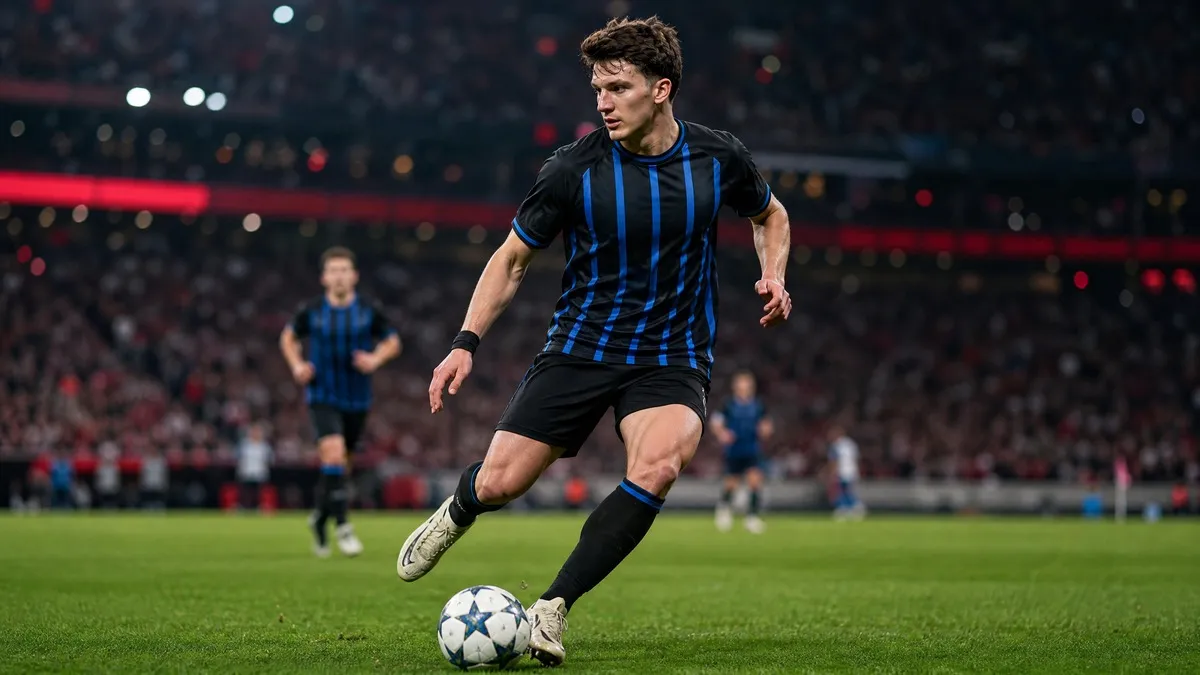
Alonzo Engwanda transfer news has traction because the player’s on-pitch story makes sense even before you read the headlines. At FC Utrecht, he’s built a reputation as a midfielder who can connect phases rather than just survive them. He shows for the ball under pressure, carries through the middle third, and has the defensive urgency to recover when possession flips. Brugge, who often face low blocks domestically but chaotic transitions in Europe, need that blend.
There’s also the age curve: 23 is the sweet spot where development still has runway, but performance is tangible enough for a club with title expectations. In the Eredivisie, Engwanda has looked comfortable in games that demand tempo changes, which is exactly what Brugge’s midfield can lack when opponents disrupt rhythm. That’s why Alonzo Engwanda transfer news isn’t simply “another Dutch-league link” but a targeted response to a tactical need. His ceiling feels higher than his current role.
Strip away the hype and the question becomes simple: can he help Brugge control matches? Engwanda’s value lies in how he receives on the half-turn and plays forward without forcing hero passes, a trait Brugge midfielders must have to feed their wide threats. He also covers space intelligently, which matters in Belgian football where transitions are frequent. Alonzo Engwanda transfer news persists because he’s not a luxury player; he’s a system player.
Engwanda being a Belgian youth international gives the move an extra logic beyond tactics. Brugge can sell the narrative of bringing a Belgian talent home while still buying from the Eredivisie, a league they trust for readiness. That dual appeal is marketing-friendly and squad-planning friendly, especially when domestic registration considerations and fan identity matter. Alonzo Engwanda transfer news also benefits because it doesn’t feel like a cultural leap; it feels like a return.
The reported €7–9 million valuation is where Alonzo Engwanda transfer news becomes a real boardroom conversation rather than a speculative link. For FC Utrecht, that range represents smart business, especially given the detail that Engwanda was acquired for free after leaving RSC Anderlecht. In a market where mid-tier clubs survive by timing exits, this is the kind of deal that can fund two replacements or a summer of targeted depth. Utrecht know the leverage they hold.
From Brugge’s perspective, €7–9 million is significant but not outrageous if the player is viewed as a starter-level midfielder with resale potential. Belgian football’s top clubs have increasingly paid “Eredivisie-ready” fees to reduce risk, and Brugge’s European campaigns demand reliability. The key is whether they see Engwanda as a plug-and-play No.8, a deeper controller, or a flexible rotation piece. Alonzo Engwanda transfer news will hinge on role definition as much as price.
Utrecht can point to form, age, and scarcity: there aren’t many midfielders who can both progress play and defend transitions at a high tempo. If multiple clubs sniff around, the fee quickly hardens toward the top end, and that’s why Alonzo Engwanda transfer news could intensify once Brugge make their interest formal. Utrecht’s recruitment team will also know that selling a player bought for free creates pure profit. That profit can reshape their own season plan.
Brugge often face the expensive choice between buying “ready-made” and buying “project,” and Engwanda sits in the rare middle. If they pay €8 million now, they might avoid spending similar amounts on two separate profiles later, because he can cover multiple midfield tasks. That’s why Alonzo Engwanda transfer news feels like a strategic purchase rather than a luxury splash. If Beuker arrives, he may prefer fewer, higher-conviction deals with clear pathway planning.
One detail that keeps Alonzo Engwanda transfer news from sounding fully scripted is Engwanda’s own reaction: surprise at the rumors. Players often dodge these questions with rehearsed lines, but surprise suggests either the talks are early, or the information is moving faster than the player’s camp expected. For supporters, that’s a reminder that transfer stories often leak from club-to-club contact before agents formalize the pitch. It can be true without being advanced.
Still, surprise doesn’t equal denial, and that nuance matters. Engwanda acknowledging the link, even with a raised eyebrow, keeps the door open and signals respect to both clubs. If Brugge are serious, they’ll want to present a clear sporting project: minutes, role, and how he fits in European games. Alonzo Engwanda transfer news will accelerate the moment the player feels a concrete plan rather than distant admiration. That’s when “rumor” becomes “decision.”
It sounds odd, but in many modern deals the player isn’t the first to know, especially early on. Clubs sound out each other on valuation and availability long before agents start negotiating personal terms, which is why Engwanda’s surprise rings plausible. In Alonzo Engwanda transfer news, the chatter could be driven by Brugge’s internal planning around Beuker and midfield needs. Only once Brugge sense a workable fee do they typically move to the player-facing stage.
Engwanda’s situation also includes human considerations that don’t show up on a spreadsheet. Moving from FC Utrecht to Club Brugge is a step into a title race and regular European nights, but it also increases scrutiny and expectation. As a Belgian youth international, there’s a natural pull to prove himself in Belgian football, closer to familiar environments. Alonzo Engwanda transfer news resonates because it’s not just a career move; it’s an identity move with sporting upside.
If Marijn Beuker takes the technical reins, Brugge’s squad build could tilt toward clearer role profiles, and Alonzo Engwanda transfer news becomes a test case. Brugge have often been at their best when their midfield can dictate tempo in domestic games and survive waves in Europe. That requires a player who can receive under pressure, cover ground, and keep passes clean when the match gets frantic. Engwanda’s Eredivisie schooling suggests he can handle that rhythm shift.
The most interesting tactical question is where he plays in Brugge’s midfield triangle or double pivot. In Belgium, Brugge frequently face opponents who sit deep, forcing midfielders to break lines with carries and quick combinations. In Europe, those same midfielders must defend space behind aggressive fullbacks and wingers. Alonzo Engwanda transfer news matters because he looks like a midfielder who can do both jobs without changing his personality. That versatility is gold in a long season.
Transfers at this level often come down to one blunt question: will he start? Brugge can sell prestige, but players in their early twenties want a role that matches their development curve, not just a badge. If Engwanda is seen as immediate first-choice, Alonzo Engwanda transfer news becomes far more likely to turn into a bid. If he’s framed as rotation, Utrecht’s asking price may feel steep and the player may hesitate. Clarity on minutes will be decisive.
Club Brugge’s strongest argument is the Champions League or Europa League stage, where midfielders can elevate their market value quickly. For Engwanda, a year of strong European performances could turn €7–9 million into a much larger future fee, and Brugge know that. That’s why Alonzo Engwanda transfer news isn’t only about what he gives Brugge, but what Brugge can give him: a platform, a narrative, and elite-level reps. Beuker’s presence could make that pathway feel credible.
Zooming out, Alonzo Engwanda transfer news reflects a broader trend: Belgian top clubs shopping in the Eredivisie for players who are tactically trained, physically ready, and used to high-tempo games. The Netherlands remains a development league with strong positional coaching, while Belgium offers a quicker route to European exposure for clubs like Brugge. That exchange has been growing for years, and Engwanda’s case is a clean example. Utrecht develop, Brugge scale, Europe showcases.
It also shows how quickly value can be created in modern recruitment. Engwanda arriving at Utrecht on a free from Anderlecht and potentially leaving for €7–9 million is the kind of margin that keeps mid-tier clubs competitive. For Belgian football, it’s a reminder that letting talent leave cheaply can come back to haunt you, especially when that player returns as a more expensive asset. Alonzo Engwanda transfer news carries that subtext: development pathways are competitive, and timing is everything.
If Utrecht do sell, supporters will want to see the money reinvested smartly, not just banked. A midfield like Engwanda’s is hard to replace directly, so Utrecht may need to rebuild by committee: one ball-winner, one passer, one runner. That’s where the financial impact of Alonzo Engwanda transfer news becomes real, because a big sale can fund a more balanced squad. But it can also create pressure to get recruitment right immediately, or risk a step backward.
For Brugge, the summer is about keeping their edge while refreshing the squad’s intensity. If Beuker arrives, expect a more methodical approach: signings that fit a defined game model, not just names that excite. Alonzo Engwanda transfer news aligns with that because it’s about function and fit, not celebrity. Add in Siem de Jong’s possible influence and you can see a coherent Dutch-Belgian corridor forming. If it clicks, Brugge could start next season with a midfield built for both control and chaos.
In the end, Alonzo Engwanda transfer news feels less like a random rumor and more like a story with multiple pieces snapping into place. Beuker’s potential appointment, Siem de Jong’s reported involvement, and Brugge’s need for a modern, two-way midfielder all point in the same direction. For FC Utrecht, the €7–9 million range could be transformative, especially given Engwanda’s free arrival from Anderlecht. For Engwanda, the surprise may fade once the project is presented clearly, and then the summer could move fast.

Julian Mercer is a lifelong student of the game whose passion for football was sparked at an early age, after stepping onto the grass of Camp Nou as a six-year-old — a moment that left a lasting impression and set him on a permanent path into the sport. Since then, football has been both his lens on the world and his favourite language. Blending traditional fandom with a deep interest in tactics, squad building, and long-term team development, Julian has spent decades analysing the game from every angle. His fascination with football strategy was further shaped through years of immersive play in Football Manager, a series he has followed since the mid-1990s, developing a sharp eye for patterns, player profiles, and the fine margins that define success. At My World Of Football, Julian focuses on the stories beneath the surface — from tactical evolutions and managerial philosophies to the narratives that connect clubs, players, and supporters across generations. His writing aims to balance insight with accessibility, always grounded in a genuine love for the game.
Continue reading more football news