Myworldoffootball
Arsenal player withdrawals: Arteta explains injury fears
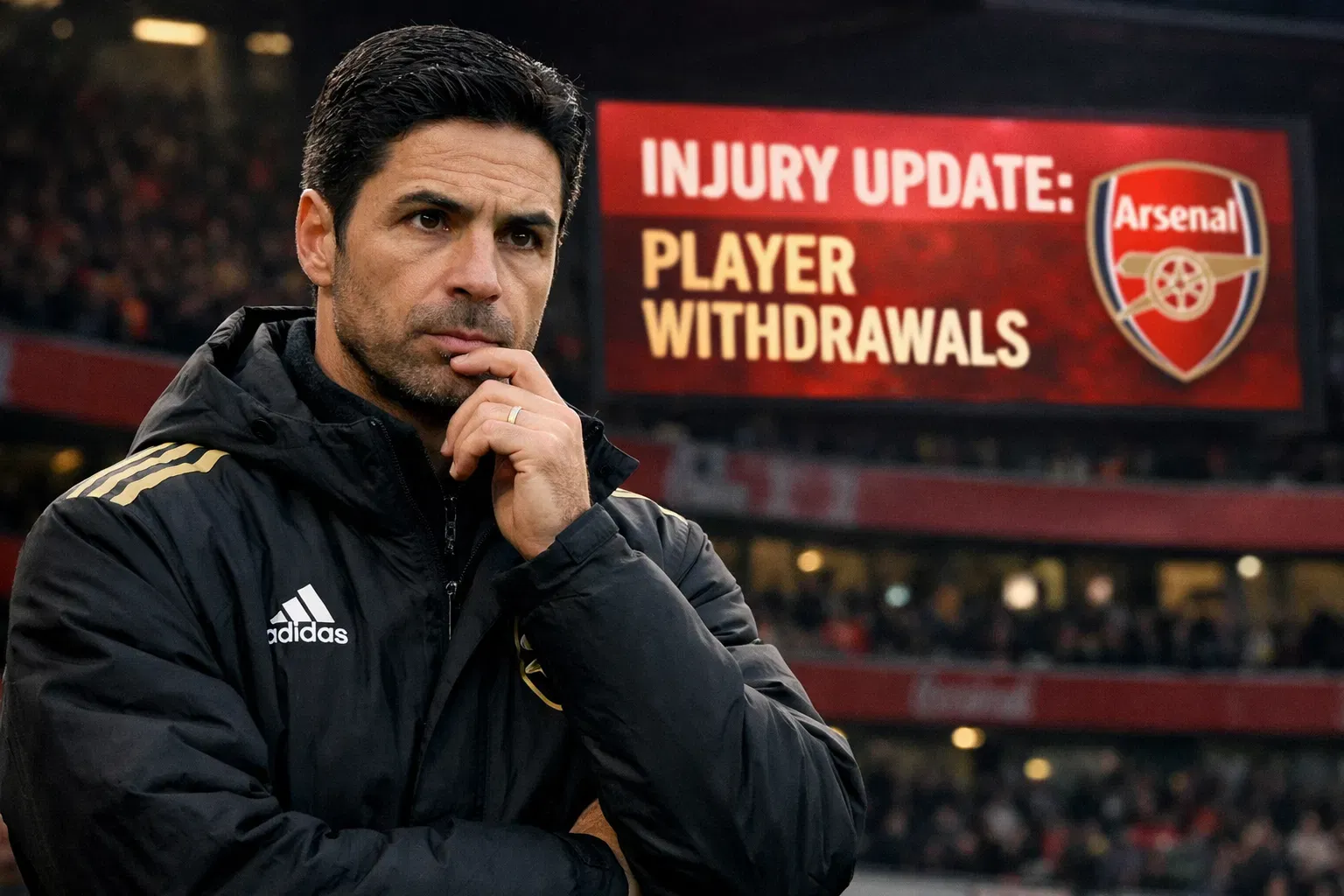
Mikel Arteta press conference tackles Arsenal player withdrawals, national team injuries, and fitness worries after the Man City cup final loss.
Mikel Arteta press conference tackles Arsenal player withdrawals, national team injuries, and fitness worries after the Man City cup final loss.
The international break was supposed to be a breather for Arsenal, yet it quickly turned into a talking point when 11 names vanished from national-team squads. With Arsenal player withdrawals forming a hefty slice of that list, the noise around an “injury crisis” grew loud enough to follow Mikel Arteta into his latest media briefing. He didn’t dodge it, instead framing the situation as a medical and communication issue rather than a political one. After a bruising cup final defeat to Manchester City, every fitness update suddenly feels like a headline.
The timing of the Arsenal player withdrawals made them feel more dramatic than they might have in a quieter week. Arsenal had just come through an intense run capped by defeat against Manchester City in the English League Cup final, a match that leaves physical marks even when players insist they are fine. When multiple countries then announced late changes, supporters joined the dots and worried about depth. Arteta understood the anxiety, but he pushed back on the idea of chaos.
In his telling, Arsenal player withdrawals weren’t a coordinated club move to hoard talent, but a reflection of medical reality and careful workload management. He stressed that the club’s responsibility is to the player first, and that decision-making follows clinical information rather than fixture panic. The language mattered: he spoke about “conditions” and “process,” not about protecting Arsenal at all costs. That approach was designed to calm a fanbase that has seen seasons derailed by bad timing.
The Mikel Arteta press conference was notable for how directly he addressed suspicion, because he knows modern football lives on insinuation. Arteta said the club communicated transparently with federations, sharing medical details and timelines rather than vague warnings. He also made a point of describing the relationship with national-team staff as supportive, not adversarial. In other words, Arsenal weren’t gaming the system, and he wanted that on record.
International break news often turns routine medical assessments into public drama, especially when several withdrawals cluster together. Arsenal player withdrawals became a trend because they were visible and because the club’s stars are high-profile across Europe and beyond. Fans see a list and assume the worst, while coaches see a spreadsheet of minutes, travel, and risk. The truth tends to sit in the middle: a series of small issues can look like a crisis when grouped.
One reason Arsenal player withdrawals create confusion is that “withdrawn” can mean several things at once. It can be a clear injury with imaging results, a flare-up that needs rest, or even a precaution based on load and travel demands. Arteta leaned on that nuance, explaining that every case has its own context and that Arsenal’s doctors don’t write one-size-fits-all notes. For supporters, the challenge is accepting uncertainty when they want certainty before the next Premier League match.
The phrase national team injuries also hides the fact that many issues are accumulated over weeks rather than suffered in one moment. Players carry knocks through big games, then hit a threshold where medical staff finally call time. Arsenal player withdrawals, in that sense, can be a delayed consequence of the club schedule, not evidence of something suddenly going wrong behind the scenes. Arteta’s emphasis was that the club didn’t “discover” injuries overnight; they were managing ongoing situations responsibly.
When William Saliba and Gabriel Magalhães are mentioned alongside Arsenal player withdrawals, the reaction is immediate because the defensive structure is built around them. Arteta didn’t dress it up as trivial, but he also avoided language that suggested long-term damage. The key point was that the medical picture was shared with France and Brazil, and that the players’ conditions dictated the call. Losing either changes Arsenal’s build-up, their duels, and their confidence.
Including Eberechi Eze and Martin Ødegaard in the broader narrative shows how Arsenal player withdrawals aren’t limited to one unit of the team. Ødegaard’s situation, in particular, always draws attention because he is the tempo-setter and emotional barometer in big matches. Eze’s name adds a twist because it widens the conversation to England’s pool and the wider Premier League ecosystem. Arteta’s line was consistent: the specifics were communicated, and the priority was player welfare.
Every international window brings the same old suspicion: are clubs using minor issues to keep players at home? Arsenal player withdrawals, arriving in a bunch, naturally invited that debate, but Arteta tried to remove the oxygen from it. He said Arsenal have a good relationship with national teams and that they want players to go, because it’s part of their development and pride. The subtle message was that Arsenal gain more from healthy, motivated internationals than from short-term hoarding.
The Mikel Arteta press conference also highlighted how complex modern communication has become. Clubs now exchange detailed medical reports, training data, and rehab plans with federations, and disagreements are less about honesty than about risk tolerance. Arsenal player withdrawals can happen even when a player feels capable of playing, because doctors are thinking about recurrence and long-term availability. Arteta positioned Arsenal as collaborative, suggesting that the club’s credibility matters as much as any single weekend’s team sheet.
When Arteta described a supportive relationship with federations, he was also defending Arsenal against the unspoken accusation of manipulation. Arsenal player withdrawals are always interpreted through a lens of power, because clubs pay wages and countries chase tournaments. A supportive relationship implies trust: if Arsenal say a player should rest, the federation believes it’s medically grounded. That trust is hard-earned and easily damaged, so Arteta’s wording was careful and deliberate.
Premier League player updates have become their own genre, and managers must balance transparency with competitive protection. Arteta’s answers on Arsenal player withdrawals offered reassurance without handing opponents a tactical advantage. He acknowledged issues, confirmed communication, and avoided exact return dates that can be used to target vulnerabilities. Fans often want full medical detail, but clubs rarely provide it unless forced. In that gap, speculation thrives, which is exactly what Arteta was trying to limit.
The phrase Arsenal injury crisis sticks because it captures a supporter’s worst nightmare: a season defined by “what if” rather than what happened. Arsenal player withdrawals fed that fear because they arrived right after a high-profile defeat, when confidence is already fragile. In football culture, bad news clusters emotionally even if the medical cases are unrelated. Arteta’s job, beyond coaching, is to keep the group steady while the outside world spirals into storylines.
There’s also a tactical reason the anxiety rises quickly at Arsenal. Arteta’s system is heavily automated, built on partnerships, timing, and familiarity, so missing one key player can disrupt several mechanisms at once. Arsenal player withdrawals therefore feel like more than absences; they feel like structural threats. The manager tried to reframe it as a moment to rely on preparation and squad depth, but he knows depth is judged harshly when trophies are on the line.
The Manchester City defeat didn’t just cost Arsenal a cup; it sharpened scrutiny of every selection and every sprint. Arsenal player withdrawals in the following days were inevitably read as fallout, as if the final broke bodies as well as morale. Even when injuries are minor, the optics after a loss are brutal, because fans look for explanations that make the pain feel rational. Arteta’s calmness was partly a response to that emotional context.
Arsenal player withdrawals also reignited the depth debate, because modern elite football punishes thin squads. High pressing, repeated accelerations, and short recovery windows make “small” injuries more common, and they often require rest rather than treatment. Arteta has demanded intensity as a non-negotiable, and that intensity comes with a bill. The hidden cost is that you must rotate, trust backups, and accept that not every international call-up is physically sensible.
Arteta was keen to stress that players want to represent their countries, and that Arsenal are proud of how many are selected. That matters because Arsenal player withdrawals can be misread as players dodging duty or clubs blocking dreams. In reality, most internationals view call-ups as validation and a chance to compete in different environments. When a player pulls out, it often hurts them emotionally as well as physically, because they feel they’re letting people down.
There’s also a performance angle: national-team camps can refresh a player mentally, offering a new voice, different teammates, and a reset from club pressure. Arsenal player withdrawals therefore aren’t automatically “good news” for Arsenal, even if it reduces minutes. Arteta’s message implied that the club doesn’t want to become a bubble; it wants players to come back energized and sharp. The key is choosing the right moments to rest, not avoiding international football altogether.
For players like Saliba and Gabriel Magalhães, missing international duty can be particularly frustrating because status is never permanently secured. Arsenal player withdrawals may protect their bodies, but they can also interrupt rhythm and reduce visibility with national-team coaches. That’s why Arteta emphasized willingness and pride, hinting that the withdrawals were not preference-based. The best defenders often want to play through discomfort, so being told to stop can feel like a personal defeat.
Martin Ødegaard carries the double weight of being a club captain figure and a national-team leader, which makes any absence feel larger. Arsenal player withdrawals involving him trigger questions about leadership, not just fitness, because fans link availability to authority. Yet the most responsible leaders are sometimes the ones who accept rest to avoid bigger breakdowns. Arteta’s stance suggested that protecting Ødegaard’s long-term availability is part of protecting Arsenal’s identity.
The practical question after all the talk is simple: who is available for the next match, and at what level? Arsenal player withdrawals will be judged in hindsight by how quickly players return and whether recurrence follows. Arteta will likely drip-feed Premier League player updates in training-week increments, because that’s how clubs manage expectations. Fans should expect cautious language until players complete sessions, because “available” is a medical and performance threshold, not just a yes-or-no answer.
Selection dilemmas also extend beyond the injured names, because the international break creates uneven fitness across the squad. Some players return with heavy minutes, others with none, and those affected by Arsenal player withdrawals may need a reconditioning phase even if the issue is minor. Arteta’s challenge is to balance rhythm with caution, especially after the Manchester City loss raised the stakes on immediate results. The next few line-ups will reveal how much trust he has in the wider group.
If Saliba or Gabriel need careful reintegration, Arteta may adjust build-up patterns to protect whoever steps in. Arsenal player withdrawals at centre-back can influence everything from pressing height to how full-backs invert, because the team’s spacing depends on defensive security. He could choose a slightly more conservative rest defense, reducing exposure to counterattacks. These tweaks often look subtle on TV, but they change the risk profile of the entire side.
International break news can feel like a detour, yet it often previews the themes that decide seasons: availability, rotation, and resilience. Arsenal player withdrawals may end up being a footnote, or they may be the first sign that Arsenal must navigate spring with constant medical maintenance. Arteta’s press conference tried to set the tone early, insisting on transparency and collaboration rather than drama. For fans, the best outcome is boring updates and a full-strength squad at the business end.
Arsenal player withdrawals will remain a hot topic because they sit at the crossroads of club ambition, national pride, and the physical limits of elite football. Arteta’s message was clear: Arsenal have communicated openly, supported federations, and made decisions based on medical evidence rather than convenience. After the Manchester City final disappointment, supporters are primed to worry, but the bigger test is what Arsenal look like when the Premier League resumes. If the core returns smoothly, this episode will read less like crisis and more like competent management.

Julian Mercer is a lifelong student of the game whose passion for football was sparked at an early age, after stepping onto the grass of Camp Nou as a six-year-old — a moment that left a lasting impression and set him on a permanent path into the sport. Since then, football has been both his lens on the world and his favourite language. Blending traditional fandom with a deep interest in tactics, squad building, and long-term team development, Julian has spent decades analysing the game from every angle. His fascination with football strategy was further shaped through years of immersive play in Football Manager, a series he has followed since the mid-1990s, developing a sharp eye for patterns, player profiles, and the fine margins that define success. At My World Of Football, Julian focuses on the stories beneath the surface — from tactical evolutions and managerial philosophies to the narratives that connect clubs, players, and supporters across generations. His writing aims to balance insight with accessibility, always grounded in a genuine love for the game.
Continue reading more football news