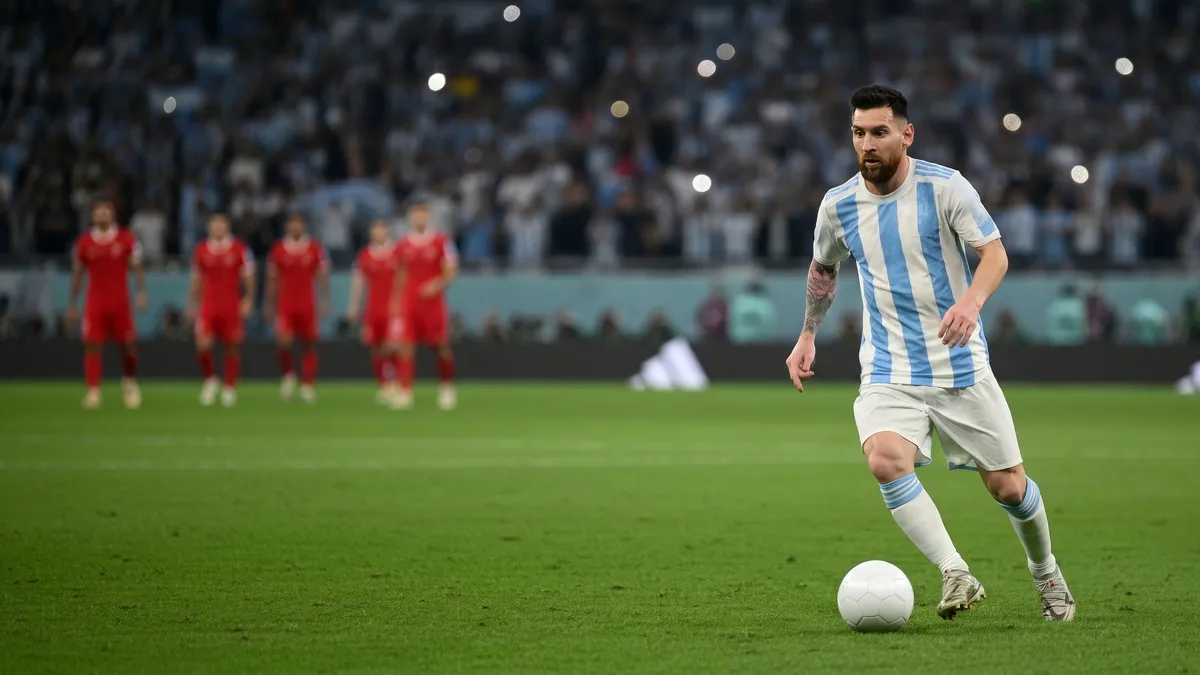
Bukayo Saka Ballon d'Or push shocks England race
Bukayo Saka Ballon d'Or talk grows as Hasselbaink backs him to rival Harry Kane and Declan Rice, with Arsenal flying in the Premier League.
Bukayo Saka Ballon d'Or talk grows as Hasselbaink backs him to rival Harry Kane and Declan Rice, with Arsenal flying in the Premier League.
For years, the Ballon d'Or has felt like a distant, glamorous planet for English football, visible but unreachable since Michael Owen’s 2001 triumph. Now, the conversation is changing, and not just because England finally has multiple elite-level candidates at once. Jimmy Floyd Hasselbaink has thrown real fuel on the debate by framing the Bukayo Saka Ballon d'Or case as more than hype. With Arsenal leading the Premier League and Saka producing decisive moments weekly, the possibility of an English breakthrough suddenly feels tangible.
Hasselbaink’s praise matters because it comes from a striker who lived on ruthless end product and understands what separates “nice player” from match-winner. He’s not describing Saka as a future candidate, but as a current threat in the Ballon d'Or contenders conversation. The Bukayo Saka Ballon d'Or narrative is built on repeatable qualities: availability, bravery in big games, and a calmness that makes pressure look optional. That mix is rare, even among stars.
What makes this moment feel different is the context around him: Arsenal are not merely entertaining, they are setting the pace. When a team is top of the Premier League, every contribution becomes amplified and every highlight clip carries extra weight. The Bukayo Saka Ballon d'Or argument is strengthened by that weekly spotlight, because voters and fans remember leaders more than nearly-men. Hasselbaink is essentially saying Saka is already playing like a face of the season.
Hasselbaink’s key point is consistency, and it’s the part of Saka’s game that has quietly become elite. Plenty of wingers can produce a month of fireworks, but fewer can keep the output steady while being double-marked and kicked through 90 minutes. The Bukayo Saka Ballon d'Or case leans on that reliability: he turns up, he affects games, and he rarely drifts into anonymity. In awards voting, the boringly dependable often beats the sporadically spectacular.
There’s also a uniquely English twist: Saka isn’t being compared to a foreign megastar first, but to two national teammates. Framing him as a serious rival to Harry Kane and Declan Rice gives the debate structure and makes it feel immediate for England football supporters. The Bukayo Saka Ballon d'Or conversation becomes a domestic storyline with global stakes, and that’s why it’s catching fire. It’s been a long time since England could argue this confidently.
Arsenal leading the Premier League changes the temperature of everything around them, especially individual awards chatter. When you’re top, even routine performances get treated like statements, and when you’re chasing titles, decisive moments become folklore. The Bukayo Saka Ballon d'Or debate benefits because Arsenal’s matches are now framed as must-watch events. Saka isn’t just producing numbers; he’s producing momentum, the kind that makes a season feel like it has a central character.
His eight goals and seven assists this season underline a broader truth: Saka is no longer a “potential” superstar, he’s a finished product who still has room to grow. Those figures matter because they arrive alongside heavy defensive attention and a workload that rarely eases. The Bukayo Saka Ballon d'Or case is strengthened by the sense he’s doing it the hard way, not floating through games with space. Arsenal’s system depends on him, and opponents plan around him.
Becoming Arsenal’s highest-paid player is not just a salary headline; it’s a signal of hierarchy and responsibility. Clubs don’t hand out that status unless they believe a player is central to their identity, and Arsenal have effectively built their public face around Saka. The Bukayo Saka Ballon d'Or conversation gains credibility when his contract mirrors his influence, because it shows his importance is recognized internally, not just by fans. Big wages often follow big expectations, and he’s meeting them.
Leadership isn’t always armbands and speeches; sometimes it’s demanding the ball when the stadium tightens. Saka has developed that big-game gravity where teammates look for him as the release valve and the accelerator. The Bukayo Saka Ballon d'Or argument grows when you see how Arsenal’s tempo changes with his involvement, because that’s what elite attackers do. He draws fouls, forces overloads, and creates the kind of chaos that opens doors for others.
If Saka is the Premier League’s headline act, Harry Kane is the relentless numbers machine abroad, piling up 45 goals for Bayern Munich. That tally is the kind that traditionally bulldozes its way into Ballon d'Or conversations, especially when delivered with Kane’s reputation for consistency. The Bukayo Saka Ballon d'Or case, therefore, isn’t happening in a vacuum; it’s competing with a striker whose output is almost unfair. For voters, goals remain the loudest language.
Yet Kane’s situation also highlights the complicated politics of awards: league perception, European nights, and whether trophies match the statistics. Bayern Munich are expected to dominate, so brilliance can sometimes be treated as business as usual. The Bukayo Saka Ballon d'Or debate gains a sliver of opportunity here, because Arsenal’s rise feels more narrative-driven and emotionally gripping. In award seasons, storylines can carry nearly as much weight as raw production.
The Kane-versus-Saka comparison revives football’s oldest argument: do you reward the finisher or the player who shapes entire matches? Kane’s scoring is a hammer, but Saka’s impact is more like a lever, shifting defensive structures and creating secondary chances. The Bukayo Saka Ballon d'Or discussion thrives in that grey area where influence can’t be reduced to a single stat. If Arsenal win big, voters may look beyond goals and toward the player who tilted the pitch.
Both players also carry the weight of England football expectations, but in different ways. Kane is the established captain and record scorer, while Saka represents the new era, the homegrown star who feels like he belongs to a generation of fearless attackers. The Bukayo Saka Ballon d'Or narrative taps into that generational shift, where fans want the next symbol as much as they respect the current one. That emotional pull can matter when debates reach fever pitch.
Declan Rice being mentioned alongside Saka and Kane is a reminder that the modern Ballon d'Or contenders list isn’t exclusively for forwards anymore. Rice has four goals and 11 assists, eye-catching numbers for a midfielder whose main job description is control, coverage, and balance. The Bukayo Saka Ballon d'Or conversation becomes more interesting with Rice involved, because it forces fans to compare different kinds of excellence. It’s not just about who dazzles; it’s about who drives winning.
Rice’s presence also strengthens Arsenal’s overall case in the Premier League, and that matters for Saka’s candidacy too. When a team has multiple stars, voters sometimes split credit, but they also notice a collective standard that screams “champions.” The Bukayo Saka Ballon d'Or argument benefits if Arsenal are viewed as the season’s defining side, because then the debate becomes which Gunner best represents that dominance. Rice makes Arsenal harder to beat; Saka makes them harder to contain.
Midfield excellence often hides in plain sight, and Rice’s best work can look like “just doing his job” to casual viewers. That’s why his Ballon d'Or contenders status is fascinating: it challenges the highlight culture that favors goals and tricks. The Bukayo Saka Ballon d'Or conversation, by contrast, is naturally more marketable because winger output is visible and easily clipped. Rice may be the metronome, but Saka is the melody people hum afterward.
One reason Arsenal look credible at the top of the Premier League is that their stars appear to elevate, not compete destructively. Rice’s arrival could have shifted attention away from Saka, but instead it has given him a stronger platform: better recoveries, cleaner transitions, more sustained pressure. The Bukayo Saka Ballon d'Or case is helped by that ecosystem, because individual awards often follow players who thrive in well-oiled machines. Arsenal’s structure makes Saka’s risk-taking safer and more frequent.
Every serious Ballon d'Or push needs a blueprint, and Saka’s is forming in real time: solid statistics, signature moments, and a team story that feels historic. Eight goals and seven assists are the foundation, but the real selling point is how those contributions arrive in tight matches where margins are thin. The Bukayo Saka Ballon d'Or storyline also benefits from freshness, because voters like the feeling of crowning someone new. Arsenal’s title chase gives that freshness a stage.
There’s also a psychological element: Saka has learned to play through attention, through contact, and through the expectation that he must deliver. That resilience is a crucial ingredient in any Ballon d'Or contenders profile, because the best players are targeted every week. The Bukayo Saka Ballon d'Or argument is less about a hot streak and more about a sustained standard that opponents can’t scheme away. When you’re the plan and still succeed, you look like an award winner.
To turn candidacy into inevitability, Saka likely needs a couple of defining goals on the biggest stages, the kind replayed for years. Ballon d'Or voting often tilts toward Champions League nights and title-deciding moments, because those are the games that feel like history. The Bukayo Saka Ballon d'Or path, therefore, is partly about timing: scoring when everyone is watching and when the season is on the line. Arsenal’s schedule will provide those auditions, and he’ll be judged on them.
Former players can steer conversations, especially when they speak with clarity rather than hype. Hasselbaink framing Saka as a real rival to Harry Kane and Declan Rice gives fans permission to treat the Bukayo Saka Ballon d'Or idea as serious analysis, not wishful thinking. That matters because awards are influenced by collective perception over months, not just by one spectacular week. When respected voices repeat the same message, it becomes part of the season’s accepted reality.
The fact that no English player has won since Michael Owen in 2001 hangs over the conversation like a stubborn cloud. It’s not a curse, but it has become a cultural reference point, a reminder that England football often produces great teams without producing the world’s officially crowned best individual. The Bukayo Saka Ballon d'Or discussion taps into that longing for recognition, especially for a player developed in the Premier League spotlight. If he breaks through, it would feel like a generational landmark.
Arsenal’s role is crucial because individual awards rarely detach from team achievement, particularly when the race is tight. If Arsenal convert their Premier League lead into silverware, Saka’s candidacy becomes more than compelling; it becomes difficult to ignore. The Bukayo Saka Ballon d'Or case is essentially tethered to Arsenal’s ability to finish the job, because trophies turn great seasons into iconic ones. For supporters, that creates a thrilling double narrative: club glory and personal coronation.
It’s rare to have three English stars simultaneously arguing for the same global prize from such different roles. Kane brings the Bayern Munich goal avalanche, Rice brings modern midfield control with tangible output, and Saka brings the winger’s blend of production and spectacle. The Bukayo Saka Ballon d'Or angle feels especially electric because it pits him against both the traditional goal king and the new-age midfielder. For fans, it’s a debate that can be argued honestly from multiple viewpoints, which is what makes it fun.
From here, the season becomes a series of narrative checkpoints: head-to-head clashes, title pressure, and knockout football where one touch can reshape reputations. Supporters tracking the Bukayo Saka Ballon d'Or race should watch for three things: decisive goals, big assists under pressure, and Arsenal’s ability to keep winning when fatigue bites. Voters remember the final months most vividly, and that’s when legends are usually written. If Saka owns that stretch, the conversation won’t be a surprise anymore.
Whatever happens, this is already a refreshing shift for England football: the debate is no longer about whether an English player can enter the Ballon d'Or conversation, but about which one deserves to lead it. Hasselbaink’s comments have crystallized the moment, and the Bukayo Saka Ballon d'Or storyline now sits at the heart of Arsenal’s season. With Kane’s Bayern Munich numbers and Rice’s all-action influence in the mix, the race feels richly competitive. If Arsenal turn their Premier League position into trophies, Saka’s case could become impossible to dismiss.

Julian Mercer is a lifelong student of the game whose passion for football was sparked at an early age, after stepping onto the grass of Camp Nou as a six-year-old — a moment that left a lasting impression and set him on a permanent path into the sport. Since then, football has been both his lens on the world and his favourite language. Blending traditional fandom with a deep interest in tactics, squad building, and long-term team development, Julian has spent decades analysing the game from every angle. His fascination with football strategy was further shaped through years of immersive play in Football Manager, a series he has followed since the mid-1990s, developing a sharp eye for patterns, player profiles, and the fine margins that define success. At My World Of Football, Julian focuses on the stories beneath the surface — from tactical evolutions and managerial philosophies to the narratives that connect clubs, players, and supporters across generations. His writing aims to balance insight with accessibility, always grounded in a genuine love for the game.
Continue reading more football news