Myworldoffootball
Bukayo Saka injury update: Arteta’s City worry
Bukayo Saka injury update as Arteta weighs Achilles concerns before Man City. Arsenal injury news, title-race pressure, and return timeline.
Bukayo Saka injury update as Arteta weighs Achilles concerns before Man City. Arsenal injury news, title-race pressure, and return timeline.
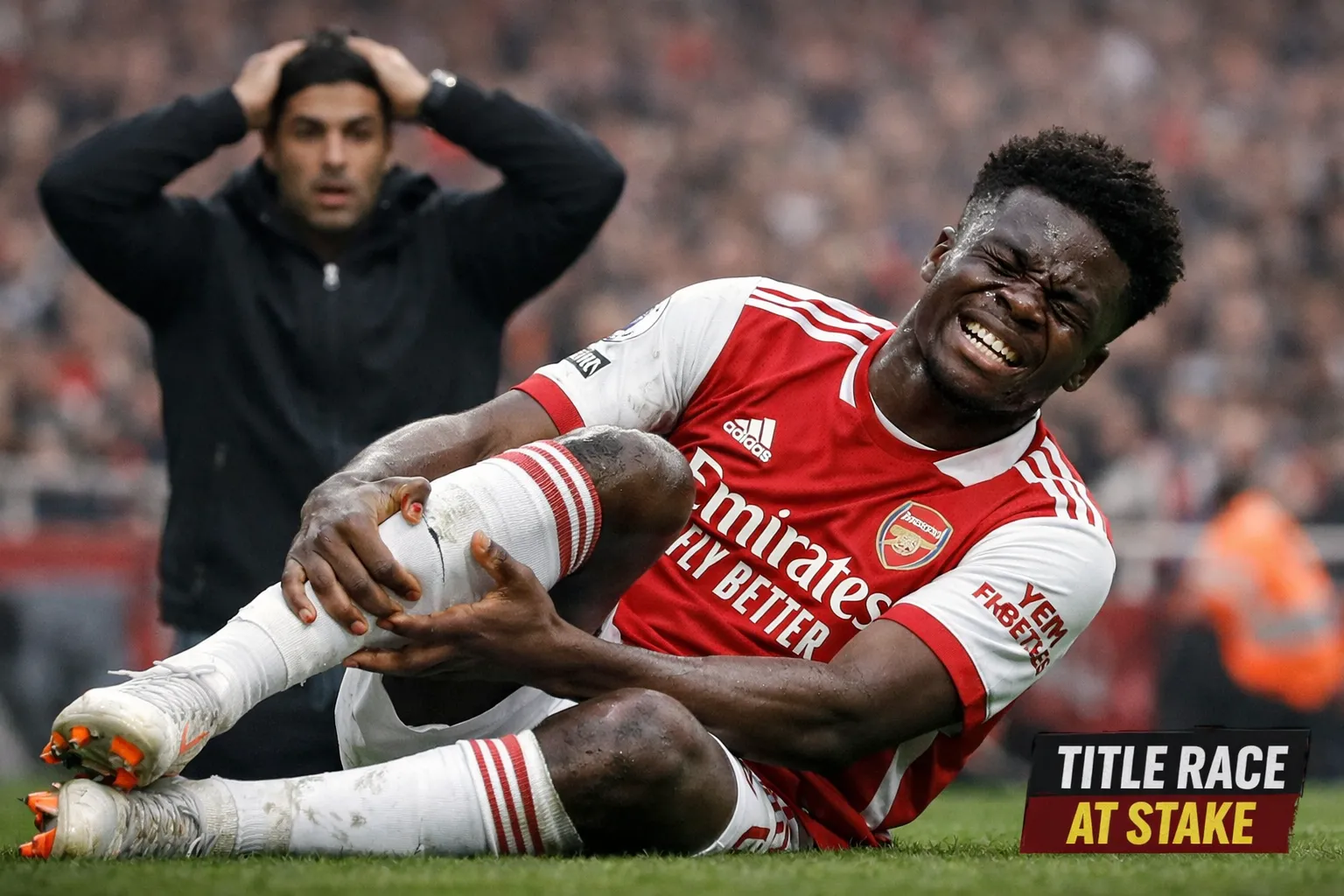
Arsenal’s season has reached that point where every training-ground clip feels like a headline, and every absence looks like a warning sign. The latest Bukayo Saka injury update from Mikel Arteta has only sharpened that tension, with the winger still managing an Achilles issue that threatens his involvement in the defining stretch. Arteta insists the timeline is “days, not weeks,” yet he also sounds like a coach who knows one wrong step can turn a niggle into a month. With Manchester City looming and form wobbling, Arsenal’s margin for error has suddenly thinned.
The most important detail in this Bukayo Saka injury update is the body part: Achilles problems are rarely straightforward, especially for a player whose game is built on explosive changes of direction and repeated sprints. Arteta’s tone has been cautiously upbeat, but he has also stressed the need to protect the player, which is manager-speak for “we can’t gamble.” In a season where Arsenal have leaned on Saka’s availability, this is unsettling timing.
From an Arsenal injury news perspective, the worry is not just whether Saka can play, but whether he can be Saka. A rushed return can mean reduced sharpness, fewer high-intensity actions, and a player subconsciously protecting the tendon in duels and accelerations. That matters in a match like Manchester City, where every half-yard is contested and every transition is punished. The Bukayo Saka injury update therefore becomes a performance question, not only a selection one.
The key Mikel Arteta comments have been framed to calm, but they also underline uncertainty: “days, not weeks” suggests optimism, while the repeated emphasis on monitoring suggests a medical staff unwilling to be rushed. This is typical of elite clubs managing tendon issues, because Achilles discomfort can flare after a single heavy session. The Bukayo Saka injury update reads like a balancing act between urgency and long-term protection.
Achilles injuries are notorious because they sit at the centre of acceleration, deceleration, and jumping, which are the exact movements wingers repeat hundreds of times per match. Arsenal can tape it, manage minutes, and alter training loads, but they cannot remove the demands of the position once the whistle goes. That is why Saka fitness concerns have escalated despite the “days” timeline. In this Bukayo Saka injury update, the medical nuance is the real headline.
Arsenal have lost three of their last four matches, and that run has changed the emotional temperature around the squad. When results are flowing, you can absorb an injury with structure and confidence; when form dips, every missing starter becomes a narrative. This Bukayo Saka injury update lands in a moment where Arsenal’s attacking rhythm has looked less certain, and where small issues have started to stack into bigger ones.
What Saka provides is not only goals and assists, but a reliable outlet that stabilises Arsenal’s possession. Without him, there is less automatic width on the right, fewer one-v-one wins that pin back full-backs, and fewer moments where Arsenal can escape pressure with one dribble. That’s why the Bukayo Saka injury update is being felt by fans as a structural problem, not merely a missing name on the teamsheet.
Arsenal’s right side is often their control panel, with Saka receiving to feet, drawing two defenders, and then either slipping a pass inside or driving to the byline. Take that away and Arsenal can become more predictable, funnelled into central areas where opponents crowd space. This is where Saka fitness concerns become tactical concerns, because the team’s spacing and tempo change. The Bukayo Saka injury update therefore connects directly to Arsenal’s recent bluntness.
Declan Rice has been asked to cover huge territory, and when Arsenal lack a consistent wide outlet, the midfield can feel like it has to do everything at once. Rice ends up progressing the ball, protecting transitions, and arriving in the box, which is an immense load across a congested schedule. That is why the latest Arsenal injury news matters beyond the forward line. The Bukayo Saka injury update indirectly increases the strain on players like Rice.
Saka’s absence from training ahead of a major European night has amplified the sense that Arsenal are walking a tightrope. Missing sessions is often more revealing than missing matches, because it suggests the player can’t tolerate full intensity, even in controlled conditions. In that context, each Bukayo Saka injury update becomes a check-in on pain tolerance and recovery response, rather than a simple countdown to the next fixture.
The Champions League quarter-final stage is unforgiving, and Arsenal’s margin for rotation is already limited by the calendar. If Saka can’t contribute, Arteta must either alter the front line or ask other players to replicate his output, which is a tall order. The club’s Arsenal injury news cycle then becomes intertwined with European ambition and league priorities. This Bukayo Saka injury update is shaping decisions across competitions.
When a player of Saka’s durability goes missing for multiple games, it usually means the issue is persistent rather than dramatic. It can be managed day-to-day, but it resists the final step that allows full match intensity. That’s why the Bukayo Saka injury update has carried a slight edge of concern even with optimistic wording. Arsenal know the Achilles can settle, then flare, then settle again, and that cycle is dangerous.
Arteta has often preferred continuity, but this period forces compromise, especially if the winger returns at less than 100 percent. Do you start him and risk losing him for weeks, or hold him back and risk losing a tie or dropping points? Those are the decisions hidden inside the Mikel Arteta comments. The Bukayo Saka injury update is essentially a debate about resource management at the sharpest end of the season.
The looming meeting with Manchester City is why this Bukayo Saka injury update feels so urgent. Arsenal may lead the table by six points, but City have a game in hand and the psychological power of experience in run-ins. One result can swing momentum, belief, and the way both teams approach the remaining fixtures. If Saka is unavailable or limited, Arsenal lose one of their most reliable big-game outlets and press-resistant ball carriers.
Against City, every attacking player must also defend with discipline, tracking runners and helping full-backs survive isolation. Saka’s intelligence without the ball is a major part of Arsenal’s structure, because he understands when to press, when to block passing lanes, and when to drop. That’s why the Bukayo Saka injury update is not just about goals; it’s about whether Arsenal can execute their entire game plan. City punish any weakness in the chain.
The Premier League title race is often described as a marathon, but certain fixtures function like sprints where the damage is immediate. Arsenal versus City is one of those, because it doubles as a six-pointer and a confidence barometer. If Arsenal win, they tighten their grip; if they lose, the table compresses and anxiety returns. The Bukayo Saka injury update matters because it may decide whether Arsenal can play with freedom or with caution.
Pep Guardiola’s teams are ruthless at identifying where an opponent is weakened, whether that’s a full-back carrying a knock or a winger unable to sprint repeatedly. If Saka starts but can’t hit his usual intensity, City can press his side, force turnovers, and attack the spaces he normally protects. That’s why Saka fitness concerns are tactical gold dust for the opposition. This Bukayo Saka injury update will be studied closely by City’s analysts as much as Arsenal’s supporters.
Arsenal’s injury list has been manageable at times this season, but the timing of issues is what defines campaigns. With Saka in doubt, attention also turns to who can change the team’s profile from the bench and who can cover multiple roles. Jurrien Timber’s situation is particularly relevant because his versatility can help Arsenal adjust their build-up and defensive matchups. In the wider Arsenal injury news picture, the Bukayo Saka injury update is the headline, but it’s not the only variable.
Arteta’s preferred approach is to create stable relationships on the pitch, yet injuries force experimentation. Without Saka, Arsenal might need more overlap from full-back, more underlaps from midfield, or different pressing triggers to win the ball higher. Those tweaks can work, but they take time, and time is scarce in April. That’s why the Bukayo Saka injury update feels like a fork in the road: either Arsenal keep their identity intact, or they adapt on the fly.
Timber’s value is that he can invert, overlap, and defend in wide spaces, giving Arteta options to reinforce whichever flank is under stress. If Arsenal need to protect a winger who is returning short of full sharpness, a full-back who can step into midfield and control transitions becomes vital. That’s why Timber is part of the broader Arsenal injury news discussion around this period. The Bukayo Saka injury update indirectly increases the need for flexible defenders.
Even top squads struggle to replace a player who combines output, availability, and tactical intelligence the way Saka does. Arsenal can swap profiles—more direct running, more central combinations, more crossing—but they can’t copy-paste his decision-making under pressure. That is why the Mikel Arteta comments about availability are so pointed: he knows systems break when key roles lose their specialist. The Bukayo Saka injury update is essentially about whether Arsenal must play Plan B in the biggest weeks.
If Arteta is right and Saka returns in days, Arsenal still have to decide how to use him. A substitute appearance can be safer, but it can also be chaotic if the match is already stretched and the player has to sprint repeatedly. A start can offer structure, yet it risks overloading the tendon early. The Bukayo Saka injury update therefore doesn’t end with a return date; it continues through the first two matches back, where reaction matters most.
There is also the messaging to consider, because supporters read confidence from their manager’s words. Arteta’s optimism is partly leadership, partly protection of the player from external pressure, and partly an attempt to keep opponents guessing. But internally, Arsenal will be tracking pain levels, morning stiffness, and post-session response, which are the true indicators with Achilles complaints. In that sense, each Bukayo Saka injury update is a snapshot, not a conclusion, and the picture can change quickly.
Elite sports medicine often treats availability as a spectrum: fully available, available with restrictions, or available only in emergencies. With Achilles issues, the club will monitor how Saka handles repeated accelerations, sharp cuts, and contact, because those are match demands that drills can only approximate. That’s why Saka fitness concerns persist even when the timeline sounds short. The Bukayo Saka injury update might soon become a minutes-management update, which is just as important.
Big title races are decided by tiny psychological swings, and the presence of a star can lift a stadium and a dressing room. If Saka is named in the squad, Arsenal gain an instant jolt of belief; if he isn’t, City gain a quiet confidence before a ball is kicked. That is why this Bukayo Saka injury update carries weight beyond the medical room. It influences mood, tactics, and the way both teams interpret the run-in.
Ultimately, Arsenal’s season may hinge on whether they can navigate this stretch with their identity intact and their best players functional. The latest Bukayo Saka injury update offers hope, but it also demands patience, because Achilles issues do not negotiate with fixture lists. Arteta will try to protect Saka while still chasing the points that keep City at arm’s length, and that is the tightrope of a real title contender. If Saka returns sharp, Arsenal’s right side hums again; if he returns compromised, the Premier League title race could tilt on a single tendon’s response.

Julian Mercer is a lifelong student of the game whose passion for football was sparked at an early age, after stepping onto the grass of Camp Nou as a six-year-old — a moment that left a lasting impression and set him on a permanent path into the sport. Since then, football has been both his lens on the world and his favourite language. Blending traditional fandom with a deep interest in tactics, squad building, and long-term team development, Julian has spent decades analysing the game from every angle. His fascination with football strategy was further shaped through years of immersive play in Football Manager, a series he has followed since the mid-1990s, developing a sharp eye for patterns, player profiles, and the fine margins that define success. At My World Of Football, Julian focuses on the stories beneath the surface — from tactical evolutions and managerial philosophies to the narratives that connect clubs, players, and supporters across generations. His writing aims to balance insight with accessibility, always grounded in a genuine love for the game.
Continue reading more football news