Myworldoffootball
Club Brugge play-offs: Mechele on pressure & race
Brandon Mechele says Club Brugge play-offs bring higher pressure after last year’s loss, praising cohesion, fitness work, and a Union-led title race.
Brandon Mechele says Club Brugge play-offs bring higher pressure after last year’s loss, praising cohesion, fitness work, and a Union-led title race.
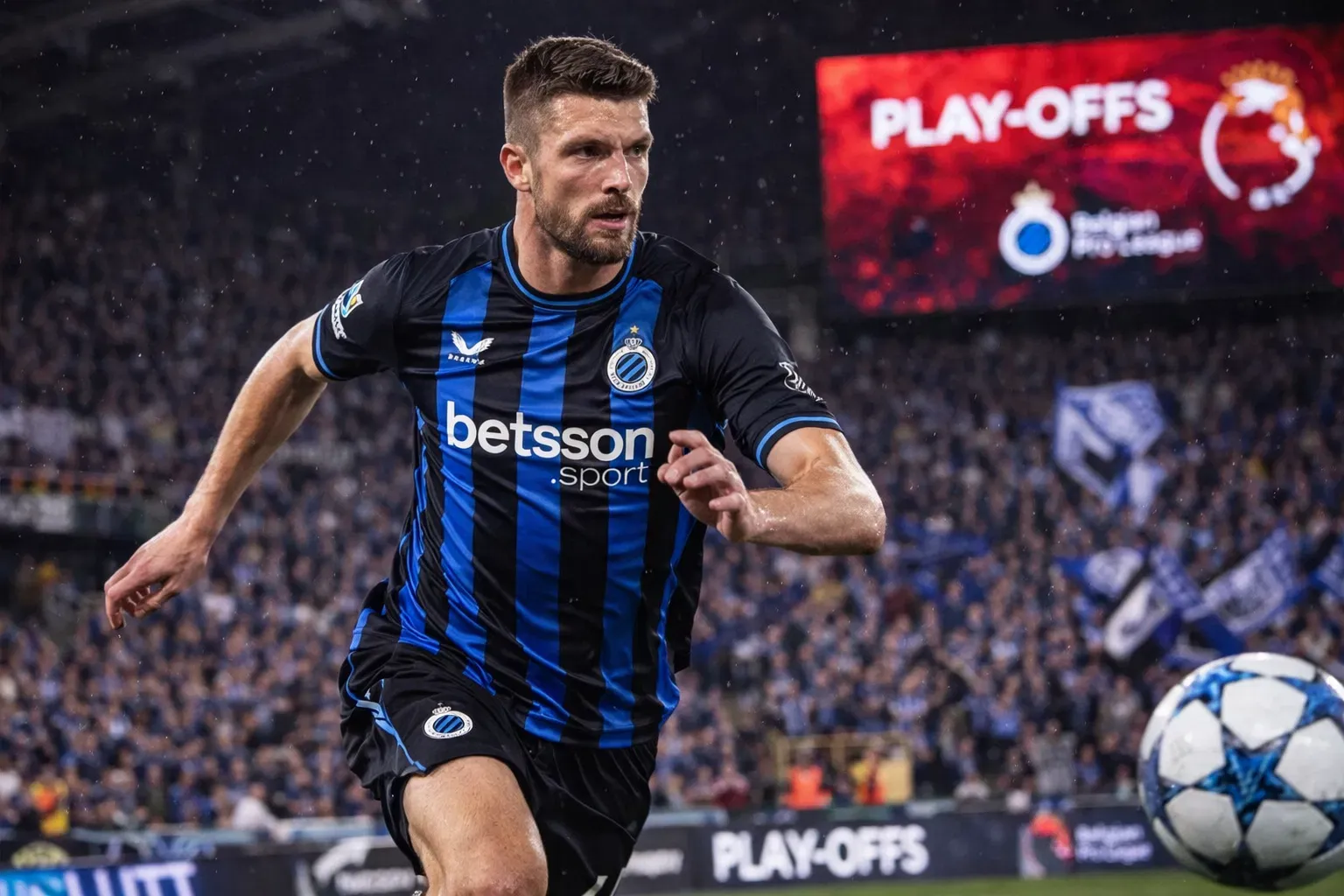
In Belgium, spring doesn’t just mean better pitches and louder terraces; it means the Club Brugge play-offs are about to squeeze every mistake into a headline. Brandon Mechele has felt that squeeze before, and he’s not hiding from it after last season’s title slip to Union Saint-Gilloise. For Club Brugge, the stakes are personal and institutional, because the play-offs don’t reward comfort or reputation. They reward nerve, legs, and the ability to win while everyone is watching.
Mechele’s message is clear: the Club Brugge play-offs feel heavier this time because the memory of last year’s disappointment still sits in the dressing room. When a club of Brugge’s size finishes second, it’s not filed away as “progress”; it’s treated as unfinished business. That creates a sharper edge in training, in recovery habits, and in how leaders speak. The pressure is real, but it also clarifies priorities.
In Belgian football, pressure often arrives in layers, and the Jupiler Pro League play-offs turn those layers into a full-body press. Mechele talks like a defender who understands momentum, because one bad half can swing a mini-league. The Club Brugge play-offs compress time, and they compress patience too. That’s why the group’s emotional control becomes as important as set-piece routines and build-up patterns.
Brandon Mechele doesn’t need a captain’s armband to sound like a stabilizer, especially when the Club Brugge play-offs begin to distort normal rhythms. His value is in the calm details: when to step, when to hold, when to slow the game with a simple pass. In a title run-in, defenders become narrators of risk, and Mechele’s experience helps teammates choose the sensible option without losing ambition.
Union Saint-Gilloise aren’t just another rival; they’re the reference point that keeps Club Brugge honest heading into the Club Brugge play-offs. Union’s rise has forced the traditional powers to modernize, to run harder, and to accept that control can be taken away. The psychological detail matters: losing a title to Union changes how Brugge interpret “good enough.” It pushes standards upward, even on quiet Mondays.
No conversation about the Jupiler Pro League is complete without the point-halving system, and Mechele’s view reflects the dressing-room reality: players may debate it, but they still have to master it. The Club Brugge play-offs can punish teams that dominated earlier months, and that’s exactly why they feel like a separate competition. It’s a format that amplifies drama, but it also amplifies accountability every weekend.
For fans, the point-halving is either genius theatre or a sporting compromise, and both arguments have merit. Yet the Club Brugge play-offs thrive on that tension, because it keeps more clubs believing longer. Mechele’s perspective is pragmatic: if the rules create an intense atmosphere, then the squad must treat intensity as a skill. In this setup, emotional resilience becomes a tactical weapon.
Mechele argues that player development accelerates when every touch feels like a referendum, and the Club Brugge play-offs provide exactly that environment. Young players learn quickly what it means to defend a lead with ten minutes left and an entire stadium leaning forward. They also learn how to recover from a mistake without spiraling. Belgian football has long exported talent, and this crucible can sharpen it.
The Club Brugge play-offs don’t just test your best eleven; they test the depth of your week-to-week solutions. Suspensions, minor knocks, and form dips are inevitable in a short, high-stress sprint. That’s where cohesion matters, because replacements must understand automatisms, pressing triggers, and set-piece roles. Mechele’s emphasis on togetherness is really an argument for structural clarity: everyone must know the plan, quickly.
When Mechele talks about the group, he keeps circling back to cohesion, as if it’s the one thing you can’t fake in the Club Brugge play-offs. Cohesion shows up in small gestures: who covers a teammate’s run, who offers the safe passing lane, who communicates early instead of late. In a pressure cooker, those habits decide whether a team looks synchronized or scrambled. Brugge want to look inevitable, not anxious.
Preparation is also about removing noise, and the Club Brugge play-offs create noise by default: media narratives, table permutations, and the constant comparison with Union Saint-Gilloise. The best teams simplify their week: repeat patterns, protect recovery, and keep messaging consistent. Mechele’s confidence suggests a squad that believes its work will travel into hostile stadiums. That belief is fragile, but it can be reinforced by routine and results.
Defenders often talk about “moments,” because in the Club Brugge play-offs you can dominate a match and still lose to one lapse. Mechele’s focus naturally lands on distances between lines, second balls after clearances, and the discipline to avoid cheap set pieces. Titles in the Jupiler Pro League are frequently decided by these margins. A single mistimed step can undo ninety minutes of control, and he knows it.
In Belgian football, the play-offs compress quality gaps, so communication becomes a way to manufacture advantage. Mechele’s job is partly to keep the back line brave, stepping up together rather than retreating individually. In the Club Brugge play-offs, hesitation is contagious, but so is decisiveness. A loud, early instruction can prevent a dangerous transition before it exists. That’s why leadership often sounds like constant, useful information.
Mechele’s praise for the physical coach isn’t a throwaway compliment; it’s a window into how modern squads survive the Club Brugge play-offs. The schedule is unforgiving, and the intensity of each match raises the cost of fatigue. Optimizing performance now means managing load, sleep, and micro-recovery, not just running more. Brugge want fresh legs late in games, because late goals often decide the mini-league.
There’s also a mental benefit to feeling physically ready, especially in the Club Brugge play-offs where anxiety can tighten muscles and slow decision-making. When players trust their conditioning, they press with conviction and recover their positions faster. Mechele’s confidence suggests the staff have built a program that peaks at the right time. In a sprint finish, the best-conditioned team can turn “even” matches into repeatable wins.
The tactical layer is simple: if you can run, you can impose your style, and the Club Brugge play-offs often reward the team that controls transitions. Strong fitness allows Brugge to counter-press after losing the ball, preventing opponents from launching quick attacks. It also helps when protecting a lead, because tired legs invite late crosses and second chances. In a title race, stamina becomes a form of strategy.
Mechele’s mention of optimization hints at the unseen work: injury prevention, individualized programs, and smarter rotation as the Club Brugge play-offs pile up. One hamstring tweak can remove a key player for the entire run, and there’s rarely time to “play into form.” Belgian football’s play-off sprint demands immediate readiness from squad players. Brugge’s challenge is to rotate without losing rhythm, a balance staff must constantly recalculate.
Mechele is candid about the likely shape of the title race, and his prediction aligns with what many fans feel: the Club Brugge play-offs are set up for a duel with Union Saint-Gilloise. Union have become a model of coherence and belief, while Brugge carry the weight and resources of a giant. That contrast makes every head-to-head feel like a referendum on identity. The margins between them are thin, and that’s the point.
What makes this rivalry compelling is that it’s not built on history alone; it’s built on recent proof. The Club Brugge play-offs are where narratives harden into outcomes, and Brugge know Union won’t flinch in hostile environments. Mechele’s calm suggests he expects a long fight rather than a quick separation. In these mini-leagues, a single away draw can feel like a missed opportunity, and both teams will chase momentum.
If you’re looking for where the Club Brugge play-offs will swing, start with set pieces and game management. Tight matches often hinge on one corner, one second ball, or one clever block that buys a free header. Away-day nerve matters too, because the atmosphere is sharper and the refereeing debates louder. Mechele, as a defender, lives in those moments where chaos is closest to goal and composure is priceless.
Mechele’s view on Sint-Truiden is not dismissive so much as realistic about what the Club Brugge play-offs usually demand. Sint-Truiden can be organized, awkward, and brave, but sustaining title-winning consistency against elite squads is a different challenge. In the Jupiler Pro League, resources and depth often show up late, when legs are heavy and benches decide outcomes. Brugge will respect Sint-Truiden’s threat, yet still see the main obstacle as Union.
For supporters, the Club Brugge play-offs are a season within a season, and they reshape how fans remember everything that came before. A strong regular season is appreciated, but a play-off wobble can erase months of joy in a week. That emotional volatility is why stadiums feel louder and conversations feel sharper. Mechele’s comments capture that reality: players sense the crowd’s urgency, and they carry it onto the pitch.
The broader impact on Belgian football is significant, because the play-offs create a product that draws attention beyond domestic borders. The Club Brugge play-offs can showcase intensity, tactical variety, and the kind of pressure that prepares players for European nights. For Brugge, there’s also brand responsibility: they’re expected to compete at the top and represent the league well. That expectation adds another layer to Mechele’s “pressure,” and it’s not imaginary.
Modern pressure isn’t only in the stadium; it’s in the phone, and the Club Brugge play-offs generate constant judgment. A defender’s error becomes a clip, a striker’s miss becomes a meme, and narratives harden before teams even return to training. Mechele’s experience helps here, because veterans learn to filter the noise and keep feedback internal. Momentum swings are real, but the best squads treat them as temporary and correctable.
Every spring, the Club Brugge play-offs become a proving ground where reputations are either confirmed or rewritten. For established players like Brandon Mechele, it’s about leadership and reliability when the air feels heavy. For younger teammates, it’s about showing they can perform when the match matters more than the calendar suggests. Belgian football has always valued big-game temperament, and these weeks measure it with brutal clarity.
As the Jupiler Pro League reaches its sharpest edge, the Club Brugge play-offs promise the kind of drama that turns ordinary moments into season-defining memories. Mechele’s honesty about pressure, and his belief in preparation, reads like a team trying to turn last year’s pain into this year’s purpose. With Union Saint-Gilloise looming as the obvious rival and Sint-Truiden ready to disrupt, nothing will be gifted. For Brugge fans, it’s simple: brace for tension, and hope the work shows when it counts.

Julian Mercer is a lifelong student of the game whose passion for football was sparked at an early age, after stepping onto the grass of Camp Nou as a six-year-old — a moment that left a lasting impression and set him on a permanent path into the sport. Since then, football has been both his lens on the world and his favourite language. Blending traditional fandom with a deep interest in tactics, squad building, and long-term team development, Julian has spent decades analysing the game from every angle. His fascination with football strategy was further shaped through years of immersive play in Football Manager, a series he has followed since the mid-1990s, developing a sharp eye for patterns, player profiles, and the fine margins that define success. At My World Of Football, Julian focuses on the stories beneath the surface — from tactical evolutions and managerial philosophies to the narratives that connect clubs, players, and supporters across generations. His writing aims to balance insight with accessibility, always grounded in a genuine love for the game.
Continue reading more football news