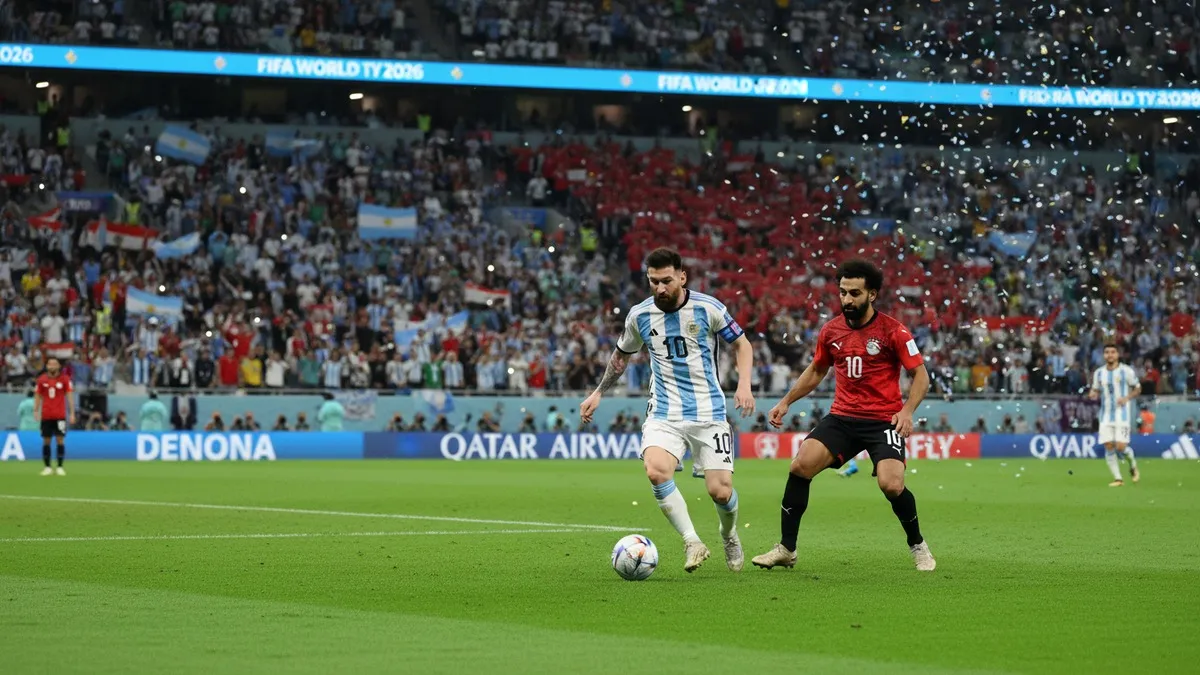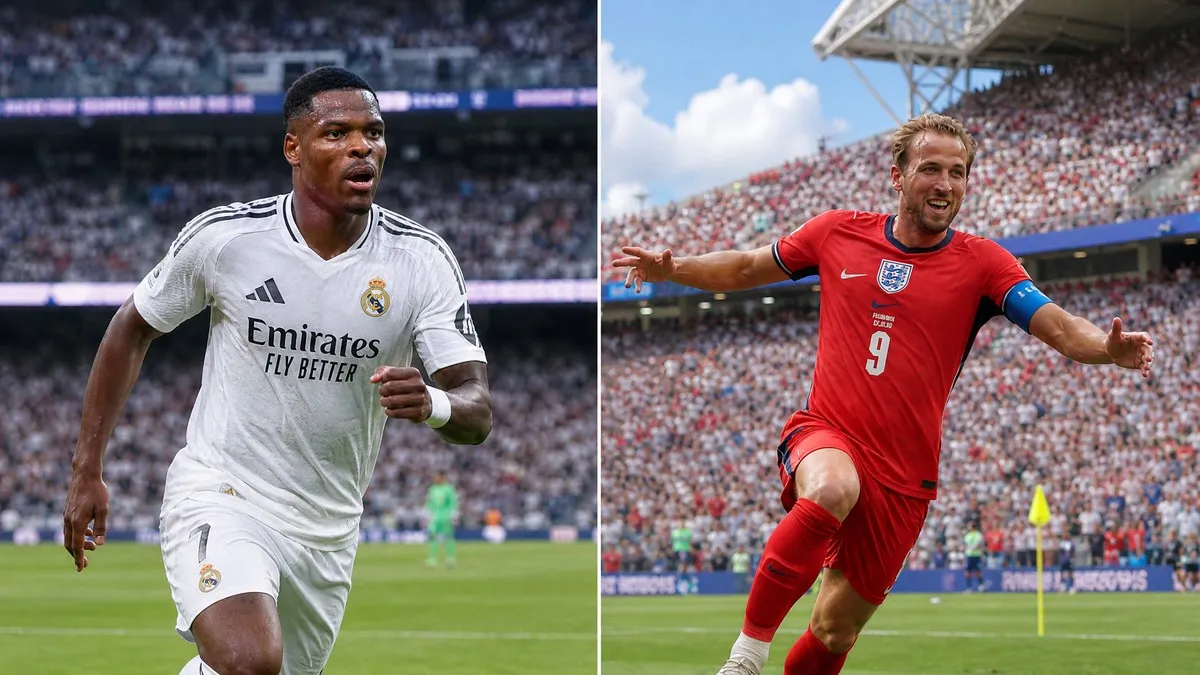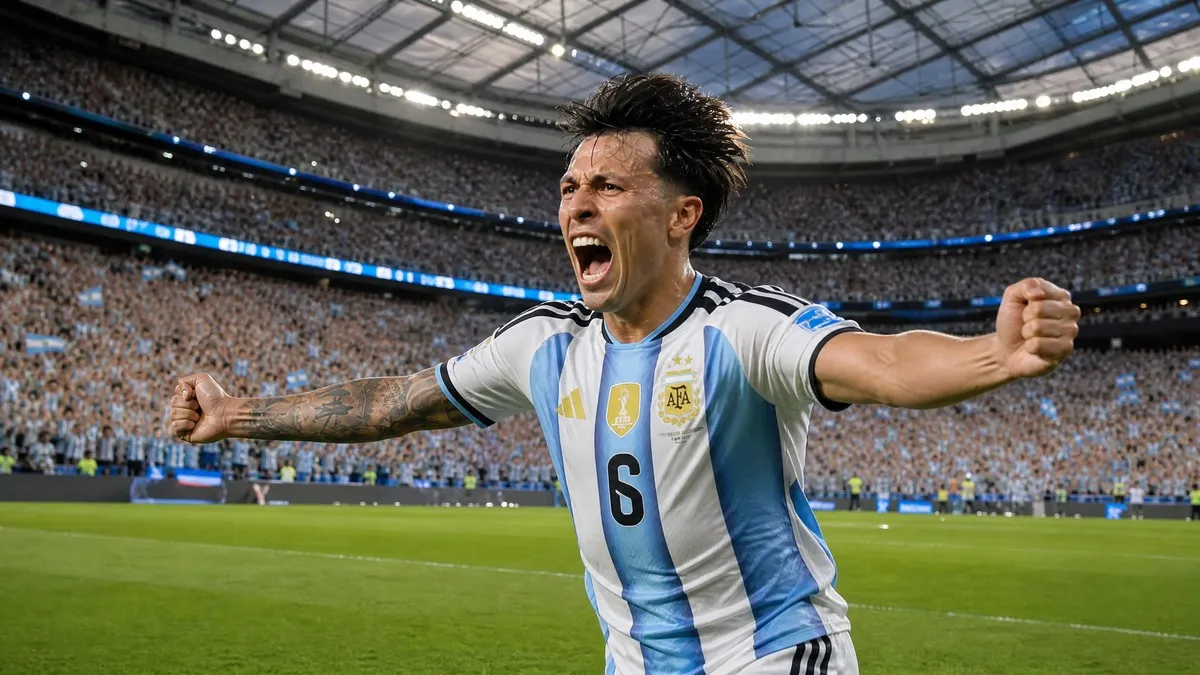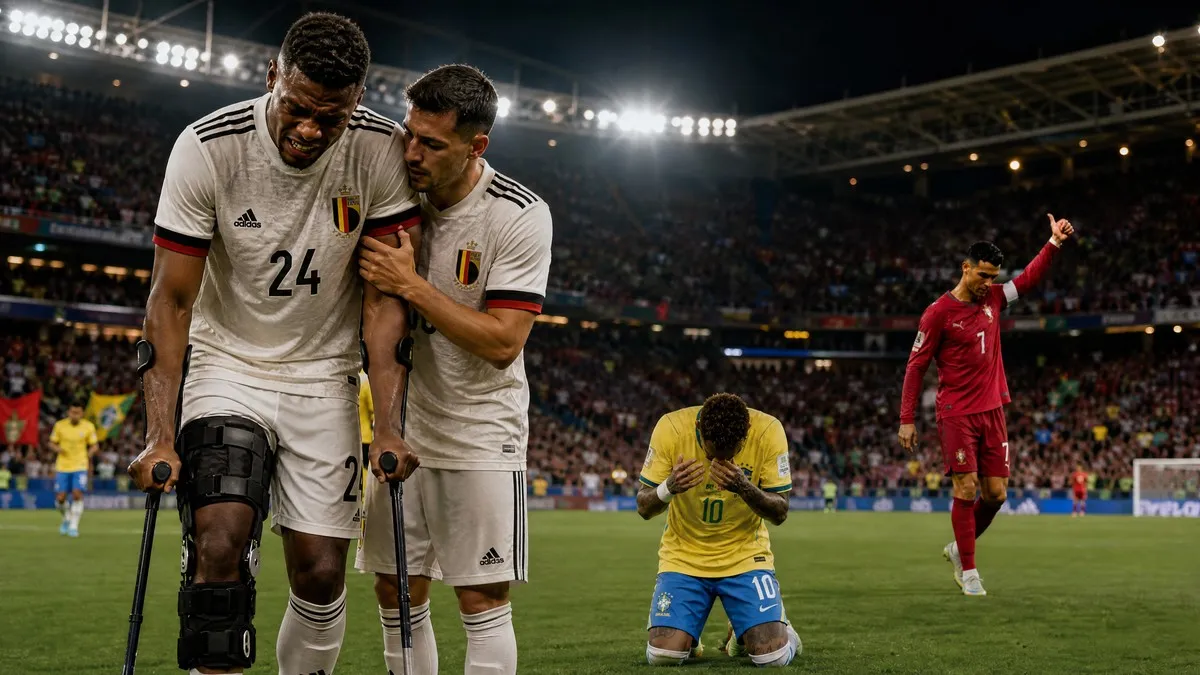
AI-generated image
Football News Today: Onana injury and Neymar's retirement
Big news today as Onana's injury hits Villa hard and Neymar retires after a shocking World Cup exit. Plus, Ronaldo's emotional farewell.
Big news today as Onana's injury hits Villa hard and Neymar retires after a shocking World Cup exit. Plus, Ronaldo's emotional farewell.
What a day in football. Amadou Onana's injury has sent shockwaves through Villa and Belgium. Neymar hangs up his boots after a surprising World Cup exit against Norway. And Ronaldo's World Cup farewell ended in heartbreak against Spain. With transfer talks heating up across Europe, there's plenty to catch up on as clubs scramble to make their moves.
The Amadou Onana injury sucked the air out of what should have been a comfy night for Belgium. Up 4-1 on the US and cruising, then he goes down in the 21st minute and you could feel the mood flip. A torn ACL is brutal timing in a tournament because you cannot patch it with adrenaline. You lose a player and a whole set of solutions.
Onana is not just “a midfielder” in this Belgium World Cup run. He is the one who lets the others play their game. He wins second balls, covers the full-backs when they fly on, and gives you a simple out ball when the press bites. Without him, Belgium either go more conservative or ask someone else to do two jobs. Neither option feels great.
Lukaku’s moment said a lot. The Romelu Lukaku tribute after scoring was not a gimmick, it was a dressing room reaction in real time. Belgium know how important Onana is to their balance, especially when games tighten. Against Spain in the quarter-final, that balance matters even more. Spain will pin you in, move you side to side, and punish any gap between midfield and defence.
And then there is Aston Villa news, where the knock-on effect is huge. Unai Emery had Onana as a key part of the engine room, and now the Premier League midfield crisis looks real with Boubacar Kamara already out. The Amadou Onana injury update forces Villa to rethink roles, minutes, and maybe even their summer window. You cannot chase Europe in March and April with a midfield held together by hope.
Neymar international retirement landing like this just feels wrong. Brazil going out 2-1 to Norway in the round of 16 is the kind of result you tell yourself cannot happen, then it does. He scores the penalty, hits 80 goals, becomes the record man, and still walks off looking empty. That mix sums up his Seleção life. Brilliant moments, and a constant sense the story never quite matched the talent.
The record matters, but it also opens the old debate about what we count. Neymar’s 80 came across eras, coaches, and styles, often with him carrying the creative load because Brazil never really replaced the old No 10 pipeline. He was asked to be the finisher and the playmaker, plus the face of the team. When it went wrong, it was always personal. Neymar legacy talk has to include that weight, not just the highlights reel.
Brazil World Cup exit makes it seven straight knockout losses to European opposition, and that is not “bad luck” anymore. Norway are not a traditional giant, but they are built like a modern European side and they punished Brazil’s loose moments. If Erling Haaland got even half a chance, you felt danger. Casemiro and the midfield looked like they were chasing the game’s rhythm instead of setting it.
Now Carlo Ancelotti has a proper rebuild on his hands, and Neymar international retirement makes the hardest part obvious. Brazil lose the one player who could slow a match down and invent something when structure fails. Ancelotti has to decide if he wants a more collective Brazil or if he tries to create a new focal point fast. Either way, the next cycle cannot be another waiting room for one superstar to save them.
The Neymar father plea to keep playing at club level is the bit I actually agree with. International retirement does not have to mean the end of Neymar club future. If his body holds up, he can still be a difference-maker in bursts, even if the days of carrying a team every week are gone. Let the Brazil chapter close. Just do not let the football stop yet.
The Cristiano Ronaldo World Cup farewell always felt like it would be messy, but not like this. Portugal were seconds from forcing extra time in Dallas, then Mikel Merino stole it in stoppage time and the whole night turned cold. Ronaldo’s emotional exit hit because it was so familiar: big stage, fine margins, and Portugal walking off with regret instead of a trophy.
Spain did not dominate the ball for the sake of it. They controlled the tempo, kept Portugal’s wide runners quiet, and trusted Unai Simón to handle the rare moments where the game opened up. Portugal looked caught between two plans: feed Ronaldo early or play around him with quicker combinations. That hesitation mattered. In knockout football, if you do not commit to an identity, you end up surviving until you don’t.
Ronaldo finishing his World Cup history with 11 goals across six tournaments is still ridiculous, and it explains why this Cristiano Ronaldo World Cup farewell lands heavier than most. But this tournament also showed the reality of time. He still drags defenders, still lives for the box, yet Portugal’s best moments came when the attack moved at a different speed. That is not an insult. It is just the sport.
Now the awkward bit starts. The manager resigning means Portugal’s national team has to pick a direction fast, because you cannot rebuild while also trying to squeeze one last campaign out of a legend. Ronaldo pointing to Euro 2016 as the peak is telling. That win gave the shirt a different weight. If Euro 2028 is the target, the next coach has to build a team that can win without looking for Ronaldo to save them.
So the Cristiano Ronaldo World Cup farewell becomes a marker for a wider transition. Portugal have the talent to stay elite, but they need clarity: who leads the press, who owns midfield, who finishes moves. Spain’s late punch was brutal, yet it also offered a clean lesson. Sentiment does not protect you in stoppage time. Structure does.
The Rafael Leao transfer news feels like the first proper statement swing of Tottenham’s summer. Not another “promising winger” punt, but a player who decides games on his own. If the €60 million figure is even close, it is the kind of price that makes you double-take, because Milan wrote a €175 million release clause for a reason.
For Spurs, the appeal is obvious. Leao gives you that left-sided chaos: big carries, early shots, and the ability to turn a slow attack into a chance in two touches. De Zerbi teams want width and 1v1s, but they also want runners who can threaten in behind when the build-up gets crowded. Leao fits that better than most names on the market.
The Milan angle is the interesting part. New coach or not, Fabrizio Romano saying AC Milan are open to selling tells you this is about squad planning and wages, not just tactics. Ruben Amorim arriving doesn’t automatically mean a clean slate for everyone. Christian Pulisic has become a reliable output guy on the right, and if Milan see Leao as inconsistent for his cost, they will listen.
Still, Tottenham Hotspur have to be honest about the risk. Leao can drift in games, and the Premier League will punish passengers quicker than Serie A. Spurs would need a clear role, proper support from the left-back, and a plan for when teams sit deep. The Rafael Leao transfer news also sits alongside Savinho talk, which hints Spurs want two different winger profiles, not just one headline.
If Spurs have already done six major deals, this is where you find out if the window is about depth or about raising the ceiling. A €60 million Leao is a bet on elite moments. If he really wants the move, that matters. These ones only happen when player and club pull the same way.
Bruno Fernandes talking about wanting to match the impact of Paul Pogba and Sandro Tonali hits a nerve because it is really about status. In the Premier League, you are judged on output, sure, but also on what you cost and what you represent. Pogba arrived as a statement. Tonali landed as a project with a price tag. Bruno is basically saying he wants to be that reference point.
That is why Premier League transfer records never sit still. Manchester United’s history is a perfect example. Fans still argue about who the “real” record signing is, because the numbers shift with clauses, agent fees, and currency chat. You see a list with Declan Rice at £100m and Mesut Ozil at £42.5m and it reminds you how fast the market has sprinted in a decade. Context matters more than the headline fee.
Add-ons are where it gets murky. A deal can be “£60m” in June and quietly become £72m by Christmas if appearances, Champions League qualification, or trophies kick in. That changes how we talk about players. When they struggle, supporters throw the guaranteed figure at them. When they shine, clubs like to quote the maximum. It is why Premier League transfer records feel like arguments waiting to happen.
What I like is the contrast with Aston Villa and Bournemouth. They have not tried to win the biggest-fee contest. Villa have mixed smart mid-range buys with the odd big swing, building a squad that makes sense together. Bournemouth have leaned into recruitment that fits a style and a resale plan. United have often chased “the guy” and then asked the team to adapt. Bruno’s comments land in that tension between identity and spending.
And that is the emotional bit. Fans do not just track transfer fees like accountants. They track hope. A record signing is a promise, and when it breaks, it feels personal. Bruno wanting to emulate Pogba and Tonali is not about copying their careers. It is about carrying the weight that comes with modern valuations, where Premier League transfer records can define the conversation before a ball is even kicked.
Ramiz Zerrouki transfer news is starting to feel real rather than wishful thinking. Feyenoord have a contract ticking down to next summer, and that always changes the mood. If a player is not nailed-on first choice, the club usually prefers cash now over a free later. Seeing Zerrouki and his agent in Enschede fits that pattern. It looks like proper talks, not a casual visit.
For FC Twente, the appeal is obvious. Zerrouki already knows the club, the city, and the expectations. He has 143 games there with nine goals and thirteen assists, which is solid output for a midfielder who does a lot of the dirty work too. Twente’s best sides in recent years have had a controller in the middle who can take pressure, play forward early, and keep the tempo sensible. He fits that.
From Feyenoord’s side, this is classic squad planning. They are usually ruthless when a player sits in that awkward zone: good enough to contribute, not essential enough to build around. With Feyenoord transfer updates often focused on balancing Europe ambitions with smart sales, moving Zerrouki now protects value and frees wages. It also reduces the risk of a drawn-out Zerrouki contract situation becoming a distraction through the autumn.
The interesting bit is what Twente can realistically offer. They do not need a headline signing, they need reliability. Zerrouki brings leadership at 28, plus that Algerian international soccer edge where he has handled bigger atmospheres than most Eredivisie grounds. If the fee stays sensible, this is one of those Eredivisie transfers that helps both clubs. Ramiz Zerrouki transfer news will turn into a deal once Feyenoord feel the replacement plan is locked.
Newcastle United transfer news has a clear theme this week: replace the Tonali-shaped hole with legs, control, and a bit of bite. The €108 million Sandro Tonali sale to Tottenham changes the mood instantly. It is not just about cash, it is about expectation. If you bank that kind of fee, you cannot drift into August hoping vibes carry you. You have to act.
Sean Steur looks like the first swing. A €24 million base fee to Ajax, maybe €27 million with bonuses, is serious but still sensible for a midfielder who can grow into the Premier League. The appeal is obvious. Ajax midfielders tend to arrive with clean technique and a feel for tempo. The risk is also obvious. The league eats passengers. If Steur needs a year to adjust, Newcastle need a plan.
That is where the Johan Manzambi interest comes in, and why this Newcastle United transfer news thread feels more complicated than a simple one-in, one-out. Manzambi is 21, Swiss, and his World Cup run has put him on the map for everyone. Freiburg asking for €60 million is a statement price. Newcastle have to decide if they are buying a starter now or a high-upside option.
The tricky bit is role overlap. Steur and Manzambi both project into that modern eight who can carry, press, and link play. Two similar arrivals can be great for squad depth, but it can also stall one player’s adaptation. Steur needs minutes to learn the pace and the duels. Manzambi would arrive expecting to play. Newcastle midfield competition is healthy, but it can turn noisy fast.
So the next few weeks are about clarity. If Newcastle see Manzambi as the Tonali replacement, then Steur becomes more of a rotation bet and the fee has to reflect that. If Steur is the long-term build, then paying Freiburg’s full number for Manzambi feels like a luxury. Either way, Newcastle United transfer news says they are not done, and that is the right attitude.
Gilberto Mora transfer news has moved from “nice scouting spot” to a proper European scramble after his World Cup. Mexico getting to the last 16 was not a fluke, and Mora looked like the kid who could slow a game down, pick the right lane, then speed it up again. Liverpool’s exploratory contact makes sense because he already plays like he sees two passes ahead.
What Liverpool FC interest really says is they think his skill set fits their next cycle, not just a marketing punt. Mora can play as a 10, drift wide, or drop into an 8 role when the press needs a second controller. That versatility matters in Arne Slot style football where the midfielders rotate a lot. He is not a pure sprinter, but he’s sharp in tight spaces and brave receiving on the half-turn.
The problem is Real Madrid competition feels personal here. Mora has been pretty open about the dream, and Madrid can sell him a pathway that includes learning off Jude Bellingham and still getting minutes in cups and lower-stakes league games. Barcelona transfer target talk is real too, because they love a technical connector, but their finances always turn “interest” into a waiting game.
Club Tijuana midfielder contract protection until 2029 is smart, and the €40m-plus valuation is a warning shot. Still, the October age barrier shapes everything. Nobody wants a messy pre-agreement that kills his momentum, but the big clubs also hate leaving it late and letting rivals control the conversation. More Gilberto Mora transfer news is coming fast, and it feels like Liverpool need a clear sporting pitch, not just a bigger cheque.
John Terry calling Jude Bellingham “Zidane-like” is the kind of compliment that can sound daft until you watch the tape back. The Jude Bellingham World Cup performance against Mexico had that same mix of glide and bite. Two goals, yes, but also the way he kept England moving when the game got messy. England won 3-2, but it felt like Bellingham dragged them through the chaos.
The Zidane comparison is really about authority. Bellingham didn’t just arrive in the box, he dictated where England’s attacks should land. That matters because Mexico tried to turn it into a scrap, and England can get sucked into that. Terry’s point about the core is bang on too. Harry Kane’s calm link play and Declan Rice’s covering runs are the platform that lets Bellingham take risks and still look in control.
Now the Norway quarter-finals feel like a different sport. You are not just managing your own rhythm, you are managing their two game-breakers. Martin Odegaard will try to pull Rice and the centre-backs into awkward angles with those little passes into the half-spaces. And Erling Haaland is not a “handle him later” problem. Seven goals means every poor clearance becomes a chance. The Jude Bellingham World Cup performance will need to include defensive discipline too.
Terry’s defender advice on Haaland is basically old-school, and it still works. Don’t dive in, don’t wrestle early, and don’t let him set his feet in the box. England’s centre-backs have to win the first contact and then squeeze the second ball, because Haaland lives off rebounds and panic touches. If England keep Odegaard facing his own goal and stop service early, the Jude Bellingham World Cup performance can stay about football, not firefighting.
The Rodri Bernardo Silva apology is the bit everyone will remember from Spain’s 1-0 win over Portugal, even though the football was proper tense and tactical. Rodri’s celebration after Bernardo fluffed a big moment felt personal in the heat of a knockout. It is the kind of split-second needle that looks clever for a second, then ugly when the cameras catch it.
What makes it messy is Rodri was brilliant otherwise. He ran Spain’s rhythm with 106 touches and 87 completed passes, basically keeping Portugal chasing shadows for long spells. That control can feed a sense of authority, and authority can slip into arrogance when the stakes spike. The Rodri Silva altercation showed how international pressure strips away the club-mate niceties fast.
Portugal’s exit leaves big questions that go way beyond one spat. Cristiano Ronaldo’s future is now the headline, because every tournament loss feels like a closing scene even when he still drags defenders and attention with him. Roberto Martinez stepping aside would also fit the mood, since Portugal looked short of ideas once they had to chase. If Jorge Jesus comes in, expect less patience and more vertical risk.
For Spain, the Rodri Bernardo Silva apology matters because it sets the tone inside the camp. They cannot carry that edge into the Belgium game and lose their heads if it turns into a scrap. Spain hit a lull after the break against Portugal, with plenty of possession but not enough bite or runners beyond the ball. Belgium will punish that. Spain are in the quarter-finals, but they need sharper attacking patterns, not just control.
Mohamed Salah transfer news has gone from idle gossip to a proper European plot now his Liverpool deal has ended by mutual consent on June 30. It still feels strange saying “ex-Liverpool” when he’s been the era’s defining forward, but the timing makes sense. Liverpool get a clean break, Salah gets control, and everyone else gets a free shot at a huge name.
Atletico Madrid circling is the interesting bit. If Antoine Griezmann really is MLS-bound, Diego Simeone needs goals and personality in the same package. Salah at 34 is not the relentless touchline sprinter he was, but Atletico do not need that every week. They need a forward who can decide tight games, punish transitions, and carry big nights at the Metropolitano.
The “free transfer” label is doing a lot of work here. Atletico can save on a fee, then spend it on wages and a sign-on bonus that fit a statement signing. The risk is obvious: Salah’s decline at Liverpool was real, especially when legs went late in games and the press got messy. Simeone’s system is demanding too, just in different ways. If he buys in defensively, it can work.
World Cup 2023 form with Egypt will shape the next chapter, even if clubs swear they are scouting the full season. A sharp tournament would reset the conversation and push this Mohamed Salah transfer news into a bidding war. A quiet one strengthens Atletico’s hand. And no, Everton rumors were never serious. Moyes shutting that down is just football reality. Liverpool, meanwhile, must replace output and aura, not just a right winger.
The latest Virgil van Dijk transfer news has fizzled out in the most Liverpool way possible: a lot of noise, then the captain just carries on. Galatasaray interest always felt like a long shot, and the AC Milan rumors had that familiar summer vibe of “big name, big club, easy link.” But Van Dijk staying matters because it stabilises everything after a coaching change.
Andoni Iraola coming in and making it clear he wants Van Dijk is the key detail here. New managers often talk about “assessing the squad,” which can be code for open season. Iraola doing the opposite tells you he sees the Dutchman as the base of his build. It also hints at a tactical plan that still values control, line management, and leadership over a full reset.
On the pitch, you can argue about legs and timing, but you cannot replace what Van Dijk gives Liverpool in one window. He still organises the box, sets the line, and makes everyone around him calmer. In big Premier League games, that matters more than highlight tackles. The Champions League and title-winning pedigree is not just a medal list. It is authority in the tough moments.
The human side is worth listening to too. Van Dijk talking about stepping back and focusing on personal life, and then thinking about the Netherlands national team, sounds like a player who has carried a lot. It has been a rough year for plenty of reasons, and reflection is normal when you are the face of a club and a country. The Virgil van Dijk transfer news cycle ignores that, but fans do not.
For Liverpool supporters, this is relief more than celebration. You want evolution, not chaos. Keeping Van Dijk buys time for Iraola to shape the squad without ripping out the spine. It also keeps standards high in the dressing room while younger defenders develop. If there is a contract chat to come, fine. For now, the message is simple: the captain stays, and Liverpool move forward.
Spain’s win over Portugal in the World Cup 2026 last 16 wasn’t just a result, it was a reminder that one teenager can bend a whole match. Lamine Yamal Mini Messi talk always sounds a bit lazy, but you could see why it sticks. Portugal set up to funnel him wide and double up, and he still kept finding the inside lane, asking defenders questions every touch.
The big swing moment was Nuno Mendes going down after another long sequence of chasing and turning. It wasn’t some nasty tackle story, more the cumulative effect of being forced into repeated sprints, awkward body shapes, and last-ditch recoveries. Yamal’s pressure does that. He doesn’t just dribble for highlights, he dribbles to make you defend twice. Once when he receives, again when he slips away.
Nemanja Vidic calling him “Mini Messi” landed because the similarities are about movement, not just tricks. Yamal’s first touch sets up the second action, and he’s constantly scanning for the defender’s hips. When he cuts inside, he’s not hunting a shot every time. He’s waiting for the full-back to panic, then feeding runners or drawing fouls. That’s very Barcelona, very La Masia, and very hard to scheme against.
Portugal tried rotating Nelson Semedo across and shuffling midfield cover, but that just opened other pockets. Spain looked calmer once they realised they could let Yamal pin the left side of Portugal’s shape and then switch quickly into the opposite half-space. Now the quarter-finals against Belgium feel like a different test. They will be more compact and more physical. Spain need Yamal fit, sharp, and brave again, because the Lamine Yamal Mini Messi label only matters if he keeps deciding games.
World Cup 2026 ticket prices were always going to be spicy in North America, but seeing listings up near $30,000 tells you how weird the soccer ticket market gets when scarcity meets a once-in-a-generation trip. It is not just “big event tax”. It is 48 teams, more games, more travel, and a fanbase that now treats the World Cup like a must-do life moment.
The big driver is dynamic pricing World Cup style, which basically means the price is never really the price. It moves with demand, opponent, kickoff time, and the host city premium. That is why you get wild gaps between group games and the knockout rounds. FIFA’s official drops can look reasonable, then secondary markets react instantly. FIFA ticket resale rules exist, but the reality is many fans still end up on StubHub.
Argentina ticket demand is the clearest example. Lionel Messi still bends the whole tournament’s gravity, even if he is not sprinting like 2014. People are buying the story as much as the seat. You are paying for the possibility of seeing Messi and Rodrigo De Paul drag a tight game into chaos, and you are paying because everyone else wants the same memory. That demand spills into neutral matches too.
Then you get the MetLife Stadium final problem. A final is always expensive, but this one sits in a massive, wealthy catchment area with easy flights and corporate buyers. Prices from roughly $2,030 to $7,875 sound “normal” only because the top end elsewhere has gone silly. If you are hunting, check FIFA platforms daily, be flexible on venues, and treat resale like a stock chart, not a fixed menu.
Maas Willemsen transfer news is starting to feel like the next proper Eredivisie storyline. He arrived at sc Heerenveen from De Graafschap in summer 2025 and already looks like a defender with a higher ceiling than the club can comfortably keep. Thirty-five appearances later, he is not just filling minutes. He is setting the tone, organising, and taking responsibility in moments when games get messy.
A lot of that points back to Robin Veldman. Heerenveen have looked clearer in their defensive habits, and Willemsen has benefited from a role that asks him to lead, not hide. You can see the coaching in his decision-making: when to step in, when to hold the line, and how quickly he resets after a mistake. That last bit matters. He talks like a player obsessed with getting better.
The Ajax interest, Feyenoord rumors, and PSV speculation make sense if you think about what those clubs actually shop for now. They want young defenders who can defend space, not just win headers. Willemsen looks comfortable dealing with runners and transitions, which is where top sides get punished in Europe. Maas Willemsen transfer news will keep bubbling because he ticks the modern boxes and still has room to grow.
For sc Heerenveen, the timing is tricky. Selling one star can fund two or three upgrades, but it can also pull the spine out of a team that is building something. The fact that Vasilios Zagaritis and Oliver Braude are also drawing looks says the squad is being noticed as a group. That is flattering, but it also means Heerenveen need a plan for succession, not just a big fee.
Willemsen saying he is happy where he is feels genuine, but everyone knows how this works. A serious offer from Ajax, Feyenoord, or PSV changes the conversation fast, especially with European football and bigger pressure. The best outcome for Heerenveen might be one more season of development, then a sale on their terms. Until then, Maas Willemsen transfer news is the sort that can distract or motivate.
Keep an eye on the transfer market as clubs look to bolster their squads. The fallout from the World Cup will keep fans buzzing for weeks. Stay tuned for more updates!

Julian Mercer is a lifelong student of the game whose passion for football was sparked at an early age, after stepping onto the grass of Camp Nou as a six-year-old — a moment that left a lasting impression and set him on a permanent path into the sport. Since then, football has been both his lens on the world and his favourite language. Blending traditional fandom with a deep interest in tactics, squad building, and long-term team development, Julian has spent decades analysing the game from every angle. His fascination with football strategy was further shaped through years of immersive play in Football Manager, a series he has followed since the mid-1990s, developing a sharp eye for patterns, player profiles, and the fine margins that define success. At My World Of Football, Julian focuses on the stories beneath the surface — from tactical evolutions and managerial philosophies to the narratives that connect clubs, players, and supporters across generations. His writing aims to balance insight with accessibility, always grounded in a genuine love for the game.
Continue reading more football news