AI-generated image
Football News Today: Courtois injury and Gakpo rumors
Big stories today include Courtois’ injury woes, Gakpo's potential move, and Spain edging Belgium in the World Cup semi-finals.
Big stories today include Courtois’ injury woes, Gakpo's potential move, and Spain edging Belgium in the World Cup semi-finals.
Hey football fans, it’s a big day in the beautiful game. Thibaut Courtois’ injury has left Belgium reeling after a tough loss to Spain in the World Cup. Meanwhile, Cody Gakpo is generating buzz with Tottenham circling Liverpool’s star. With transfer news heating up and World Cup drama unfolding, there's plenty to dive into today.
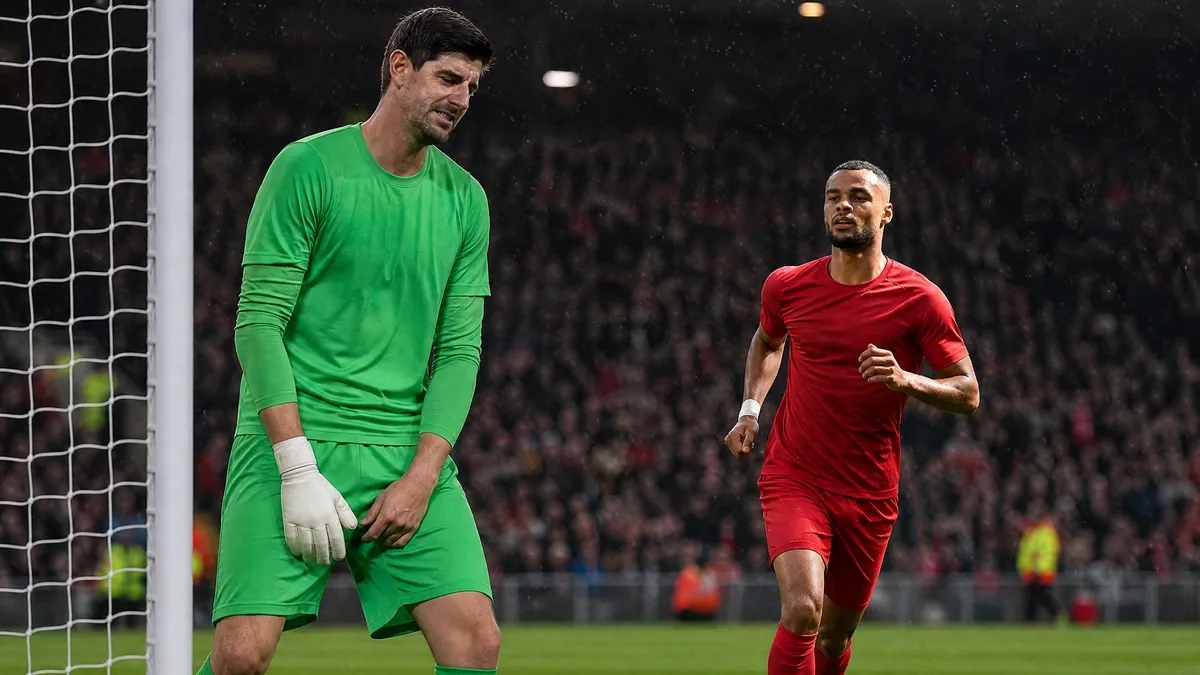
Belgium’s World Cup exit always felt like it would come down to fine margins, but losing Thibaut Courtois mid-game made it brutal. The Thibaut Courtois injury hit in the 71st minute against Spain, and you could see it straight away. He tried to push through, then the reality landed. A keeper’s confidence is half the battle, and Belgium’s whole back line looked shakier the moment he went down.
Courtois is more than a shot-stopper. He runs the box, sets the line, and calms the chaos when games get frantic. When a Real Madrid goalkeeper plays, defenders take risks because they trust the safety net. Take that away and the decision-making changes. Belgium had already been patching things up through this tournament, and the Thibaut Courtois injury just exposed how thin the margins were.
Senne Lammens coming on was always going to be a tough ask, and the error that led to Spain’s winner felt like the worst kind of football cruelty. One moment defines you, even if it should not. Spain smelled it, pressed the uncertainty, and punished it. Mikel Merino and company did what top sides do in knockout games: force the uncomfortable touch, make you play fast, and wait for the slip.
The bit that stuck with me was Courtois afterwards. He looked crushed, but he still went to Lammens and owned the moment like a leader. That matters in a squad that’s clearly at a crossroads. This Belgium World Cup exit is going to spark the usual questions about senior players and what comes next, including Courtois future with the national team. First, though, it’s medical checks and a nervous wait for Real Madrid.
Belgium looked like they had this quarter-final under control, then football did its usual thing. The whole night flipped the moment Thibaut Courtois went down. You could feel the nerves spread through the back line as Senne Lammens jogged on for his World Cup debut. Belgium still started well, pressed Spain’s build-up, and had them playing safe. But the margin was tiny.
The Senne Lammens World Cup error wasn’t just a bad touch, it was the kind of mistake that changes how both teams think. Spain instantly smelled blood. They stopped forcing passes and started putting Belgium under proper stress, pinning them with short combinations and second-ball pressure. Belgium’s defenders suddenly dropped a yard deeper, which is death against Spain because it gives their midfield time to pick angles.
By the last 20 minutes it felt like a game of who blinked first. Belgium still had moments, but the old “golden generation” control wasn’t there. The legs looked heavy, the decisions a beat late. Spain, for all the patience, had more clarity. When Mikel Merino popped up for the 88th-minute winner, it felt like the logical end of that pressure, not some smash-and-grab.
It’s harsh to hang a World Cup exit on one lad, but the Senne Lammens World Cup error will be the clip everyone shares. Courtois, the Real Madrid safety net, has saved Belgium so many times that losing him changed the whole emotional balance. Spain earned it with experience and game management, and now they get France in the semi-finals. Belgium, though, walk away with that familiar feeling of an era slipping out quietly.
Nicky Hayen heading to Burnley is one of those moves that tells you how quickly coaching stock can rise. For KRC Genk, it flips the mood from planning to firefighting, because timing matters. A KRC Genk coach replacement is not just a name on a press release. It sets the tone for pre-season, transfers, and how the squad buys into another set of ideas.
Hayen’s departure also raises the awkward question of identity. Genk usually wants proactive football, brave use of youth, and a clear pathway from the academy. Burnley will want structure and results fast, so Hayen’s next job will shape how Genk fans remember him. The Genk coaching search now has to balance patience with urgency, because Belgian clubs cannot afford a slow start.
Jess Thorup being a serious Jess Thorup candidate makes sense for two reasons. One, he knows the club and the league, which cuts the bedding-in time. Two, his CV since 2020 shows he can handle different environments, from FC Copenhagen’s pressure to Augsburg’s weekly grind. The risk is whether that “been here before” familiarity brings fresh energy or just a rerun.
In the short term, Peter Balette assistant duties alongside Domenico Olivieri is a steady, club-friendly bridge. It keeps training calm and stops the dressing room from drifting into uncertainty while the board negotiates. Still, interim setups can only do so much. The KRC Genk coach replacement needs to be locked in early enough to influence recruitment, especially if key players need convincing to stay.
Genk saying they are confident is fine, but the market is brutal and the best coaches get snapped up early. This is also Burnley coach news with a knock-on effect, because it signals Genk are a stepping stone again. If Thorup returns, it has to be with clear authority and a long-term plan. Otherwise, the next Nicky Hayen departure will be just around the corner.
The Cody Gakpo transfer news doing the rounds feels like two different stories glued together. On one hand you have the sensible bit: Liverpool’s winger has a long contract, a strong output, and a market that’s still paying silly money for elite forwards. On the other, the €360 million chatter is pure fantasy pricing, the kind you float when you do not actually want to sell.
That is the key context. Liverpool bought Gakpo for €42 million from PSV Eindhoven and have watched him grow into a reliable, flexible attacker. Fifty goals and 23 assists in 180 games is not “one-season wonder” stuff. He played his part in the 2024/25 title run, and under Arne Slot he fits the idea of wide players who can drift inside and finish moves.
But last season dipped, and it is impossible to ignore the human side. Diogo Jota’s death hit the squad hard, and you could see the emotional weight in performances across the group, not just Gakpo. When rhythm goes, confidence goes. Suddenly touches look heavy and decisions slow. That matters when clubs start circling, because form is the easiest lever to pull when you want a move.
Tottenham Hotspur interest makes sense if you strip away the headline numbers. Spurs need goals from wide areas and Gakpo gives you end product plus the ability to play across the front line. The reported £70 million asking price is the real conversation starter, not €360 million. For Liverpool FC, selling at that level only happens if they have a clear upgrade lined up, or if Gakpo pushes hard.
The Cody Gakpo transfer news also bumps into a bigger truth about the football transfer market. Contracts to 2030 are designed to kill bargains, not guarantee sales. Liverpool can wait, and they usually do. Spurs can dream, but they will need more than a big fee. They will need a sporting plan that convinces a top Dutch international he is not stepping sideways.
The Sven Mijnans PSV transfer feels like PSV doing the sensible thing after Ismael Saibari’s exit, not just grabbing a name. Saibari gave them legs and chaos between the lines, and that is hard to replace with one player. Mijnans is a different profile, more of a rhythm-setter. That matters in a side that often faces low blocks in the Eredivisie.
What I like is how clear he is about being a number 10. At PSV, that role can be a bit fluid under Peter Bosz. The “10” is asked to press, arrive in the box, and also link play when the wingers stay high. Mijnans saying he can do box-to-box work is basically him reading the room. Minutes come easier if you can play two jobs.
His AZ year is the real selling point. Doubling your output is not just “confidence”, it usually means better decision-making in the final third and more repeatable actions. AZ also gave him big-game reps, plus that trophy run, which is a different pressure to weekly league control. The Sven Mijnans PSV transfer is PSV betting that those habits scale up rather than reset.
Champions League is where we find out. PSV will not dominate every phase like they do domestically, so your attacking midfielder has to protect the ball and still hurt teams on the break. If Mijnans can receive on the half-turn and play early, he will fit. If he needs lots of touches, he might get squeezed. National team talk is fine, but at PSV you earn that by surviving Europe first.
Sadio Mane retirement feels like the end of a whole era, not just one player stepping aside. The timing hurts too. Senegal going out of the 2026 World Cup in the round of 16, 3-2 to Belgium, makes it feel final. Mane’s farewell letter hit because it sounded like a lad who gave everything, then finally exhaled.
With 130 caps, Mane became the reference point for Senegal. Even when his legs were not quite what they were at Liverpool, teams still built their plan around stopping him. That is what elite international players do. Two Africa Cup of Nations titles tells you the story. Senegal stopped being “talented” and started being “winners” with Mane leading the line.
Now the hard bit starts. Senegal have to regenerate without leaning on the comfort blanket of a superstar. That changes selection, tactics, and even dressing-room hierarchy. Who takes the big penalties? Who drags the tempo up when a game goes flat? It is not just about replacing goals. It is about replacing authority, and that takes time and a few awkward nights.
The Sadio Mane retirement also forces a rethink of how Senegal attack. For years, the outlet was simple: get it to Mane early, let him run, let chaos follow. Without that, the team might need more control and more combinations, especially against organised sides like Belgium. It could even open doors for a different profile up front, less explosive, more link play.
Mane saying he wants to stay involved is the best part of the news. Whether it is coaching, mentoring, or something in administration, Senegal could use his standards around the squad. He knows what it takes from youth level to the top. From Metz to Liverpool and beyond, he has seen every dressing room. International football retirement does not have to mean disappearing. It can mean building the next lot.
Joao Gomes transfer news has turned into a proper tug-of-war because Wolves going down changes everything. Relegation clauses, wage structures, ambition, it all comes to a head fast. Gomes is too good to spend a year chasing promotion, and Wolves will need sales to reset. That means the price is there to be negotiated, but the queue is real.
The Atletico Madrid angle is what makes this feel more concrete than the usual summer noise. A €45m agreement doesn’t get that far unless the player profile is nailed on. If it collapsed, it’s usually structure, timing, or Wolves trying to squeeze more once bigger clubs sniff around. Now Liverpool transfer news reads like they’re moving early to stop Manchester United getting a clear run.
From Liverpool’s side, Gomes fits the post-Klopp midfield logic: high volume ball-winner, quick to second balls, aggressive in duels, and tidy enough to play through pressure. He is not a pure controller, but he can be the legs next to one. His past comments about liking Liverpool matter too. Players do have preferences, especially when both clubs can offer minutes and money.
Manchester United transfer news here is tied to them stepping away from Ederson Silva. That suggests they still want a mobile No 8 who can cover ground and help the press, not just a passer. Gomes is a cleaner Premier League bet than many imports, and United have the pitch of being the missing piece in a rebuild. But if Liverpool have already made contact, this becomes about speed and clarity.
Wolves will point to the Andrey Santos-type market and argue midfielders with engine and bite are expensive now. The smart play for the buyer is add-ons and a sell-on, because Wolves need guaranteed cash but also want upside. For fans, the Joao Gomes transfer news is simple: Liverpool look like the club he wants, United look like the club that might pay most.
The Christos Tzolis Arsenal transfer noise makes sense when you look at Arsenal’s squad shape, not just the names. Arteta likes a left winger who can hold width, press hard, and still arrive in the box when the move swings to the far post. If Trossard really is tempted by Besiktas, Arsenal need a like-for-like option in terms of end product, not another project.
Tzolis’ numbers at Club Brugge jump off the page, but the interesting bit is how he got them. He wasn’t just padding stats against weak sides. Brugge used him in rotations where he could start wide, then drive inside to combine and finish. That blend of direct running and final action is exactly what Arsenal sometimes miss when the left side gets too tidy and predictable.
Still, the Premier League tax is real, and £35m as a record Greek fee is a proper bet. The Christos Tzolis Arsenal transfer would have to clear two tests fast: can he handle the tempo without losing his touch, and can he defend in Arteta’s system. Arsenal’s wingers do a lot of ugly work, tracking full-backs and protecting the half-space, not just waiting for the ball.
The timing matters too. This feels tied to Trossard’s decision, because Arsenal won’t want two players fighting for the same minutes if they also need to spend elsewhere. Romano saying Arsenal are in regular contact with Tzolis’ camp suggests they’re ready to move quickly once the exit door opens. If it lands, it is a statement Premier League signing: a scorer-creator profile, not a safe squad filler.
Xavi talking up Lamine Yamal talent hits different because he is not some ex-player doing pundit theatre. He has coached him, watched him train, and seen how quickly the kid absorbs instructions. When Xavi says “once in a generation” and mentions Messi, it is less about marketing and more about recognising the same rare thing: a winger who slows the game down for everyone else.
The bit about spotting him in a youth match matters. Plenty of prospects look good in academy football, but Yamal stood out through decision-making, not just tricks. A goal and two assists at 15 is nice, yet the bigger tell is calmness. He picks the right pass early, then attacks the space he has created. That is usually the last skill to arrive for young talent. His arrived first.
At Barcelona, that blend is gold. La Masia produces tidy players, but first-team football demands personality and risk management. Yamal plays like he understands when to keep the ball moving and when to go one-v-one, which is why coaches trust him. That is the core of the Lamine Yamal talent conversation. It is not only highlight reels. It is reliability in big phases of games.
Xavi is right to warn about Messi comparisons. They are lazy and they can mess with a teenager’s head. Messi was a whole ecosystem at Barça, built over years, and nobody should be asked to replicate that. Let Yamal be a different kind of star. His leadership gets mentioned for a reason. He already carries responsibility for Spain football, and the 2026 World Cup stage will test how he handles being the plan, not the surprise.
The scary part is the trophy timeline. If he is already stacking titles and major international wins before 20, the ceiling is basically about health and development choices. Barcelona need to protect his body and his joy, not just his minutes. If they do, Lamine Yamal talent could define the next era, without needing to borrow Messi’s shadow to look bigger.
Cody Gakpo transfer news is getting louder because Liverpool look like they are weighing up a proper squad reset, not just tweaking around the edges. Gakpo’s numbers, nine goals and six assists in 52 games, read like a player stuck between roles. He has played across the front line, pressed hard, done the running, but rarely owned a position the way top forwards have to.
That matters at Liverpool, where the wide forwards usually carry the goal threat and the central option links play without killing the box presence. Gakpo can do bits of both, which is the problem. When he is wide, he wants to drift in and combine. When he is central, he can look like a connector rather than a finisher. Liverpool transfer rumors make more sense when a player feels like a luxury rather than a cornerstone.
Tottenham Hotspur interest feels real because Spurs need a forward who can rotate across the line and still keep their football tidy at speed. If they are building around a high-tempo style, Gakpo’s ball security and pressing fit. The question is output. Spurs cannot carry another attacker who looks nice but does not decide matches often enough, especially if the fee tracks his Gakpo market value around €60m.
Manchester United Gakpo is the spicier link, and also the one that usually dies on the rivalry rocks. United have historically avoided shopping straight from Liverpool, and Liverpool do not love strengthening a direct rival. Still, the summer transfer window makes clubs pragmatic when the right profile appears. United also being linked with Crysencio Summerville hints they want more direct wing threat, which might push Gakpo into a ‘versatile option’ bracket rather than a headline buy.
Contract-wise, Liverpool hold the cards. A deal to 2030 means they do not need to sell, so Cody Gakpo transfer news only becomes real if the player wants a clearer role and a club meets Liverpool’s price. The next few weeks will tell us whether Spurs go big, or whether United test the waters and find the door firmly shut.
Belgium’s 2-1 loss to Spain felt like more than a World Cup exit. It felt like the end of a cycle, and the quotes afterwards backed that up. The Belgium national team futures chat is suddenly real again because the two faces of the last decade, Kevin De Bruyne and Thibaut Courtois, are both talking like lads who have finally hit the wall.
De Bruyne’s situation is pretty straightforward. He’s 35, he’s had hamstring surgery late in 2025, and he’s basically saying his body needs a reset. Belgium have leaned on him to solve games with one pass for years, even when he’s running on fumes. If he steps away, it is not drama. It is a veteran choosing longevity over another summer of rehab and rushed returns.
Courtois is different because his decision sounds political as well as physical. He picked up a quadriceps injury during the tournament, and now he’s pointing towards talks with the Belgian FA and Rudi Garcia. That hints at role clarity, communication, and trust. Goalkeepers can go longer than outfield players, but only if the environment feels stable. A year-long hiatus would not be shocking.
This is where Belgium football has to be honest about where it is. The golden generation argument is tired, but the consequences are not. If both De Bruyne and Courtois pause or stop, Belgium national team futures depend on building a team that wins without leaning on old rescue acts. That means clearer patterns in possession, more responsibility shared across the midfield, and a keeper plan that is more than “hope Thibaut is fit.”
Garcia and the FA have a narrow window to handle this well. If they treat it like a rebuild, they can sell a proper transition and keep the door open for cameo returns. If they cling to the past, they risk losing both players and the dressing room mood. After this World Cup exit, Belgium national team futures should be about the next two years, not the last ten.
Spain’s 2-1 over Belgium felt like one of those nights where the scoreline tells you the basics, but not the real story. The real swing came from the Lamine Yamal performance on the right. No goal, no assist, still Man of the Match, and it made sense. Belgium never got comfortable because every Spain attack had that little threat of chaos.
What stood out was how Yamal used the ball, not just that he could beat a man. Four successful dribbles is nice, but it was the timing that hurt Belgium. He waited for the full-back to set, then went, which pulled a second defender across and opened lanes for runners inside. That 0.33 xA chance creation number backs up the eye test. He kept Spain moving forward.
Cesar Azpilicueta’s comments landed because they were basically the grown-up version of what we all think watching him. The Lamine Yamal performance is already match-shaping, but the next step is turning dominance into numbers. Not because he is selfish, but because knockout football is cruel. If you do the hard work, you need something on the board before the game flips on one counter or set piece.
France is the perfect stress test. They will sit in a compact block, then spring wide areas with pace, so Spain’s wingers have to defend transitions as much as they attack. That’s where Yamal’s decision-making matters. If he keeps beating the first man but also releases the ball early when the trap comes, Spain can tilt the pitch. Another Lamine Yamal performance like this could decide the whole tournament.
Lamine Yamal talking up Spain’s chances is not just teen swagger. It lands because Spain have earned the right to believe. The 2-1 over Belgium felt like a grown-up win, not a highlight reel. They managed the tempo, suffered at the right times, and still found moments to play. It sets a proper stage for a Spain World Cup semi-final that has been a long time coming.
Yamal getting Player of the Match matters, but not for the trophy. It matters because his best games now look like full winger performances, not just tricks. He holds width, pins the full-back, then picks the moment to come inside. That gives midfielders like Fabián Ruiz and Mikel Merino clearer passing lanes and second-ball positions. Spain’s attack looks less like a puzzle and more like a plan.
His line about not caring for goal stats is also a quiet dig at the noise. Spain do not need him to be a nine. They need him to tilt the pitch. If France double him, Spain can play through the middle. If France leave him isolated, he can carry them 30 metres and win set pieces. In a Spain World Cup semi-final, those small wins can decide everything.
Spain’s recent record against France is a real psychological edge, but only if they treat it properly. France can change personnel and still look like France. Fast transitions, big moments, and ruthless finishing. Spain’s task is to stop the first pass after they lose it. That means Merino and Ruiz have to be brave without getting dragged into fouls and counters.
The bigger point is legacy. Spain have not reached a World Cup final in 16 years, and this Spain vs France tie is the sort of night that defines a generation. Yamal’s confidence helps, but the real strength is the collective. If Spain control the rhythm and keep their wide threats alive, the Spain World Cup semi-final can finally feel like a step forward, not a throwback.
Spain vs Belgium World Cup 2023 had that familiar Spain feel. The ball belonged to them, the tempo belonged to them, and Belgium spent long spells chasing shadows. But it never felt comfortable, because when you dominate possession you also invite that one moment where the game flips. Spain’s control was real, yet it still needed sharp decisions in the box and a bit of help from the goalkeeper.
The opener summed up the pressure. Spain forced Belgium to play out, Courtois hesitated, and Fabian Ruiz punished it. It was not just a keeper mistake, it was the consequence of Spain’s constant squeezing of space. Ruiz has been brilliant at arriving late and striking cleanly, and here he looked like a Napoli midfielder who’s totally at ease dictating rhythm and then breaking it with one action.
Belgium’s equaliser mattered because it finally tested Spain’s defensive record. Charles De Ketelaere’s header was simple but well-timed, and it showed Belgium’s best route was direct and early into the box. Spain had been able to defend most of the tournament in front of its back line. This time they had to defend the goalmouth, and that is a different kind of stress in World Cup quarter-finals.
Then came the Mikel Merino goal, and it felt like a player in form taking control of a tight match. He has now delivered decisive contributions in back-to-back games, and it’s not luck. He reads second balls well, he attacks the rebound, and he stays calm. Courtois will hate the late error, but Spain earned the moment by piling on pressure until Belgium cracked.
Spain vs Belgium World Cup 2023 also sets up a proper semi-final with France, and it’s a fascinating clash of styles. Spain will back their possession and chance volume, but they have now shown they can concede from one good delivery. Against France, those moments multiply. Spain’s upside is clear though. They create, they keep coming, and they look mentally tough when the script stops being perfect.
Spain’s 2-1 over Belgium was one of those wins that tells you more about a squad than a system. They had to manage momentum swings, defend their box properly, and still keep enough composure to play through pressure. Luis de la Fuente didn’t just praise a substitute for the cameras. He basically pointed to Mikel Merino Spain as the kind of profile that makes his whole idea work.
Merino’s impact off the bench wasn’t about one Hollywood moment. It was about stitching phases together when Belgium tried to turn it into a transition game. When Spain needed an extra body to secure second balls, he was there. When they needed a calmer third-man option to keep possession moving, he offered it. That is why Mikel Merino Spain keeps coming up in these conversations. He gives you control without slowing you down.
De la Fuente calling him “tailor-made” makes sense if you watch how Spain want to solve problems. They ask midfielders to cover wide spaces, press in short bursts, then arrive in the box like a late runner. Merino can play as an eight, a deeper controller, or even tilt left to help the full-back. That versatility is not just handy. It lets Spain change shape mid-match without making a sub every time.
Now it’s France in the World Cup semi-finals on July 14 at Dallas Stadium, and the margins get even tighter. France will test Spain’s rest defence and punish loose passes with pace. That is where Merino impact could matter again, whether he starts or finishes it. If Spain want to build on recent success against the 2018 world champions, they will need legs, discipline, and midfielders who can do two jobs at once. Merino fits that brief.
Keep an eye on the transfer market as Gakpo's future unfolds. And don’t miss the World Cup semi-finals as Spain takes on France next.

Julian Mercer is a lifelong student of the game whose passion for football was sparked at an early age, after stepping onto the grass of Camp Nou as a six-year-old — a moment that left a lasting impression and set him on a permanent path into the sport. Since then, football has been both his lens on the world and his favourite language. Blending traditional fandom with a deep interest in tactics, squad building, and long-term team development, Julian has spent decades analysing the game from every angle. His fascination with football strategy was further shaped through years of immersive play in Football Manager, a series he has followed since the mid-1990s, developing a sharp eye for patterns, player profiles, and the fine margins that define success. At My World Of Football, Julian focuses on the stories beneath the surface — from tactical evolutions and managerial philosophies to the narratives that connect clubs, players, and supporters across generations. His writing aims to balance insight with accessibility, always grounded in a genuine love for the game.
Continue reading more football news