AI-generated image
Football News Today: Kane shines as England eyes glory
England dreams of World Cup victory as Kane shines. Aston Villa looks at Balogun while PSV eyes talent after standout performances.
England dreams of World Cup victory as Kane shines. Aston Villa looks at Balogun while PSV eyes talent after standout performances.
Happy July 8, football fans! Today, we’ve got some exciting stories coming out of the Premier League and the World Cup. Harry Kane is turning heads with his form, making England fans dream big. Aston Villa is eyeing Balogun as they look to strengthen their squad. Plus, the buzz around Messi in the World Cup continues. Let’s dive into the latest updates and see what everyone is talking about.
Aston Villa transfer news is starting to feel like a proper Champions League hangover, even if it is Europa League on the calendar. You can see why Balogun’s name pops up. Villa are one Watkins knock away from a problem, and the fixture load is only getting nastier. But Stan Collymore’s point lands. Emery does not usually chase a moment. He chases repeatable output.
Balogun has the tools. Quick across the ground, sharp when the box gets messy, and he can run channels so Watkins is not doing every sprint on his own. The doubt is role and cost. If Monaco want a big fee, Villa have to ask whether that money buys goals or just optionality. Emery’s system needs pressing, timing, and reliability more than a highlight reel.
That is why the wider squad matters in this Aston Villa transfer news cycle. Collymore banging on about wide players is not random. Villa’s best version under Emery stretches you, then attacks the half-spaces with runners arriving on time. If the service into Watkins is inconsistent, a second striker does not fix the root cause. A proper wide threat, plus depth, can turn Watkins from busy to lethal.
Then there is the Morgan Rogers noise, with Arsenal supposedly sniffing around a record fee. If Villa cash in, it changes the summer signings plan fast. Emery could spread that money across two or three starters rather than one big swing at Balogun. And in goal, Zion Suzuki is the kind of move that fits the manager’s logic. Better distribution, calmer build-up, fewer chaotic moments.
So Balogun is interesting, but not essential. Villa’s bigger need is to raise the floor across the XI so Watkins gets more chances and fewer lonely nights. If the club can add a wide starter, a goalkeeper upgrade, and one flexible forward who can play with Watkins, that feels more Emery than chasing the latest World Cup bump. Aston Villa transfer news should be read through that lens.
The World Cup quarter-finals 2026 feel like someone’s quietly changed the rules while we were looking at our phones. No Germany, no Netherlands, no Italy, no Brazil. That combo missing at this stage would have sounded impossible not long ago. It is not just a weird bracket either. It is the clearest sign yet that international football dynamics have shifted for good.
Morocco reaching another deep run is not a fluke story anymore, it is a system story. Their best players are baked in elite environments early, then they bring that level back to the national team. Achraf Hakimi at PSG is the obvious example, but it is broader than one star. The same logic helps Switzerland and Belgium, who have built squads that look like Champions League sides, not underdogs.
Norway are the most interesting of the emerging football nations because they are not winning with chaos. They are winning with a clear plan built around elite match-winners. Erling Haaland changes games even when service is poor, and that matters in tournament football. The old football powerhouses used to have that edge everywhere on the pitch. Now it is more evenly spread, and the gap in “big game” experience is smaller than it used to be.
The Champions League impact sits underneath all of this. Over the last two decades, the European Cup became the weekly standard for intensity, tactics, and squad depth. The World Cup history used to be about nations peaking every four years. Now it is about which national team can best copy club automatisms in a short camp, then manage bodies. That is why the World Cup quarter-finals 2026 look like a reshuffle, not a shock.
Fan engagement has shifted too. Players live in a club-first world, then drop into national duty with different expectations and a louder, more personal spotlight. Lionel Messi’s era showed how one player can carry a nation’s emotional weight, but also how exhausting that relationship can be. If FIFA want the World Cup quarter-finals 2026 to be the start of something, not just a novelty, they may need to rethink scheduling and squad rules so the best players arrive fresh and invested.
Patrice Evra talking up the Michael Olise rise in soccer lands because it matches what you see with your own eyes. Olise plays like the noise does not reach him. At Bayern Munich, that matters. The shirt can chew up wingers who chase moments. Olise picks moments. He slows the game, takes the safe pass, then suddenly slips a runner in behind.
The numbers tell you he is not just a tidy link player anymore. Twenty goals and twenty assists in 2025-26 is elite output for a Bayern Munich winger, especially one who is still learning the rhythms of a new league. Bundesliga full-backs do not give you freebies. The jump from Crystal Palace transfer buzz to delivering weekly in Munich is the real step in the Michael Olise rise in soccer.
His path matters too. Reading gave him reps, Palace gave him responsibility, and Bayern gave him pressure. That sequence builds a different kind of winger. At Palace he had to create with limited support, so he learned to protect the ball and wait. At Bayern he has runners everywhere, so his decision-making gets tested. Evra’s point about humility is basically code for “do not start believing your own highlights.”
Real Madrid interest at a reported €223 million is the sort of number that changes how people talk about you. It also changes how opponents play you. Suddenly every right-back wants to “make a name” and every bad touch becomes a clip. If Madrid are serious, the best thing Olise can do is keep his game boring in the best way. Simple choices, repeatable actions, no chasing headlines.
And then there is World Cup 2026. If Olise ends up alongside Kylian Mbappe with France, the spotlight goes nuclear. That is where Ballon d’Or potential becomes real, not as a fantasy but as a consequence of big games. The Michael Olise rise in soccer now depends on consistency under chaos. Evra has seen that movie. Stay calm, stay fit, keep learning.
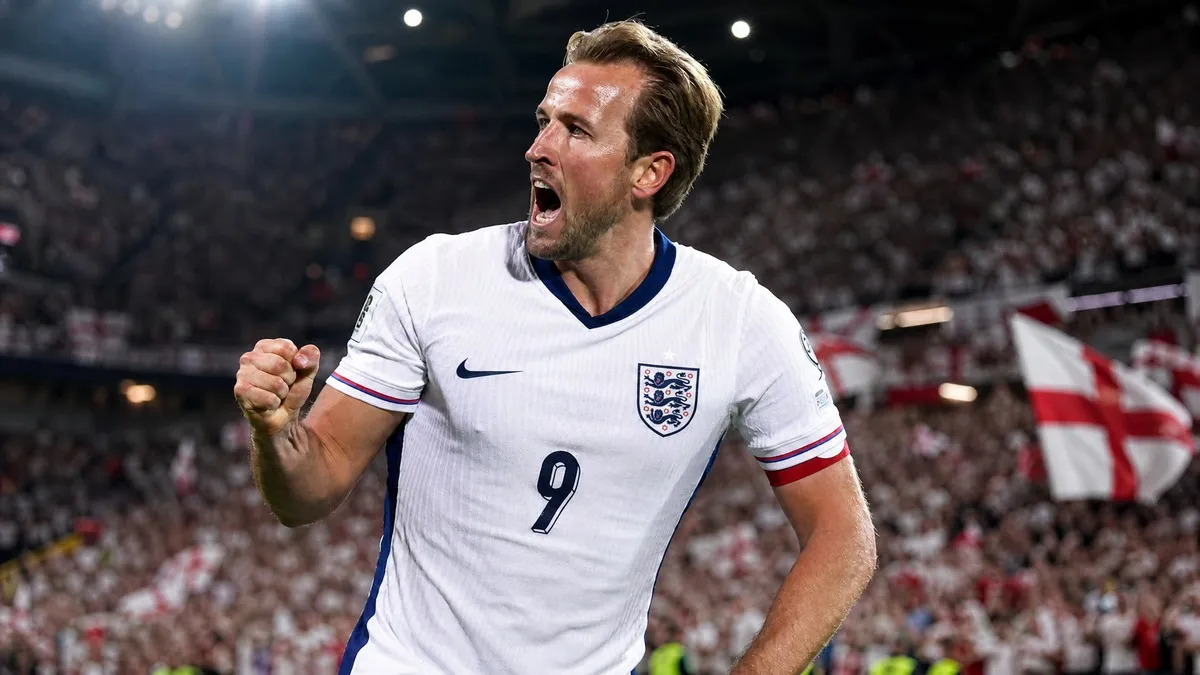
Harry Kane World Cup 2026 has turned into a reminder that elite finishing is still the hardest thing to coach and the hardest thing to stop. Six goals already is not just a hot streak. It is the product of a striker who reads danger quicker than centre-backs and who stays calm when everyone else rushes. England are in the quarters and it feels like Kane is dragging the whole attack into rhythm.
Des Walker saying the only way to stop him is to kick him is obviously tongue-in-cheek, but it lands because you can see how few clean solutions there are. If you step tight, Kane rolls you and wins the foul. If you drop off, he gets that half-yard to set and shoot, or he clips the pass into runners. That all-around game is why his Kane goals never feel accidental.
The Bayern Munich move in 2023 looks even smarter now. He has played in bigger games every month, against teams that press hard and defend deep, and he has had to be more than a penalty-box finisher. That 146 in 147 line is ridiculous, but the real carry-over to England football is his sharper timing and his willingness to link play early, then arrive late like a second wave.
The Kane and Jude Bellingham partnership is the bit that should worry Norway. Bellingham’s runs force defenders to turn, and Kane loves that moment when a back line loses its shape. If Norway sit in, England need Kane to pin the centre-halves and keep the ball moving quickly. If Norway push up, Kane’s first touch and early passing can break them. Harry Kane World Cup 2026 might come down to which version Norway choose to face.
There is also a psychological edge now. Kane has 85 for England and he looks like a captain who knows exactly what games like this demand. In World Cup quarter-finals, chances shrink and patience matters. England do not need chaos. They need control, set-pieces, and one big moment. With Kane in this form, that moment always feels close.
The Jordan Henderson injury is one of those freak World Cup moments you never see coming. England beat Mexico 3-2, the place is bouncing, and then the captain ends up in surgery because of a slip over the advertising boards. It is not a training-ground strain or a bad tackle. It is pure chaos after the whistle, and it instantly changes the mood around a big win.
From Brian Henderson’s side, you get the bit fans forget. Families sit at home in the UK waiting for scraps of info while the medical staff do their thing. That shock is real because an arm injury looks dramatic, and “fracture” usually means plates, screws, and weeks of recovery. The surgery update and the cast confirm it is not a quick patch-up job.
On the pitch, England’s bigger issue is what the Jordan Henderson injury does to their structure. He is not just a name, he is a reference point for pressing triggers and game management when matches get messy. Without him, you ask others to do the boring leadership stuff: slowing it down, talking refs, keeping shape. Harry Kane can lead, but he is also the finisher. That is a different load.
Now it is Norway in the World Cup quarter-finals, and that is no free hit after they dumped Brazil. If Erling Haaland gets service, he turns half-chances into goals, so England’s midfield screen matters even more. Jordan saying he will support from the sidelines is nice, but England need someone to replace his voice on the grass. The Mexico match showed they can score, but they cannot afford loose moments now.
Sean Steur transfer news has landed with a proper double-take feel because Ajax usually keep this type of midfielder for at least one big season. But the clue is in the timing. If Jordi Cruijff would not give him a clear run of starts, Steur’s camp has basically said fine, we’ll take the Premier League route now. That is bold, and it tells you he thinks he is ready.
The money explains why Ajax aren’t digging in. €24 million plus €3 million in bonuses is serious for a young midfielder who still has to prove week-to-week output, and the 12.5% sell-on clause is classic Ajax risk management. If he pops at Newcastle United, they get paid twice. It also hints Ajax believe the ceiling is high, even if the short-term fit under Cruijff was messy.
From Newcastle’s side, this is not a Tonali replacement, and it does not need to be. Tonali is a tempo-setter with elite habits. Steur looks more like a long-term squad shaper, someone who can learn the league while offering legs, ball-carrying, and rotation minutes when the schedule gets heavy. The fact he is joining first-team preseason on July 13 matters. They want him embedded early.
The hard part is the depth chart. Bruno Guimarães is the hub, and he is not moving. Joe Willock has his own role when fit, and Newcastle tend to pick midfields that can run and press for 90 minutes. Sean Steur transfer news sounds exciting, but he will need a clear “why him” to get minutes: either he offers more control in possession, or he becomes the first option when Newcastle want to play faster through midfield.
This is also a bet on development pathways. Ajax usually offer minutes as education, while Newcastle offer intensity and exposure. If Steur embraces the physical side and keeps his decision-making tidy, the fee will look smart. If he needs constant starts to grow, he might find the Premier League is a harsh classroom. Either way, this move screams ambition.
The Haissem Hassan PSV transfer news chatter makes sense if you watched Argentina vs Egypt. He played like a winger who wants to be remembered. Quick feet, brave touches, and that slalom dribble before the disallowed goal was proper street football. PSV Eindhoven love wide players who can break a block on their own, especially when teams sit deep in the Eredivisie.
But the numbers are the awkward bit. Hassan has not scored in LaLiga, and Real Oviedo going down doesn’t help the optics. Still, context matters. He has produced in lower divisions, and his profile is more creator than finisher. At 24, he should be entering his best years, yet he is still searching for a stable platform after spells around Villarreal and loans.
That’s why the Haissem Hassan PSV transfer news feels like monitoring rather than a move that’s already warming up. Rik Elfrink’s read is sensible. PSV don’t need to buy just because a winger had a hot international moment. The squad already has options, and the club usually prioritises clear upgrades or specific roles, not impulse signings off one highlight.
Everything hinges on exits. If Couhaib Driouech or Esmir Bajraktarevic is sold or loaned, then PSV Eindhoven suddenly need a wide player who can carry the ball and create separation. Hassan fits that need, and his World Cup performance will have nudged his price up, plus his agent’s confidence. PSV will try to keep leverage by waiting, but relegation at Real Oviedo could also open a cheaper door.
The smart bet is PSV keep him on the list, keep talking, and only move if the market forces their hand. That’s how they’ve operated at their best: sell well, replace fast, and target players with one elite trait they can polish. Hassan’s elite trait is clear. The question is whether his end product catches up quickly enough in Eindhoven.
Tottenham going hard for the Michele Di Gregorio transfer Tottenham story tells you this summer is not about “a couple of tweaks”. It is a full reset with Roberto De Zerbi trying to build a squad that can play his way every week. After big money on Sandro Tonali and Mateus Fernandes, plus free deals like Andy Robertson and Martin Dubravka, the next big question is who actually starts in goal.
If Vicario is genuinely at risk of leaving, Spurs cannot drift into August hoping it sorts itself out. De Zerbi’s teams ask the keeper to be brave, take touches, and find the spare man under pressure. That is not just “distribution”. It is decision-making at speed. The Michele Di Gregorio transfer Tottenham angle makes sense because it signals a keeper chosen for style, not just shot-stopping highlights.
Di Gregorio being valued around €15m is the kind of fee that makes you think Spurs are looking for value and upside, not a headline name. Juventus goalkeeper news is always noisy, but if Juve are open to business, Tottenham should move quickly. Dubravka feels like cover, not a long-term No 1. A younger starter who fits the build-up template is the real need.
What makes this interesting is how it links to the rest of the Spurs transfer strategy. If you are chasing Savinho and looking at Eli Junior Kroupi, you are planning for a team that pins opponents back and attacks in waves. That only works if the keeper helps you keep the ball and reset attacks. The Michele Di Gregorio transfer Tottenham push would be another step toward a proper “De Zerbi XI”, not just more bodies.
PSV transfer news has moved fast since Ismael Saibari’s Bayern switch, and the club’s response was sharp: Sven Mijnans in from AZ. It is not a like-for-like replacement, but it does give Peter Bosz another midfielder who can keep the ball moving at tempo. Mijnans has played in structured systems and won’t panic when pressed, which matters in Europe.
What this PSV transfer news really tells you, though, is that the next move has to be at left-back. Anass Salah-Edinne going back to Roma leaves a proper hole, not just in minutes but in balance. Bosz wants width and bravery from his full-backs, and when that role is filled by a stopgap, the whole left side gets predictable. In big games, that is where opponents lean.
Mauro Júnior being floated with a €12m buyout clause is interesting because it feels like the cleanest deal on the board. PSV know him, he knows the league, and he can play multiple roles without the level dropping off a cliff. The downside is obvious too: if Fenerbahçe and Porto are sniffing around, the wages and the promise of being a nailed-on starter might get complicated quickly.
Zakaria El Ouahdi is the tougher negotiation. Genk pricing him above €15m is not shocking in this market, but PSV have to decide if that is “starter for years” money or “nice option” money. El Ouahdi brings athleticism and proper duel-winning, yet paying top price means you need certainty. That is why PSV signings often end up being surgical, not splashy.
Other names have popped up, but the path looks messy. Quilindschy Hartman heading to Espanyol takes one realistic Eredivisie option off the table, while Lutsharel Geertruida is the kind of deal that snowballs into a bidding war and a salary jump. So the pressure is on: PSV transfer news will keep circling, but the best outcome is simple. Get a left-back who starts immediately and makes the whole XI feel settled.
The Jesse Derry loan transfer to Sporting CP is one of those moves that tells you Chelsea are trying to calm things down, even if the club still feels noisy. Fabrizio Romano’s update that there’s no buy option matters. Chelsea are basically saying, “Go play real minutes, then come back.” With Chelsea covering his salary, it’s also a statement of responsibility, not a fire sale.
Sporting is a smart landing spot for an England Under-19 lad because it’s a club that actually trusts young players in competitive games. That’s the difference. At Chelsea, even the promising kids can get swallowed by constant squad churn and pressure for instant results. The Jesse Derry loan transfer gives him a defined year, a clear role, and a league where technical players can grow without being kicked out of rhythm every week.
It also sits in the context of a messy season where finishing tenth felt like the final symptom, not the disease. Manager changes, mixed recruitment, and a squad that never looked settled. If you’re a young winger or forward trying to learn timing and decision-making, that chaos hurts. A Sporting CP transfer on loan is basically a controlled environment, and Chelsea need more of those pathways.
John Terry popping up to say he should have been considered for the interim job is classic Chelsea nostalgia, but it lands because the club has looked like it’s searching for identity. Terry’s point about English managers getting boxed out is fair, even if the interim call is usually about short-term stability. Still, it highlights the same theme as the Jesse Derry loan transfer: Chelsea are trying to find structure in a place that’s been reactive.
Then you’ve got the background noise, like Enzo Fernandez rumors and links to big-name signings. That’s Chelsea, always. But loans like this matter because they’re the quiet part of squad-building. If Derry comes back sharper, tougher, and ready to contribute, it saves money and spots in the squad. If not, at least the club learns something real, not just from training clips.
Julian Ryerson transfer news feels like the kind of link that makes sense if United are finally getting serious about the boring stuff. Full-back depth has been a problem for ages, and Dortmund’s Ryerson is exactly the sort of reliable, two-way defender you can plug in without rebuilding the whole system around him. At around €30m, it is not cheap, but it is not fantasy-money either.
Ryerson’s World Cup performance for Norway did a lot of the marketing, but the real appeal is his versatility and edge. He can play either side, he runs all day, and he defends like it matters. United have had too many games where the wide areas collapse under pressure, especially when the winger in front stops tracking. A Borussia Dortmund defender with that work rate changes the mood of a back line.
The Ederson transfer from Atalanta is an interesting first move because it hints at a more functional midfield. If Ederson comes in to cover ground and win duels, it frees the full-backs to be braver without leaving the centre-backs exposed every time possession turns over. That is where Julian Ryerson transfer news connects to the bigger plan. It is not glamorous, but it is how you start controlling matches again.
Then you have the Tchouameni Manchester United chatter, which is the opposite end of the spectrum. He is elite, but the salary and negotiation hurdles are real, and Real Madrid do not sell easily unless the deal suits them. INEOS Manchester United needs to decide where the line is between ambition and distraction. If you can land Ryerson and a couple more sensible Manchester United signings, you might actually build a squad that works week to week.
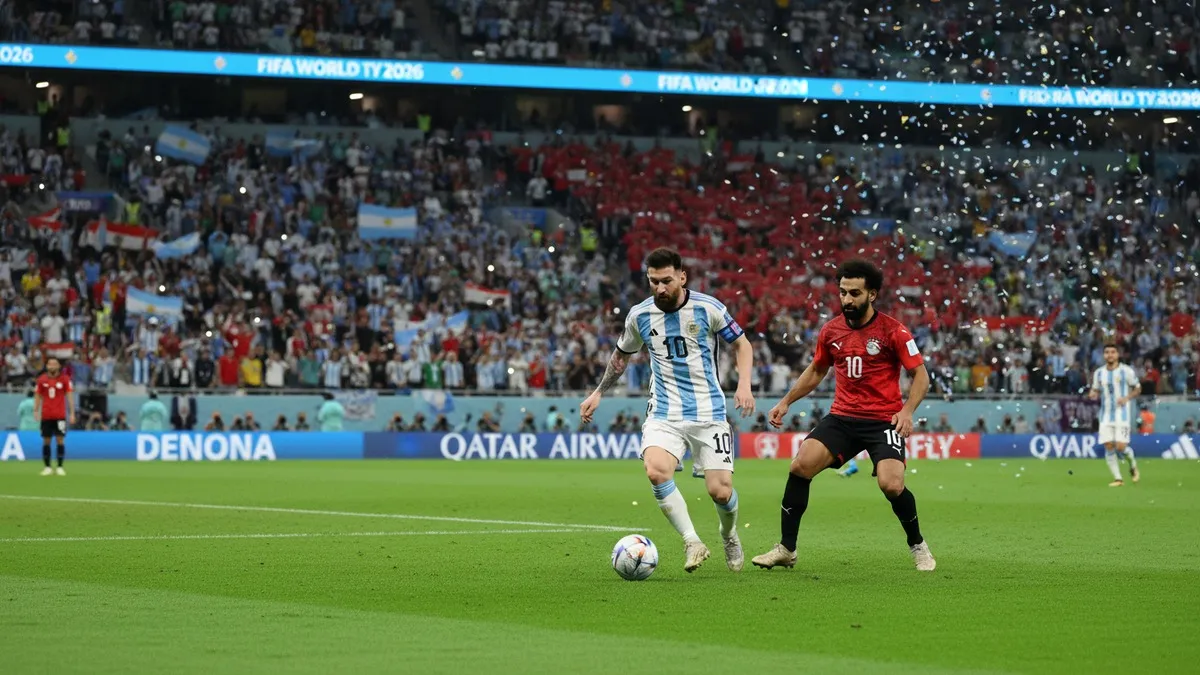
Zlatan’s point lands because we have all watched this film before. Lionel Messi Argentina World Cup nights can feel like a one-man rescue mission, and the 3-2 comeback against Egypt was another episode. He sets up Cristian Romero, then drags them level himself, then Argentina nick it late through Enzo Fernandez. It is brilliant, but it is also a warning sign.
Ibrahimovic comments were blunt: Messi is doing Messi things, but too many around him are passengers until the panic hits. That is the real issue, not whether Messi still has it. He clearly does. The question is whether Argentina can control games without waiting for a moment of magic. Against better sides, you do not always get the time or the space for a superhero finish.
Thierry Henry’s amazement is fair too. Messi’s output at this Lionel Messi Argentina World Cup is ridiculous, and leading the Golden Boot race with eight goals tells you the level. But goals can hide structural problems. When your best player is also your main chance creator, main finisher, and emotional battery, the team shape starts bending around him. That can make everyone else hesitate.
Switzerland in the quarter-finals feels like the exact type of opponent that punishes that hesitation. They sit in, they stay compact, and they love a game where you get frustrated and start forcing passes. Argentina need more runners beyond Messi, more midfielders taking responsibility, and braver wide play to stretch the block. If it turns into “give it to Leo and hope,” Zlatan’s warning gets louder.
Messi’s international numbers, 125 goals in 204 caps, already put him in a different category. But the best version of this story is not Messi dragging Argentina over the line again. It is Argentina sharing the load so Messi can pick his moments, not play every role. If they do that, the Lionel Messi Argentina World Cup narrative becomes about a team, not a lifeboat.
The Daley Blind Ajax return felt less like a nostalgia lap and more like someone turning the lights back on at De Toekomst. In his first Ajax training session he was already the loudest organiser, stopping little errors before they became habits. You could see why coaches love him. He doesn’t just talk. He points, checks shoulders, and makes sure everyone is on the same page.
What stood out in the reports was how quickly Blind went to the younger lads. Dies Janse and Mokio got constant nudges about body shape, distances, and when to step or hold. That matters because Ajax ask defenders to make decisions in open grass, not in a low block. Blind coaching teammates is basically an extra coach on the pitch, and it reduces the panic when the press gets broken.
Míchel leaning on him for tactical clarity is telling. New coaches always have ideas, but ideas die if the group can’t translate them into simple triggers. Blind has lived through different Ajax cycles, different pressing schemes, different build-up patterns. He can turn a long instruction into one sentence the back line understands. That is the real value of the Daley Blind Ajax return, especially early in a season.
Yeah, the speed question is real. Ajax get dragged into sprints when the full-backs fly on and the counter comes straight down the middle. Blind will need protection: smart rest defence, a quicker partner nearby, and midfielders who actually stop transitions. But his reading of danger buys time, and his communication keeps the line connected. Fans are excited because leadership like that has been missing.
Estadio Banorte 2026 FIFA World Cup is not just a venue slot on a schedule, it is the tournament planting its flag in football history. This is the old Estadio Azteca, the place that already carries 1970 and 1986 in its bones. Giving it the opening game feels like FIFA admitting that some stages matter as much as the teams.
The stadium renovations are the real story underneath the nostalgia. Pushing capacity towards 90,000 changes the noise, the sightlines, and the logistics, not just the headline number. The challenge is keeping the bowl’s intimidation while modernising everything fans actually touch: concourses, toilets, entry points, and safety flow. If they get that balance right, Estadio Banorte 2026 FIFA World Cup becomes a proper home advantage for the host city.
Getting there will shape the matchday experience as much as the build. Public transport to Estadio Banorte matters because Mexico City traffic can ruin even the best plan. The Metro and Light Rail give fans a fighting chance to arrive on time and leave without a two-hour crawl. For a World Cup opener, that reliability is huge, especially for neutrals trying to soak it in.
Then there is the fan culture outside the gates. Mexican cuisine near Estadio Banorte is half the point of going, from quick stadium concessions to proper street food and local spots where you can make a full pre-match of it. The only downer is FIFA World Cup tickets drying up after lotteries. If you are serious about Estadio Banorte 2026 FIFA World Cup, you plan early, or you accept you are watching from a packed bar.
Toronto getting six matches at BMO Field World Cup 2026 feels like a proper statement, not just a box ticked on a host map. Canada’s opening game there matters most. You want that first whistle in a ground that feels tight, loud, and familiar, not a soulless bowl. BMO already has that MLS edge, and the city knows how to do big event days.
The big talking point is the stadium upgrades. BMO Field has lived a few lives already, from 20,000 in 2007 to roughly 30,000 after renovations, and now the plan is 45,000 for the FIFA World Cup. The tricky bit is keeping the place feeling like BMO while adding temporary seating, hospitality, and media space. If they get sightlines and concourses right, it can stay punchy.
What helps is the venue’s track record. Toronto FC have made it a proper home, and those MLS Cup finals proved the place can handle pressure and big crowds. The Toronto Argonauts sharing the site also means the stadium ops team has experience turning it around fast and managing different fan flows. That matters in a tournament where every matchday schedule is tight.
Getting in and out will decide a lot of the matchday experience. The good news is public transit is genuinely usable here, with TTC links and GO Transit options that can take the strain off the roads. For visiting fans, that’s huge because World Cup crowds do not forgive messy transport plans. The nearby bars and food spots help too, since everyone will want somewhere to queue up pre-match.
On tickets, it’s the same advice every tournament: stick to official channels and be suspicious of “too easy” resale offers. BMO Field World Cup 2026 demand will be wild, especially for Canada’s opener. If you’re planning the trip, build your day around transit, arrive early, and treat the stadium upgrades as part of the story. It’s Toronto’s biggest football moment in decades.
Keep an eye on the World Cup action today. As the quarter-finals unfold, expect surprises and thrilling matches. Don't miss it!

Julian Mercer is a lifelong student of the game whose passion for football was sparked at an early age, after stepping onto the grass of Camp Nou as a six-year-old — a moment that left a lasting impression and set him on a permanent path into the sport. Since then, football has been both his lens on the world and his favourite language. Blending traditional fandom with a deep interest in tactics, squad building, and long-term team development, Julian has spent decades analysing the game from every angle. His fascination with football strategy was further shaped through years of immersive play in Football Manager, a series he has followed since the mid-1990s, developing a sharp eye for patterns, player profiles, and the fine margins that define success. At My World Of Football, Julian focuses on the stories beneath the surface — from tactical evolutions and managerial philosophies to the narratives that connect clubs, players, and supporters across generations. His writing aims to balance insight with accessibility, always grounded in a genuine love for the game.
Continue reading more football news