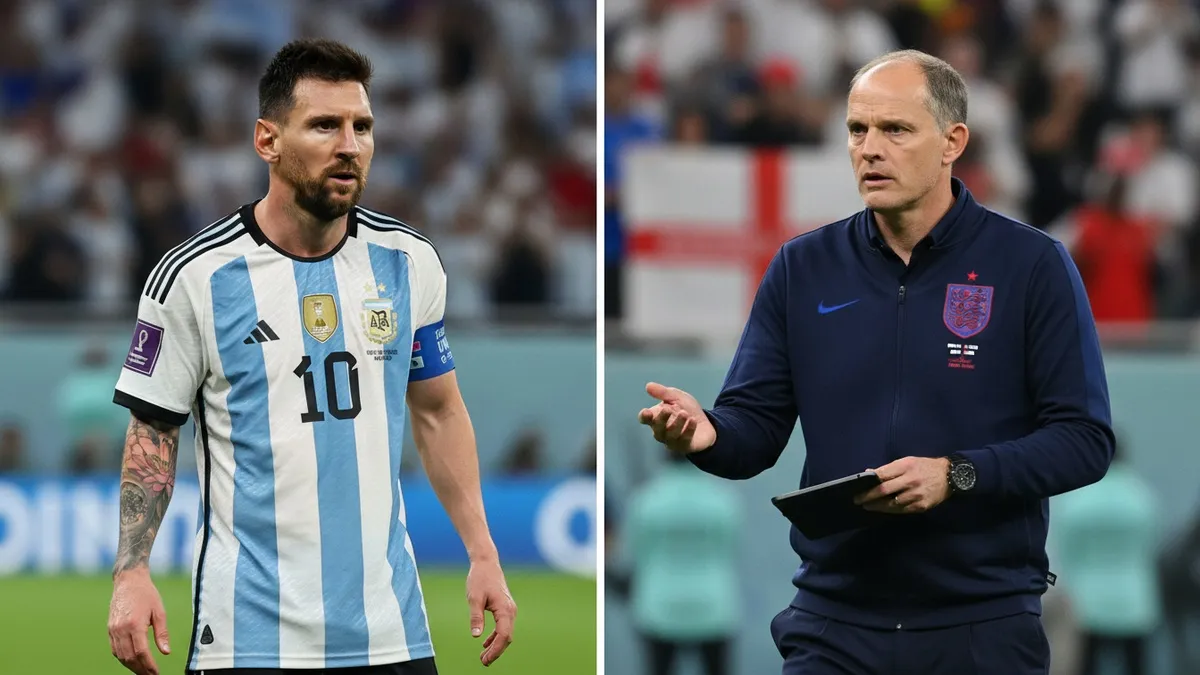
John Stones World Cup selection: Tuchel’s big call
John Stones World Cup selection debate heats up as Anton Ferdinand urges Tuchel to pick form players like Guehi and Konsa before May 11.
John Stones World Cup selection debate heats up as Anton Ferdinand urges Tuchel to pick form players like Guehi and Konsa before May 11.
England’s centre-back conversation has turned from comforting familiarity to uncomfortable urgency, and it is John Stones standing in the harshest spotlight. The John Stones World Cup selection debate is no longer a niche talking point for tactics obsessives, but a mainstream argument about form, fitness, and fairness. With only seven league appearances and another thigh issue on his record, Stones is fighting the calendar as much as rival defenders. Thomas Tuchel’s looming May 11 deadline has turned every training update into selection theatre.
The closer England gets to May 11, the more the John Stones World Cup selection question feels like a referendum on Tuchel’s values. Does he lean on experience and big-game know-how, or does he protect the squad from a player whose availability can’t be guaranteed? Stones’ Manchester City season has been a stop-start sequence of rehab, cautious returns, and fresh setbacks. In tournament football, uncertainty is a tactical weakness opponents happily target.
Anton Ferdinand has thrown petrol on the debate by framing it as a simple meritocracy: if you’re not playing, you shouldn’t go. That blunt logic resonates with fans who have watched England carry half-fit names in the past, hoping they “come good” by the knockouts. The John Stones World Cup selection dilemma is amplified because centre-back partnerships rely on rhythm and repetition, not just reputation. Tuchel must decide whether Stones can realistically build either in time.
Ferdinand’s argument is less personal than it sounds; it’s a warning about tournament margins, where one misstep can end a campaign. He points to Stones fitness issues and the lack of consistent minutes as disqualifying factors, not minor inconveniences. In that framing, the John Stones World Cup selection becomes a risk management exercise, not a celebration of past trophies. Fans understand the fear: a single sprint, twist, or collision can undo months of planning.
Tuchel inherits an England squad culture that often defaults to trusted names, especially in defense where errors are punished loudly. Yet his club career has also shown a willingness to be ruthless when the system demands it, and when fitness data doesn’t lie. The John Stones World Cup selection debate is really about whether Tuchel believes leadership comes from status or from availability. If he prioritises training continuity, fringe defenders suddenly have a clearer route into the squad.
Seven league appearances is not a normal number for a player expected to anchor a World Cup defense, and that stat keeps returning like a bad chorus. Even when Stones has been present, he has rarely enjoyed the uninterrupted run that builds sharpness in duels and timing in the line. The John Stones World Cup selection conversation therefore isn’t just about being “fit,” but about being match-ready. International football punishes rust with brutal efficiency.
Premier League injuries aren’t unique to Stones, but the pattern matters: recurring muscle problems are notoriously difficult to predict and prevent. England’s sports science team can manage loads, but they can’t manufacture competitive minutes. The John Stones World Cup selection issue is magnified by the pace of modern tournaments, where recovery windows are short and the intensity climbs quickly. Tuchel has to ask whether he can afford a centre-back who might need careful minutes from day one.
At Manchester City, rotation is normal, but Stones’ absences have felt less like tactical rests and more like forced compromises. City can cover gaps with elite alternatives and possession control that reduces defensive exposure, but England can’t assume the same protection. The John Stones World Cup selection dilemma is therefore partly about context: a player can look secure in City’s ecosystem yet be far more vulnerable in international transitions. That difference matters when the stakes are knockout football.
Defending at a World Cup is about micro-decisions made at full speed, and those decisions are sharpened by repetition. Fans remember Stones’ best England nights, but Tuchel must weigh them against the reality of limited recent evidence. The John Stones World Cup selection debate becomes uncomfortable because it asks supporters to detach from nostalgia. In a short tournament, “he’ll play himself into form” is a luxury England may not have.
Ferdinand’s proposed solution is refreshingly specific: Marc Guehi alongside Ezri Konsa, a pairing rooted in current form rather than past hierarchy. Guehi has looked increasingly comfortable as an organiser, while Konsa’s season has showcased concentration, recovery pace, and a calmness under pressure. The John Stones World Cup selection debate sharpens when alternatives feel credible rather than theoretical. If Tuchel wants a defense that trains together, plays together, and communicates instinctively, this pairing offers a clean slate.
There is also a stylistic argument for moving on, at least temporarily, from Stones. England’s build-up can still be progressive without forcing the entire plan to depend on one player’s unique passing profile. The John Stones World Cup selection conversation often treats him as irreplaceable in possession, but international football is about adaptability and game states. Tuchel may decide that reliable defending and simple progression beats a high-risk attempt to replicate City’s patterns.
Guehi’s rise has been partly about technical quality, but also about the quieter skills England need in tournament pressure. He reads danger early, speaks constantly, and looks comfortable defending large spaces when the midfield is stretched. The John Stones World Cup selection dilemma becomes more pointed because Guehi already looks like a starter, meaning the real question is who complements him best. A partner who is consistently available could outweigh a more decorated but uncertain option.
Konsa’s appeal isn’t only at centre-back; his ability to cover full-back zones and defend wide channels offers Tuchel in-game flexibility. That matters when opponents target the edges with quick switches, or when England need to protect a lead with a more conservative shape. The John Stones World Cup selection debate tilts further if Tuchel wants a squad of multi-role defenders rather than specialists. In knockout football, being able to change shape without changing personnel is a major advantage.
Stones has spoken candidly about how repeated setbacks have affected his mental health, and that honesty changes the tone of the discussion. It’s easy for fans to reduce the John Stones World Cup selection argument to spreadsheets and appearances, but the human part matters. Injuries aren’t just physical interruptions; they can erode confidence, rhythm, and the sense of control athletes depend on. When Stones admits retirement thoughts have crept in, it signals a deeper strain than a routine knock.
From Tuchel’s perspective, safeguarding a player’s wellbeing can align with safeguarding the squad’s stability. Taking an injured or fragile player to a World Cup can create constant uncertainty, both for the individual and for teammates who need clarity. The John Stones World Cup selection debate therefore sits at the intersection of performance and duty of care. England must ask whether the environment of a tournament, with scrutiny and intensity, is the right place for a player still fighting his body.
England value leadership, but leadership is complicated when a senior figure can’t participate fully in sessions. Dressing-room influence matters, yet defensive cohesion is built on shared reps, shared cues, and shared mistakes corrected on the grass. The John Stones World Cup selection conversation forces a hard question: is leadership more valuable as a voice, or as a reliable presence on the pitch? If Stones can’t train consistently, his leadership risks becoming symbolic rather than functional.
If Tuchel selects Stones, England must surround him with careful load management, clear communication, and mental support that reduces anxiety about setbacks. If Tuchel leaves him out, the messaging must be respectful and transparent to avoid framing it as punishment for being injured. The John Stones World Cup selection debate shouldn’t end with a headline; it should lead to better handling of player welfare. Either outcome can be managed well, but only if the process is compassionate and professional.
Any conversation about experience inevitably drifts toward other senior figures, and Jordan Henderson’s name often appears as a comparison point. Henderson has built a career on leadership and standards, yet even he has faced questions when club minutes or form dip. The John Stones World Cup selection issue mirrors that broader theme: England can’t be a museum of past excellence. Tuchel’s challenge is to keep the squad’s emotional spine without sacrificing the athletic edge required to win.
Leadership in 2026-style international football is increasingly expressed through intensity, recoveries, and concentration, not just speeches. When legs go, leadership can quickly look like vulnerability, especially against elite transitions. The John Stones World Cup selection debate is therefore part of a wider recalibration of what “leaders” look like in a modern England squad. Tuchel may still want experienced voices, but he’ll want them attached to bodies that can handle five games in three weeks.
England fans have lived through tournaments where big names were carried on faith, and the results have been mixed at best. Evidence-based selection sounds cold, but it’s often what separates finalists from nearly-men. The John Stones World Cup selection conversation is essentially a test case for a new era: will Tuchel reward current performance and durability, or defer to status? If he chooses evidence, it sets a precedent that could reshape squad dynamics across the pitch.
Ferdinand’s West Ham United roots and Henderson’s Liverpool legacy remind supporters how strongly club narratives influence international debates. Fans don’t just evaluate players; they carry emotional memories of title races, European nights, and iconic moments. The John Stones World Cup selection story is filtered through that same lens, with City’s dominance amplifying both praise and suspicion. Tuchel must cut through the noise, because international success demands decisions that sometimes disappoint club-based loyalties.
Assuming Guehi is the cornerstone, the next decision is about complementary traits: pace to cover space, aerial command, and distribution under pressure. Stones offers a rare blend of composure and progression, which is why the John Stones World Cup selection debate feels so consequential. But Tuchel can build passing lanes through midfield rotations and full-back positioning rather than relying on one centre-back to be the playmaker. In international football, structure can replace individual uniqueness.
The May 11 deadline adds urgency because Tuchel needs time to test partnerships, not just pick them. Training camps are short, and England’s defensive chemistry can’t be improvised on the eve of a tournament. The John Stones World Cup selection question therefore affects more than one roster spot; it affects the entire preparation plan. If Stones is a maybe, Tuchel might prefer to commit early to a pairing like Guehi-Konsa and build automatisms around them.
World Cups are often decided by set pieces and transition moments, the areas where small lapses become fatal. Tuchel will look for defenders who win first contacts, track runners, and recover quickly when England lose the ball high. The John Stones World Cup selection debate must be measured against those realities, not just passing highlights. If Stones can’t guarantee sprint capacity and repeat efforts, England’s rest-defense could be compromised against top opponents.
When Tuchel makes his call, it will be interpreted as a statement of intent: continuity or renewal, trust or ruthlessness. Selecting Stones would signal belief in elite experience and the hope that managed fitness can hold through a tournament. Leaving him out would signal a commitment to form, durability, and a future-facing England squad. Either way, the John Stones World Cup selection decision will become a reference point for every subsequent debate, from midfield balance to squad leadership.
Whatever side you take, the John Stones World Cup selection argument has exposed a truth England can’t ignore: tournaments reward availability as much as ability. Stones’ quality is not in doubt, but his body has turned selection into a gamble, and Tuchel’s job is to reduce gambles wherever possible. Ferdinand’s push for Guehi and Konsa may feel harsh, yet it reflects the modern demand for relentless readiness. With May 11 approaching, England’s next defensive era may be decided by a medical report as much as a match.

Julian Mercer is a lifelong student of the game whose passion for football was sparked at an early age, after stepping onto the grass of Camp Nou as a six-year-old — a moment that left a lasting impression and set him on a permanent path into the sport. Since then, football has been both his lens on the world and his favourite language. Blending traditional fandom with a deep interest in tactics, squad building, and long-term team development, Julian has spent decades analysing the game from every angle. His fascination with football strategy was further shaped through years of immersive play in Football Manager, a series he has followed since the mid-1990s, developing a sharp eye for patterns, player profiles, and the fine margins that define success. At My World Of Football, Julian focuses on the stories beneath the surface — from tactical evolutions and managerial philosophies to the narratives that connect clubs, players, and supporters across generations. His writing aims to balance insight with accessibility, always grounded in a genuine love for the game.
Continue reading more football news